 Preview
 Send
Send Share
Share
 Details

 Download
 Similars
 X-Ray
X-Ray Diaporama
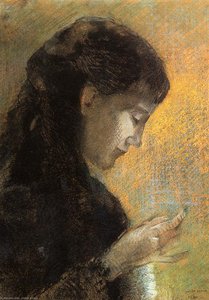
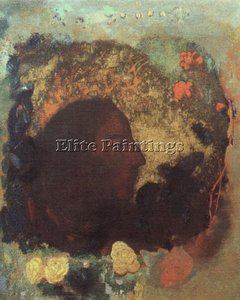
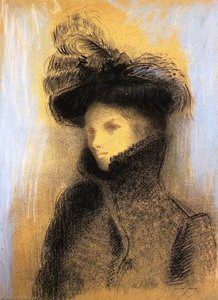
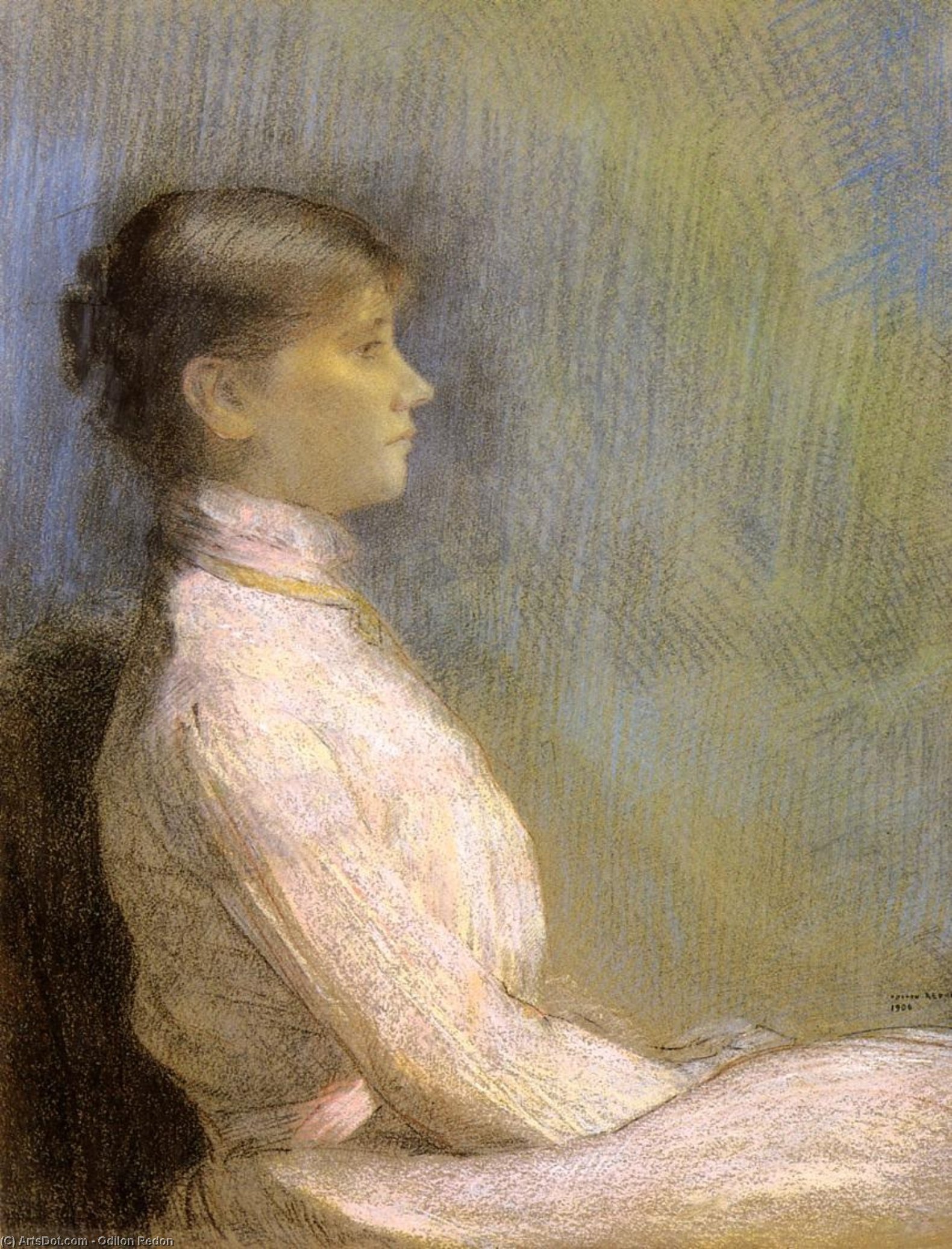
Portrait of Paule Gobillard
 Oil On Canvas
- WallArt
- Symbolist
 1900
1900 52.0 x 46.0 cm
 Read More
Hand Made Oil Reproduction
Hand-painted oil on canvas in your size and frame, made to order by our artists. ( Buy Print Buy Image)




P118B $10

P118H $10

P118W $10

P438Z $10

P508JH $12

P508YH $12

P805H $10

P805Z $10

P919BZ $10

P919G $10

P919XJ $10

P959ZH $10

P968JZ $12

W106C $8

W218G $10

W218JH $8

W218Y $10

W307PJ $10

W316G $10

W316PJ $8

W316Y $10

W398PJ $8

W4111J $10

W500HY $15

W500JH $15

W692G $12

W849H $8

W940BG $15

W953PJ $8




Pick from our preset sizes that match the artwork's original proportions.

You may enter your own dimensions to fit a specific frame or space. If your selected size does not match the original image's proportions, we will either crop the artwork or extend the painting with additional hand-painted elements. A digital mockup will be sent for your approval before production begins.
Please note that the on-screen preview does not reflect the actual cropping or extension. Only the mockup will accurately show the final composition.
While custom sizes are available, we recommend selecting a dimension from the predefined list to preserve the original proportions.
After order, ArtsDot.com team will email client for instructions and provide a mockup preview
Worldwide Delivery () in 3/4 weeks instead of standard 5 weeks. (16 August). No compromise on quality.

Free Worldwide Express Shipping

High-Quality Linen Canvas

Full Shipping Insurance

Customs Tax Refund Guarantee

True Color Matching Guarantee

60-Day Return Policy (Defects Only)

100% Money-Back Guarantee

Bulk Discount Offer
 Glass option is only available in size under 110 CM

Portrait of Paule Gobillard
Reproduction Medium
Reproduction Size
-


Total Price
$ 263
Artwork Description
Portrait of Paule Gobillard: A Window into Redon's Dreamscape
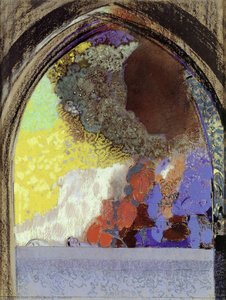
Odilon Redon’s “Portrait of Paule Gobillard,” created in 1900, is more than just a depiction of a woman; it’s an immersion into the profoundly evocative world of Symbolism. This pastel masterpiece, measuring 52 x 46 cm, immediately draws the viewer into a realm of quiet contemplation and subtle emotion – a hallmark of Redon's artistic vision. The painting captures Paule Gobillard seated in a chair, her gaze lost in thought, an image that resonates with a timeless quality, inviting us to ponder the mysteries held within the human psyche.
- The Artist’s Vision: Redon was a master of translating subjective experience into visual form. His work rejects literal representation, instead favoring symbolic imagery and emotional resonance.
- Pastel as Poetry: The choice of pastel is crucial to understanding the painting's impact. Unlike oil paints, pastels offer unparalleled subtlety and nuance, allowing Redon to build layers of color that shimmer with an ethereal quality. This technique creates a dreamlike atmosphere, enhancing the sense of introspection.
- Composition & Symbolism: The simple composition – Gobillard centrally placed against a muted background – directs our attention entirely to her expression and posture. The pearl necklace, a small yet significant detail, adds a touch of elegance while simultaneously hinting at themes of beauty and perhaps, fragility.
A Window into the Symbolist Movement
“Portrait of Paule Gobillard” firmly establishes itself within the context of the Symbolist movement, which flourished in late 19th-century Europe. Rejecting the realism championed by earlier artistic movements, Symbolists sought to express inner emotions and spiritual truths through evocative imagery and suggestive forms. Redon was a key figure in this movement, known for his haunting portraits and landscapes that often evoke a sense of melancholy and mystery. His work anticipated many of the concerns of early 20th-century modernism, exploring themes of psychology, dreams, and the subconscious.
The painting’s influence can be seen in other works by Redon, such as “Anemones and Tulips” and “Orpheus,” all characterized by their dreamlike quality and symbolic content. These pieces share a common thread – a desire to tap into the deeper currents of human experience.
Technique & Materials
Redon’s meticulous application of pastel is evident in every brushstroke. He built up layers of color with remarkable precision, creating a velvety texture that seems to glow from within. The soft, diffused light contributes significantly to the painting's ethereal quality. The use of muted tones – primarily blues, greys, and whites – further enhances this effect, allowing Gobillard’s features to emerge subtly from the background. This careful control over color and texture is a testament to Redon’s technical skill and his deep understanding of the medium.
Owning a Piece of Art History
Handmade oil paintings reproductions of “Portrait of Paule Gobillard” are available on ArtsDot.com, offering art lovers the opportunity to bring this iconic work into their homes or offices. This reproduction captures not only the visual details but also the emotional essence of Redon’s original masterpiece. It's a chance to own a tangible connection to one of the most significant figures in Symbolist art – a piece that speaks volumes about the power of imagination and the beauty of introspection.
Related Artworks
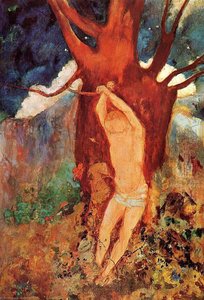
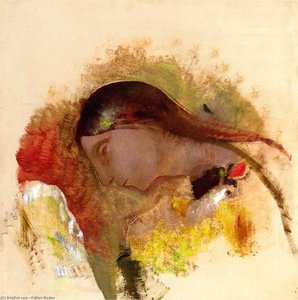
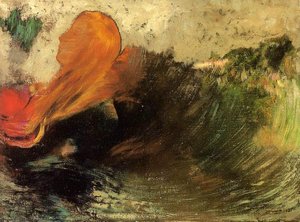
Artist Biography
A World Beyond the Visible: The Enigmatic Art of Odilon Redon
Odilon Redon, born Bertrand-Jean Redon in 1840 in Bordeaux, France, was an artist perpetually drawn to translate the unseen realms of imagination and dream into tangible form. His artistic journey began not with grand ambition but with quiet observation; at just ten years old he won a drawing prize—a foreshadowing of the visual sensitivity that would define his life’s work. Though initially steered towards architecture by familial expectations, Redon's true calling lay elsewhere, illuminated by instruction from Jean-Léon Gérôme and, crucially, Rodolphe Bresdin, who guided him in the intricate arts of etching and lithography. These techniques became foundational to his early explorations, allowing him to delve into a world of shadowy figures and ambiguous forms that would soon captivate those seeking an alternative to academic realism. The interruption of the Franco-Prussian War saw Redon briefly serving in the military, but it was upon his return to Paris that his artistic vision truly began to coalesce.The Birth of Symbolism: ‘Noirs’ and Early Visions
Redon's early career was marked by a deliberate withdrawal from prevailing artistic trends. He didn’t seek to replicate the visible world, but rather to evoke its hidden currents—the anxieties, desires, and spiritual longings that lay beneath the surface of everyday life. This led to his famed series of “noirs,” monochromatic works executed in charcoal and lithography. These weren't merely studies in darkness; they were explorations of the subconscious, populated by strange creatures, disembodied eyes, and haunting figures emerging from swirling mists. The influence of writers like Edgar Allan Poe and Charles Baudelaire is palpable here—a shared fascination with the macabre, the mysterious, and the power of suggestion. These works weren't immediately embraced; Redon remained largely unknown for years. However, a pivotal moment arrived in 1884 with Joris-Karl Huysmans’ novel *À rebours* (Against Nature), where the decadent aristocrat Des Esseintes championed Redon’s drawings, instantly elevating his status within avant-garde circles. This recognition opened doors and allowed Redon to further develop his unique artistic language. He described his work as ambiguous and undefinable, stating they should “place us, as does music, in the ambiguous realm of the undetermined.”A Palette Awakens: From Monochrome to Vibrant Expression
While the “noirs” established Redon as a significant force in Symbolism, his art underwent a remarkable transformation in the 1890s. He began to embrace color—first pastels, then oils—infusing his compositions with a newfound vibrancy and luminosity. This shift wasn’t merely technical; it reflected an evolving emotional landscape within the artist himself. The earlier works often carried a sense of melancholy and isolation, but the later paintings reveal a growing interest in mythology, Buddhism, and Japanese art – *Japonism* was a significant influence. Works like *The Death of the Buddha* (1899) demonstrate this fascination with Eastern spirituality, while pieces commissioned by Baron Robert de Domecy for his château showcase Redon’s ability to blend decorative elements with symbolic imagery. The portraits of Baroness de Domecy and her daughter Jeanne are particularly striking examples of this period, capturing not just physical likeness but also a sense of inner life and psychological depth. Redon explored his internal feelings and psyche through his art, aiming to “place the visible at the service of the invisible.”Legacy and Influence: A Precursor to Surrealism
Odilon Redon’s impact on the art world extends far beyond his own lifetime. He was awarded the Legion of Honor in 1903, and his work gained wider recognition with exhibitions at the New York Armory Show in 1913. However, it wasn't until after his death in 1916 that his true significance became fully apparent. Redon’s exploration of dreams, the subconscious, and irrationality paved the way for Surrealism, inspiring artists like Marcel Duchamp and Max Ernst to delve into similar territories. His emphasis on subjective experience and emotional expression also resonated with Expressionist painters. He wasn't simply depicting what he saw; he was visualizing what he felt, a principle that continues to inspire artists today. Redon’s legacy is one of artistic courage, a willingness to embrace the ambiguous, and a profound belief in the power of art to reveal the hidden dimensions of human experience. His drawings defied classification, ushering in a unique type of fantastic imagery born of sickness and delirium, yet always imbued with a haunting beauty.Key Characteristics & Themes
- Symbolism: Redon is considered a central figure in the Symbolist movement, prioritizing emotional and spiritual expression over realistic representation.
- Dreamlike Imagery: His works are often characterized by fantastical creatures, ambiguous landscapes, and scenes that evoke the atmosphere of dreams.
- Exploration of the Subconscious: Redon delved into themes of anxiety, desire, and the hidden depths of the human psyche.
- Influence of Literature & Mythology: He drew inspiration from writers like Poe and Baudelaire, as well as Eastern religions and mythology.
- Technical Innovation: Redon’s mastery of lithography and his innovative use of color in pastels and oils were crucial to his artistic vision.
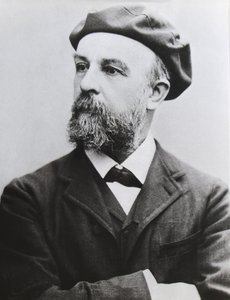
Odilon Redon
1840 - 1916 , France
Quick Facts
- Artistic Movement Or Style: Symbolism
- Artists Or Movements Influenced By This Artist:
- Surrealism
- Marcel Duchamp
- Max Ernst
- Artists Who Influenced This Artist:
- Jean-Léon Gérôme
- Rodolphe Bresdin
- Date Of Birth: 1840
- Date Of Death: 1916
- Full Name: Odilon Redon
- Nationality: French
- Notable Artworks:
- Centaurs
- Onnes
- Portrait of Ari Redon
- Place Of Birth: Bordeaux, France
Related Articles
Transforming Spaces: A Comprehensive Exploration of Wall Decor Through Art History & Contemporary Practice
Explore the art of transforming spaces with our comprehensive guide to wall decor. From historical movements to contemporary trends, discover how to curate impactful interiors and commission bespoke artwork for a truly personalized aesthetic.
The Return of the Fresco: Why Wall Murals Are the New Luxury Statement
Elevate your space with bespoke wall murals & frescoes. Explore the resurgence of this luxury art form. Expert design guidance & seamless installation – .
The Subtleties of Pastel: A Comprehensive Exploration of Technique, History & Emotional Resonance
Explore the captivating world of pastel art! Discover its rich history, Impressionistic masters like Degas, emotional power & unique techniques. Find museum-quality reproductions at ArtsDot.
The Subdued Radiance of Pastel: Exploring Nuance & Emotion in Art
Explore the nuanced world of pastel art! Discover its history, techniques & emotional power with expert insights from ArtsDot.com. Find museum-quality reproductions and learn about collecting this delicate medium.
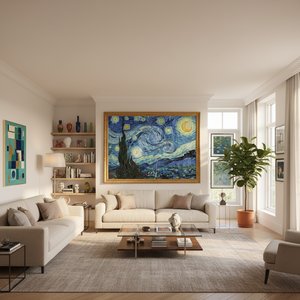
Top 10 Masterpieces for Your Living Room: Iconic Paintings & Art Decor Ideas |
Transform your living room with iconic art! Explore our guide to the Top 10 most famous paintings – from Van Gogh's Starry Night to Mona Lisa. Discover artist stories, techniques & find museum-quality reproductions for timeless decor. Explore the full collection on