 Send
Send Share
Share
 Details

 Download
 Similars
 Diaporama
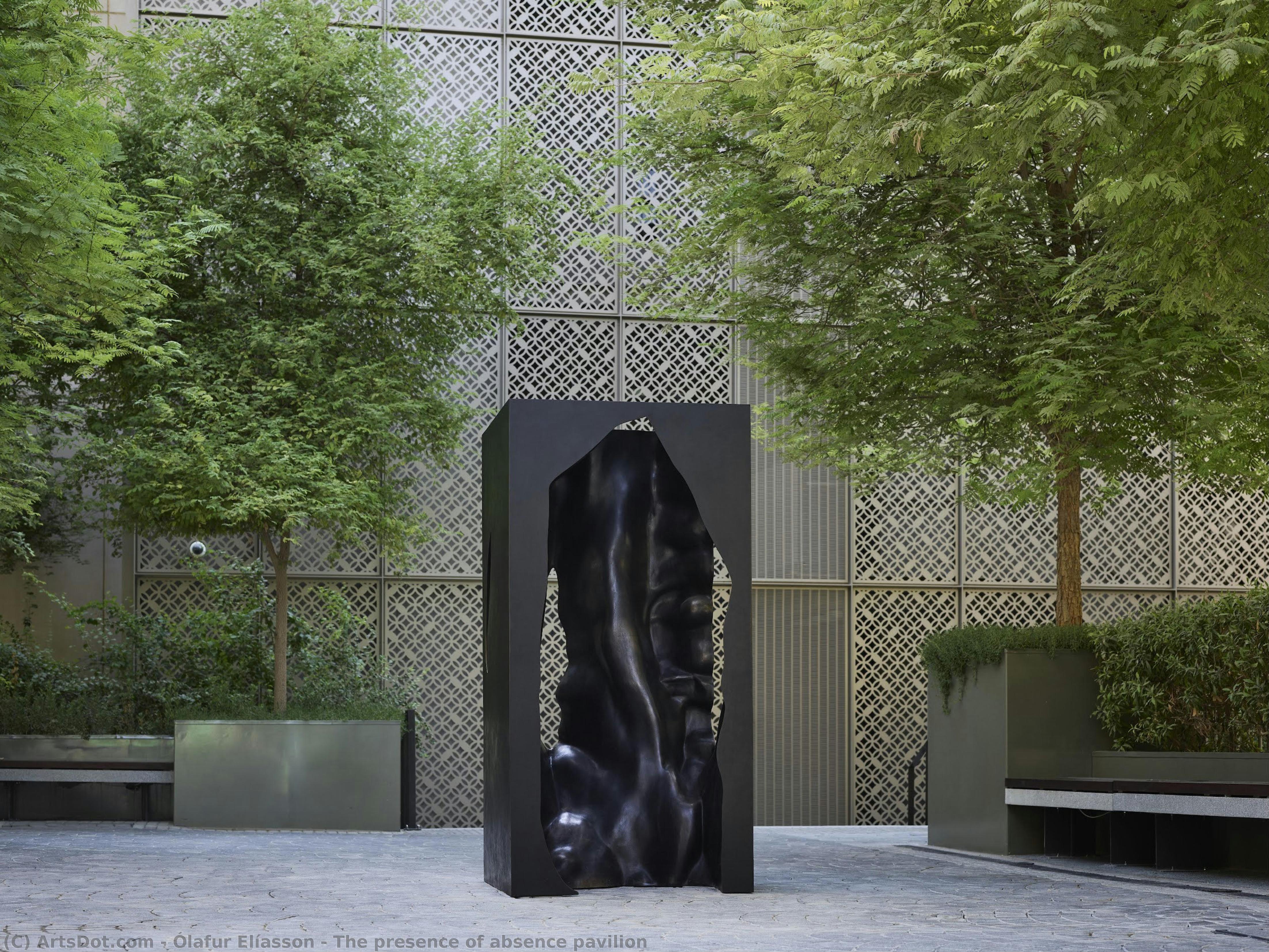
The presence of absence pavilion
 Sculpture Bronze
- Contemporary
 200.0 x 100.0 cm
 Expo 2020 Dubai
 Read More
Hand Made Oil Reproduction
Hand-painted oil on canvas in your size and frame, made to order by our artists. ( Buy Print Buy Image)




































Pick from our preset sizes that match the artwork's original proportions.

You may enter your own dimensions to fit a specific frame or space. If your selected size does not match the original image's proportions, we will either crop the artwork or extend the painting with additional hand-painted elements. A digital mockup will be sent for your approval before production begins.
Please note that the on-screen preview does not reflect the actual cropping or extension. Only the mockup will accurately show the final composition.
While custom sizes are available, we recommend selecting a dimension from the predefined list to preserve the original proportions.
After order, ArtsDot.com team will email client for instructions and provide a mockup preview
Worldwide Delivery () in 3/4 weeks instead of standard 5 weeks. (21 August). No compromise on quality.

Free Worldwide Express Shipping

High-Quality Linen Canvas

Full Shipping Insurance

Customs Tax Refund Guarantee

True Color Matching Guarantee

60-Day Return Policy (Defects Only)

100% Money-Back Guarantee

Bulk Discount Offer
 Glass option is only available in size under 110 CM

The presence of absence pavilion
Reproduction Medium
Reproduction Size
-


Total Price
$ 263
Artwork Description
A Dialogue Between Void and Light: Examining Olafur Eliasson’s “The Presence of Absence Pavilion”
Olafur Eliasson's "The presence of absence pavilion" stands as a testament to the artist’s profound exploration of perception and his masterful manipulation of natural elements within architectural space. Constructed from bronze, this sculpture isn’t merely an object; it’s an invitation to contemplate the elusive relationship between visibility and obscurity—a concept central to Eliasson's artistic philosophy rooted in phenomenology and Gestalt psychology. The installation, situated within a courtyard setting, immediately establishes a striking contrast: the dark, monolithic pavilion juxtaposed against the vibrant greenery of surrounding trees. This deliberate pairing speaks volumes about Eliasson’s preoccupation with how our senses interpret reality, prompting viewers to consider what is seen versus what remains unseen.- Material and Technique: Crafted from bronze—a material known for its durability and ability to retain detail—the pavilion's surface reflects the dappled sunlight filtering through foliage. The artist’s meticulous attention to texture contributes significantly to the overall experience, mirroring the rough bark of the trees and highlighting the geometric pattern adorning the courtyard wall. Digital photography was employed to capture this scene with exceptional clarity, ensuring that every nuance of light and shadow is faithfully reproduced.
- Spatial Composition: The pavilion’s placement within the courtyard creates a layered visual narrative. Foreground trees provide depth, while the pavilion itself dominates the middle ground, anchoring the composition. The textured wall serves as a backdrop, reinforcing the sense of spatial enclosure and inviting contemplation. Eliasson's collaboration with architect Einar Thorsteinn further solidified his commitment to geometric forms and innovative architectural designs.
- Symbolism & Context: The sculpture’s dark form symbolizes absence, representing potential or unrealized possibilities. Conversely, the sunlight embodies presence—the tangible reality of illumination and warmth. Eliasson's exploration aligns with broader artistic trends questioning established perspectives on visual experience during the late 20th century.
Related Artworks



Artist Biography
Ólafur Elíasson: A Biography
Early Life and Education
- Born in Copenhagen, Denmark in 1967 to Icelandic parents, Elías Hjörleifsson and Ingibjörg Olafsdottir.
- Spent formative years navigating dual cultural identities – Danish and Icelandic.
- Showed early artistic promise with his first solo exhibition at age 15.
- Studied at the Royal Danish Academy of Fine Arts from 1989 to 1995, a period crucial for developing his conceptual approach.
Artistic Development and Influences
- Elíasson’s work evolved from early landscape drawings to large-scale installations exploring perception, light, and natural phenomena.
- Influenced by phenomenology and Gestalt psychology, focusing on how viewers experience space and reality.
- Collaboration with architect Einar Thorsteinn significantly impacted his geometric works and spatial designs.
- Inspired by artists like Robert Irwin and James Turrell who also manipulate perception through light and space.
Key Themes and Artistic Style
- Central themes include the relationship between humans and nature, artificial versus natural environments, and the subjective experience of reality.
- His style is characterized by large-scale installations that often incorporate elemental materials like light, water, air temperature, and mirrors.
- Immersive experiences are a hallmark of his work, inviting viewers to actively participate in and question their surroundings.
- Frequently blends art with scientific inquiry, exploring concepts from physics, optics, and meteorology.
Major Achievements and Notable Works
- Represented Denmark at the 50th Venice Biennale in 2003, gaining international recognition.
- “The Weather Project” (2003) at Tate Modern’s Turbine Hall – a monumental installation creating an artificial sun and sky, becoming one of his most iconic works.
- Designed the Serpentine Gallery Pavilion in 2007, showcasing innovative architectural design.
- Created “New York City Waterfalls” (2008), transforming Manhattan’s waterfront with cascading waterfalls.
- Co-founded Studio Other Spaces with Sebastian Behmann, expanding his practice into architecture and urban interventions.
- Designed the Harpa Concert Hall in Reykjavik, Iceland – a stunning architectural landmark.
Historical Significance and Legacy
- Elíasson is considered one of the most influential contemporary artists working today.
- His work challenges traditional notions of art by blurring boundaries between disciplines—art, science, architecture, and environmentalism.
- He has sparked important conversations about climate change, sustainability, and our relationship with the natural world.
- Continues to push the boundaries of artistic practice through innovative installations, architectural projects, and public interventions.
- Currently a professor at the Berlin University of the Arts, nurturing future generations of artists and thinkers.

ólafur elíasson
1967 - , Denmark
Quick Facts
- Birth Date: 1967-02-05
- Birth Place: Copenhagen, Denmark
- Movement:
- Installation Art
- Contemporary Art
- Environmental Art
- Name: Ólafur Elíasson
- Nationality:
- Danish
- Icelandic
- Notable Works:
- The Weather Project
- Serpentine Gallery Pavilion 2007
- New York City Waterfalls
- The Presence of Absence Pavilion
Related Articles

Bronze Age to Modern Masters: 10 Sculptures That Redefined Art | ArtsDot
Journey through art history with 10 legendary bronze sculptures – from Michelangelo's David to Rodin’s Thinker. Explore the stories, techniques & timeless beauty of these masterpieces. Find museum-quality reproductions & elevate your home decor on ArtsDot.com.

Bronze Sculptures That Defined Art History | ArtsDot
Journey through art history with our Top 10 bronze sculptures! Explore masterpieces by Rodin, Michelangelo & more. Discover stories behind iconic statues and find museum-quality reproductions for your home decor at ArtsDot.com.

The Enduring Legacy of Bronze: A Historical & Artistic Exploration for the Collector
Explore the rich history & enduring appeal of bronze sculpture with expert insights for collectors at ArtsDot. Learn about casting techniques, iconic artists, collecting tips & contemporary interpretations.

The Enduring Legacy of Bronze: History, Technique & Artistic Expression for the Collector
Explore the rich history & enduring appeal of bronze sculpture with expert insights for collectors at ArtsDot. Learn about casting techniques, iconic artists, and collecting tips.

The Enduring Legacy of Bronze Sculpture: Technique, Symbolism & Cultural Impact
Explore the rich history & enduring appeal of bronze sculpture with expert insights for collectors. Learn about casting techniques, iconic artists, collecting tips & contemporary interpretations at ArtsDot.