 Preview
 Send
Send Share
Share
 Details

 Download
 Similars
 X-Ray
X-Ray Diaporama
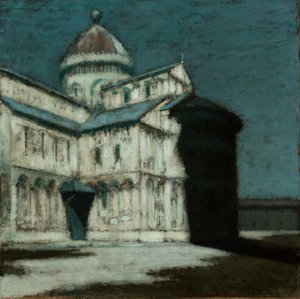
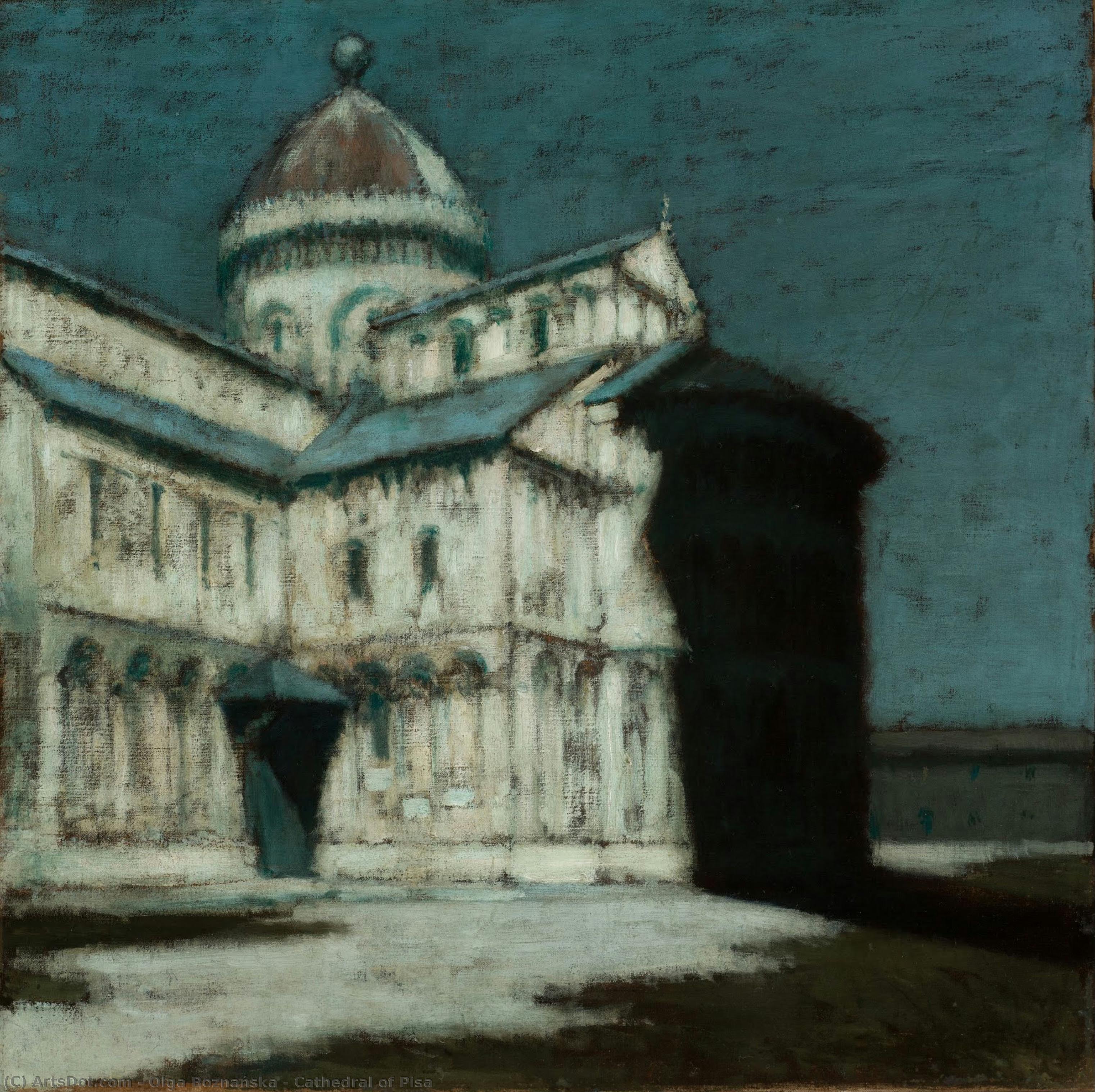
Cathedral of Pisa


 Read More
Hand Made Oil Reproduction
Hand-painted oil on canvas in your size and frame, made to order by our artists. ( Buy Print Buy Image)




P118B $10

P118H $10

P118W $10

P438Z $10

P508JH $12

P508YH $12

P805H $10

P805Z $10

P919BZ $10

P919G $10

P919XJ $10

P959ZH $10

P968JZ $12

W106C $8

W218G $10

W218JH $8

W218Y $10

W307PJ $10

W316G $10

W316PJ $8

W316Y $10

W398PJ $8

W4111J $10

W500HY $15

W500JH $15

W692G $12

W849H $8

W940BG $15

W953PJ $8




Pick from our preset sizes that match the artwork's original proportions.

You may enter your own dimensions to fit a specific frame or space. If your selected size does not match the original image's proportions, we will either crop the artwork or extend the painting with additional hand-painted elements. A digital mockup will be sent for your approval before production begins.
Please note that the on-screen preview does not reflect the actual cropping or extension. Only the mockup will accurately show the final composition.
While custom sizes are available, we recommend selecting a dimension from the predefined list to preserve the original proportions.
After order, ArtsDot.com team will email client for instructions and provide a mockup preview
Worldwide Delivery () in 3/4 weeks instead of standard 5 weeks. (17 August). No compromise on quality.

Free Worldwide Express Shipping

High-Quality Linen Canvas

Full Shipping Insurance

Customs Tax Refund Guarantee

True Color Matching Guarantee

60-Day Return Policy (Defects Only)

100% Money-Back Guarantee

Bulk Discount Offer
 Glass option is only available in size under 110 CM

Cathedral of Pisa
Reproduction Medium
Reproduction Size
-


Total Price
$ 263
Artwork Description
A Glimpse Into Polish Impressionism: Olga Boznańska’s Cathedral of Pisa
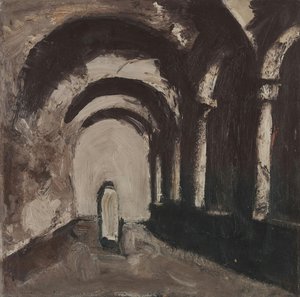
The painting “Cathedral of Pisa” by Olga Boznańska isn't merely an architectural depiction; it’s a poignant meditation on faith, resilience, and the passage of time—a cornerstone of Young Poland’s artistic fervor. Completed in 1905, this monochrome masterpiece captures the imposing Duomo di Pisa Cathedral against a muted Tuscan sky, instantly transporting viewers back to a pivotal moment in Polish cultural history.The Style & Technique: Impressionistic Echoes
Boznańska's approach aligns seamlessly with the tenets of Impressionism, though subtly filtered through her own distinctive vision. Rejecting academic realism—the dominant artistic style of her era—she embraced the fleeting effects of light and atmosphere, prioritizing subjective perception over precise representation. Thickly applied brushstrokes dominate the canvas, creating a textured surface that vibrates with movement. Unlike Monet’s luminous landscapes, Boznańska eschewed vibrant hues, opting for shades of grey, ochre, and ivory to convey a sense of solemn grandeur and understated beauty. The artist skillfully utilized chiaroscuro—the dramatic interplay between light and shadow—to sculpt the cathedral's form and imbue it with an aura of spiritual contemplation.Historical Context: Young Poland’s Artistic Renaissance
“Cathedral of Pisa” emerged during Young Poland (Młoda Polska), a period characterized by intellectual dynamism and artistic experimentation fueled by nationalist aspirations. This movement sought to revitalize Polish culture after centuries of subjugation, embracing Symbolism alongside Impressionism as expressions of national identity and spiritual yearning. The cathedral itself holds immense symbolic significance—a testament to Pisa’s perseverance in rebuilding its magnificent edifice after devastating earthquakes throughout history. Boznańska's choice of monochrome reflects the melancholic beauty inherent in remembering the past while striving for a brighter future, mirroring the broader anxieties and hopes of Young Poland artists grappling with questions of faith and national destiny.Symbolism & Emotional Resonance
Beyond its formal qualities, “Cathedral of Pisa” resonates deeply with emotional resonance. The cathedral’s towering presence embodies strength and stability amidst vulnerability—a visual metaphor for Poland's enduring spirit despite facing adversity. The muted palette evokes a sense of quiet contemplation and reverence, inviting viewers to contemplate the grandeur of faith and the enduring legacy of architectural achievement. Boznańska’s masterful composition directs the eye upwards towards the dome, symbolizing aspiration and transcendence – themes central to Young Poland’s artistic ethos.Conclusion: An Enduring Legacy
Olga Boznańska's “Cathedral of Pisa” transcends mere visual representation; it embodies the spirit of Young Poland and its commitment to capturing beauty in unexpected places. Its enduring appeal lies not only in its technical brilliance but also in its profound exploration of themes that continue to resonate with audiences today—faith, resilience, and the timeless allure of architectural grandeur. Reproductions of this evocative artwork offer a captivating glimpse into Polish artistic heritage and inspire appreciation for the power of Impressionistic technique to convey emotion and intellect alike.Related Artworks

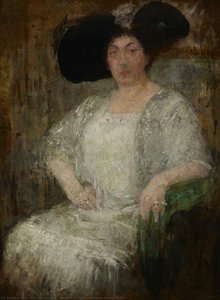
Artist Biography
The Soul Captured in Shadow: The Life of Olga Boznańska
In the quiet, atmospheric corners of late nineteenth-century European art, few names resonate with as much psychological depth and tonal subtlety as Olga Boznańska. Born in 1865 in Kraków to a Polish father and a French mother, her very existence was a bridge between two worlds. This dual heritage—the rich, historical weight of Poland and the avant-garde spirit of France—would become the cornerstone of her artistic identity. Her early years were steeped in a cultural duality that allowed her to navigate the prestigious art circles of Munich and Paris with an ease that few of her contemporaries could claim. As she matured, Boznańska did not merely paint subjects; she sought to capture the invisible essence of her sitters, creating works that feel less like static images and more like whispered secrets shared between the artist and the viewer.
Her journey through the heart of the European art scene was shaped by profound encounters with the masters of her era. Immersed in the burgeoning Impressionist movement in Paris, she absorbed the revolutionary lessons of light and color offered by figures such as Claude Monet. Yet, Boznańska possessed a temperament that resisted the purely optical experiments of pure Impressionism. Instead, she found a kindred spirit in the emotional intensity of Edvard Munch, whose ability to translate internal psychological states onto canvas deeply moved her. This synthesis of French light and Northern European introspection allowed her to develop a style that was uniquely hers—a technique defined by soft, blurred edges, a muted palette of silvery greys, deep blues, and delicate ochres, and a mastery of sfumato that lent her portraits an ethereal, almost ghostly quality.
A Mastery of Introspection and Technique
The true brilliance of Boznańska’s oeuvre lies in her ability to find profound meaning within the seemingly mundane. While many of her contemporaries sought the spectacle of grand historical narratives or the bright sunlight of plein air landscapes, Bozna and her subjects often retreated into the intimate sanctuary of the studio. Her portraits are legendary for their psychological complexity; she had an uncanny ability to strip away the social pretenses of her subjects, leaving behind a raw, contemplative vulnerability. Whether depicting a young girl lost in thought or a seasoned aristocrat, her brushwork remains incredibly nuanced, using subtle tonal gradations to build form and emotion without the need for harsh outlines.
Her technical repertoire was as diverse as her emotional range, encompassing several key elements of her artistic language:
- The Use of Tonalism: Rather than relying on high-contrast colors, she utilized a sophisticated range of mid-tones to create atmosphere and depth.
- Psychological Portraiture: Her subjects often possess an introspective gaze, inviting the viewer into their private emotional landscapes.
- Still Life as Emotion: In her still lifes, objects like flowers or simple vessels are treated with the same reverence and soulfulness as her human subjects.
- The Influence of Pastel and Oil: Her ability to manipulate different mediums allowed her to achieve both the soft, powdery textures of light and the rich, heavy shadows of deep emotion.
Legacy and Historical Significance
As a prominent figure within the Young Poland movement, Boznańska played a vital role in elevating Polish art to the international stage during a period of significant national transition. Her studio in Paris and later her return to Kraków served as more than just workspaces; they were intellectual crucibles where the boundaries of modern portraiture were pushed and redefined. She stood as a pioneer for female artists, proving that a woman could command the profound, often somber themes of psychological realism with unparalleled authority.
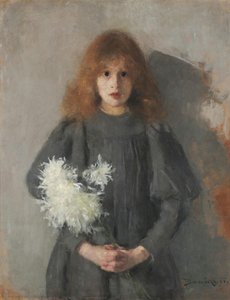
Today, her legacy is preserved not just in museums, but in the way we perceive the intersection of light and human emotion. Her masterpiece, Girl with Chrysanthemums, remains a haunting testament to her ability to render innocence through a lens of melancholy beauty. Boznańska’s work continues to captivate modern audiences because it speaks to a universal truth: that beneath the surface of every face lies a complex, beautiful, and often tragic story waiting to be told through the delicate dance of shadow and light.
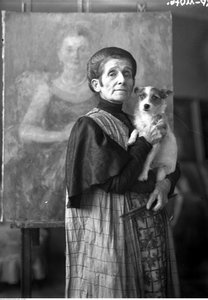
Olga Boznańska
1865 - 1940 , Poland
Quick Facts
- Artistic Movement Or Style: Impressionism
- Artists Or Movements Influenced By This Artist: ['Polish Impressionism']
- Artists Who Influenced This Artist: ['Gustav Klimt']
- Date Of Birth: 1865
- Date Of Death: 1940
- Full Name: Olga Boznańska
- Nationality: Polish
- Notable Artworks:
- Girl with Chrysanthemums
- Portrait of Gabriela Reval
- Cathedral of Pisa
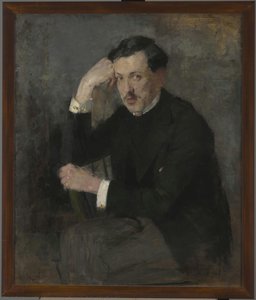
- Portrait of Faliks Manggha Jasieński
- Place Of Birth: Kraków, Poland
Related Articles

Impressionism's Masterpieces: 10 Paintings That Defined a Movement | ArtsDot
Journey through Impressionism's heart with 10 iconic paintings by Monet, Renoir & Degas. Explore light, color & the stories behind these masterpieces. Find museum-quality art reproductions and elevate your home decor on ArtsDot.com.
Fleeting Moments & Radiant Light: Exploring the Enduring Legacy of Impressionism
Explore the captivating world of Impressionism! Discover its history, key artists like Monet & Renoir, defining techniques, and lasting impact on modern art. Expert insights for collectors.
Beyond Light & Color: Impressionism vs. Post-Impressionism for the Discerning Collector
Explore the nuances of Impressionism & Post-Impressionism with . Expert insights for collectors on style, investment, and acquiring museum-quality reproductions.

Cézanne's Masterpieces: 25 Iconic Artworks to Transform Your Space
Journey through 25 iconic artworks by Paul Cézanne – a master of Impressionism and Post-Impressionism. Explore his landscapes, still lifes, and the stories behind these timeless masterpieces. Discover museum-quality reproductions & curated decor at ArtsDot.com.
Beyond Impressionism: Exploring the Emotional Depth of Post-Impressionist Painting
Explore the profound emotional depth & innovative techniques of Post-Impressionism with ArtsDot. Discover Cézanne, Van Gogh, Gauguin & more – and their lasting impact on modern art.