 Preview
 Send
Send Share
Share
 Details

 Download
 Similars
 X-Ray
X-Ray Diaporama
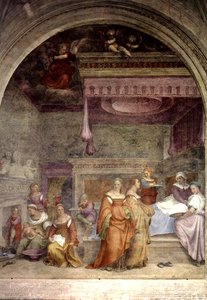
Birth of the Virgin
 Baroque
 1635
1635 164.0 x 111.0 cm
 Pinacoteca Malaspina
 Read More
Giclée / Art Print
Museum-quality giclée or canvas print with fast production and flexible finish options. ( Buy Hand Made Painting Buy Image)




































Pick from our preset sizes that match the artwork's original proportions.

You may enter your own dimensions to fit a specific frame or space. If your selected size does not match the original image's proportions, we will either crop the artwork or extend the image with a mirrored or solid-fill edge. A digital mockup will be sent for your approval before production begins.
Please note that the on-screen preview does not reflect the actual cropping or extension. Only the mockup will accurately show the final composition.
While custom sizes are available, we recommend selecting a dimension from the predefined list to preserve the original proportions.
Worldwide Delivery () in 2 weeks instead of standard 4/5 weeks. (30 August)

Free Worldwide Express Shipping

High-Quality Linen Canvas

Full Shipping Insurance

Customs Tax Refund Guarantee

True Color Matching Guarantee

60-Day Return Policy (Defects Only)

100% Money-Back Guarantee

Bulk Discount Offer
 Glass option is only available in size under 110 CM

Birth of the Virgin
Giclée / Art Print
Reproduction Size
-


Total Price
$ 63
Artistic Style and Composition
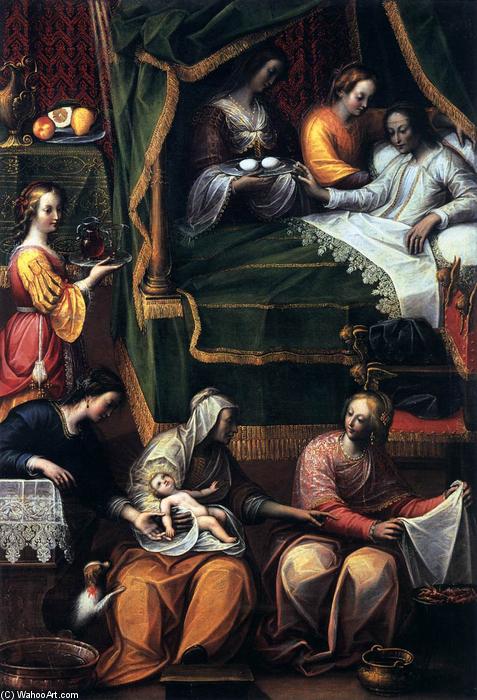
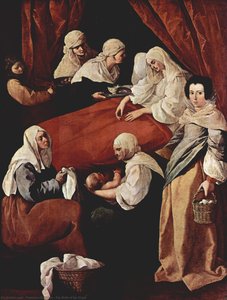
The central figure is Mary, who is being presented to her mother, St. Anne. Mary is depicted as a young girl, dressed in a white robe with a blue cloak, holding a book and a lily, symbols of purity and knowledge. The background features a rich tapestry with intricate patterns, adding depth to the scene. Various objects such as fruit, books, and religious symbols are scattered throughout the painting, contributing to its narrative. Key Features of the painting include:- Detailed depiction of figures and their attire
- Use of vibrant colors that bring life to the scene
- Attention to detail in the drapery and expressions on the faces of the characters
Artist and Museum Information
Orsola Maddalena Caccia was a talented artist who created many notable works, including Birth of the Virgin. The Pinacoteca Malaspina is a renowned museum located in Pavia, Italy, and is home to many significant artworks, including those by Rembrandt Van Rijn and Hans Holbein the Younger. For more information on these artists and their works, visit Luis Berrueco or Wikipedia.org.The Birth of the Virgin is a remarkable painting that showcases Orsola Maddalena Caccia's artistic skill and attention to detail. As a handmade oil painting reproduction, it can be appreciated in a new light, allowing art lovers to experience the beauty and significance of this masterpiece.
Related Artworks

Artist Biography
Orsola Maddalena Caccia: A Nun’s Revolutionary Art
Orsola Maddalena Caccia, born Theodora Caccia in Moncalvo, Italy, in 1596, stands as a pivotal figure in the history of art – a testament to creativity blossoming within the confines of religious life. Her journey, spanning nearly eight decades, is one of quiet revolution, challenging conventional notions about artistic practice and paving the way for women’s participation in the burgeoning world of painting during the 17th century. More than just a skilled artist, Orsola was a pioneer, an abbess, and a teacher who fundamentally shifted perspectives on the role of nuns within the church and as creators. Her legacy is not one of grand, public acclaim, but rather a slow, deliberate unveiling of a remarkable body of work that continues to captivate art historians today.A Life Shaped by Art and Faith
Orsola’s early life was deeply intertwined with the artistic traditions of her family. Born into a lineage of painters – her father, Guglielmo Caccia, was a respected artist in his own right – she received an invaluable education in technique and composition from a young age. She learned to mix pigments, study anatomy, and master the subtle nuances of perspective within her father’s studio, assisting him with preparatory sketches and secondary figures in his paintings. This apprenticeship provided a solid foundation for her future endeavors. However, Orsola's life took an unexpected turn when, at the age of twenty-four, she entered the Ursuline convent of Bianzè. This decision wasn’t merely a shift in lifestyle; it represented a profound transformation – a deliberate choice to dedicate her artistic talents to God and the community. The convent itself was strategically located on the borderlands between powerful warring states—Gonzaga, Mantua, Monferrato, and Savoy—necessitating its establishment as a safer haven for the Ursuline sisters. Her father’s foresight in securing permission and providing resources for this new foundation ensured that Orsola's artistic path would continue within the walls of her childhood home.The Convent Studio: A Space for Innovation
Upon relocating to the newly founded convent in Moncalvo, Orsola established a dedicated studio—a remarkable achievement for a woman operating within the constraints of religious life. This wasn’t simply a room where she painted; it was a center of artistic production and instruction. She welcomed novitiates into her workshop, imparting her knowledge and fostering a new generation of female artists within the convent community. This act of mentorship was revolutionary in itself – challenging the prevailing belief that women were incapable of serious artistic training or independent creative expression. Orsola’s influence extended beyond her immediate students; she became a respected figure within the local art scene, receiving commissions from patrons both near and far, including members of the nobility. Her work reflected a blend of Mannerist influences inherited from her father, combined with a distinctly personal style that emphasized emotional depth and meticulous detail.A Pioneer in Still Life and Religious Iconography
Orsola’s artistic output spanned several distinct genres: religious altarpieces, intimate devotional paintings, and, most notably, pioneering still lifes. While the Italian art world was beginning to embrace the dramatic innovations of Caravaggio and other Baroque masters, Orsola's work offered a quieter, more contemplative approach. Her still lifes, particularly those created later in her career, are considered groundbreaking for their time – showcasing an unprecedented level of detail and realism in depicting flowers, fruits, and everyday objects. These weren’t merely decorative elements; they were imbued with symbolic meaning, reflecting the convent's devotion to nature and God’s creation. Her religious paintings, often featuring depictions of the Virgin Mary and Christ Child, are characterized by a serene beauty and a profound sense of spirituality. The use of rich colors, intricate patterns, and carefully rendered figures creates an atmosphere of reverence and contemplation. She skillfully blended traditional iconography with subtle personal touches, imbuing her works with a unique emotional resonance.Legacy and Recognition
Orsola Maddalena Caccia’s life and work remained largely obscured for centuries after her death in 1676. Her contributions were overshadowed by the prominence of male artists and the limitations placed upon women within the art world. However, in recent decades, scholars have begun to recognize Orsola's significance as a truly exceptional artist – a woman who defied expectations, established a thriving artistic practice within a religious context, and profoundly influenced the development of both religious painting and still life in Italy. Her legacy is not one of fleeting fame but rather enduring recognition as a pioneer, an innovator, and a testament to the power of creativity to transcend social boundaries. Today, her paintings are treasured for their beauty, their technical skill, and their poignant reflection of a remarkable woman’s journey – a nun who dared to paint her way into art history.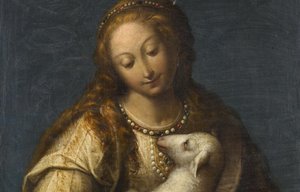
Orsola Maddalena Caccia
1596 - 1676 , Italy
Quick Facts
- Artistic Movement Or Style: Mannerism, Religious Painting
- Artists Or Movements Influenced By This Artist: ['Ursuline nuns']
- Artists Who Influenced This Artist: ['Guglielmo Caccia (father)']
- Date Of Birth: 1596-12-04
- Date Of Death: 1676
- Full Name: Orsola Maddalena Caccia
- Nationality: Italian
- Notable Artworks:
- Birth of the Virgin
- St. Luke in his Studio
- Place Of Birth: Moncalvo, Italy
Related Articles

Baroque Drama: Bringing Opulence & Emotion into Contemporary Interiors
Explore the opulent world of Baroque interior design! Discover key elements, modern applications & how to bring dramatic elegance into your home with 's authentic reproductions.

The Dramatic Flourish: Exploring the Baroque Movement's Enduring Legacy in Art History
Explore the dramatic world of Baroque art! Discover iconic artists like Caravaggio & Rubens, defining techniques, and its lasting impact on art history. Expert insights for collectors & enthusiasts at ArtsDot.

Baroque Masterpieces: 10 Paintings That Defined an Era |
Journey through the drama & grandeur of Baroque art! Explore 10 masterpieces by Caravaggio, Rembrandt, Rubens & more. Discover stunning oil paintings, rich colors & timeless stories. Find museum-quality reproductions at .

The Visceral Stage: Exploring Dramatic Narratives & Emotional Intensity in Baroque Art
Explore the dramatic world of Baroque art! Discover iconic masters like Caravaggio & Rembrandt, their techniques, and the movement's lasting impact. Expert insights for collectors & enthusiasts at ArtsDot.

Theatricality & Triumph: Baroque Drama in Painting & Sculpture
Explore the dramatic world of Baroque art! Discover its history, defining characteristics, & lasting influence on painting & sculpture. Expert insights into Caravaggio, Zurbarán, and Bernini – plus high-quality reproductions at ArtsDot.