![Autorretrato [self-portrait] — Oscar Pereira Da Silva](/media/artworks/images/full/e7/e0/e7e0073afd984e71817c078a2146f517.Jpg)
 Preview
 Send
Send Share
Share
 Details

 Download
 Similars
 X-Ray
X-Ray Diaporama
Autorretrato [Self-Portrait]
 Acrylic On Canvas
- WallArt
 1936
1936 28.0 x 20.0 cm
 Pinacoteca do Estado de São Paulo
 Read More
Hand Made Oil Reproduction
Hand-painted oil on canvas in your size and frame, made to order by our artists. ( Buy Print Buy Image)




P118B $10

P118H $10

P118W $10

P438Z $10

P508JH $12

P508YH $12

P805H $10

P805Z $10

P919BZ $10

P919G $10

P919XJ $10

P959ZH $10

P968JZ $12

W106C $8

W218G $10

W218JH $8

W218Y $10

W307PJ $10

W316G $10

W316PJ $8

W316Y $10

W398PJ $8

W4111J $10

W500HY $15

W500JH $15

W692G $12

W849H $8

W940BG $15

W953PJ $8




Pick from our preset sizes that match the artwork's original proportions.

You may enter your own dimensions to fit a specific frame or space. If your selected size does not match the original image's proportions, we will either crop the artwork or extend the painting with additional hand-painted elements. A digital mockup will be sent for your approval before production begins.
Please note that the on-screen preview does not reflect the actual cropping or extension. Only the mockup will accurately show the final composition.
While custom sizes are available, we recommend selecting a dimension from the predefined list to preserve the original proportions.
After order, ArtsDot.com team will email client for instructions and provide a mockup preview
Worldwide Delivery () in 3/4 weeks instead of standard 5 weeks. (16 August). No compromise on quality.

Free Worldwide Express Shipping

High-Quality Linen Canvas

Full Shipping Insurance

Customs Tax Refund Guarantee

True Color Matching Guarantee

60-Day Return Policy (Defects Only)

100% Money-Back Guarantee

Bulk Discount Offer
 Glass option is only available in size under 110 CM

Autorretrato [Self-Portrait]
Reproduction Medium
Reproduction Size
-


Total Price
$ 263
Artwork Description
Oscar Pereira da Silva: A Brushstroke Across Brazilian History
Oscar Pereira da Silva (1867-1939) stands as a cornerstone of Brazilian artistic heritage, an artist whose oeuvre embodies the spirit of his era – transitioning from imperial grandeur to republican idealism. Born in São Fidélis, Brazil, he embarked on his artistic journey at the Imperial Academy of Fine Arts in 1882, immersing himself in the rigorous traditions championed by masters like Eliseu Visconti and Eduardo Sá, shaping him into a craftsman deeply rooted in classical aesthetics.
- Style: Silva’s distinctive style is characterized by an “antique” aesthetic—a deliberate homage to European artistic conventions prevalent during the Belle Époque. This stylistic choice reflects a broader cultural fascination with reviving idealized representations of antiquity, mirroring anxieties about national identity and progress amidst rapid societal change.
- Technique: Primarily employing oil paint on panel, Silva meticulously executed his canvases with painstaking detail, prioritizing realism combined with expressive brushwork. His technique demonstrates an unwavering commitment to capturing the nuances of light and shadow, resulting in images imbued with palpable atmosphere.
- Historical Context: Silva’s artistic output coincided with Brazil's pivotal shift from monarchy to republic (1889), a period marked by fervent debates over national values and aspirations. His paintings frequently depict historical scenes—often commemorating significant moments of Brazilian history—serving as visual narratives that reinforce patriotic sentiment and solidify the nation’s collective memory.
- Symbolism: Recurring motifs in Silva's works – such as monumental figures, idealized landscapes, and meticulously rendered architectural details – carry symbolic weight. These elements transcend mere depiction; they convey profound ideas about heroism, virtue, and the enduring legacy of Brazilian culture.
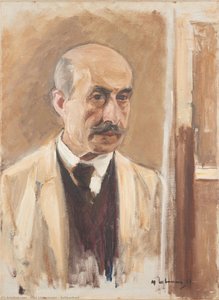
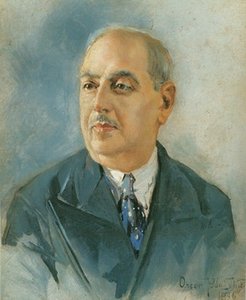
“Autorretrato” (Self-Portrait), completed in 1936, exemplifies Silva’s artistic vision. The painting portrays a man with a mustache dressed in formal attire—a suit and tie—facing the viewer with an earnest gaze. This portrait isn't simply a likeness; it’s a carefully constructed statement about identity and self-awareness, reflecting Silva’s own intellectual engagement with philosophical currents of his time.
The subdued palette – dominated by earthy tones – contributes to the painting’s contemplative mood. Silva skillfully utilizes chiaroscuro—the dramatic interplay between light and dark—to sculpt the figure's form and imbue it with psychological depth. The wall in the background serves as a grounding element, anchoring the composition while simultaneously hinting at themes of solitude and introspection.
Silva’s legacy extends beyond his individual artworks. He championed the revival of academic painting within Brazil, fostering a tradition that prioritized technical mastery and intellectual rigor. His influence can be discerned in subsequent generations of Brazilian artists who sought to honor the artistic heritage of Europe while forging their own distinctive voices—a testament to Silva's enduring contribution to Brazilian art history.
A reproduction of “Autorretrato” offers more than just a visual representation; it invites contemplation on themes of selfhood, tradition, and the artist’s role in shaping cultural memory. Its meticulous execution and evocative atmosphere resonate with collectors and interior designers alike—a timeless piece that speaks to the enduring power of art.
Related Artworks
![[hercule Florence] — Oscar Pereira Da Silva, Academic Portraiture](/media/artworks/images/thumbnails/5b/23/5b231923ef0640b6aa10e4a8130b614d.jpg)
![L’enlèvement De Psyché [the Abduction Of Psyche] — Oscar Pereira Da Silva, Academic Historicism](/media/artworks/images/thumbnails/cf/91/cf9167e0d9b94794a7daf14b76bd4566.jpg)

Artist Biography
A Brushstroke Across Brazilian History: The Life and Art of Oscar Pereira da Silva
Oscar Pereira da Silva, born in the small Brazilian town of São Fidélis in 1867, emerged as a pivotal figure in the nation’s artistic landscape. His life unfolded across a period of significant transformation for Brazil, from the waning days of the Empire to the burgeoning Republic, and his art served as both a reflection of these changes and a deliberate engagement with historical narrative. From an early age, a passion for drawing ignited within him, leading him to enroll at the Imperial Academy of Fine Arts in 1882. There, under the tutelage of esteemed artists like Eliseu Visconti, Eduardo Sá, and João Batista da Costa, he honed his skills, laying the foundation for a career that would span decades and leave an indelible mark on Brazilian art. His academic training instilled within him a reverence for classical techniques, a characteristic that would define much of his later work. He wasn’t merely replicating styles; he was absorbing principles – composition, anatomy, light and shadow – that allowed him to articulate his own artistic vision.From Parisian Salons to São Paulo's Artistic Heart
Pereira da Silva’s ambition extended beyond the Brazilian borders. In 1889, he embarked on a journey to Paris, securing a coveted scholarship funded by Emperor Pedro II. This period at the École des Beaux-Arts proved formative, placing him within the orbit of influential masters like Jean-Léon Gérôme and Léon Bonnat. However, unlike many of his contemporaries who embraced the avant-garde movements sweeping through Europe, Pereira da Silva remained steadfast in his commitment to a more traditional aesthetic. He didn’t reject innovation outright, but rather chose to refine and adapt established techniques to suit his own artistic goals. Upon returning to Brazil in 1896, he settled in São Paulo, quickly becoming a central figure in the city's burgeoning art scene. He not only practiced his art but also dedicated himself to education, teaching at institutions like the São Paulo School of Arts and Crafts and establishing the Núcleo Artístico, which later evolved into the School of Fine Arts. This commitment to pedagogy underscores his belief in the importance of artistic training and the preservation of classical techniques.Themes of Nationhood and Artistic Style
Pereira da Silva’s oeuvre is remarkably diverse, encompassing historical paintings, portraits, religious scenes, genre works, still lifes, and landscapes. However, a recurring theme throughout his career is the exploration of Brazilian history and identity. As nationalist sentiments gained momentum in Brazil during the early 20th century, he responded with grand-scale historical compositions such as *O Desembarque de Cabral em Porto Seguro* (The Landing of Cabral at Porto Seguro) and *Fundação de São Paulo* (The Foundation of São Paulo). These works weren’t simply illustrations of past events; they were carefully constructed narratives designed to evoke a sense of national pride and collective memory. Beyond his historical paintings, Pereira da Silva excelled in portraiture, capturing the likenesses of prominent figures within São Paulo society. His portraits are characterized by their meticulous detail, psychological insight, and elegant compositions. He also produced numerous religious works, often commissioned for churches and chapels, showcasing his mastery of composition and color. Notably, he deliberately eschewed the incorporation of Brazilian folk traditions into his art, opting instead for an “antique style” that drew inspiration from European masters. This stylistic choice has been a subject of debate among art historians, with some criticizing it as being overly academic and detached from Brazil’s cultural realities, while others praise it for its technical brilliance and artistic integrity.Legacy and Enduring Influence
Oscar Pereira da Silva passed away in São Paulo in 1939, leaving behind a rich legacy that continues to resonate within Brazilian art history. His works are prominently displayed at the Pinacoteca do Estado de São Paulo and the Museu do Ipiranga, offering visitors a comprehensive overview of his artistic achievements. While his deliberate rejection of overtly “Brazilian” themes may have drawn criticism from some quarters, his technical skill, compositional mastery, and dedication to historical narrative cannot be denied. He represents a fascinating intersection of European academic tradition and Brazilian national identity, embodying the complexities and contradictions of a nation grappling with its own cultural formation. His influence can be seen in the work of subsequent generations of Brazilian artists who sought to balance artistic innovation with respect for established techniques. Pereira da Silva’s art serves as a powerful reminder that history is not merely a collection of facts, but a living narrative constantly being reinterpreted and reimagined through the eyes of artists. His paintings invite us to contemplate Brazil's past, present, and future, prompting us to reflect on our own place within the grand sweep of time.Exploring Further
- ArtsDot: Discover a curated selection of his artworks: https://ArtsDot.com/@/oscar-pereira-da-silva
- Wikipedia: Delve deeper into his life and career: https://en.wikipedia.org/wiki/oscar_pereira_da_silva
- Museu do Ipiranga Collection (via ArtsDot): Explore his works within this historic museum: /en/art/show/art-d3bb4k-en/
- Pinacoteca do Estado de São Paulo Exhibitions (via ArtsDot): Discover his pieces showcased in this renowned gallery: /en/art/show/art-d3bqyz-en/
Oscar Pereira da Silva
1867 - 1939 , Brazil
Quick Facts
- Artistic Movement Or Style: Antique style
- Artists Who Influenced This Artist:
- Eliseu Visconti
- Jean-Léon Gérôme
- Léon Bonnat
- Date Of Birth: August 29, 1867
- Date Of Death: January 17, 1939
- Full Name: Oscar Pereira da Silva
- Nationality: Brazilian
- Notable Artworks:
- Paisagem
- Nu de mulher
- Escrava romana
- Place Of Birth: São Fidelis, Brazil
Related Articles
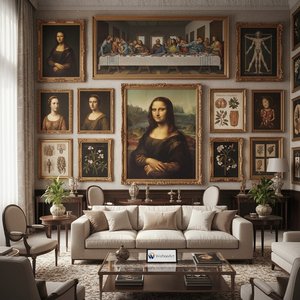
Leonardo da Vinci's Masterpieces: Explore 25 Iconic Artworks for Your Home | ArtsDot
Journey through Leonardo da Vinci's genius with our curated selection of 25 iconic artworks. Explore the stories behind Mona Lisa, The Last Supper & more Renaissance masterpieces. Find museum-quality art reproductions for your home at ArtsDot.com.
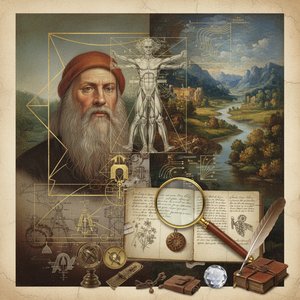
Leonardo da Vinci: A Renaissance Master’s Synthesis of Art, Science & Human Observation – Reinterpreted for the Collector
Explore Leonardo da Vinci’s timeless masterpieces with ArtsDot. Discover insights into his art, science, and legacy – trusted expertise for discerning collectors seeking authentic reproductions & investment opportunities.
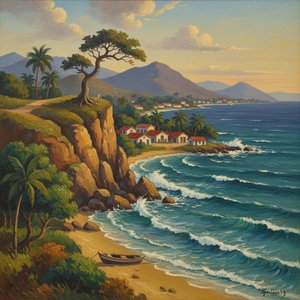
Benedito Calixto: A Brazilian Modernist's Landscape of Memory & National Identity
Explore the captivating world of Benedito Calixto, a pivotal Brazilian Modernist painter. Discover his iconic landscapes, the story behind the famous Bandeirante portrait, and his lasting impact on Brazilian national identity. Learn more at ArtsDot.
Renaissance Humanism's Greatest Art: 10 Masterpieces for Your Home
Explore 10 Renaissance Humanism masterpieces by Leonardo da Vinci, Michelangelo & Raphael. Discover the stories behind these iconic paintings & sculptures and bring timeless art into your home with museum-quality reproductions from ArtsDot.com. Explore the full collection online!
Alceu de Paula Penna: A Synthesis of Brazilian Modernism & Poetic Abstraction
Explore the captivating world of Alceu de Paula Penna, a pivotal figure in Brazilian Modernism. Discover his innovative concrete poetry & influence on Latin American art history. Expert insights for collectors.
![Autorretrato [Self-Portrait]](/media/artworks/images/thumbnails/07/0f/070f3b1a11d645f9961d0d4301220c29.jpg)
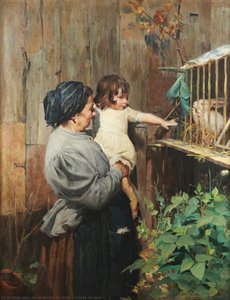
![Escrava Romana [Roman Slave]](/media/artworks/images/thumbnails/06/ab/06abedc1375e4ef9aec80538ef2e4bf8.jpg)