

 Preview
 Send
Send Share
Share
 Details

 Download
 Similars
 X-Ray
X-Ray Diaporama
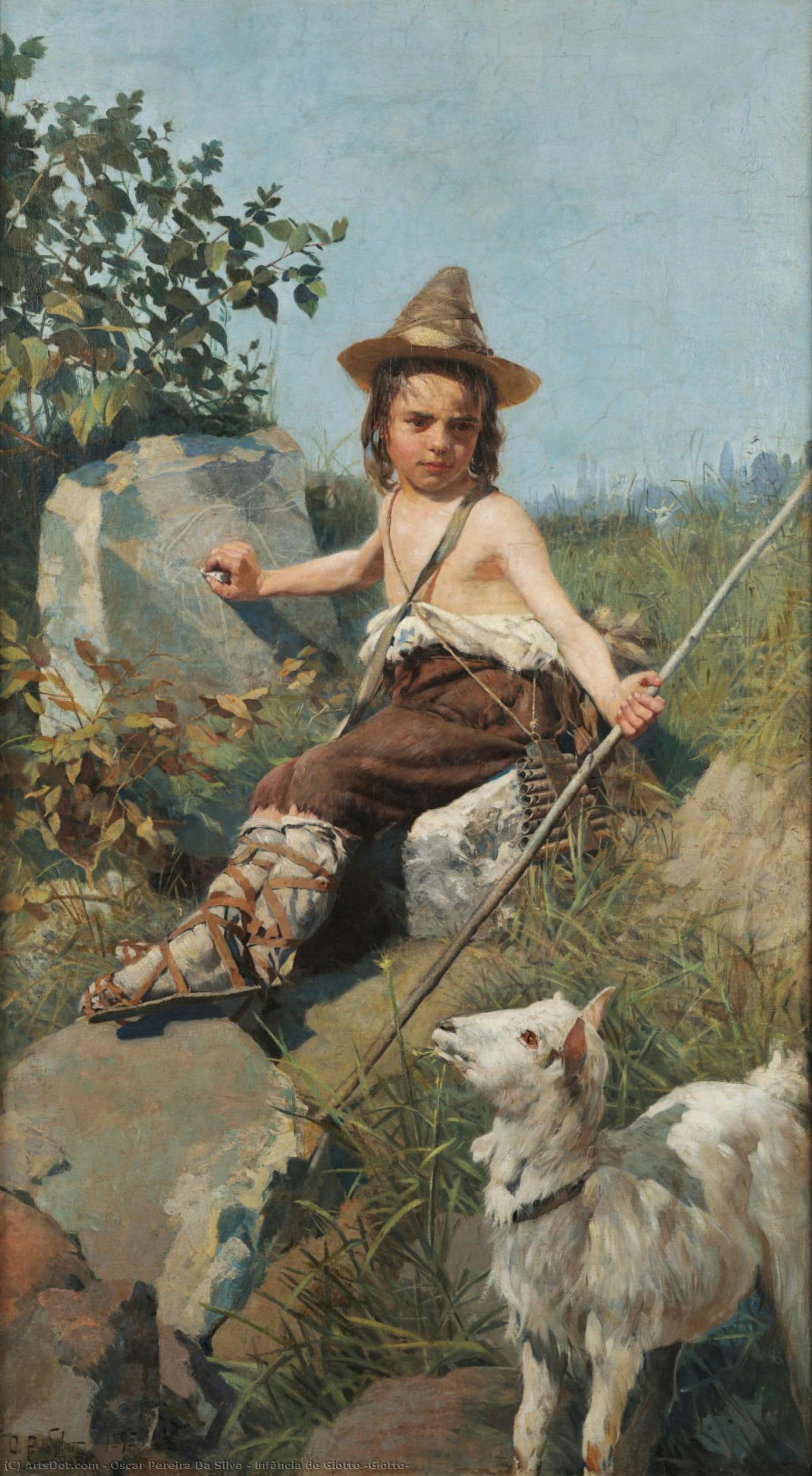
Infância de Giotto [Giotto
 Acrylic On Canvas
- WallArt
- Antique Style Painting
 1895
1895 138.0 x 75.0 cm
 Pinacoteca do Estado de São Paulo
 Read More
Purchase a high-resolution, enhanced digital image, far superior to the online preview.
Each file is meticulously prepared by our in-house specialists using advanced tools and expert manual retouching. We ensure every image has exceptional clarity, precise color accuracy, and fine detail.
The final file is delivered via email within 72 hours, optimized for immediate use in professional, editorial, and print environments. This is the same quality trusted by top-tier design studios, publishers, and galleries.
Digital Image
Download a high-resolution file for personal display, printing, and creative projects. ( Buy Print Buy Hand Made Painting)
Included in Every Digital Image Order
Expert Digital Delivery, Guaranteed
When you choose ArtsDot.com, you're not just getting an image - you're receiving a professionally enhanced digital artwork, crafted with precision and backed by a satisfaction guarantee. Here's everything that comes with your order, automatically:

Fast Email Delivery
Your high-resolution digital image file will be emailed to you within 72 hours of ordering - ready for immediate use.

AI-Enhanced Digital File
Your artwork is professionally optimized using advanced AI tools and manual editing, ensuring maximum detail, clarity, and color accuracy.

Free Lifetime Re-Delivery
Accidentally deleted or lost your file? No worries - we'll resend it to you anytime, free of charge.

No Import Fees - Ever
Enjoy your artwork instantly with zero customs, duties, or delivery fees - digital downloads are always tax-free.

Color Accuracy Guarantee
We ensure your digital image reflects the original colors as closely as possible using professional tools and color management.

60-Day Satisfaction Guarantee
If you're not satisfied with your digital image, we'll revise it or refund 100% within 60 days - no questions asked.

100% Money-Back Guarantee
Not satisfied? Get a full refund within 60 days of receiving your digital file - no questions asked.

Bulk Order Discounts
Buy 3 images, save 10% - Buy 5, save 15% - Buy 10+, save 20%. Great for creative projects, galleries, and agencies.
Collectible Description
The Genesis of a Vision: Oscar Pereira da Silva’s “Infância de Giotto”
Oscar Pereira da Silva's "Infância de Giotto" (1895) isn’t merely a portrait; it’s a carefully constructed narrative, a poignant meditation on artistic lineage and the enduring spirit of innovation. The painting captures a young Giotto di Bondone, born in Tuscany around 1266, as he sketches a goat amidst the rolling hills of his childhood village – a scene meticulously rendered by Silva with a distinctively antique style that harkens back to the idealized forms of the Renaissance masters.
Silva’s choice to depict Giotto at such a formative age is profoundly significant. It's not a straightforward likeness, but rather an evocation of the artist’s early passion for observation and drawing – a foundational element that would ultimately shape his revolutionary approach to painting. The boy’s posture, alert yet contemplative, suggests a nascent talent, a spark of genius already evident in his hand poised over the chalk.
A Dialogue with Vasari: Reimagining History
The painting is deeply rooted in Giorgio Vasari's “Lives of the Most Excellent Painters,” which served as Silva’s primary source. Vasari famously recounted how Giotto, a humble shepherd boy, discovered his artistic abilities by sketching animals on the hillsides near Florence – a story that Silva brilliantly translates onto canvas. While acknowledging this foundational tale, Silva subtly diverges from Vasari's account, replacing the sharp stone with a piece of chalk and swapping the sheep for goats, injecting a touch of Brazilian realism into the Italian narrative.
This reimagining isn’t simply decorative; it reflects Silva’s own artistic sensibilities and his desire to connect the legacy of Giotto with the burgeoning art scene in Brazil. He skillfully blends elements of Italian Renaissance idealism with a distinctly Brazilian atmosphere, creating a unique visual dialogue between two distinct cultural traditions.
Technique and Atmosphere: A Symphony of Color
Silva’s masterful technique is immediately apparent in the painting's subdued yet luminous palette. Dominated by cool blues and greens, the composition exudes a sense of tranquility and serenity. The artist employs a delicate layering of paint, creating subtle gradations of tone that imbue the scene with depth and atmosphere. Notice how the light catches on the boy’s face and the goats’ fur, adding a tactile quality to the image.
The background, rendered in broad strokes, establishes a sense of rural simplicity – a timeless landscape that anchors the narrative within its historical context. The inclusion of two dogs further enhances the scene's charm, suggesting companionship and a connection to nature. Silva’s attention to detail is remarkable, particularly in capturing the boy’s expressive eyes and the subtle nuances of his posture.
Symbolism and Emotional Resonance
“Infância de Giotto” transcends its literal depiction to become a powerful symbol of artistic inspiration and the transformative power of observation. The painting speaks to the enduring legacy of Giotto, not just as a painter but as a pioneer who liberated art from the constraints of medieval tradition. It also celebrates the potential for creativity to emerge from humble beginnings – a message that resonates deeply with viewers today.
Beyond its historical and artistic significance, the painting evokes a sense of nostalgia and wonder. The image invites us to reflect on our own childhoods, our earliest encounters with art, and the moments when we first discovered our passions. “Infância de Giotto” is more than just a beautiful painting; it’s a timeless testament to the human spirit.
Related Artworks
![[hercule Florence] — Oscar Pereira Da Silva, Academic Portraiture](/media/artworks/images-thumb/6e/59/6e59d1f45a12e06cc4a46aa211b8e19f.jpg)
![L’enlèvement De Psyché [the Abduction Of Psyche] — Oscar Pereira Da Silva, Academic Historicism](/media/artworks/images-thumb/5f/a0/5fa0456cb481bd203147aae9eef9336a.jpg)
![Pas Mèche [nothing Doing] — Jules Bastien-lepage, Naturalist Painting](/media/artworks/images-thumb/01/c8/01c885499ff56bb2e6383eef008f6c1b.jpg)
![Autorretrato [self-portrait] — Oscar Pereira Da Silva](/media/artworks/images-thumb/f8/2c/f82c36e3c45761e537cad75f812a5b33.jpg)
Artist Biography
A Brushstroke Across Brazilian History: The Life and Art of Oscar Pereira da Silva
Oscar Pereira da Silva, born in the small Brazilian town of São Fidélis in 1867, emerged as a pivotal figure in the nation’s artistic landscape. His life unfolded across a period of significant transformation for Brazil, from the waning days of the Empire to the burgeoning Republic, and his art served as both a reflection of these changes and a deliberate engagement with historical narrative. From an early age, a passion for drawing ignited within him, leading him to enroll at the Imperial Academy of Fine Arts in 1882. There, under the tutelage of esteemed artists like Eliseu Visconti, Eduardo Sá, and João Batista da Costa, he honed his skills, laying the foundation for a career that would span decades and leave an indelible mark on Brazilian art. His academic training instilled within him a reverence for classical techniques, a characteristic that would define much of his later work. He wasn’t merely replicating styles; he was absorbing principles – composition, anatomy, light and shadow – that allowed him to articulate his own artistic vision.From Parisian Salons to São Paulo's Artistic Heart
Pereira da Silva’s ambition extended beyond the Brazilian borders. In 1889, he embarked on a journey to Paris, securing a coveted scholarship funded by Emperor Pedro II. This period at the École des Beaux-Arts proved formative, placing him within the orbit of influential masters like Jean-Léon Gérôme and Léon Bonnat. However, unlike many of his contemporaries who embraced the avant-garde movements sweeping through Europe, Pereira da Silva remained steadfast in his commitment to a more traditional aesthetic. He didn’t reject innovation outright, but rather chose to refine and adapt established techniques to suit his own artistic goals. Upon returning to Brazil in 1896, he settled in São Paulo, quickly becoming a central figure in the city's burgeoning art scene. He not only practiced his art but also dedicated himself to education, teaching at institutions like the São Paulo School of Arts and Crafts and establishing the Núcleo Artístico, which later evolved into the School of Fine Arts. This commitment to pedagogy underscores his belief in the importance of artistic training and the preservation of classical techniques.Themes of Nationhood and Artistic Style
Pereira da Silva’s oeuvre is remarkably diverse, encompassing historical paintings, portraits, religious scenes, genre works, still lifes, and landscapes. However, a recurring theme throughout his career is the exploration of Brazilian history and identity. As nationalist sentiments gained momentum in Brazil during the early 20th century, he responded with grand-scale historical compositions such as *O Desembarque de Cabral em Porto Seguro* (The Landing of Cabral at Porto Seguro) and *Fundação de São Paulo* (The Foundation of São Paulo). These works weren’t simply illustrations of past events; they were carefully constructed narratives designed to evoke a sense of national pride and collective memory. Beyond his historical paintings, Pereira da Silva excelled in portraiture, capturing the likenesses of prominent figures within São Paulo society. His portraits are characterized by their meticulous detail, psychological insight, and elegant compositions. He also produced numerous religious works, often commissioned for churches and chapels, showcasing his mastery of composition and color. Notably, he deliberately eschewed the incorporation of Brazilian folk traditions into his art, opting instead for an “antique style” that drew inspiration from European masters. This stylistic choice has been a subject of debate among art historians, with some criticizing it as being overly academic and detached from Brazil’s cultural realities, while others praise it for its technical brilliance and artistic integrity.Legacy and Enduring Influence
Oscar Pereira da Silva passed away in São Paulo in 1939, leaving behind a rich legacy that continues to resonate within Brazilian art history. His works are prominently displayed at the Pinacoteca do Estado de São Paulo and the Museu do Ipiranga, offering visitors a comprehensive overview of his artistic achievements. While his deliberate rejection of overtly “Brazilian” themes may have drawn criticism from some quarters, his technical skill, compositional mastery, and dedication to historical narrative cannot be denied. He represents a fascinating intersection of European academic tradition and Brazilian national identity, embodying the complexities and contradictions of a nation grappling with its own cultural formation. His influence can be seen in the work of subsequent generations of Brazilian artists who sought to balance artistic innovation with respect for established techniques. Pereira da Silva’s art serves as a powerful reminder that history is not merely a collection of facts, but a living narrative constantly being reinterpreted and reimagined through the eyes of artists. His paintings invite us to contemplate Brazil's past, present, and future, prompting us to reflect on our own place within the grand sweep of time.Exploring Further
- ArtsDot: Discover a curated selection of his artworks: https://ArtsDot.com/@/oscar-pereira-da-silva
- Wikipedia: Delve deeper into his life and career: https://en.wikipedia.org/wiki/oscar_pereira_da_silva
- Museu do Ipiranga Collection (via ArtsDot): Explore his works within this historic museum: /en/art/show/art-d3bb4k-en/
- Pinacoteca do Estado de São Paulo Exhibitions (via ArtsDot): Discover his pieces showcased in this renowned gallery: /en/art/show/art-d3bqyz-en/
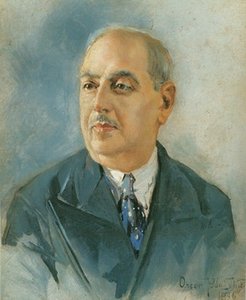
Oscar Pereira da Silva
1867 - 1939 , Brazil
Quick Facts
- Artistic Movement Or Style: Antique style
- Artists Who Influenced This Artist:
- Eliseu Visconti
- Jean-Léon Gérôme
- Léon Bonnat
- Date Of Birth: August 29, 1867
- Date Of Death: January 17, 1939
- Full Name: Oscar Pereira da Silva
- Nationality: Brazilian
- Notable Artworks:
- Paisagem
- Nu de mulher
- Escrava romana
- Place Of Birth: São Fidelis, Brazil

