

 Preview
 Send
Send Share
Share
 Details

 Download
 Similars
 X-Ray
X-Ray Diaporama
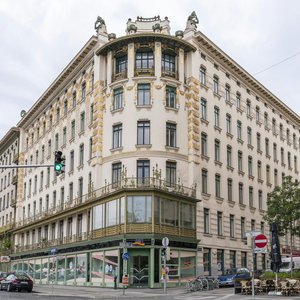
Medallion House in Vienna, Austria


 Read More
Purchase a high-resolution, enhanced digital image, far superior to the online preview.
Each file is meticulously prepared by our in-house specialists using advanced tools and expert manual retouching. We ensure every image has exceptional clarity, precise color accuracy, and fine detail.
The final file is delivered via email within 72 hours, optimized for immediate use in professional, editorial, and print environments. This is the same quality trusted by top-tier design studios, publishers, and galleries.
Digital Image
Download a high-resolution file for personal display, printing, and creative projects. ( Buy Print Buy Hand Made Painting)
Included in Every Digital Image Order
Expert Digital Delivery, Guaranteed
When you choose ArtsDot.com, you're not just getting an image - you're receiving a professionally enhanced digital artwork, crafted with precision and backed by a satisfaction guarantee. Here's everything that comes with your order, automatically:

Fast Email Delivery
Your high-resolution digital image file will be emailed to you within 72 hours of ordering - ready for immediate use.

AI-Enhanced Digital File
Your artwork is professionally optimized using advanced AI tools and manual editing, ensuring maximum detail, clarity, and color accuracy.

Free Lifetime Re-Delivery
Accidentally deleted or lost your file? No worries - we'll resend it to you anytime, free of charge.

No Import Fees - Ever
Enjoy your artwork instantly with zero customs, duties, or delivery fees - digital downloads are always tax-free.

Color Accuracy Guarantee
We ensure your digital image reflects the original colors as closely as possible using professional tools and color management.

60-Day Satisfaction Guarantee
If you're not satisfied with your digital image, we'll revise it or refund 100% within 60 days - no questions asked.

100% Money-Back Guarantee
Not satisfied? Get a full refund within 60 days of receiving your digital file - no questions asked.

Bulk Order Discounts
Buy 3 images, save 10% - Buy 5, save 15% - Buy 10+, save 20%. Great for creative projects, galleries, and agencies.
Collectible Description
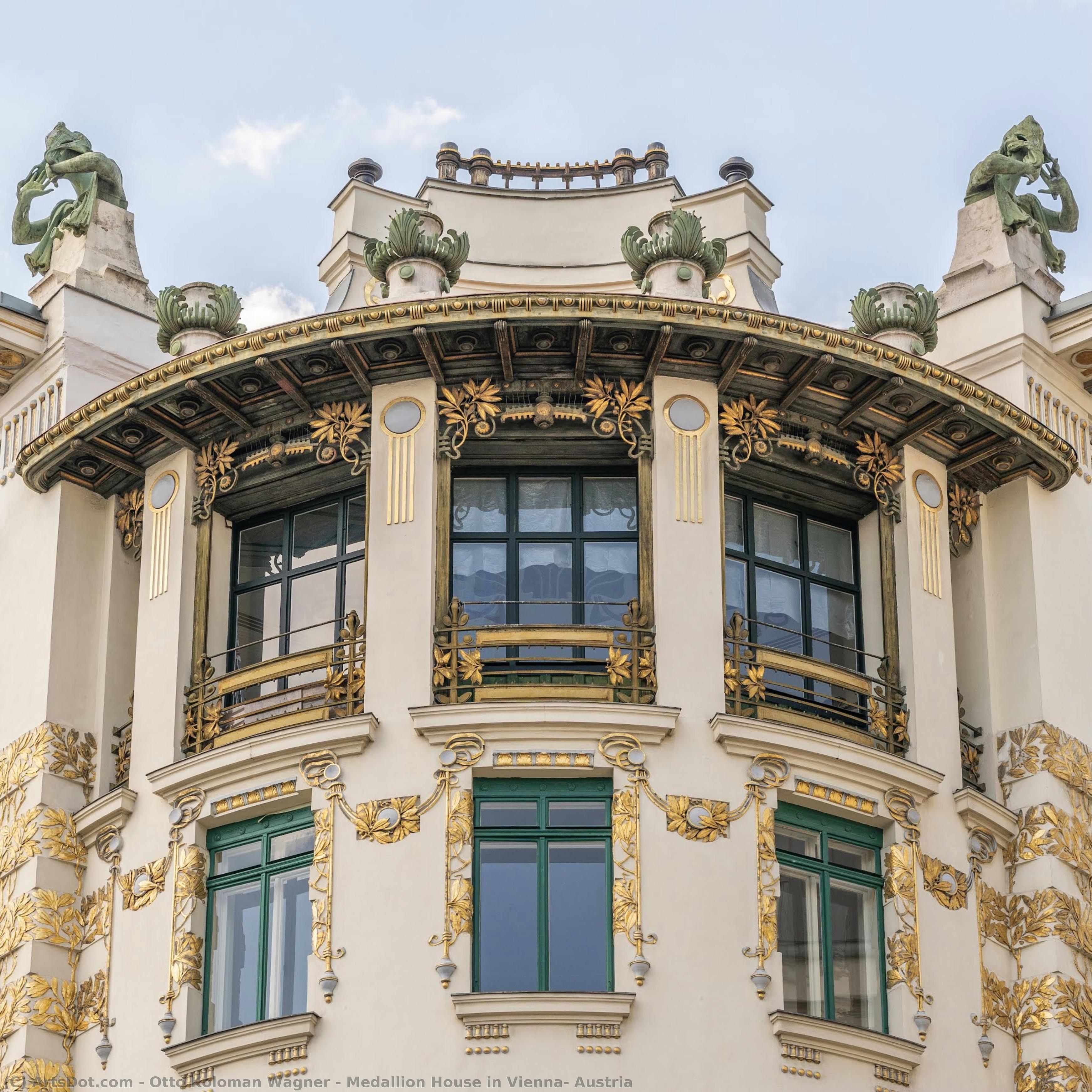
Medallion House in Vienna, Austria: A Symphony of Secession Style
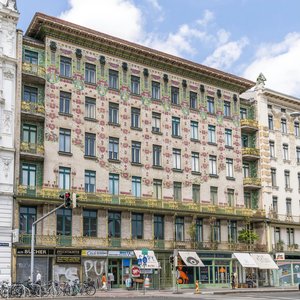
Vienna’s Naschmarkt side is graced by an architectural marvel—the Medallion House, designed by Otto Koloman Wagner and completed in 1899. More than just bricks and mortar, this building embodies the spirit of the Vienna Secession movement, a bold reaction against academic tradition and a fervent embrace of modern aesthetics. Its striking façade immediately captivates the eye with its opulent Majolica tile cladding—a testament to Wagner’s visionary collaboration with Alois Ludwig—and speaks volumes about the artistic fervor of the era.- Style: Secession Style – Characterized by geometric forms, bold colors, and stylized ornamentation, rejecting historical imitation in favor of expressive abstraction.
- Material: Majolica Tiles – Produced by Wienerberger, these vibrant tiles dominate the building’s exterior, showcasing intricate floral motifs inspired by Japanese art and reflecting a fascination with natural beauty.
- Architectural Features: Rounded Corner – Wagner deliberately broke away from the straight lines of classical architecture, opting for a curved corner that creates visual dynamism and emphasizes the building's presence on the streetscape.
Wagner’s Vision: Beyond Decoration
Otto Koloman Wagner wasn’t merely constructing buildings; he was crafting experiences. Influenced by August Sicardsburg and Eduard von der Nüll, Wagner championed “rational expression,” arguing that architecture should serve its purpose while simultaneously conveying artistic ideas. This philosophy is palpable in every detail of the Medallion House—from the soaring ironwork balconies to the meticulously crafted interior spaces—demonstrating a commitment to functionality intertwined with aesthetic grandeur. Wagner’s aim was to elevate urban living, creating spaces that stimulated both intellect and emotion.- Wagner's Influence: Wagner’s belief in “rational expression” profoundly impacted architectural thought, paving the way for subsequent modernist movements.
- Collaboration with Moser: Koloman Moser’s gilded stucco medallions—featuring serene women and floral swirls—added a layer of symbolic richness to the façade, reflecting Wagner's desire to infuse buildings with artistic meaning.
- Symbolism: The stylized figures on the roof ("The Criers") convey themes of sorrow and contemplation, mirroring Wagner’s preoccupation with human emotion and spirituality.
A Corner Piece of Viennese History
Located at Linke Wienzeile 38 and Köstlergasse 3, the Medallion House stands as a landmark of Vienna's cultural heritage. Completed during World War II, it was seized by the Kohn family after their exile—a poignant reminder of artistic endeavors disrupted by political upheaval. Today, it houses a bank, yet retains its original splendor thanks to meticulous preservation efforts. Its €100 gold coin commemorates this enduring legacy, solidifying its place as an icon of Secessionist art and Viennese identity.- Historical Context: Constructed during the Austro-Hungarian Empire’s twilight years, the Medallion House reflects anxieties about tradition amidst burgeoning modernity.
- Contemporary Significance: The building continues to inspire architects and designers today, demonstrating the timeless appeal of Wagner's innovative approach to architectural form and decoration.
- Legacy: Its €100 gold coin serves as a tangible symbol of Vienna’s artistic heritage and its enduring fascination with beauty and craftsmanship.
Discovering the Beauty Within
The Medallion House isn't merely an impressive façade; it’s a microcosm of Wagner’s artistic vision—a celebration of color, form, and symbolism that transcends time. Its intricate detailing invites contemplation and admiration, reminding us that architecture can be more than just shelter; it can be a conduit for emotion and inspiration. Consider commissioning a hand-painted reproduction to bring this Viennese masterpiece into your home and experience the enduring power of Secession style firsthand.Related Artworks

Artist Biography
A Pioneer of Modernity: The Life and Vision of Otto Koloman Wagner
Otto Koloman Wagner, born in Vienna in 1841, stands as a pivotal figure bridging the gap between 19th-century historicism and the dawn of modern architecture. His journey wasn’t one of immediate revolution, but rather a gradual evolution—a thoughtful dismantling of established norms coupled with an unwavering commitment to functionality and honest expression. Initially steeped in classical training at the Vienna Polytechnic Institute and later refined at the Royal Academy of Architecture in Berlin, Wagner's early work reflected the prevailing academic styles. However, even within these traditional frameworks, seeds of innovation were sown. His studies under August Sicardsburg and Eduard von der Nüll instilled a crucial principle: architecture must possess a “rational expression” suited to its modern purpose—a concept that would become central to his life’s work. These formative years weren't merely about mastering technique; they were about questioning the very foundations of architectural thought, setting the stage for Wagner’s eventual break from convention. He began building a reputation through speculative ventures, designing apartment houses that subtly blended classical elements with emerging modernist ideas, financing these projects himself and demonstrating an entrepreneurial spirit alongside his artistic vision.The Vienna Secession and a Blossoming Style
A turning point arrived in 1893 with Wagner’s compelling entry into the Vienna city-planning competition. Though not ultimately victorious in the overall plan, his proposals—particularly those concerning an integrated urban rail network—garnered significant attention and led to his appointment as chief architect of the municipal railway system in 1894. This marked a decisive shift towards urban planning and a more pragmatic approach to design. Simultaneously, Wagner became deeply involved with the burgeoning Vienna Secession movement, founded in 1897. This group of artists, architects, and designers sought liberation from the rigid constraints of traditional artistic conventions, embracing new forms of expression and challenging the established order. Wagner’s style during this period blossomed into a distinctive blend of Art Nouveau flourishes and functional clarity. The Vienna Metro stations he designed—often adorned with decorative schemes by Koloman Moser—are prime examples of this synthesis. These weren't merely transportation hubs; they were carefully considered works of art, intended to elevate the everyday experience of city dwellers. Key characteristics began to define Wagner’s architectural language: a preference for geometric forms, minimal ornamentation focused on enhancing structure rather than concealing it, and an unwavering emphasis on functionality as the driving force behind design.Landmark Creations and Architectural Innovations
Wagner's legacy is etched into the urban landscape of Vienna through a series of remarkable buildings that showcase his evolving style and innovative thinking. The Medallion House (1900) stands as an iconic example of the Vienna Secession, its facade adorned with stylized medallions that hint at ornamentation while maintaining a sense of geometric order. The Kirche am Steinhof (Church of St. Leopold), completed between 1897 and 1902, demonstrates Wagner’s ability to seamlessly integrate art into everyday life—a sacred space designed not just for worship but as an uplifting experience for the community. Perhaps surprisingly, even a seemingly mundane structure like the Karlsplatz Pavillion (1897-1904), originally intended as a public toilet facility, became a celebrated example of his functional design and urban planning prowess. The Majolika-Haus (1906-1913) is another testament to Wagner’s skill in integrating decorative arts into architecture, its elaborate facade covered in vibrant majolica tiles. However, it was the Austrian Postal Savings Bank building (1894-1905) that truly signaled his shift towards a more restrained aesthetic—a monumental structure characterized by simplified forms and an emphasis on structural clarity.A Lasting Legacy: Shaping Modern Architecture
Wagner’s later works, spanning from 1906 until his death in 1918, are now widely recognized as precursors to the modern architectural movement. He moved away from the floral embellishments of Art Nouveau, embracing a more austere and geometric vocabulary that prioritized structural honesty and functional efficiency. This wasn't simply a rejection of ornamentation; it was a fundamental rethinking of what architecture *should* be—a direct response to the needs of a rapidly changing world. His influence on subsequent generations of architects is undeniable. By championing functionality, geometric design, and rejecting excessive decoration, Wagner laid crucial groundwork for the development of modernist principles. He wasn’t merely building structures; he was articulating a new architectural philosophy that would resonate throughout the 20th century and beyond. His contributions to the Vienna Secession were instrumental in fostering an environment of artistic freedom and innovation, paving the way for a new aesthetic that challenged conventional norms. Otto Koloman Wagner’s legacy continues to be celebrated not just for his individual achievements, but for his pioneering role in bridging the gap between the past and the future—a true visionary who helped shape the modern world we inhabit today. He remains a towering figure whose work continues to inspire architects and designers seeking to create buildings that are both beautiful and functional.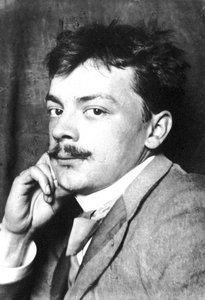
Otto Koloman Wagner
1841 - 1918 , Austria
Quick Facts
- Artistic Movement Or Style: Art Nouveau, Vienna Secession
- Artists Or Movements Influenced By This Artist:
- Modern Architecture
- Vienna Secession
- Artists Who Influenced This Artist:
- August Sicardsburg
- Eduard von der Nüll
- Date Of Birth: 1841
- Date Of Death: 1918
- Full Name: Otto Koloman Wagner
- Nationality: Austrian
- Notable Artworks:
- Austrian Postal Savings Bank
- Karlsplatz Pavillion
- Medallion House
- Kirche am Steinhof
- Place Of Birth: Vienna, Austria

