 Preview
 Send
Send Share
Share
 Details

 Download
 Similars
 X-Ray
X-Ray Diaporama
Casa Vicens, Barcelona


 Read More
Hand Made Oil Reproduction
Hand-painted oil on canvas in your size and frame, made to order by our artists. ( Buy Print Buy Image)




P118B $10

P118H $10

P118W $10

P438Z $10

P508JH $12

P508YH $12

P805H $10

P805Z $10

P919BZ $10

P919G $10

P919XJ $10

P959ZH $10

P968JZ $12

W106C $8

W218G $10

W218JH $8

W218Y $10

W307PJ $10

W316G $10

W316PJ $8

W316Y $10

W398PJ $8

W4111J $10

W500HY $15

W500JH $15

W692G $12

W849H $8

W940BG $15

W953PJ $8




Pick from our preset sizes that match the artwork's original proportions.

You may enter your own dimensions to fit a specific frame or space. If your selected size does not match the original image's proportions, we will either crop the artwork or extend the painting with additional hand-painted elements. A digital mockup will be sent for your approval before production begins.
Please note that the on-screen preview does not reflect the actual cropping or extension. Only the mockup will accurately show the final composition.
While custom sizes are available, we recommend selecting a dimension from the predefined list to preserve the original proportions.
After order, ArtsDot.com team will email client for instructions and provide a mockup preview
Worldwide Delivery () in 3/4 weeks instead of standard 5 weeks. (17 August). No compromise on quality.

Free Worldwide Express Shipping

High-Quality Linen Canvas

Full Shipping Insurance

Customs Tax Refund Guarantee

True Color Matching Guarantee

60-Day Return Policy (Defects Only)

100% Money-Back Guarantee

Bulk Discount Offer
 Glass option is only available in size under 110 CM

Casa Vicens, Barcelona
Reproduction Medium
Reproduction Size
-


Total Price
$ 263
Artwork Description
A Jewel of Catalan Modernism: Casa Vicens
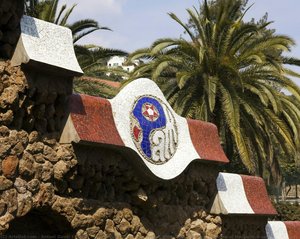
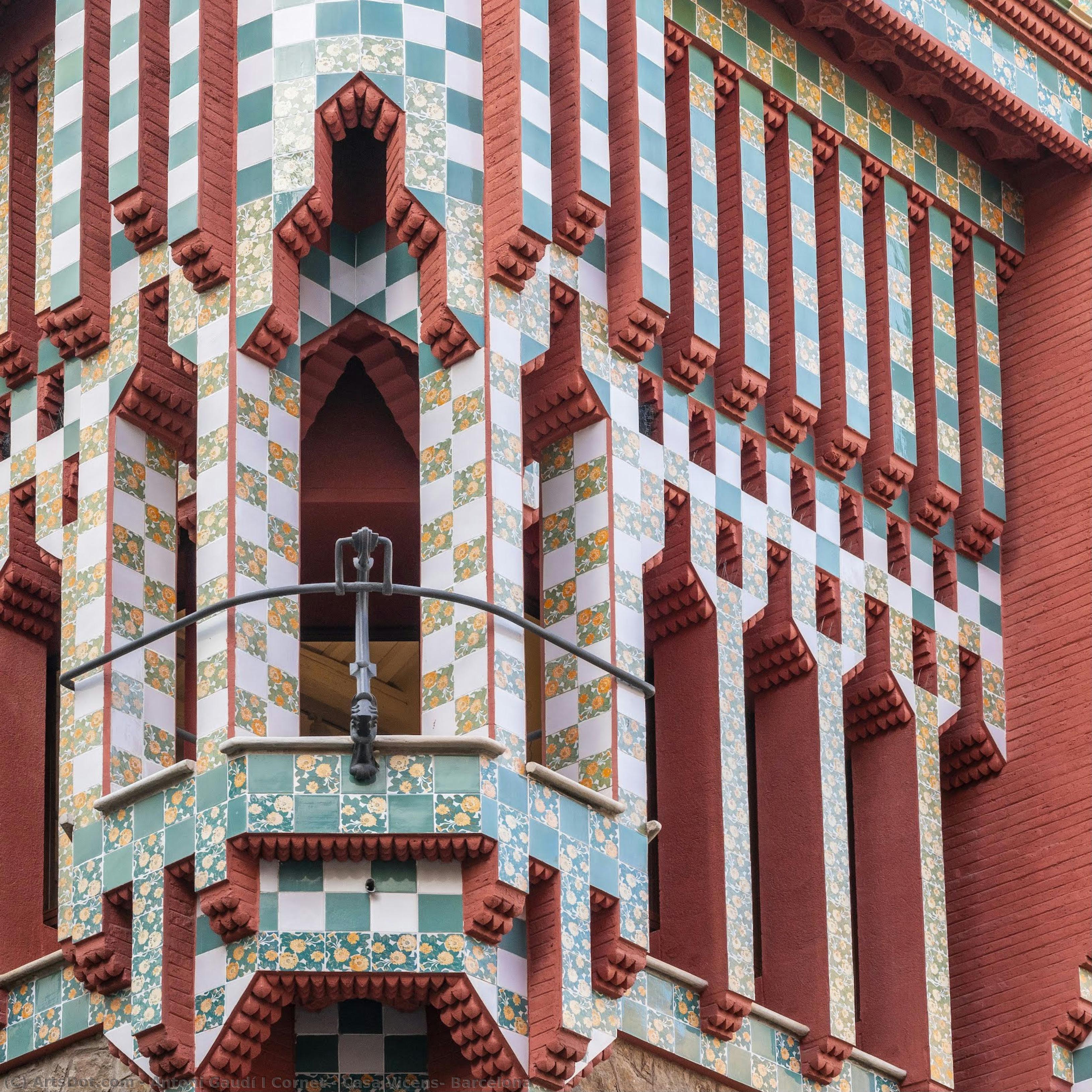
Antoni Gaudí’s Casa Vicens, nestled in Barcelona's Gràcia district, isn’t merely a house; it’s a vibrant declaration of the architect’s burgeoning artistic vision and a profound exploration of Eastern influences. Completed between 1883 and 1885, this early masterpiece stands as a pivotal moment in Gaudí’s career, marking his transition from traditional architectural forms to the groundbreaking, emotionally charged style that would define his legacy. More than just a residence for the wealthy Vicens family, Casa Vicens embodies a synthesis of nature, faith, and innovative construction techniques—a testament to Gaudí's unique approach to design. The building’s very existence was a bold statement, challenging conventional notions of domestic architecture and establishing Gaudí as a force to be reckoned with in the burgeoning world of Catalan Modernisme.A Symphony of Color and Eastern Echoes
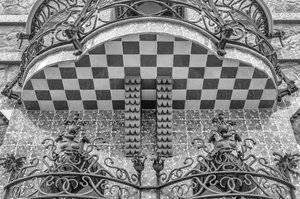
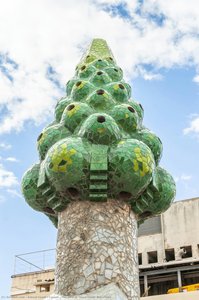
Casa Vicens is immediately arresting, not for its imposing scale but for its riotous color palette and intricate detailing. The façade isn’t a static display; it's an animated tapestry woven from thousands of ceramic tiles—a technique Gaudí pioneered during this period. These aren’t simply decorative elements; they are integral to the building’s structure, reflecting his belief that form follows function. The dominant hues – deep blues, vibrant yellows, and earthy terracotta – evoke the colors of the Mediterranean landscape and draw inspiration from Islamic art, particularly the intricate patterns found in Moorish architecture. Notice the deliberate asymmetry, a hallmark of Gaudí's style, creating a sense of dynamic movement and rejecting rigid symmetry. The use of horseshoe arches, reminiscent of those seen in Islamic palaces, further reinforces this connection to the East, alongside the incorporation of geometric motifs and stylized floral designs.Craftsmanship and Innovative Construction
Beyond its visual splendor, Casa Vicens showcases Gaudí’s remarkable engineering ingenuity. He employed a revolutionary construction method using brickwork laid in a herringbone pattern, creating a remarkably strong and lightweight structure. This technique, combined with the use of trencadís – broken ceramic shards meticulously arranged to form mosaics – demonstrates Gaudí's commitment to transforming waste materials into beautiful and durable art. The building’s undulating walls, reminiscent of waves or dunes, are not simply aesthetic choices; they were designed to minimize the effects of wind and create a sense of harmony with the surrounding landscape. The interior spaces continue this exploration of innovative construction, featuring intricate plasterwork, stained glass windows that flood the rooms with colored light, and a central courtyard—a vital element in Gaudí’s designs, intended to bring nature indoors.Symbolism and Emotional Resonance
Casa Vicens is rich in symbolism, reflecting Gaudí's deeply held spiritual beliefs. The building’s orientation, for example, aligns with the rising sun on the summer solstice, symbolizing renewal and rebirth. The courtyard, a central element of the design, represents paradise—a miniature world of tranquility and beauty. The use of water features – fountains and pools – further reinforces this connection to nature and spirituality. More than just a building, Casa Vicens is an emotional experience; it’s a place that invites contemplation and evokes a sense of wonder. It's a testament to Gaudí’s ability to infuse his creations with meaning and create spaces that resonate deeply with the human spirit. Today, Casa Vicens stands as a poignant reminder of Gaudí’s early genius and a captivating glimpse into the genesis of one of architecture’s most celebrated figures.Related Artworks
Artist Biography
A Life Forged in Stone and Faith: The World of Antoni Gaudí
Antoni Gaudí i Cornet, born on June 25, 1852, in the Catalan town of Reus, Spain, was not merely an architect; he was a visionary who sculpted dreams into reality. His life story is as captivating and unconventional as the buildings that bear his indelible mark. Growing up amidst the rolling hills and rugged landscapes of Catalonia profoundly shaped Gaudí’s artistic sensibility. Even as a child, he displayed a keen observational skill, meticulously studying the forms and textures of nature – an influence that would become the cornerstone of his unique architectural language. Family life was marked by both comfort and constraint; his father, a coppersmith, instilled in him a respect for craftsmanship, while his mother’s devout Catholicism fostered a deep spiritual connection that permeated his later work. These early experiences laid the foundation for a career dedicated to harmonizing art, nature, and faith. His formal education began at the Piarist school in Reus, followed by studies at the University of Barcelona before ultimately enrolling in the Provincial School of Architecture, where he graduated in 1878. Even during his academic years, Gaudí’s talent was evident, though perhaps not conventionally recognized; his professors acknowledged his skill but often struggled to reconcile it with established norms. He supplemented his education by working as a draughtsman for architect Josep Fontserè i Mestres, contributing to projects like Ciutadella Park in Barcelona – an early glimpse of the urban landscapes he would soon transform.
The Blossoming of a Unique Vision
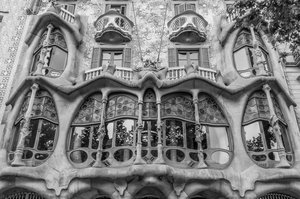
Gaudí’s initial commissions showcased a developing style that skillfully blended historical influences—Neo-Gothic, Orientalism—but it was his innate ability to transcend imitation and forge something entirely new that set him apart. The Casa Vicens (1883-1888) stands as an early testament to this burgeoning originality, its Moorish and Gothic Revival elements interwoven with a vibrant palette and intricate detailing. However, it was the undertaking of the Sagrada Família basilica in 1883 that truly defined his life’s work. What began as a relatively conventional neo-Gothic project quickly evolved under Gaudí's direction into an audacious, organic masterpiece—a testament to his unwavering vision and innovative structural techniques. He envisioned not just a building but a “stone bible,” each element imbued with religious symbolism. Simultaneously, Gaudí was crafting residential marvels like Casa Batlló and Casa Milà (La Pedrera), completed between 1904 and 1910. These structures defied architectural convention with their undulating facades, skeletal forms, and rejection of rigid symmetry. They were not merely buildings but living organisms, breathing with a unique energy. Parc Güell, begun in 1900, further exemplified his mastery of integrating architecture with the natural landscape, utilizing colorful mosaics—his signature *trencadís* technique—to create harmonious spaces that felt both whimsical and deeply spiritual. Even earlier works like Palau Güell (1886-1888) demonstrated his experimentation with parabolic arches and innovative material usage, foreshadowing the structural breakthroughs to come.
Nature, Faith, and Innovation: The Pillars of Gaudí’s Genius
At the heart of Gaudí's architectural philosophy lay an unwavering reverence for nature. He believed that natural forms held the key to perfect design, meticulously studying everything from seashells and trees to animal skeletons. This biomimicry wasn’t merely aesthetic; it informed his structural innovations as well. His equilibrated structures—reliant on tilted columns and lightweight tile vaults—were a direct response to observing how natural elements distribute weight efficiently, eliminating the need for traditional buttressing. Beyond nature, Gaudí's deep Catholic faith was an equally potent influence, particularly evident in the Sagrada Família where religious symbolism is woven into every facet of the design. The basilica wasn’t simply a place of worship; it was intended to be a physical manifestation of Christian beliefs. He also pioneered the *trencadís* technique—a mosaic art form utilizing broken ceramic pieces—creating vibrant, textured surfaces that added another layer of organic beauty to his creations. His early exposure to Neo-Gothic and Oriental influences provided a foundation, but he didn’t simply replicate these styles; he absorbed them, transformed them, and ultimately transcended them to create something uniquely his own.
A Lasting Legacy: Gaudí's Impact on the World
Antoni Gaudí is rightfully considered the greatest exponent of Catalan Modernisme (Art Nouveau), a movement that sought to forge a distinct cultural identity for Catalonia through art and architecture. His work wasn’t just about building structures; it was about creating an experience, evoking emotion, and celebrating the spirit of his homeland. Today, seven of Gaudí's masterpieces—the Sagrada Família, Park Güell, Casa Batlló, Casa Milà, Palau Güell, Casa Vicens, and the Crypt in Colonia Güell—are designated UNESCO World Heritage Sites, a testament to their outstanding universal value. His influence on architecture extends far beyond Spain; architects and designers worldwide continue to draw inspiration from his innovative forms, structural techniques, and holistic approach to design. Tragically, Gaudí’s life was cut short on June 10, 1926, when he was struck by a tram in Barcelona. Ironically, his unassuming appearance led many to believe he was simply a beggar, delaying medical attention until it was too late. Despite his death, construction of the Sagrada Família continued based on his meticulously detailed plans and models, and is now slated for completion in 2026—the centenary of his passing. Furthermore, the Catholic Church initiated a process for Gaudí’s canonization in 2003, recognizing both his devout faith and his extraordinary artistic contributions – a fitting tribute to the man who dedicated his life to building monuments that touched the heavens.
Beyond Bricks and Mortar: The Enduring Spirit of Gaudí
- Catalan Identity: Gaudí’s work became synonymous with Catalan culture, embodying a spirit of independence and artistic innovation.
- Architectural Revolution: He challenged conventional architectural norms, pioneering new structural techniques and embracing organic forms.
- Spiritual Resonance: His deep faith infused his creations with religious symbolism and a sense of the sacred.
- Lasting Inspiration: Gaudí continues to inspire architects, artists, and designers around the world, leaving an enduring legacy on the landscape of modern art and architecture.
Antoni Gaudí was more than just an architect; he was a poet in stone, a visionary who transformed Barcelona into a living work of art. His buildings are not merely structures but testaments to the power of imagination, faith, and the enduring beauty of the natural world.
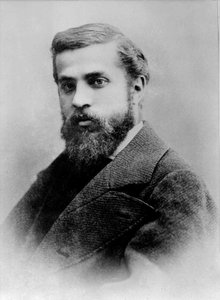
Antoni Gaudí
1852 - 1926 , Spain
Quick Facts
- Artistic Movement Or Style: Catalan Modernisme
- Artists Or Movements Influenced By This Artist:
- Art Nouveau
- Modern Architecture
- Artists Who Influenced This Artist:
- Neo-Gothic art
- Oriental techniques
- Date Of Birth: June 25, 1852
- Date Of Death: 1926
- Full Name: Antoni Gaudí i Cornet
- Nationality: Spanish
- Notable Artworks:
- Sagrada Família
- Casa Batlló
- Casa Milà
- Parc Güell
- Palau Güell
- Casa Vicens
- Place Of Birth: Reus, Spain
Related Articles
The Alchemy of Clay: A Collector's Guide to the Mastery, Texture, and Timeless Form of Ceramic Art
Discover the profound beauty of ceramic art. Our expert guide explores the alchemy of clay, texture, and glaze, offering collectors deep insights into mastering earth and fire to create timeless, sculptural masterpieces for any curated collection.
The Alluring Gaze: Orientalism in 19th-Century Art – Representation, Reception & Construction of the 'Orient'
Explore the complex history of Orientalism in 19th-century art. Discover how Western artists depicted the 'Orient,' its cultural impact, and Edward Said's critical analysis. A deep dive for art lovers & historians.
The Allure of the Exotic: Orientalism in 19th-Century Art
Explore the captivating world of 19th-century Orientalist art! Discover iconic painters like Gérôme & Benjamin-Constant, key themes, and collecting insights. Expert analysis at ArtsDot.
John Frederick Lewis: Orientalism, Detail & Genre Painting in 19th-Century British Art
Explore the captivating Orientalist paintings of John Frederick Lewis! Discover his mastery of detail, genre scenes & influence on 19th-century British art. Learn about his life, techniques & legacy at ArtsDot.
Panoramic Visions of Empire: The Daniells’ Artistic Collaboration & Legacy
Explore the captivating 'Oriental Scenery' by Thomas & William Daniell. Discover their pioneering aquatint prints of India, imperial context, artistic collaboration, and lasting legacy. A deep dive for history lovers.