

 Preview
 Send
Send Share
Share
 Details

 Download
 Similars
 X-Ray
X-Ray Diaporama
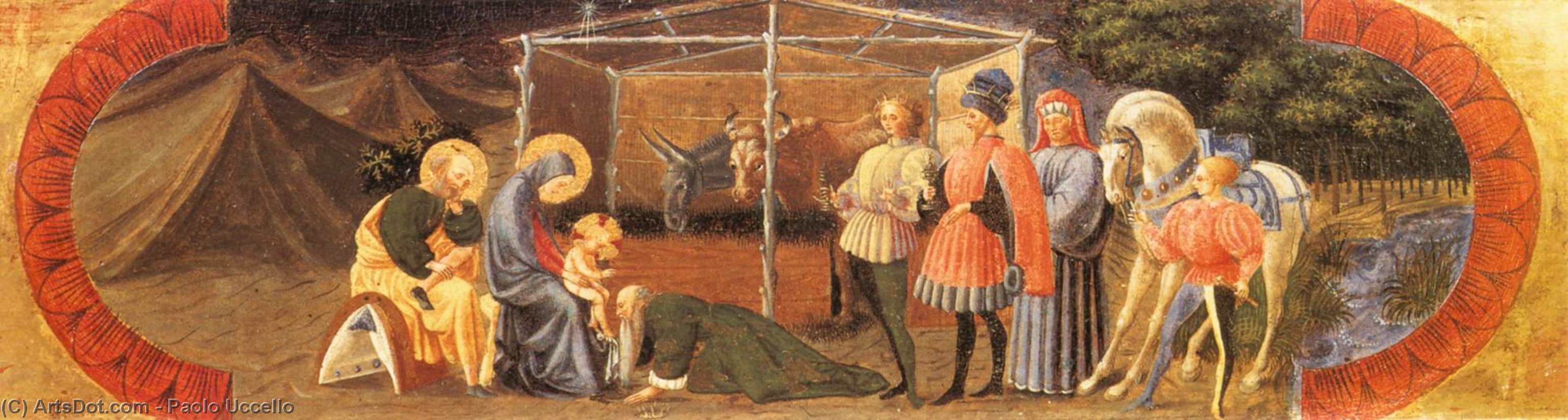
Adoration of the Magi (Quarate predella)
 Tempera On Panel
- WallArt
- Renaissance Perspective Innovation
 1435
1435- Renaissance
 20.0 x 82.0 cm
 Museo Arcivescovile
 Read More
Purchase a high-resolution, enhanced digital image, far superior to the online preview.
Each file is meticulously prepared by our in-house specialists using advanced tools and expert manual retouching. We ensure every image has exceptional clarity, precise color accuracy, and fine detail.
The final file is delivered via email within 72 hours, optimized for immediate use in professional, editorial, and print environments. This is the same quality trusted by top-tier design studios, publishers, and galleries.
Digital Image
Download a high-resolution file for personal display, printing, and creative projects. ( Buy Print Buy Hand Made Painting)
Included in Every Digital Image Order
Expert Digital Delivery, Guaranteed
When you choose ArtsDot.com, you're not just getting an image - you're receiving a professionally enhanced digital artwork, crafted with precision and backed by a satisfaction guarantee. Here's everything that comes with your order, automatically:

Fast Email Delivery
Your high-resolution digital image file will be emailed to you within 72 hours of ordering - ready for immediate use.

AI-Enhanced Digital File
Your artwork is professionally optimized using advanced AI tools and manual editing, ensuring maximum detail, clarity, and color accuracy.

Free Lifetime Re-Delivery
Accidentally deleted or lost your file? No worries - we'll resend it to you anytime, free of charge.

No Import Fees - Ever
Enjoy your artwork instantly with zero customs, duties, or delivery fees - digital downloads are always tax-free.

Color Accuracy Guarantee
We ensure your digital image reflects the original colors as closely as possible using professional tools and color management.

60-Day Satisfaction Guarantee
If you're not satisfied with your digital image, we'll revise it or refund 100% within 60 days - no questions asked.

100% Money-Back Guarantee
Not satisfied? Get a full refund within 60 days of receiving your digital file - no questions asked.

Bulk Order Discounts
Buy 3 images, save 10% - Buy 5, save 15% - Buy 10+, save 20%. Great for creative projects, galleries, and agencies.
A Mathematical Symphony of Faith and Form
In the quiet halls of the Museo Arcivescovile in Florence, there exists a panel that does more than merely recount a sacred event; it captures the very moment when the medieval world began to grasp the infinite depth of human perception. Paolo Uccello’s Adoration of the Magi, part of the celebrated Quarate predella, is a breathtaking intersection of spiritual devotion and scientific inquiry. Created in 1435, this masterpiece serves as a window into the mind of an artist who was as much a mathematician as he was a painter. As the three Magi—Caspar, Melchior, and Gaspar—arrive at Bethlehem to honor the newborn King, Uccello does not simply present a flat icon of piety. Instead, he invites the viewer into a meticulously constructed stage where light, shadow, and geometry converge to create a sense of profound presence.
The scene is an exquisite dance of figures and architecture, where every element is placed with deliberate, calculated intent. The Magi stand as the central pillars of this narrative, their regal presence anchored by a richly ornamented backdrop that directs the gaze upward toward the heavens. Surrounding them, a cast of attendants and kneeling figures, including the tender silhouettes of Mary and Joseph, weave a complex tapestry of human emotion and religious reverence. Even the animals within the frame contribute to this sense of lived reality; two horses, positioned with striking precision, lend a weight of majesty and power to the composition, reminding us of the arduous journey undertaken by these travelers to reach their divine destination.
The Architecture of the Infinite
What truly distinguishes this work for the discerning collector or art enthusiast is Uccello’s pioneering use of linear perspective. At a time when much of European art remained tethered to the decorative flatness of the Gothic tradition, Uccello was obsessed with the "vanishing point." He treated the canvas not as a surface, but as a three-dimensional volume. Through the painstaking calculation of orthogonals—lines that converge toward a single point—he achieved an illusion of depth that was revolutionary for the early 15th century. This technique allows the viewer to feel as though they could step directly into the shallow architectural space of the predella, experiencing the same sense of spatial realism that fascinated his contemporaries.
This mathematical rigor does not strip the painting of its soul; rather, it enhances its spiritual impact. The structured geometry creates a sense of divine order, suggesting that the universe itself is governed by a beautiful, underlying logic. For those looking to integrate such a piece into a sophisticated interior, the Adoration of the Magi offers a unique balance of intellectual depth and visual harmony. It provides a focal point that is both intellectually stimulating and aesthetically soothing, making it an ideal choice for spaces designed to inspire contemplation and awe.
A Legacy of Visionary Brilliance
To possess a reproduction of this work is to hold a fragment of the Renaissance spirit—a period defined by the daring pursuit of truth through both art and science. Uccello, whose nickname "little bird" suggests a whimsical nature, proved himself to be one of the era's most formidable visionaries. His ability to bridge the gap between the decorative elegance of his predecessors and the rigorous realism of the coming High Renaissance remains one of the great achievements in art history. This painting is not just a depiction of a biblical moment; it is a testament to the human desire to map the unseen and to find the divine within the measurable.
Whether you are an interior designer seeking to add a layer of historical gravity to a curated room, or a lover of fine art looking for a piece that tells a story of innovation, Uccello’s predella offers an unparalleled opportunity. It is a work that rewards repeated viewing, revealing new layers of geometric complexity and narrative richness with every glance, ensuring that its presence in any collection remains as enduring as the mathematical truths upon which it was built.
Related Artworks
Artist Biography
A Florentine Visionary: The Life and Art of Paolo Uccello
Paolo Uccello, born Paolo di Dono in 1397 amidst the rolling hills near Florence, remains one of the most captivatingly enigmatic figures of the Early Renaissance. His very nickname, “Uccello” – little bird – hints at a whimsical nature and an artistic inclination towards depicting the avian world, yet it belies a mind deeply engaged with the burgeoning intellectual currents of his time. He wasn’t merely a painter; he was a pioneer, a mathematician of the canvas, striving to unlock the secrets of visual space and translate them into breathtaking works of art. His father, Dono di Paolo, practiced the dual profession of barber-surgeon, while his mother, Antonia, hailed from a Florentine noble family – a lineage that perhaps instilled in young Paolo both a practical sensibility and an appreciation for refined aesthetics. From 1412 to 1416, Uccello’s formative years were spent under the tutelage of Lorenzo Ghiberti, whose workshop was a crucible of artistic innovation, focused on the creation of the magnificent bronze doors for Florence's Baptistery. This early exposure steeped him in the prevailing Gothic style, with its emphasis on decorative elegance and narrative clarity, yet also ignited within him a desire to push beyond established boundaries.The Pursuit of Perspective: A Mathematical Mind at Play
Uccello’s artistic development wasn't simply about mastering technique; it was driven by an insatiable curiosity regarding the underlying principles governing perception. He became consumed with mathematics, particularly geometry and perspective, not as abstract disciplines but as tools to unlock a more truthful representation of reality. While Filippo Brunelleschi is often credited with discovering linear perspective, Uccello was among the first to systematically apply it to painting, meticulously calculating vanishing points and orthogonal lines to create an illusion of depth that had previously been largely absent from art. This wasn’t merely about technical accuracy; for Uccello, perspective became a means of structuring narrative, enhancing drama, and imbuing his compositions with a sense of order and intellectual rigor. His fascination bordered on obsession, as recounted by Giorgio Vasari, who described Uccello staying up late into the night, lost in contemplation of vanishing points and spatial relationships. This dedication, while sometimes perceived as eccentric, ultimately revolutionized painting and paved the way for future generations of artists.Masterpieces of Illusion: Key Works and Stylistic Traits
Uccello’s oeuvre, though relatively small, is marked by a distinctive style that blends Gothic elegance with Renaissance innovation. The Battle of San Romano, a series of three panels commissioned to commemorate a Florentine victory, stands as perhaps his most celebrated achievement. These paintings are not simply depictions of warfare; they are dynamic compositions filled with swirling figures, fragmented armor, and dramatically foreshortened lances – all rendered in vibrant colors and arranged according to meticulously calculated perspective. The Birth of the Virgin, showcases Uccello’s mastery of linear perspective, creating a convincing illusion of depth within a shallow space, while his St George and the Dragon presents a striking depiction of the legendary saint, characterized by bold colors and stylized forms. Even in works like The Flood and the Ark, part of the San Miniato al Monte frescoes, Uccello’s fascination with architectural detail and complex compositions is readily apparent. His style consistently reveals:Legacy and Influence: A Lasting Impact on Art History
Paolo Uccello’s contribution to the Renaissance extends far beyond his individual paintings. His pioneering exploration of perspective fundamentally altered the course of art history, influencing countless artists who followed in his wake. Albrecht Dürer, the renowned German printmaker and painter, was deeply inspired by Uccello's work, dedicating himself to the study of perspective and incorporating its principles into his own artistic practice. While Uccello’s style remained somewhat idiosyncratic throughout his career – a unique blend of Gothic refinement and Renaissance innovation – his groundbreaking approach to space and form secured his place as a pivotal figure in the development of Western art. He died in Florence in 1475, leaving behind a legacy not only of beautiful paintings but also of intellectual curiosity and artistic daring. His work continues to inspire awe and admiration, reminding us that true artistry lies not just in what is seen, but in the understanding of how we see it.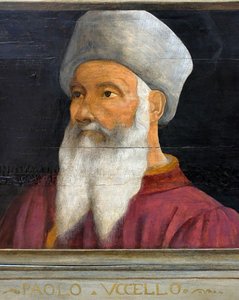
Paolo Uccello
1397 - 1475 , Italy
Quick Facts
- Artistic Movement Or Style: Early Renaissance
- Artists Or Movements Influenced By This Artist: ['Albrecht Dürer']
- Artists Who Influenced This Artist:
- Lorenzo Ghiberti
- Donatello
- Date Of Birth: 1397
- Date Of Death: 1475
- Full Name: Paolo Uccello
- Nationality: Italian
- Notable Artworks:
- Battle of San Romano
- Birth of the Virgin
- St George & Dragon
- The Flood and Ark
- Place Of Birth: Pratovecchio, Italy

