 Preview
 Send
Send Share
Share
 Details

 Download
 Similars
 X-Ray
X-Ray Diaporama
Deposition
 Etching
- Other
- Mannerist Painting
 331.0 x 240.0 cm
 Graphische Sammlung Albertina
 Read More
Hand Made Oil Reproduction
Hand-painted oil on canvas in your size and frame, made to order by our artists. ( Buy Print Buy Image)




P118B $10

P118H $10

P118W $10

P438Z $10

P508JH $12

P508YH $12

P805H $10

P805Z $10

P919BZ $10

P919G $10

P919XJ $10

P959ZH $10

P968JZ $12

W106C $8

W218G $10

W218JH $8

W218Y $10

W307PJ $10

W316G $10

W316PJ $8

W316Y $10

W398PJ $8

W4111J $10

W500HY $15

W500JH $15

W692G $12

W849H $8

W940BG $15

W953PJ $8




Pick from our preset sizes that match the artwork's original proportions.

You may enter your own dimensions to fit a specific frame or space. If your selected size does not match the original image's proportions, we will either crop the artwork or extend the painting with additional hand-painted elements. A digital mockup will be sent for your approval before production begins.
Please note that the on-screen preview does not reflect the actual cropping or extension. Only the mockup will accurately show the final composition.
While custom sizes are available, we recommend selecting a dimension from the predefined list to preserve the original proportions.
After order, ArtsDot.com team will email client for instructions and provide a mockup preview
Worldwide Delivery () in 3/4 weeks instead of standard 5 weeks. (16 August). No compromise on quality.

Free Worldwide Express Shipping

High-Quality Linen Canvas

Full Shipping Insurance

Customs Tax Refund Guarantee

True Color Matching Guarantee

60-Day Return Policy (Defects Only)

100% Money-Back Guarantee

Bulk Discount Offer
 Glass option is only available in size under 110 CM

Deposition
Reproduction Medium
Reproduction Size
-


Total Price
$ 413
Artwork Description
A Moment of Profound Sorrow: Unveiling Parmigianino’s “Deposition”
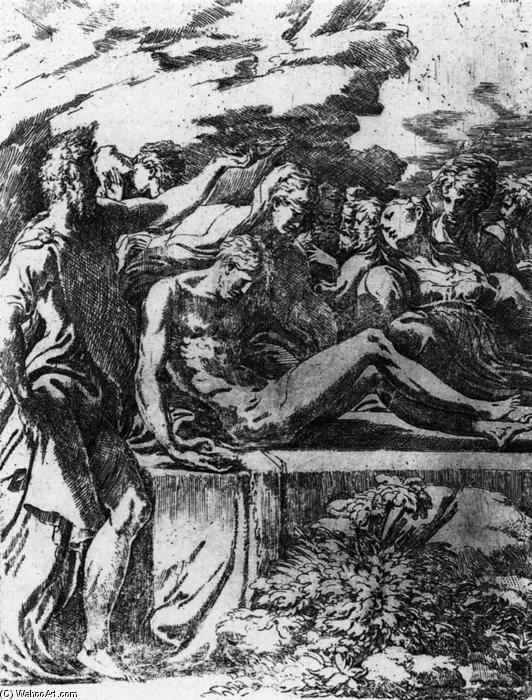
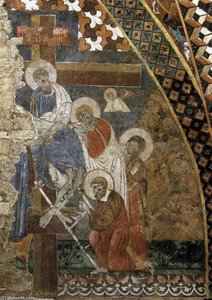
Parmigianino's "Deposition," a haunting etching from around 1540, isn’t merely a depiction of a biblical scene; it’s an exquisitely rendered meditation on grief, loss, and the profound weight of human suffering. Created during the tumultuous transition between the High Renaissance and Mannerism, this work embodies the stylistic shift towards heightened emotion, elongated forms, and a deliberate distortion of reality that would define the era. The piece immediately draws the viewer into a scene saturated with sorrow – a palpable atmosphere of mourning hangs heavy over the figures arranged within its tightly constructed composition.
The subject itself—the removal of Christ’s body from the cross—is one steeped in religious significance, yet Parmigianino elevates it beyond simple narrative. He doesn't offer a triumphant resurrection or a heroic sacrifice; instead, he presents a raw and vulnerable portrayal of the immediate aftermath. The figures surrounding the prone form of Jesus are not idealized saints but ordinary individuals – mourners, family members, and witnesses to this devastating event—each etched with expressions of profound grief. Their postures, subtly elongated and deliberately unbalanced, reflect the instability and emotional turmoil at the heart of the scene.
The Language of Mannerism: Line, Shadow, and Distortion
Parmigianino’s mastery lies in his command of etching technique. The intricate network of fine lines, meticulously rendered with astonishing precision, creates a remarkable sense of texture and depth. Cross-hatching is employed liberally to build up areas of shadow, lending the scene an almost sculptural quality. Notice how the artist uses varying line weights – bold strokes defining the contours of clothing and faces, delicate tracings suggesting the folds of fabric and the fragility of human form. This deliberate manipulation of line isn’t about realistic representation; it's about conveying emotion and atmosphere through a carefully orchestrated visual language.
- Elongated Proportions: Parmigianino’s signature Mannerist trait is evident in the subtly distorted proportions of the figures. Limbs are stretched, faces are elongated, and bodies are rendered with an unsettling grace that defies naturalism.
- Dynamic Composition: The arrangement of figures creates a sense of controlled chaos—a deliberate imbalance that mirrors the emotional turmoil of the scene.
- Monochromatic Palette: The absence of color amplifies the drama, focusing attention on the interplay of light and shadow and the expressive power of line.
Symbolism and Emotional Resonance
Beyond its technical brilliance, “Deposition” is rich in symbolic meaning. The cloudy sky above—a recurring motif in Parmigianino’s work—evokes a sense of foreboding and impending doom. The landscape below, rendered with stark simplicity, provides a desolate backdrop to the scene of mourning. The figures themselves are not simply witnesses; they represent humanity's shared experience of loss and vulnerability. The overall effect is profoundly moving, inviting viewers to contemplate the nature of grief, faith, and mortality.
A Timeless Masterpiece: Reproduction and Legacy
“Deposition” stands as a testament to Parmigianino’s artistic genius and his pivotal role in shaping the course of Mannerist painting. Reproductions offer an accessible way to experience this extraordinary work, allowing its beauty and emotional depth to be appreciated by a wider audience. When selecting a reproduction, consider the quality of the print – archival materials and meticulous attention to detail are essential to faithfully capturing the nuances of Parmigianino’s original etching. This piece remains a powerful reminder of the enduring capacity of art to evoke profound emotions and illuminate the complexities of the human condition.
Related Artworks
Artist Biography
A Refined Sensibility: The Life and Art of Parmigianino
Girolamo Francesco Maria Mazzola, known to history as Parmigianino – “the little one from Parma” – emerged during the High Renaissance, yet swiftly became a defining figure of the burgeoning Mannerist style. Born in Parma on January 11, 1503, his early life was marked by familial loss; his father, Filippo Mazzola, died when Girolamo was just two years old. Raised by his uncles, Michele and Pier Ilario, both modestly skilled artists themselves, the young Parmigianino received his initial artistic training within this familial circle. This foundation, however, proved merely a springboard for an exceptional talent that would soon eclipse even his mentors. By the astonishing age of eighteen, he had already completed the Bardi Altarpiece, a work demonstrating a maturity and sophistication far beyond his years, signaling the arrival of a truly remarkable artist.Florence, Rome, and the Shaping of a Mannerist Vision
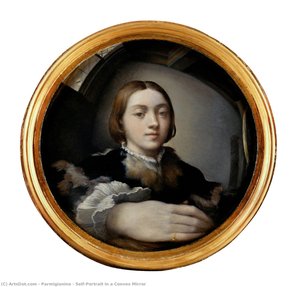
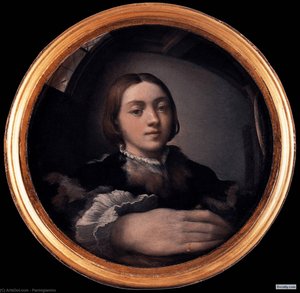
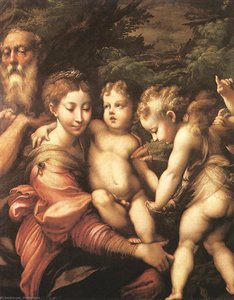
Parmigianino’s artistic journey led him to Florence around 1524, where he absorbed the influence of masters like Raphael and Leonardo da Vinci, though he quickly began to forge his own distinct path. He presented Pope Clement VII with three paintings, including a striking self-portrait in a convex mirror – a testament to his technical skill and burgeoning self-awareness. This act secured commissions in Rome, but the city’s artistic landscape was soon disrupted by the tumultuous Sack of 1527. Forced to flee, Parmigianino sought refuge in Bologna, where he painted one of his most celebrated works, the *Holy Family*. It was during this period that his signature style truly crystallized: elongated forms, graceful poses, and a refined sensuality became hallmarks of his art. He wasn’t merely depicting reality; he was reimagining it through a lens of elegance and idealized beauty. This departure from the High Renaissance's emphasis on naturalism marked him as a key innovator of Mannerism, an artistic movement characterized by its artificiality, sophistication, and deliberate distortion of classical forms.Masterpieces of Elongation and Grace
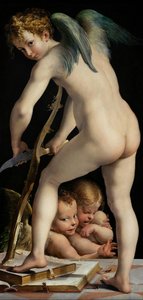
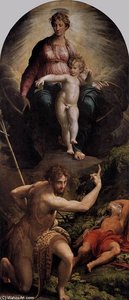
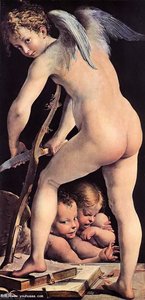
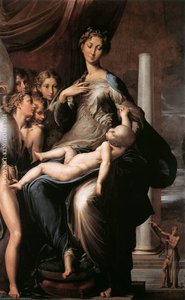
Parmigianino’s legacy rests upon a relatively small but profoundly influential body of work. The *Madonna with the Long Neck* (1534) remains perhaps his most iconic creation. Its unsettling yet captivating composition, featuring figures with elongated necks and limbs, challenges conventional notions of beauty and proportion. This deliberate distortion isn't simply stylistic; it conveys a sense of spiritual yearning and otherworldly grace. Similarly, *Vision of Saint Jerome* (1527), completed during his time in Rome, showcases his mastery of anatomy and perspective, while simultaneously embracing the Mannerist penchant for dramatic compositions and emotional intensity. Beyond these celebrated paintings, Parmigianino’s drawings reveal an extraordinary level of skill and sensitivity. His studies of figures, drapery, and architectural elements demonstrate a meticulous attention to detail and a profound understanding of form. Even his lesser-known works, such as *Bow-Carving Amor*, display the same refined sensibility and technical virtuosity that define his oeuvre.A Legacy Interrupted: Parmigianino’s Final Years
Tragically, Parmigianino's promising career was cut short by his untimely death in Casalmaggiore in 1540 at the age of thirty-seven. The circumstances surrounding his demise remain somewhat mysterious; some accounts suggest he succumbed to a fever, while others hint at complications from a fall. Despite his brief life, Parmigianino left an indelible mark on Italian Renaissance art. He stands as one of the most important representatives of Mannerism, influencing generations of artists with his elegant style and innovative approach to form and composition. His work continues to captivate viewers today, offering a glimpse into a world where beauty is not merely observed but actively created – a testament to the enduring power of artistic vision. The frescoes he left unfinished in Parma and Fontanellato serve as poignant reminders of what might have been, yet even in their incomplete state, they reveal the brilliance of a master whose legacy continues to resonate through the centuries.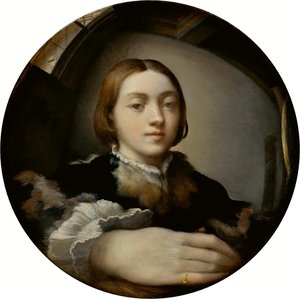
Parmigianino
1503 - 1540 , Italy
Quick Facts
- Artistic Movement Or Style: Mannerism
- Artists Or Movements Influenced By This Artist: ['Italian Renaissance art']
- Artists Who Influenced This Artist:
- Correggio
- Raphael
- Date Of Birth: January 11, 1503
- Date Of Death: 1540
- Full Name: Girolamo Francesco Maria Mazzola
- Nationality: Italian
- Notable Artworks:
- Madonna with the Long Neck
- Vision of Saint Jerome
- Self-Portrait in a Convex Mirror
- Holy Family
- The Circumcision
- Bow-carving Amor
- Place Of Birth: Parma, Italy
Related Articles
The Visceral Language of Loss: Exploring Grief's Depiction in Art History
Explore the profound history of grief in art with ArtsDot. Discover Renaissance & Baroque masterpieces depicting loss, mourning, and faith. Expert insights & handmade reproductions available.
El Greco: Spirituality, Style & Innovation – A Renaissance Master's Legacy
Explore the captivating world of El Greco! Discover his unique style, spiritual intensity, and lasting impact on art history. Learn about this Renaissance master's life, iconic paintings & legacy.
The Northern Renaissance: A Flourishing of Realism, Religious Reform & Artistic Innovation
Explore the Northern Renaissance! Discover Jan van Eyck's innovations, religious shifts, & key artists of this influential period. Expert analysis and insights into Early Netherlandish painting at ArtsDot.
Maerten van Heemskerck: Bridging Mannerism & Renaissance Ideals
Explore the captivating world of Maerten van Heemskerck, a pivotal Dutch Renaissance painter bridging Mannerism & Italian influence. Discover his masterpieces and legacy with ArtsDot.
Jacopo Pontormo: A Bridge Between Renaissance Tradition & Mannerist Emotion
Explore the captivating world of Jacopo Pontormo, a pivotal Italian Mannerist painter. Discover his unique style, influences & masterpieces – and find museum-quality reproductions at ArtsDot.