 Preview
 Send
Send Share
Share
 Details

 Download
 Similars
 X-Ray
X-Ray Diaporama
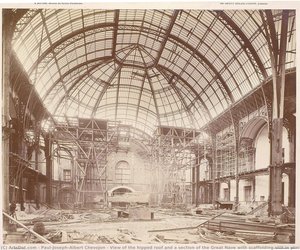
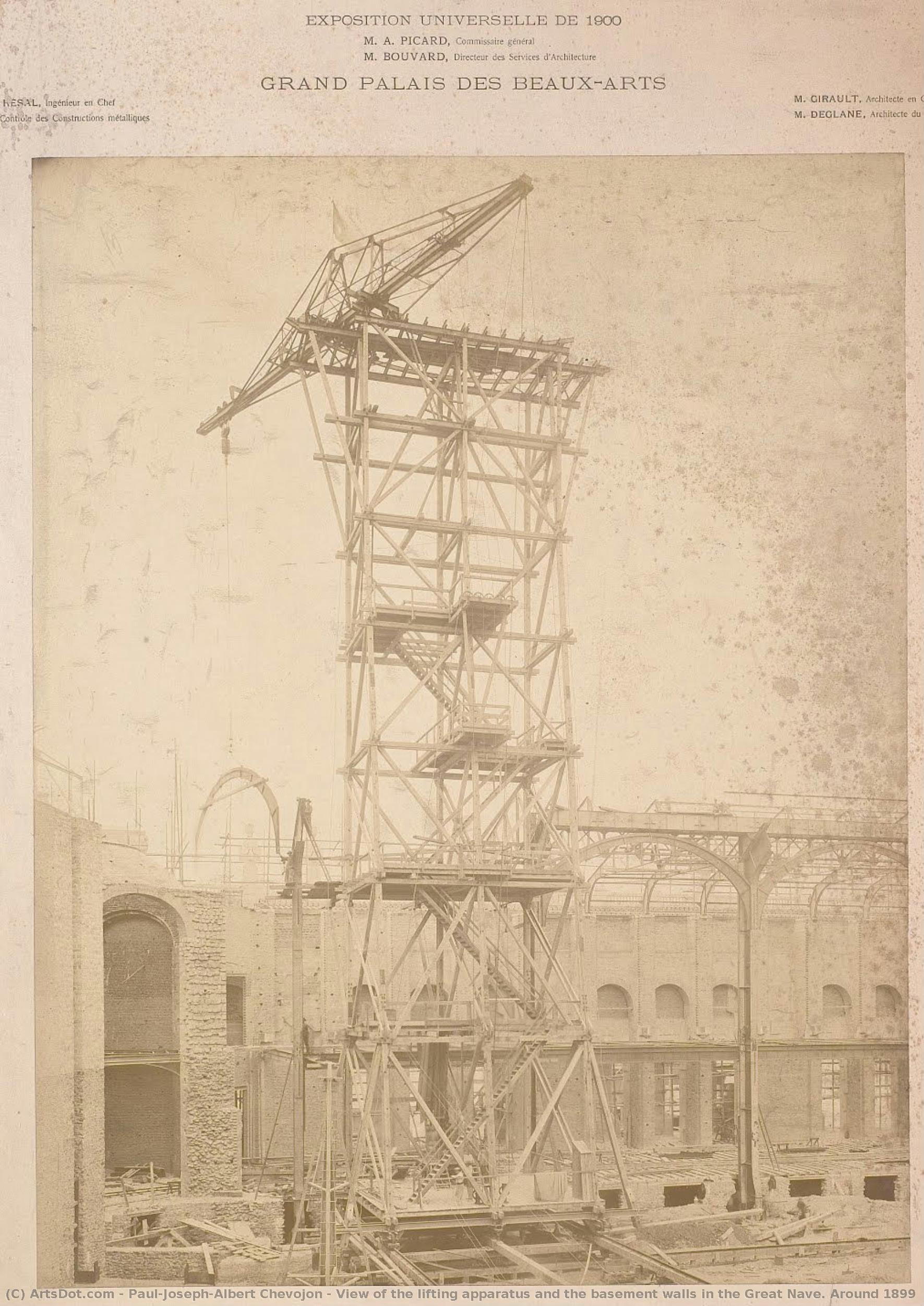
View of the lifting apparatus and the basement walls in the Great Nave. Around 1899
 Acrylic On Canvas
- WallArt
- Architectural Photography
 1899
1899 5.0 x 45.0 cm
 Grand Palais
 Read More
Giclée / Art Print
Museum-quality giclée or canvas print with fast production and flexible finish options. ( Buy Hand Made Painting Buy Image)




P118B $10

P118H $10

P118W $10

P438Z $10

P508JH $12

P508YH $12

P805H $10

P805Z $10

P919BZ $10

P919G $10

P919XJ $10

P959ZH $10

P968JZ $12

W106C $8

W218G $10

W218JH $8

W218Y $10

W307PJ $10

W316G $10

W316PJ $8

W316Y $10

W398PJ $8

W4111J $10

W500HY $15

W500JH $15

W692G $12

W849H $8

W940BG $15

W953PJ $8




Pick from our preset sizes that match the artwork's original proportions.

You may enter your own dimensions to fit a specific frame or space. If your selected size does not match the original image's proportions, we will either crop the artwork or extend the image with a mirrored or solid-fill edge. A digital mockup will be sent for your approval before production begins.
Please note that the on-screen preview does not reflect the actual cropping or extension. Only the mockup will accurately show the final composition.
While custom sizes are available, we recommend selecting a dimension from the predefined list to preserve the original proportions.
Worldwide Delivery () in 2 weeks instead of standard 4/5 weeks. (29 August)

Free Worldwide Express Shipping

High-Quality Linen Canvas

Full Shipping Insurance

Customs Tax Refund Guarantee

True Color Matching Guarantee

60-Day Return Policy (Defects Only)

100% Money-Back Guarantee

Bulk Discount Offer
 Glass option is only available in size under 110 CM

View of the lifting apparatus and the basement walls in the Great Nave. Around 1899
Giclée / Art Print
Reproduction Size
-


Total Price
$ 63
A Glimpse Behind the Iron: Paul-Joseph-Albert Chevojon’s Documentation of Grand Palais Construction
Paul-Joseph-Albert Chevojon's "View of the Lifting Apparatus and the Basement Walls in the Great Nave. Around 1899" offers more than just a snapshot of a construction site; it’s a meticulously observed document, a silent witness to one of Paris’s most ambitious architectural endeavors – the creation of the Grand Palais for the 1900 Universal Exposition. This evocative black and white photograph, measuring a modest 5 x 45 cm, transports us directly into the heart of a monumental undertaking, revealing not just the mechanics of building but also the human scale within this grand project. Chevojon’s skill lies in his ability to capture both the raw power of industrial progress and the quiet dignity of the laborers who brought it to life. The image isn't merely a record; it possesses a palpable sense of time, a feeling of being present at a pivotal moment in Parisian history.The Anatomy of an Engineering Marvel
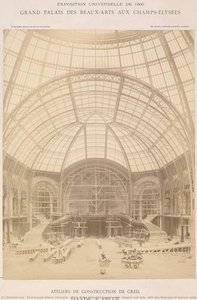
Chevojon’s photograph is remarkably detailed, focusing on the intricate network of cranes and scaffolding that dominated the Great Nave during its construction. The imposing metal structure of the crane itself commands attention, its ladder extending upwards towards the nascent dome – a symbol of aspiration and technological advancement. Around it, a cluster of figures, rendered in soft focus, suggests the ongoing activity, hinting at the sheer scale of manpower required to execute this colossal project. Notably, a smaller crane is positioned on the right, adding another layer of complexity to the scene and emphasizing the logistical challenges faced by the engineers. The basement walls, partially exposed, reveal the foundations upon which this architectural masterpiece would be built – a testament to the painstaking groundwork that preceded the final, breathtaking structure. The photograph’s composition deliberately highlights these elements, inviting the viewer to contemplate not just what is being built, but *how* it's being built.A Parisian Chronicle: Context and Craftsmanship
Created around 1899, this image provides a crucial window into a specific period of Parisian history – an era defined by rapid industrialization, technological innovation, and the fervent optimism surrounding the upcoming Universal Exposition. Chevojon’s work is deeply intertwined with the story of the Grand Palais itself, a project that pushed the boundaries of engineering and design. The photograph isn't simply documenting construction; it reflects the broader cultural context of the late 19th century, a time when Paris was striving to assert its position as a global center of art, commerce, and innovation. Chevojon’s meticulous attention to detail—the textures of the stone, the gleam of the metal, the expressions on the workers' faces—demonstrates his commitment to capturing not just the physical reality but also the spirit of the era.Symbolism in Steel and Stone
Beyond its technical documentation value, the photograph is rich with symbolic meaning. The cranes themselves represent progress, industry, and the ambition of a modernizing Paris. The basement walls, though partially revealed, symbolize the hidden foundations upon which all grand achievements are built – the unseen labor and careful planning that underpin even the most spectacular displays. The figures working on the construction site embody the collective effort required to realize such an ambitious vision. Chevojon’s choice of black and white further enhances this symbolic resonance, stripping away any distractions and focusing attention on form, texture, and light. The image speaks to a fundamental human desire to build, create, and leave a lasting legacy.A Reproduction for the Modern Home
Today, "View of the Lifting Apparatus and the Basement Walls in the Great Nave. Around 1899" is available as a meticulously crafted hand-painted reproduction by ArtsDot.com, allowing art lovers to bring this captivating historical document into their homes or offices. The reproduction faithfully captures Chevojon’s original vision, preserving the photograph's dramatic lighting, intricate details, and evocative atmosphere. This artwork serves not only as a beautiful addition to any interior space but also as a tangible connection to a pivotal moment in Parisian history – a reminder of the ingenuity, dedication, and artistic spirit that shaped one of the world’s most iconic landmarks.Related Artworks
Artist Biography
early life and career
paul-joseph-albert chevojon, a french photographer, was born in 1865 in paris, france. his life's work would later be characterized by his remarkable architectural photography, particularly the iconic grand palais (paris, france). chevojon's photographic career began with a focus on capturing the essence of parisian landmarks.notable works and contributions
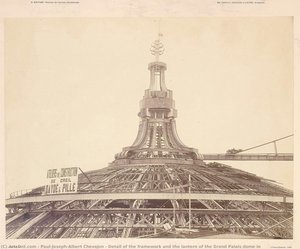
chevojon is renowned for his photographs of the grand palais (paris, france), which include:- view of the scaffolding erected to install the central dome of the grand palais, following construction of the nave. (view on ArtsDot)
- view of the lifting apparatus and the basement walls in the great nave. (view on ArtsDot)
legacy and influence
chevojon's work has been featured in various exhibitions, including those at musée national jean-jacques henner (paris, france), which houses an impressive collection of french post-impressionism paintings. (discover the wonders of musée national jean-jacques henner with ArtsDot) chevojon's legacy extends beyond his own work, influencing generations of architectural photographers. his photographs continue to inspire artists and architects alike.conclusion
paul-joseph-albert chevojon's remarkable career as a photographer has left an indelible mark on the world of architecture and photography. through his lens, he captured the essence of paris's iconic landmarks, providing a unique perspective on their construction and beauty. to explore more of chevojon's works and other notable artists, visit ArtsDot, where you can also order stunning canvas prints or oil-painted replicas of your favorite artworks.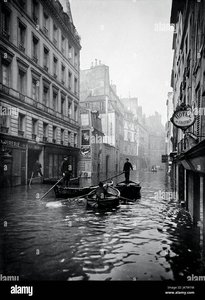
paul-joseph-albert chevojon
1865 - 1925 , France
Quick Facts
- Artistic Movement Or Style: Impressionism
- Artists Or Movements Influenced By This Artist: ['Robert Henri School']
- Artists Who Influenced This Artist: ['William Merritt Chase']
- Date Of Birth: 1865
- Date Of Death: 1929
- Full Name: Robert Henri
- Nationality: American
- Notable Artworks: ['Plowing in Nivernais']
- Place Of Birth: Cincinnati, Ohio
Related Articles
Paul Klee's Masterpieces: Explore 25 Iconic Paintings & Prints | ArtsDot
Journey through Paul Klee's 25 most iconic paintings & prints. Explore his abstract style, Bauhaus influence, and vibrant color palettes. Find museum-quality art reproductions & decor ideas at ArtsDot.com. Discover all masterpieces online.

Cézanne's Masterpieces: 25 Iconic Artworks to Transform Your Space
Journey through 25 iconic artworks by Paul Cézanne – a master of Impressionism and Post-Impressionism. Explore his landscapes, still lifes, and the stories behind these timeless masterpieces. Discover museum-quality reproductions & curated decor at ArtsDot.com.
Paul César Helleu: Capturing Belle Époque Elegance & Artistic Innovation
Explore the captivating world of Paul César Helleu, master portraitist of the Belle Époque. Discover his innovative techniques, iconic works like 'Portrait of Margaret Kelly,' and investment potential with ArtsDot.

Walter Crane: Aestheticism, Socialism & the Evolution of British Decorative Art
Explore the life & work of Walter Crane, a pivotal figure in Aestheticism & the Arts & Crafts movement. Discover his socialist ideals, stunning illustrations, and lasting impact on British art & design.
Paul Klee: A Poetics of Form and Color – Exploring the Inner Landscape of a Modern Master
Explore the captivating world of Paul Klee! Discover his innovative art, Bauhaus influence, & unique symbolic language. Expert analysis & high-quality reproductions at ArtsDot.