 Preview
 Send
Send Share
Share
 Details

 Download
 Similars
 X-Ray
X-Ray Diaporama
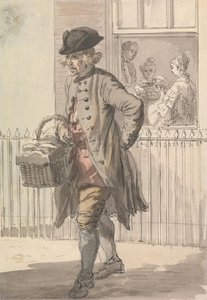
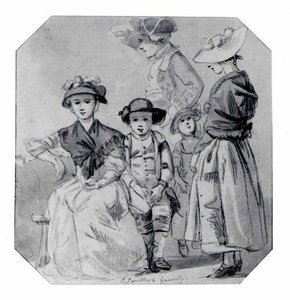
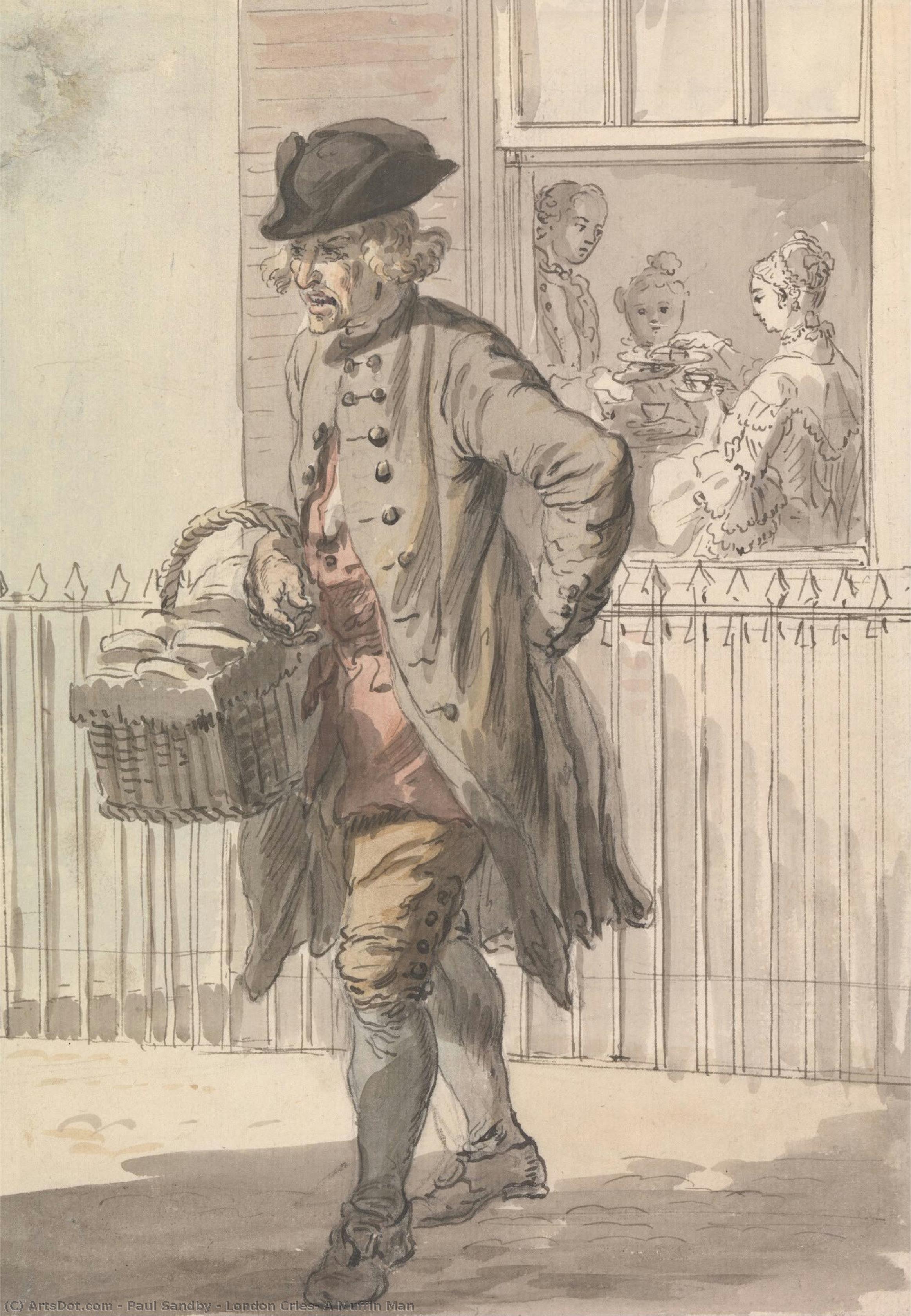
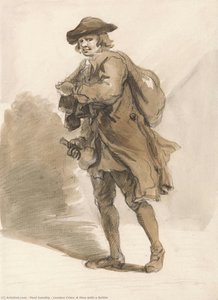
London Cries: A Muffin Man
 Drawing
- WallArt
- Romanticism
 1759
1759- 19th Century
 19.0 x 13.0 cm
 Yale Center for British Art
 Read More
Hand Made Oil Reproduction
Hand-painted oil on canvas in your size and frame, made to order by our artists. ( Buy Print Buy Image)




P118B $10

P118H $10

P118W $10

P438Z $10

P508JH $12

P508YH $12

P805H $10

P805Z $10

P919BZ $10

P919G $10

P919XJ $10

P959ZH $10

P968JZ $12

W106C $8

W218G $10

W218JH $8

W218Y $10

W307PJ $10

W316G $10

W316PJ $8

W316Y $10

W398PJ $8

W4111J $10

W500HY $15

W500JH $15

W692G $12

W849H $8

W940BG $15

W953PJ $8




Pick from our preset sizes that match the artwork's original proportions.

You may enter your own dimensions to fit a specific frame or space. If your selected size does not match the original image's proportions, we will either crop the artwork or extend the painting with additional hand-painted elements. A digital mockup will be sent for your approval before production begins.
Please note that the on-screen preview does not reflect the actual cropping or extension. Only the mockup will accurately show the final composition.
While custom sizes are available, we recommend selecting a dimension from the predefined list to preserve the original proportions.
After order, ArtsDot.com team will email client for instructions and provide a mockup preview
Worldwide Delivery () in 3/4 weeks instead of standard 5 weeks. (16 August). No compromise on quality.

Free Worldwide Express Shipping

High-Quality Linen Canvas

Full Shipping Insurance

Customs Tax Refund Guarantee

True Color Matching Guarantee

60-Day Return Policy (Defects Only)

100% Money-Back Guarantee

Bulk Discount Offer
 Glass option is only available in size under 110 CM

London Cries: A Muffin Man
Reproduction Medium
Reproduction Size
-


Total Price
$ 263
Artwork Description
A Glimpse into Georgian Street Life
This evocative drawing, titled "London Cries: A Muffin Man," transports the modern viewer directly into the bustling, atmospheric heart of 18th-century London. The scene is rendered with a captivating immediacy that speaks volumes about daily commerce and human interaction. At the center moves the muffin man, his basket laden with tempting goods, embodying a moment of everyday ritual. His figure, complete with a distinctive hat and mustache, anchors the composition, suggesting a narrative rich with untold stories—the calls of vendors echoing off cobblestones long since smoothed by time.
Artistic Technique and Historical Resonance
Executed in 1759, this piece captures the spirit of Georgian urban life. While the original medium is a drawing, its reproduction offers an intimate study in line work and tonal contrast, characteristic of early topographical studies. The artist, Paul Sandby, masterfully employs black and white tones to build depth and atmosphere without relying on vibrant color. Observe how the surrounding figures—some pausing with a cup, others merely observing—are integrated into the scene, giving it a palpable sense of movement. It is a testament to an era when street scenes were not just backdrops, but subjects worthy of meticulous artistic documentation.
Symbolism of Daily Commerce
The muffin man himself serves as a potent symbol. He represents sustenance, routine, and the enduring rhythm of city life. The basket of muffins is more than mere cargo; it symbolizes simple pleasures and the necessary exchange that fuels a community. In this quiet tableau amidst the crowd, there is a profound sense of connection—the vendor offering his wares, the passerby pausing to witness or partake. It speaks to the universal human need for both nourishment and momentary distraction from the city's relentless pace.
Bringing Victorian Charm Home
For the collector or designer seeking an accent piece imbued with historical depth, this reproduction offers unparalleled charm. Its delicate scale (19 x 13 cm) makes it perfect for mantelpieces, gallery walls, or writing desks where a touch of nostalgic elegance is desired. Owning this artwork is not merely acquiring a drawing; it is curating a moment—a preserved whisper from the vibrant streets of London's past, allowing you to infuse your contemporary space with timeless, narrative grace.
Related Artworks


Artist Biography
The Father of Modern Landscape Painting
Paul Sandby stands as a pivotal figure in the history of British landscape painting, recognized not merely for his artistic skill but for establishing a new aesthetic tradition that profoundly impacted subsequent generations. Born in Nottingham to Thomas Sandby, a textile worker, Paul’s early life was marked by self-education and an innate fascination with observation—qualities that would prove instrumental in shaping his extraordinary career as both a mapmaker and painter. Unlike many artists of his time who pursued formal training, Sandby honed his craft independently, immersing himself in the natural world and meticulously documenting its beauty through watercolor.
His formative years instilled within him a deep appreciation for detail and accuracy, skills that would later translate seamlessly into his cartographic endeavors. His brother Thomas, also a draughtsman, fostered this artistic inclination, encouraging experimentation and fostering a collaborative spirit. Together, they established an academy in Nottingham, attracting aspiring artists eager to learn from their expertise. Their distinctive style—characterized by luminous washes of color and a masterful depiction of atmospheric perspective—became instantly recognizable and profoundly influential across the British Isles.
Topography and the Spirit of the Land
Sandby’s professional journey was uniquely shaped by his involvement with the military drawing department at the Tower of London. This role propelled him into a position that would expose him to the grandeur of Scotland during the Jacobite Rebellion. Tasked with creating topographical maps and sketches of Highland landscapes, he became a visual recorder of history, transforming from a mere illustrator into one of the foremost landscape artists of his era. This period of service allowed him to blend the precision of a cartographer with the soul of an artist, capturing the rugged majesty of the Scottish terrain with unprecedented clarity.
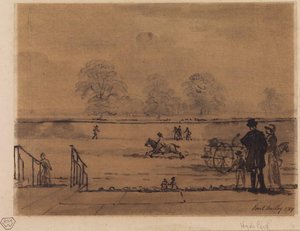
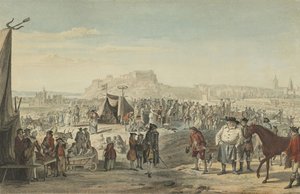
His body of work reflects a remarkable versatility, ranging from sweeping vistas to intimate urban snapshots. In his celebrated series London Cries, such as the poignant depiction of A Man with a Bottle, Sandby captured the rhythmic pulse of street life in the 18th century. He possessed a rare ability to find beauty in the mundane, documenting the characters and commerce of London with a charming realism that remains captivating to modern eyes. Whether he was painting the tranquil river scenes of Llangollen or the bustling energy of the Horse Fair on Bruntsfield Links, his work always maintained a sense of topographical truth paired with poetic light.
Legacy and Artistic Innovation
As a founding member of the Royal Academy, Sandby played a crucial role in elevating the status of watercolor painting. Before his influence, watercolor was often relegated to preparatory sketches or mere instructional tools; however, through his mastery of the medium, he helped establish it as a respected fine art form capable of profound expression. His use of aquatint engraving further allowed his detailed views to reach a wider audience, spreading the beauty of the British landscape throughout Europe.
The historical significance of Paul Sandby lies in his ability to bridge the gap between scientific documentation and romantic expression. His legacy is found in:
- The development of the English watercolor tradition: Establishing the technical foundations for future masters of the medium.
- Topographical excellence: Merging the accuracy of mapmaking with the emotive power of landscape art.
- Cultural documentation: Preserving the social fabric of 18th-century Britain through his detailed urban and rural observations.
Through his tireless dedication to observing the world, Sandby did more than just paint landscapes; he taught a nation how to see its own beauty.
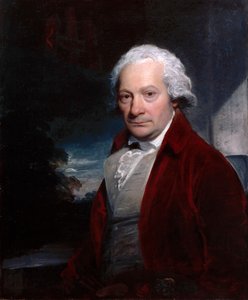
Paul Sandby
1798 - 1863 , United Kingdom
Quick Facts
- Artistic Movement Or Style: Landscape Painting
- Artists Or Movements Influenced By This Artist: ['Romanticism']
- Artists Who Influenced This Artist: ['Thomas Gainsborough']
- Date Of Birth: 1731
- Date Of Death: 1809
- Full Name: Paul Sandby RA
- Nationality: English
- Notable Artworks:
- The Light Steps, Hastings
- Paul Sandby
- Place Of Birth: Nottingham, United Kingdom
Related Articles
Paul Klee's Masterpieces: Explore 25 Iconic Paintings & Prints | ArtsDot
Journey through Paul Klee's 25 most iconic paintings & prints. Explore his abstract style, Bauhaus influence, and vibrant color palettes. Find museum-quality art reproductions & decor ideas at ArtsDot.com. Discover all masterpieces online.

Cézanne's Masterpieces: 25 Iconic Artworks to Transform Your Space
Journey through 25 iconic artworks by Paul Cézanne – a master of Impressionism and Post-Impressionism. Explore his landscapes, still lifes, and the stories behind these timeless masterpieces. Discover museum-quality reproductions & curated decor at ArtsDot.com.
Thomas Sandby: Pioneering Watercolourist & Topographer of Georgian England
Explore the life & art of Thomas Sandby (1721-1798), a pioneering English watercolourist and architect. Discover his innovations, role in founding the Royal Academy, and lasting legacy at ArtsDot.
National Gallery London's Masterpieces: 25 Iconic Paintings for Your Home Decor
Journey through the National Gallery London's 25 most iconic paintings! Explore Van Gogh, Monet, Rembrandt & more. Discover art history, techniques & find museum-quality reproductions for your home decor on ArtsDot.com.
The Nuances of Graphite: Exploring Emotional Depth & Technical Mastery in Pencil Drawing
Explore the captivating world of graphite drawing! Discover its rich history, master essential techniques like chiaroscuro, and learn how artists evoke emotion through this timeless medium. Expert insights for art enthusiasts.