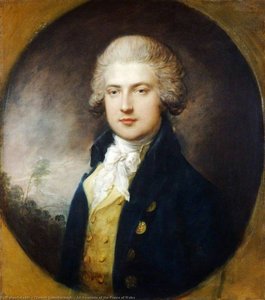
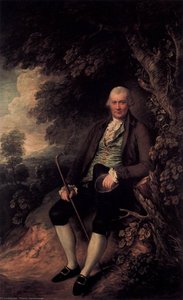
Early Life & Artistic Beginnings: From Nottingham Origins to Military Service
Thomas Sandby (1721 – 25 June 1798) was an English draughtsman, watercolour artist, architect and teacher. In 1743 he was appointed private secretary to the Duke of Cumberland, who later appointed him Deputy Ranger of Windsor Great Park, where he wa...
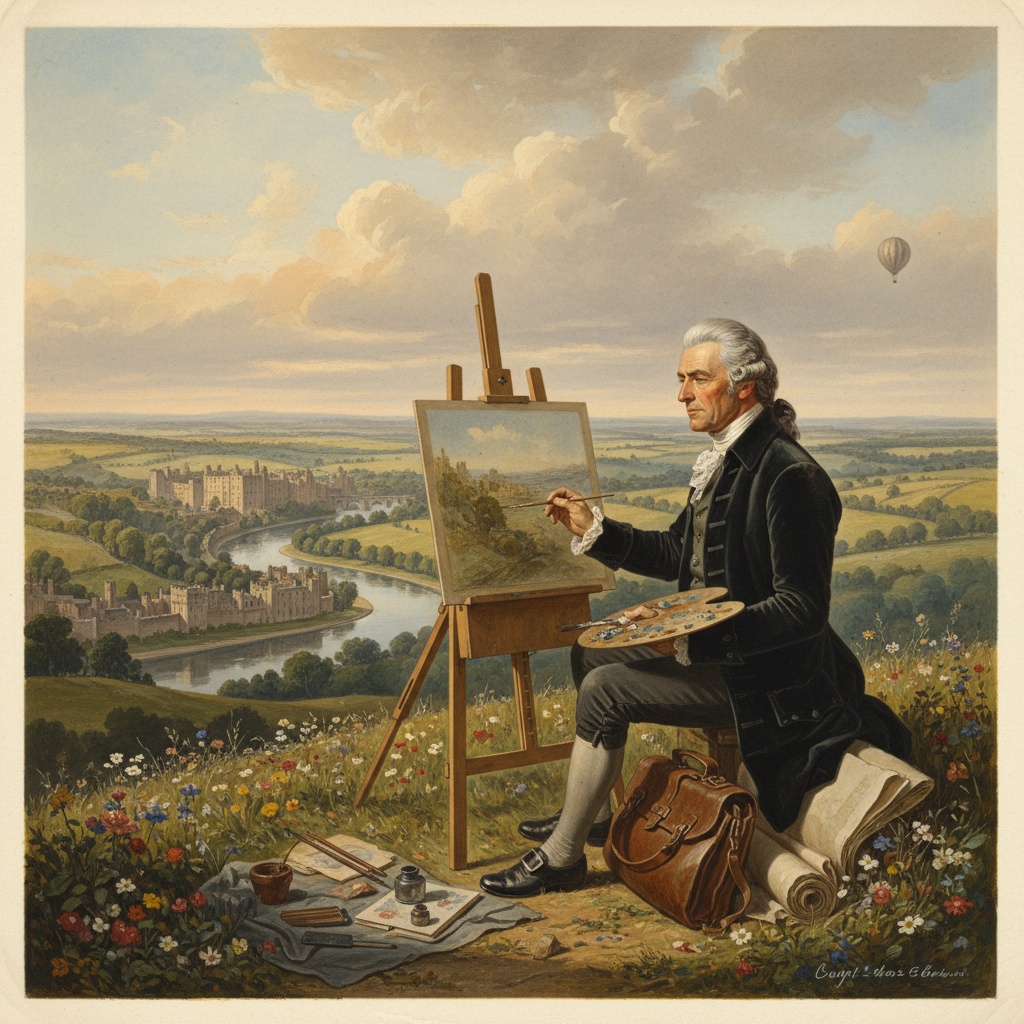
Thomas Sandby, a name synonymous with the blossoming of British watercolour painting in the 18th century, emerged from humble beginnings in Nottingham in 1721. Unlike many artists of his era born into privilege and patronage, Sandby’s early artistic development was largely self-directed, nurtured by an innate talent for draughtsmanship. His father, a textile worker, provided a stable but unartistic environment; the seeds of young Thomas's passion were sown through independent study and observation. This self-reliance would become a defining characteristic throughout his career.
The turning point arrived in 1741 when Sandby, alongside his brother Paul, ventured to London seeking opportunities. They initially found employment within the military drawing department at the Tower of London, a practical undertaking that honed their technical skills and provided a crucial introduction to topographical representation. This period wasn’t merely about earning a livelihood; it was an immersive education in precision, detail, and the art of capturing spatial relationships – qualities that would later distinguish Sandby's work. The influence of John Plumptre, MP for Nottingham, proved instrumental in securing this initial foothold.
However, it was his appointment as private secretary to William Augustus, Duke of Cumberland, in 1743 that truly propelled Sandby onto a path where artistic talent and practical responsibility converged. Accompanying the Duke on campaigns through Flanders and Scotland demanded not only administrative competence but also the ability to visually document events and landscapes – skills Sandby readily demonstrated.
Deputy Ranger of Windsor Great Park: A Landscape Transformed
The year 1746 marked a pivotal shift in Sandby’s career trajectory. Appointed Deputy Ranger of Windsor Great Park by the Duke of Cumberland, he was entrusted with considerable authority over one of England's most prestigious landscapes. This wasn’t simply a role of maintenance; it was an invitation to reshape and reimagine the park according to his artistic vision. Sandby embarked on extensive landscaping work, transforming the grounds into a harmonious blend of natural beauty and carefully orchestrated design.
His collaboration with his brother Paul during this period proved particularly fruitful. Together, they meticulously documented the evolving landscape through drawings, etchings, and watercolours. The resulting series of views – notably the *Eight Views of Windsor* (1754-55) – weren’t merely topographical records; they were imbued with a sense of romantic sensibility, capturing the atmosphere and character of the park with remarkable sensitivity. These works resonated deeply with contemporary audiences, establishing watercolour as a legitimate and expressive art form.
The patronage of George III further solidified Sandby's position. The King’s keen interest in Windsor Great Park and his personal friendship with Sandby provided unwavering support for his endeavors. This royal connection not only afforded him financial security but also elevated the status of landscape painting within the broader artistic community.
The Rise of Watercolour: Sandby’s Innovations and Techniques
Before Thomas Sandby, watercolour was often relegated to the realm of amateur pursuits or used as a preparatory medium for more ‘serious’ oil paintings. Sandby fundamentally altered this perception, elevating watercolour to an independent art form capable of profound artistic expression. He wasn't merely depicting landscapes; he was capturing fleeting moments of light and atmosphere with unprecedented nuance.
His technique involved a masterful blend of precision and spontaneity. While his military training instilled in him a meticulous attention to detail – evident in the accurate rendering of trees, foliage, and architectural elements – he also embraced a looser, more expressive approach to colour washes. He often worked *en plein air*, sketching directly from nature and then developing the compositions with layers of translucent watercolour, allowing the white of the paper to shine through and create a luminous effect.
Sandby’s influence extended beyond his own artistic practice. He encouraged other artists to explore the possibilities of watercolour, fostering a new generation of landscape painters who embraced its unique qualities. His work demonstrated that watercolour could be both technically demanding and emotionally evocative, challenging conventional notions of artistic hierarchy.
Founding Member of the Royal Academy: Establishing a New Artistic Order
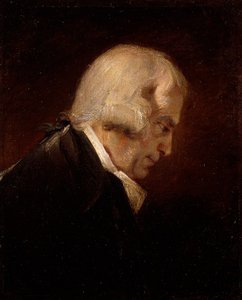 thomas sandby ra
Explore the art of Thomas Sandby RA (1721-1798), a pioneering English draughtsman, watercolorist & architect. Discover landscapes, architectural designs & his role in founding the Royal Academy.
In 1768, a watershed moment arrived in British art history with the founding of the Royal Academy. Thomas Sandby was among the twenty-eight original members nominated by George III, a testament to his growing reputation and influence within the artistic community. This wasn’t merely an honorary title; it represented a commitment to establishing a new standard for artistic excellence.
As the Academy's first professor of architecture, Sandby took on the responsibility of shaping the next generation of architects through a series of annual lectures delivered from 1770 until his death. While the manuscripts of these lectures were never formally published, they represented a comprehensive articulation of architectural principles and design aesthetics – reflecting his neoclassical sensibilities and emphasis on clarity and proportion.
His involvement in the Royal Academy wasn’t simply about promoting architecture; it was about advocating for a broader recognition of all artistic disciplines. He championed the inclusion of watercolour painting within the Academy's exhibitions, challenging the prevailing bias towards oil painting and paving the way for its eventual acceptance as a major art form.
Architectural Pursuits & Later Years: Designs, Lectures, and Legacy
While celebrated primarily as a watercolourist, Sandby’s architectural pursuits were significant in their own right. He designed numerous private houses in the Windsor area, showcasing his neoclassical style and attention to detail. His most ambitious project, the Freemason's Hall in Great Queen Street, London (demolished in 1932), unfortunately no longer stands, but drawings reveal a refined aesthetic sensibility influenced by architects like Sir William Chambers.
Despite his administrative responsibilities at Windsor and his commitments to the Royal Academy, Sandby continued to paint prolifically throughout his later years. He maintained a preference for a retired life, finding solace in the tranquility of nature and the meticulous observation of the landscape. His work from this period often reflects a sense of quiet contemplation and understated elegance.
Thomas Sandby passed away in 1798, leaving behind a remarkable legacy as a pioneer of British watercolour painting, a transformative influence on landscape art, and a founding father of the Royal Academy. His contributions extended beyond his artistic achievements; he fostered a new appreciation for nature, challenged conventional notions of artistic hierarchy, and helped to establish a vibrant artistic community in England.
Sandby's Enduring Influence: A Pioneer Remembered
The impact of Thomas Sandby resonates through the centuries. His innovative techniques, his commitment to capturing the nuances of light and atmosphere, and his advocacy for watercolour painting continue to inspire artists today. His works are held in prestigious collections worldwide, including The Metropolitan Museum of Art, offering a glimpse into the beauty and tranquility of Georgian England.
Sandby’s legacy isn't merely about the paintings he created; it’s about the artistic movement he helped to ignite. He demonstrated that watercolour could be more than just a preparatory sketch – it could be a powerful medium for expressing emotion, capturing beauty, and documenting the world around us.
At ArtsDot.com, we celebrate Sandby’s enduring influence by offering high-quality reproductions of his masterpieces, allowing art enthusiasts to experience the magic of his work firsthand. Explore our collection today and discover the timeless beauty of Thomas Sandby's vision.
- Free Art Consultation – Personalized guidance from art experts
- Custom Paintings from Photos – Handmade oil paintings or digital reproductions from any famous works