

 Preview
 Send
Send Share
Share
 Details

 Download
 Similars
 X-Ray
X-Ray Diaporama
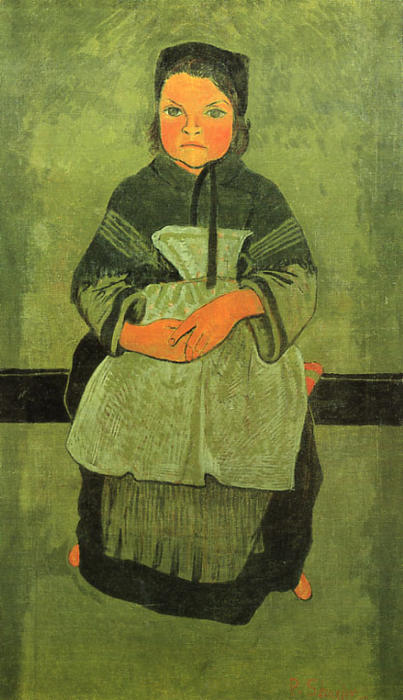
Little Breton Girl Seated (also known as Portrait of Marie Francisaille)


 Read More
Purchase a high-resolution, enhanced digital image, far superior to the online preview.
Each file is meticulously prepared by our in-house specialists using advanced tools and expert manual retouching. We ensure every image has exceptional clarity, precise color accuracy, and fine detail.
The final file is delivered via email within 72 hours, optimized for immediate use in professional, editorial, and print environments. This is the same quality trusted by top-tier design studios, publishers, and galleries.
Digital Image
Download a high-resolution file for personal display, printing, and creative projects. ( Buy Print Buy Hand Made Painting)
Included in Every Digital Image Order
Expert Digital Delivery, Guaranteed
When you choose ArtsDot.com, you're not just getting an image - you're receiving a professionally enhanced digital artwork, crafted with precision and backed by a satisfaction guarantee. Here's everything that comes with your order, automatically:

Fast Email Delivery
Your high-resolution digital image file will be emailed to you within 72 hours of ordering - ready for immediate use.

AI-Enhanced Digital File
Your artwork is professionally optimized using advanced AI tools and manual editing, ensuring maximum detail, clarity, and color accuracy.

Free Lifetime Re-Delivery
Accidentally deleted or lost your file? No worries - we'll resend it to you anytime, free of charge.

No Import Fees - Ever
Enjoy your artwork instantly with zero customs, duties, or delivery fees - digital downloads are always tax-free.

Color Accuracy Guarantee
We ensure your digital image reflects the original colors as closely as possible using professional tools and color management.

60-Day Satisfaction Guarantee
If you're not satisfied with your digital image, we'll revise it or refund 100% within 60 days - no questions asked.

100% Money-Back Guarantee
Not satisfied? Get a full refund within 60 days of receiving your digital file - no questions asked.

Bulk Order Discounts
Buy 3 images, save 10% - Buy 5, save 15% - Buy 10+, save 20%. Great for creative projects, galleries, and agencies.
A Moment Frozen in Time: Paul Serusier’s “Little Breton Girl Seated”
Paul Serusier's "Little Breton Girl Seated," often referred to as "Portrait of Marie Francisaille," is more than just a painting; it’s a poignant distillation of late 19th-century France, a testament to the burgeoning interest in capturing fleeting moments of childhood innocence and quiet contemplation. Completed in 1895, this deceptively simple work—measuring a modest 91.5 x 53.5 centimeters—holds within its carefully constructed composition a wealth of artistic significance, firmly placing it as a cornerstone of Post-Impressionism and a pivotal example of the innovative Cloisonnism technique.
The subject herself, Marie Francisaille, was a young girl from Brittany, a region deeply ingrained in French identity and folklore. Serusier’s choice to depict her seated against a muted green wall—a color palette reminiscent of Breton landscapes—immediately evokes a sense of place and connection to the land. The bench beneath her, worn and unassuming, suggests a comfortable familiarity, inviting us into her private world. Her gaze, directed slightly off-camera, is neither overtly cheerful nor melancholic; it’s an expression of quiet observation, hinting at a depth of feeling beyond her years.
The Language of Cloisonnism
Serusier's masterful execution lies in his adoption of the Cloisonnism style, pioneered by Paul Gauguin. This technique, inspired by medieval stained-glass windows, involved dividing the canvas into distinct, colored areas—like individual cells or compartments—separated by thick black outlines. Rather than blending colors seamlessly, Serusier employed a bold, almost graphic approach, emphasizing the separation of hues and creating a strikingly flat, mosaic-like effect. This deliberate flatness wasn’t an abandonment of realism but rather a conscious choice to prioritize color and form over traditional shading and perspective.
The painting's surface is remarkably smooth, achieved through meticulous layering of thin glazes—a technique that allowed him to build up rich colors while maintaining the clarity of his defined shapes. The green background isn’t rendered as a naturalistic hue but rather as a solid block of color, further reinforcing the stylized nature of the composition. This deliberate simplification and abstraction were revolutionary at the time, challenging conventional notions of representation and paving the way for future generations of artists.
A Historical Context: Nabis and Beyond
"Little Breton Girl Seated" emerged during a period of profound artistic experimentation in France. Serusier was a key figure within the “Nabis” (meaning "prophets") group, alongside artists like Pierre Bonnard and Édouard Vuillard. The Nabis sought to move beyond Impressionism’s fleeting effects of light and color, aiming instead for a more symbolic and emotionally resonant approach to painting. They were deeply influenced by Japanese prints, particularly their use of flat planes of color and simplified forms – elements that are clearly visible in Serusier's work.
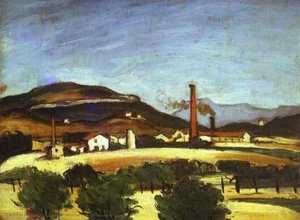
The painting’s placement within the Musée d'Orsay’s collection—a testament to its enduring artistic merit—reflects its significance as a pivotal work in the development of modern art. It stands alongside other masterpieces by Paul Serusier, including “PAYSAGE” and “BAIGNEUSES,” offering a comprehensive view of his distinctive style and artistic vision.
Symbolism and Emotional Resonance
Beyond its technical innovations, "Little Breton Girl Seated" possesses a remarkable emotional depth. The girl’s posture—relaxed yet attentive—conveys a sense of quiet dignity and self-possession. Her simple attire and unadorned surroundings suggest a life free from the complexities of adult concerns. There's an inherent vulnerability in her gaze, inviting us to empathize with her unspoken thoughts and feelings.
The painting’s enduring appeal lies not only in its aesthetic beauty but also in its ability to evoke a sense of nostalgia for a simpler time—a time when childhood innocence and the connection to nature held profound significance. It's a reminder that even in the most unassuming subjects, there can be extraordinary depth and emotional resonance.
For those seeking a high-quality reproduction of this iconic artwork, ArtsDot.com offers meticulously crafted hand-painted reproductions that capture the essence of Serusier’s original masterpiece. Visit our website to explore this stunning piece and discover other exceptional works by Paul Serusier.
Related Artworks
Artist Biography
early life and education
paul sérusier, a french painter, was born on november 9, 1864, in paris. he studied at the académie julian, where he became a monitor in the mid-1880s. this marked the beginning of his artistic journey, which would eventually lead him to pioneer abstract art and inspire the avant-garde nabis movement, synthetism, and cloisonnism.artistic career
in the summer of 1888, sérusier traveled to pont-aven, where he joined a small group of artists centered around paul gauguin. under gauguin's close supervision, sérusier painted "the talisman," an extreme exercise in cloisonnism that approximated pure abstraction. this piece showcased his innovative style and willingness to experiment with new techniques. as a post-impressionist painter, sérusier was part of the group les nabis, alongside pierre bonnard, édouard vuillard, and maurice denis. although not as widely recognized as some of his peers, sérusier's contributions to the development of abstract art are undeniable.notable works and legacy
some of sérusier's notable works include:- l'averse (1893), musée d'orsay, paris
- portrait of paul ranson (1890), musée d'orsay, paris
- melancholy (1890)
- the snake eaters (1894), muzeum narodowe, warsaw
artistic movement and influence
sérusier's work was influenced by cloisonnism, a style characterized by bold and flat forms separated by dark contours. this movement, which emerged in the late 19th century, played a significant role in shaping the development of modern art.- explore more on cloisonnism: the cloisonnism art movement
- discover sérusier's work: paul serusier | ArtsDot.com
- learn about the nabis movement: the nabis art movement
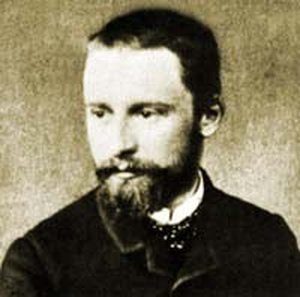
Paul Sérusier
1864 - 1927 , France
Quick Facts
- Artistic Movement Or Style: Post-Impressionism
- Artists Who Influenced This Artist:
- Paul Gauguin
- Maurice Denis
- Date Of Birth: November 9, 1864
- Full Name: Louis-Paul-Henri Sérusier
- Nationality: French
- Notable Artworks:
- The Talisman
- Landscape at the Bois d’Amour
- Place Of Birth: Paris, France

