 Preview
 Send
Send Share
Share
 Details

 Download
 Similars
 X-Ray
X-Ray Diaporama
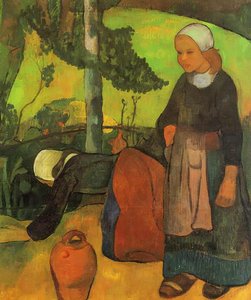
Washerwomen


 Read More
Hand Made Oil Reproduction
Hand-painted oil on canvas in your size and frame, made to order by our artists. ( Buy Print Buy Image)




P118B $10

P118H $10

P118W $10

P438Z $10

P508JH $12

P508YH $12

P805H $10

P805Z $10

P919BZ $10

P919G $10

P919XJ $10

P959ZH $10

P968JZ $12

W106C $8

W218G $10

W218JH $8

W218Y $10

W307PJ $10

W316G $10

W316PJ $8

W316Y $10

W398PJ $8

W4111J $10

W500HY $15

W500JH $15

W692G $12

W849H $8

W940BG $15

W953PJ $8




Pick from our preset sizes that match the artwork's original proportions.

You may enter your own dimensions to fit a specific frame or space. If your selected size does not match the original image's proportions, we will either crop the artwork or extend the painting with additional hand-painted elements. A digital mockup will be sent for your approval before production begins.
Please note that the on-screen preview does not reflect the actual cropping or extension. Only the mockup will accurately show the final composition.
While custom sizes are available, we recommend selecting a dimension from the predefined list to preserve the original proportions.
After order, ArtsDot.com team will email client for instructions and provide a mockup preview
Worldwide Delivery () in 3/4 weeks instead of standard 5 weeks. (16 August). No compromise on quality.

Free Worldwide Express Shipping

High-Quality Linen Canvas

Full Shipping Insurance

Customs Tax Refund Guarantee

True Color Matching Guarantee

60-Day Return Policy (Defects Only)

100% Money-Back Guarantee

Bulk Discount Offer
 Glass option is only available in size under 110 CM

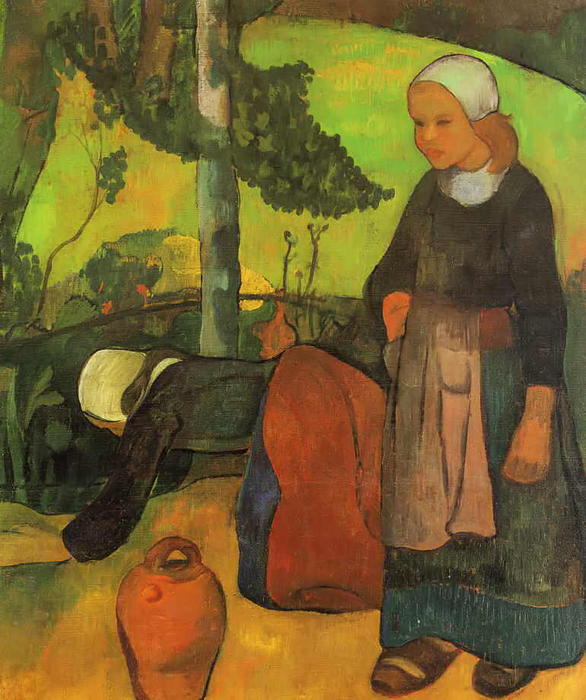
Washerwomen
Reproduction Medium
Reproduction Size
-


Total Price
$ 263
Artwork Description
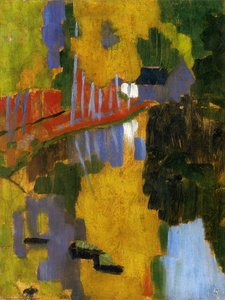
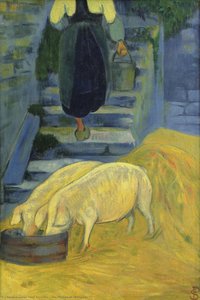
A Vibrant Echo of Impressionism: Exploring Paul Sérusier’s “The Washerwomen”
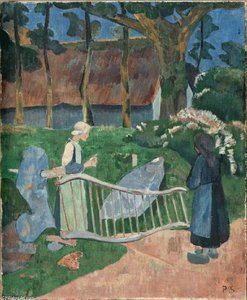
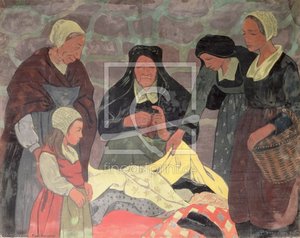
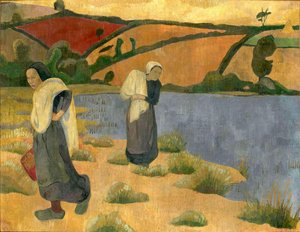
Paul Sérusier's "The Washerwomen," painted in 1891, stands as an undeniable emblem of Post-Impressionism and a foundational pillar of the Nabi movement—a collective that irrevocably altered the course of modern art. More than just a depiction of rural labor, this unassuming canvas embodies Serusier’s audacious experimentation with color and form, marking him as one of the earliest pioneers of abstract expression and profoundly influencing subsequent artistic endeavors. Located in Bern, Switzerland, Zentrum Paul Klee houses the largest collection of Paul Klee's artworks, offering visitors an unparalleled opportunity to immerse themselves in the spirit of modern art and explore Serusier’s legacy alongside other influential artists of his era.The Genesis of Cloisonnism: Technique and Innovation
Serusier’s approach to painting was revolutionary for its time. He rejected the conventional blending techniques favored by Impressionists, opting instead for a technique known as cloisonnism—a method championed by Paul Gauguin and characterized by applying pigment in small, rectangular cells or panels separated by thin lines of opaque paint. This deliberate fragmentation of color created an illusion of depth and luminosity without resorting to traditional shading. The resulting image possesses a remarkable textural quality, capturing the essence of the landscape with astonishing precision while simultaneously hinting at a deeper spiritual resonance. Examining “The Washerwomen” closely reveals Serusier’s masterful manipulation of pigment—a testament to his unwavering commitment to pushing artistic boundaries.A Landscape Steeped in Symbolism: Color and Atmosphere
The painting's dominant hue – a vibrant lemon yellow – isn’t merely descriptive; it serves as a powerful symbol of optimism and renewal, mirroring the burgeoning hope for a brighter future amidst the anxieties of the Victorian era. Serusier skillfully employs this color to illuminate the scene, casting an ethereal glow over the figures and emphasizing the surrounding wildflowers—specifically poppies—which are traditionally associated with remembrance and mourning. The rocky outcrop behind the women acts as a grounding element, anchoring the composition while simultaneously representing resilience and permanence. These subtle visual cues contribute significantly to the painting’s emotive impact, inviting contemplation on themes of beauty, labor, and the cyclical nature of life.Historical Context: Gauguin's Influence and the Nabi Movement
“The Washerwomen” emerged during a period of intense artistic ferment—the formative years of Les Nabis (The Impressionists), a group of artists who sought to transcend the limitations of Impressionism’s focus on fleeting impressions. Influenced by Gauguin’s exploration of Polynesian spirituality, Serusier and his fellow Nabis aimed to express inner emotions and spiritual truths through simplified forms and bold colors—a deliberate rejection of academic conventions. This movement represented a decisive step away from realism, prioritizing subjective experience and artistic intuition as guiding principles. Studying “The Washerwomen” alongside Gauguin’s works illuminates the shared ambition to forge a new aesthetic language rooted in profound contemplation.Emotional Resonance: Capturing Essence Over Representation
Ultimately, Serusier's achievement lies not in accurately portraying the physical world but in conveying its spirit—its essence—with breathtaking immediacy. “The Washerwomen” transcends mere visual depiction; it evokes a palpable sense of tranquility and connection to nature. The figures themselves appear almost dreamlike, imbued with an understated dignity that speaks volumes about their daily lives. This painting continues to captivate viewers today because it succeeds in capturing the intangible beauty of human experience—a timeless testament to Serusier’s artistic vision and his enduring contribution to the history of art.Related Artworks
Artist Biography
early life and education
paul sérusier, a french painter, was born on november 9, 1864, in paris. he studied at the académie julian, where he became a monitor in the mid-1880s. this marked the beginning of his artistic journey, which would eventually lead him to pioneer abstract art and inspire the avant-garde nabis movement, synthetism, and cloisonnism.artistic career
in the summer of 1888, sérusier traveled to pont-aven, where he joined a small group of artists centered around paul gauguin. under gauguin's close supervision, sérusier painted "the talisman," an extreme exercise in cloisonnism that approximated pure abstraction. this piece showcased his innovative style and willingness to experiment with new techniques. as a post-impressionist painter, sérusier was part of the group les nabis, alongside pierre bonnard, édouard vuillard, and maurice denis. although not as widely recognized as some of his peers, sérusier's contributions to the development of abstract art are undeniable.notable works and legacy
some of sérusier's notable works include:- l'averse (1893), musée d'orsay, paris
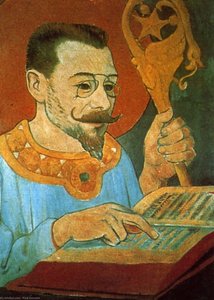
- portrait of paul ranson (1890), musée d'orsay, paris
- melancholy (1890)
- the snake eaters (1894), muzeum narodowe, warsaw
artistic movement and influence
sérusier's work was influenced by cloisonnism, a style characterized by bold and flat forms separated by dark contours. this movement, which emerged in the late 19th century, played a significant role in shaping the development of modern art.- explore more on cloisonnism: the cloisonnism art movement
- discover sérusier's work: paul serusier | ArtsDot.com
- learn about the nabis movement: the nabis art movement
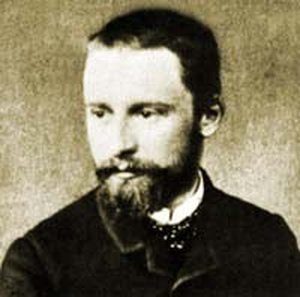
Paul Sérusier
1864 - 1927 , France
Quick Facts
- Artistic Movement Or Style: Post-Impressionism
- Artists Who Influenced This Artist:
- Paul Gauguin
- Maurice Denis
- Date Of Birth: November 9, 1864
- Full Name: Louis-Paul-Henri Sérusier
- Nationality: French
- Notable Artworks:
- The Talisman
- Landscape at the Bois d’Amour
- Place Of Birth: Paris, France
Related Articles

Cézanne's Masterpieces: 25 Iconic Artworks to Transform Your Space
Journey through 25 iconic artworks by Paul Cézanne – a master of Impressionism and Post-Impressionism. Explore his landscapes, still lifes, and the stories behind these timeless masterpieces. Discover museum-quality reproductions & curated decor at ArtsDot.com.
Paul Klee's Masterpieces: Explore 25 Iconic Paintings & Prints | ArtsDot
Journey through Paul Klee's 25 most iconic paintings & prints. Explore his abstract style, Bauhaus influence, and vibrant color palettes. Find museum-quality art reproductions & decor ideas at ArtsDot.com. Discover all masterpieces online.
Paul Sérusier: Pioneering Synthetism & The Nabis’ Symbolic Revolution
Discover Paul Sérusier's pivotal role in the Nabis movement & the birth of Synthetism. Explore 'The Talisman,' his influence on modern art, and a deeper understanding of this symbolic revolution. Expert analysis & insights.
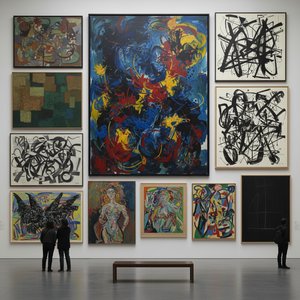
Abstract Expressionism's 10 Defining Masterpieces |
Explore 10 defining Abstract Expressionism masterpieces by Pollock, Rothko & de Kooning. Discover the stories behind these iconic paintings and find museum-quality art reproductions to elevate your home decor on .

Geometric Abstraction's 10 Defining Masterpieces | Art for Your Home - ArtsDot
Explore 10 defining masterpieces of Geometric Abstraction! Discover Kandinsky, Mondrian & Malevich’s iconic works. Find museum-quality art reproductions and curated decor ideas to elevate your home at ArtsDot.com.