 Preview
 Send
Send Share
Share
 Details

 Download
 Similars
 X-Ray
X-Ray Diaporama
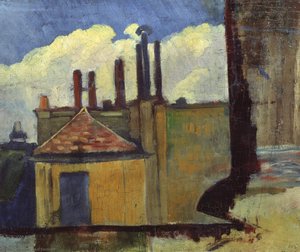
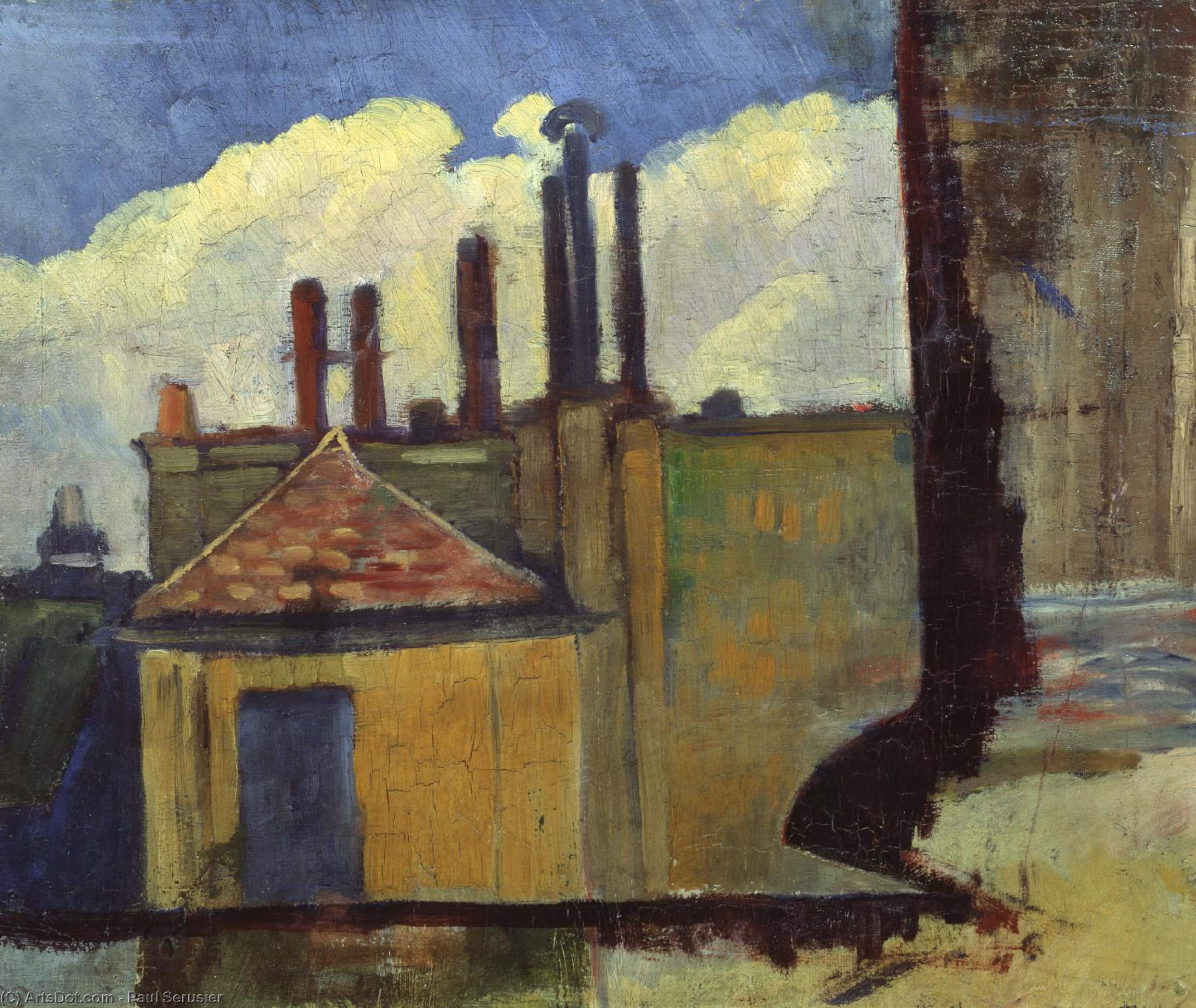
Roof Tops in Paris


 Read More
Hand Made Oil Reproduction
Hand-painted oil on canvas in your size and frame, made to order by our artists. ( Buy Print Buy Image)




P118B $10

P118H $10

P118W $10

P438Z $10

P508JH $12

P508YH $12

P805H $10

P805Z $10

P919BZ $10

P919G $10

P919XJ $10

P959ZH $10

P968JZ $12

W106C $8

W218G $10

W218JH $8

W218Y $10

W307PJ $10

W316G $10

W316PJ $8

W316Y $10

W398PJ $8

W4111J $10

W500HY $15

W500JH $15

W692G $12

W849H $8

W940BG $15

W953PJ $8




Pick from our preset sizes that match the artwork's original proportions.

You may enter your own dimensions to fit a specific frame or space. If your selected size does not match the original image's proportions, we will either crop the artwork or extend the painting with additional hand-painted elements. A digital mockup will be sent for your approval before production begins.
Please note that the on-screen preview does not reflect the actual cropping or extension. Only the mockup will accurately show the final composition.
While custom sizes are available, we recommend selecting a dimension from the predefined list to preserve the original proportions.
After order, ArtsDot.com team will email client for instructions and provide a mockup preview
Worldwide Delivery () in 3/4 weeks instead of standard 5 weeks. (17 August). No compromise on quality.

Free Worldwide Express Shipping

High-Quality Linen Canvas

Full Shipping Insurance

Customs Tax Refund Guarantee

True Color Matching Guarantee

60-Day Return Policy (Defects Only)

100% Money-Back Guarantee

Bulk Discount Offer
 Glass option is only available in size under 110 CM

Roof Tops in Paris
Reproduction Medium
Reproduction Size
-


Total Price
$ 263
Artwork Description
A Parisian Reverie: Paul Sérusier’s “Roof Tops in Paris”
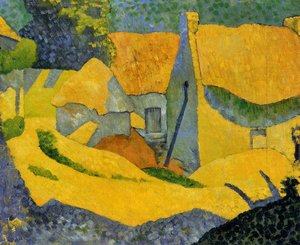
Paul Sérusier's "Roof Tops in Paris," painted around 1891, isn’t merely a depiction of a cityscape; it’s a distilled moment of quiet contemplation captured with the nascent brushstrokes of a revolutionary artist. This unassuming canvas, now housed within the Tate Collection, offers a poignant glimpse into the burgeoning world of Post-Impressionism and the birth of modern art. Sérusier, a key figure in the influential “Nabis” movement – a group dedicated to exploring symbolism and rejecting academic constraints – employed a technique that deliberately moved away from photographic realism, prioritizing instead the emotional resonance and subjective experience of the scene. The painting’s power lies not in meticulous detail but in its evocative atmosphere, a subtle blend of melancholy and urban beauty.The Language of Cloisonnism
Sérusier's approach to this work is deeply rooted in what he termed “Cloisonnism,” a technique he pioneered alongside Paul Gauguin. Rather than blending colors seamlessly – the hallmark of Impressionism – Sérusier built up the image using distinct, separated brushstrokes of pure color applied in flat planes. This creates an almost mosaic-like effect, reminiscent of the decorative panels found in medieval and Renaissance cloisonné enamel work. The yellow building dominates the foreground, its warm tones radiating a gentle light that seems to emanate from within. Notice how the red roof is sharply defined against the cloudy sky, drawing the eye immediately to this central element. The surrounding structures are rendered with looser brushwork, suggesting distance and contributing to the overall sense of depth. This deliberate separation of color isn’t about creating a realistic representation; it's about conveying feeling – a quiet stillness, perhaps even a hint of loneliness – through the manipulation of pure hues.A Parisian Moment in Time
To understand “Roof Tops in Paris,” one must consider its historical context. Sérusier spent much of 1891 in Paris, absorbing the energy and atmosphere of the city while simultaneously seeking inspiration for his art. The painting captures a specific moment – likely late afternoon – as the light softens and casts long shadows across the rooftops. The inclusion of factory chimneys and brick walls hints at the industrialization that was rapidly transforming Paris during this period, adding a layer of complexity to the scene. It’s important to note that Sérusier later moved to Brittany, where he continued to experiment with his artistic vision, developing further techniques like Synthetism and cloisonnism. The Parisian backdrop provides a crucial link between these early explorations and his later, more abstract works.Symbolic Resonance and Emotional Depth
Beyond its technical innovations, “Roof Tops in Paris” possesses a subtle symbolic weight. The muted colors and the solitary figures suggest a sense of isolation within the bustling city. The cloudy sky evokes a feeling of introspection, inviting the viewer to contemplate their own place within the urban landscape. The painting’s quietness is profoundly moving; it's not a vibrant celebration of Parisian life but rather a poignant meditation on its complexities and the human condition. It’s this ability to evoke emotion through restrained color and form that elevates “Roof Tops in Paris” beyond a simple cityscape – transforming it into a timeless work of art.A Legacy of Innovation
Paul Sérusier's "Roof Tops in Paris" stands as a pivotal work in the development of modern art, demonstrating the shift away from traditional representation towards a more subjective and expressive approach. His pioneering use of Cloisonnism influenced generations of artists, including Matisse and Braque, who would later build upon his techniques to create their own groundbreaking works. Today, this painting continues to resonate with viewers, offering a glimpse into the artistic spirit of a transformative era and reminding us of the power of art to capture not just what we see, but how we feel.Related Artworks
Artist Biography
early life and education
paul sérusier, a french painter, was born on november 9, 1864, in paris. he studied at the académie julian, where he became a monitor in the mid-1880s. this marked the beginning of his artistic journey, which would eventually lead him to pioneer abstract art and inspire the avant-garde nabis movement, synthetism, and cloisonnism.artistic career
in the summer of 1888, sérusier traveled to pont-aven, where he joined a small group of artists centered around paul gauguin. under gauguin's close supervision, sérusier painted "the talisman," an extreme exercise in cloisonnism that approximated pure abstraction. this piece showcased his innovative style and willingness to experiment with new techniques. as a post-impressionist painter, sérusier was part of the group les nabis, alongside pierre bonnard, édouard vuillard, and maurice denis. although not as widely recognized as some of his peers, sérusier's contributions to the development of abstract art are undeniable.notable works and legacy
some of sérusier's notable works include:- l'averse (1893), musée d'orsay, paris
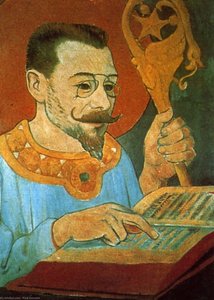
- portrait of paul ranson (1890), musée d'orsay, paris
- melancholy (1890)
- the snake eaters (1894), muzeum narodowe, warsaw
artistic movement and influence
sérusier's work was influenced by cloisonnism, a style characterized by bold and flat forms separated by dark contours. this movement, which emerged in the late 19th century, played a significant role in shaping the development of modern art.- explore more on cloisonnism: the cloisonnism art movement
- discover sérusier's work: paul serusier | ArtsDot.com
- learn about the nabis movement: the nabis art movement
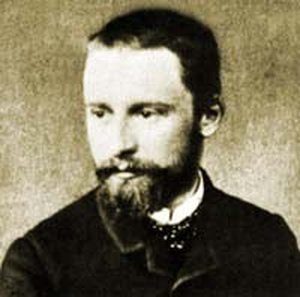
Paul Sérusier
1864 - 1927 , France
Quick Facts
- Artistic Movement Or Style: Post-Impressionism
- Artists Who Influenced This Artist:
- Paul Gauguin
- Maurice Denis
- Date Of Birth: November 9, 1864
- Full Name: Louis-Paul-Henri Sérusier
- Nationality: French
- Notable Artworks:
- The Talisman
- Landscape at the Bois d’Amour
- Place Of Birth: Paris, France
Related Articles

Cézanne's Masterpieces: 25 Iconic Artworks to Transform Your Space
Journey through 25 iconic artworks by Paul Cézanne – a master of Impressionism and Post-Impressionism. Explore his landscapes, still lifes, and the stories behind these timeless masterpieces. Discover museum-quality reproductions & curated decor at ArtsDot.com.
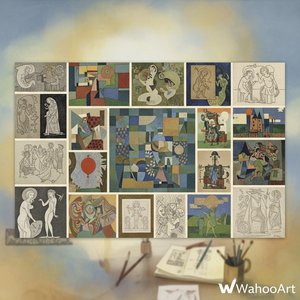
Paul Klee's Masterpieces: Explore 25 Iconic Paintings & Prints | ArtsDot
Journey through Paul Klee's 25 most iconic paintings & prints. Explore his abstract style, Bauhaus influence, and vibrant color palettes. Find museum-quality art reproductions & decor ideas at ArtsDot.com. Discover all masterpieces online.
Beyond Impressionism: Exploring the Emotional Depth of Post-Impressionist Painting
Explore the profound emotional depth & innovative techniques of Post-Impressionism with ArtsDot. Discover Cézanne, Van Gogh, Gauguin & more – and their lasting impact on modern art.
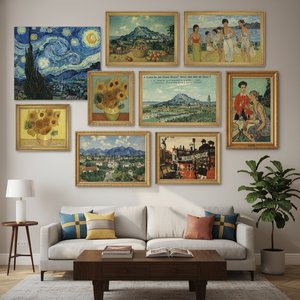
Post-Impressionism's 10 Defining Masterpieces: Art for Your Home |
Journey through Post-Impressionism's 10 defining masterpieces – Van Gogh, Monet & more. Explore iconic paintings, art history & find museum-quality reproductions for your home at . Discover all masterpieces online!
Beyond Light & Color: Impressionism vs. Post-Impressionism for the Discerning Collector
Explore the nuances of Impressionism & Post-Impressionism with . Expert insights for collectors on style, investment, and acquiring museum-quality reproductions.