 Preview
 Send
Send Share
Share
 Details

 Download
 Similars
 X-Ray
X-Ray Diaporama
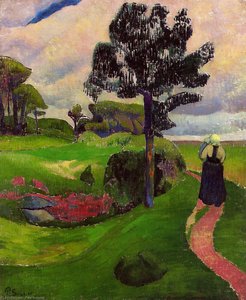
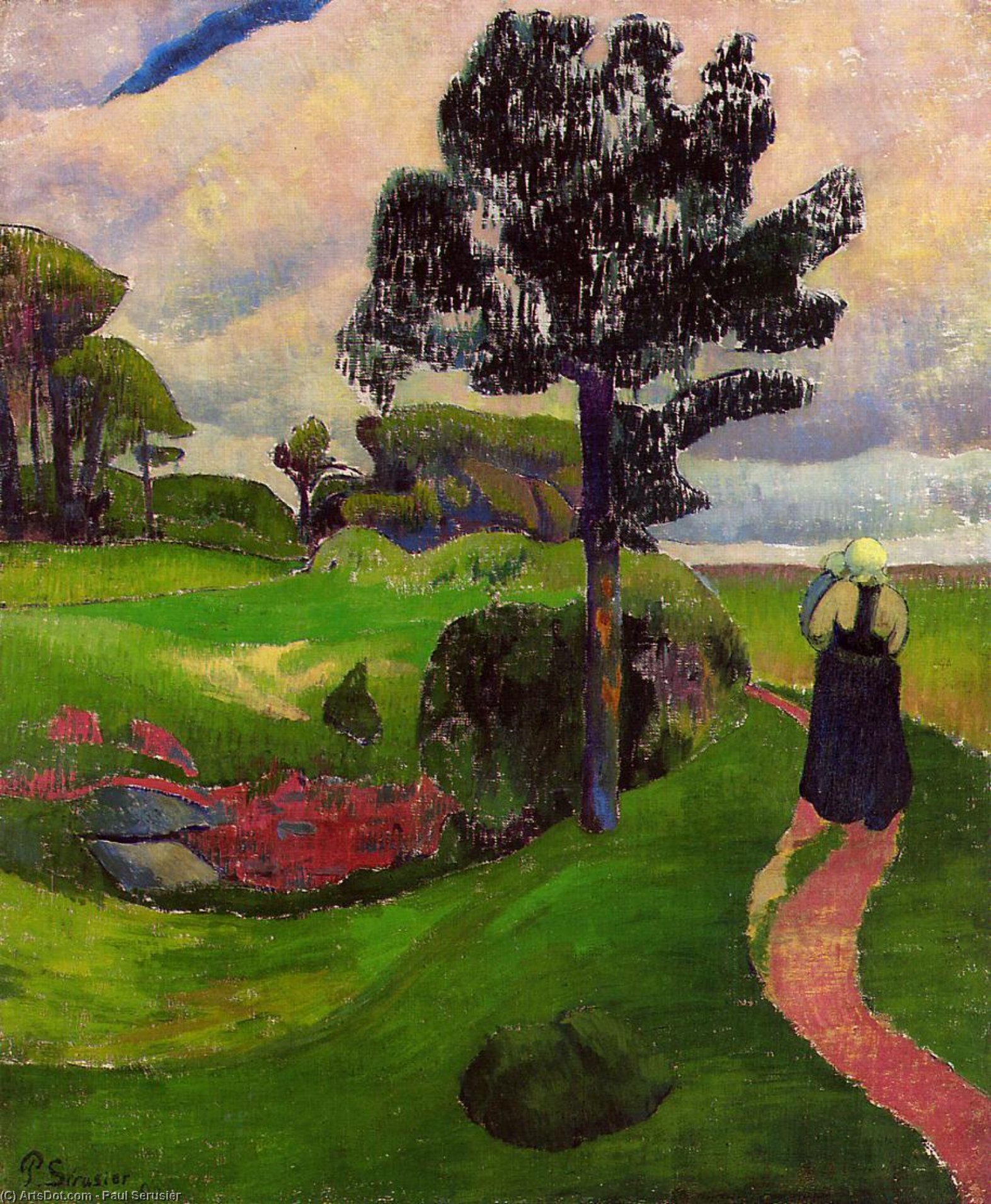
Mother and Child on a Breton Landscape
 Oil On Canvas
- WallArt
- Synthetism
 1890
1890- 19th Century
 73.0 x 60.0 cm
 Read More
Hand Made Oil Reproduction
Hand-painted oil on canvas in your size and frame, made to order by our artists. ( Buy Print Buy Image)




P118B $10

P118H $10

P118W $10

P438Z $10

P508JH $12

P508YH $12

P805H $10

P805Z $10

P919BZ $10

P919G $10

P919XJ $10

P959ZH $10

P968JZ $12

W106C $8

W218G $10

W218JH $8

W218Y $10

W307PJ $10

W316G $10

W316PJ $8

W316Y $10

W398PJ $8

W4111J $10

W500HY $15

W500JH $15

W692G $12

W849H $8

W940BG $15

W953PJ $8




Pick from our preset sizes that match the artwork's original proportions.

You may enter your own dimensions to fit a specific frame or space. If your selected size does not match the original image's proportions, we will either crop the artwork or extend the painting with additional hand-painted elements. A digital mockup will be sent for your approval before production begins.
Please note that the on-screen preview does not reflect the actual cropping or extension. Only the mockup will accurately show the final composition.
While custom sizes are available, we recommend selecting a dimension from the predefined list to preserve the original proportions.
After order, ArtsDot.com team will email client for instructions and provide a mockup preview
Worldwide Delivery () in 3/4 weeks instead of standard 5 weeks. (23 August). No compromise on quality.

Free Worldwide Express Shipping

High-Quality Linen Canvas

Full Shipping Insurance

Customs Tax Refund Guarantee

True Color Matching Guarantee

60-Day Return Policy (Defects Only)

100% Money-Back Guarantee

Bulk Discount Offer
 Glass option is only available in size under 110 CM

Mother and Child on a Breton Landscape
Reproduction Medium
Reproduction Size
-


Total Price
$ 263
Artwork Description
Mother and Child on a Breton Landscape: A Glimpse of Serene Harmony
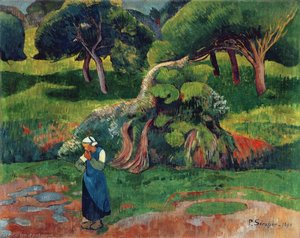
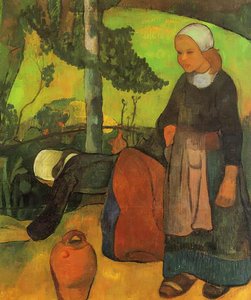
Paul Sérusier's "Mother and Child on a Breton Landscape," painted in 1890, is more than just a depiction of everyday life; it’s an embodiment of the Synthetist movement’s ideals. The painting portrays a woman gently carrying her child along a path winding through a verdant Breton countryside. Surrounded by trees bathed in soft light, the scene evokes a profound sense of peace and tranquility. This work exemplifies Sérusier's commitment to capturing not just visual reality but also the spiritual essence of his subjects.
The Essence of Synthetism
Synthetism emerged as a reaction against Impressionism, spearheaded by artists like Paul Gauguin, Émile Bernard, and Louis Anquetin. Rather than focusing on fleeting moments of light and color, Synthetists sought to distill their subjects into simplified forms and symbolic representations. They employed bold colors, flattened perspectives, and geometric shapes to create a sense of harmony and balance—a deliberate departure from the Impressionist emphasis on optical realism. Sérusier’s painting perfectly embodies these principles; the figures are rendered with broad strokes and simplified features, while the landscape is composed of blocks of color rather than meticulously detailed forms.
Technique and Materials
Sérusier masterfully utilized oil paints on canvas to achieve a rich depth and texture. The visible brushstrokes contribute to the painting's overall sense of warmth and intimacy. He employed an impasto technique, applying thick layers of paint that create a tactile surface, inviting viewers to engage with the artwork on a sensory level. The color palette is dominated by earthy greens and blues, punctuated by subtle touches of red and pink, creating a harmonious and calming visual experience. The deliberate use of these colors contributes to the painting’s overall mood of serenity and contemplation.
Symbolism and Emotional Impact
Beyond its aesthetic appeal, "Mother and Child on a Breton Landscape" carries symbolic weight. The mother and child represent universal themes of nurturing, protection, and familial love. The Breton landscape itself symbolizes connection to nature and the enduring strength of rural life. The tree in the background can be interpreted as a symbol of resilience and growth. Sérusier’s intention was not merely to depict a scene but to evoke an emotional response—a sense of quiet contemplation and appreciation for the simple joys of life. The painting's overall effect is one of gentle beauty, inviting viewers to pause and reflect on the enduring power of human connection and the tranquility of the natural world.
Paul Sérusier: A Pioneer of Abstract Art
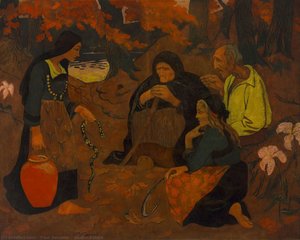
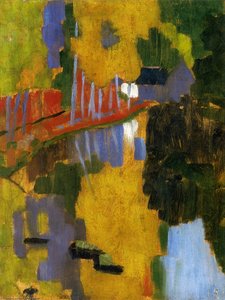
Paul Sérusier (1864-1927) was a French painter who played a pivotal role in the development of abstract art. He studied at the Académie Julian and, crucially, spent time with Paul Gauguin in Pont-Aven, where he produced "The Talisman," considered a landmark work in Cloisonnism and a precursor to abstraction. Sérusier’s exploration of simplified forms and symbolic representation significantly influenced the Nabis movement and paved the way for later abstract artists. Other notable works by Sérusier include “Melancholia, or Breton Eve” and "The Incantation (The Holy Wood)," further demonstrating his unique artistic vision.
Related Artworks
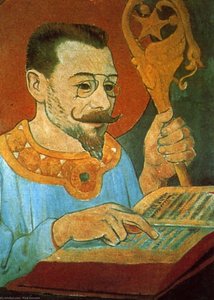
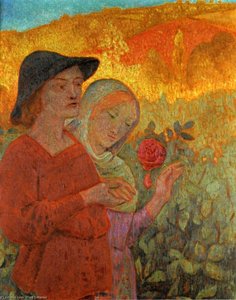
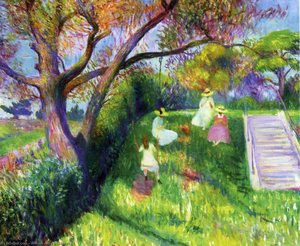
Artist Biography
early life and education
paul sérusier, a french painter, was born on november 9, 1864, in paris. he studied at the académie julian, where he became a monitor in the mid-1880s. this marked the beginning of his artistic journey, which would eventually lead him to pioneer abstract art and inspire the avant-garde nabis movement, synthetism, and cloisonnism.artistic career
in the summer of 1888, sérusier traveled to pont-aven, where he joined a small group of artists centered around paul gauguin. under gauguin's close supervision, sérusier painted "the talisman," an extreme exercise in cloisonnism that approximated pure abstraction. this piece showcased his innovative style and willingness to experiment with new techniques. as a post-impressionist painter, sérusier was part of the group les nabis, alongside pierre bonnard, édouard vuillard, and maurice denis. although not as widely recognized as some of his peers, sérusier's contributions to the development of abstract art are undeniable.notable works and legacy
some of sérusier's notable works include:- l'averse (1893), musée d'orsay, paris
- portrait of paul ranson (1890), musée d'orsay, paris
- melancholy (1890)
- the snake eaters (1894), muzeum narodowe, warsaw
artistic movement and influence
sérusier's work was influenced by cloisonnism, a style characterized by bold and flat forms separated by dark contours. this movement, which emerged in the late 19th century, played a significant role in shaping the development of modern art.- explore more on cloisonnism: the cloisonnism art movement
- discover sérusier's work: paul serusier | ArtsDot.com
- learn about the nabis movement: the nabis art movement
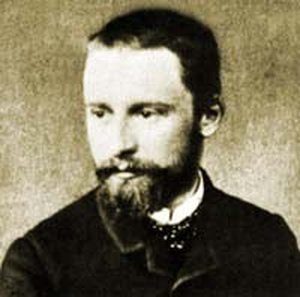
Paul Sérusier
1864 - 1927 , France
Quick Facts
- Artistic Movement Or Style: Post-Impressionism
- Artists Who Influenced This Artist:
- Paul Gauguin
- Maurice Denis
- Date Of Birth: November 9, 1864
- Full Name: Louis-Paul-Henri Sérusier
- Nationality: French
- Notable Artworks:
- The Talisman
- Landscape at the Bois d’Amour
- Place Of Birth: Paris, France
Related Articles

Cézanne's Masterpieces: 25 Iconic Artworks to Transform Your Space
Journey through 25 iconic artworks by Paul Cézanne – a master of Impressionism and Post-Impressionism. Explore his landscapes, still lifes, and the stories behind these timeless masterpieces. Discover museum-quality reproductions & curated decor at ArtsDot.com.
Paul Klee's Masterpieces: Explore 25 Iconic Paintings & Prints | ArtsDot
Journey through Paul Klee's 25 most iconic paintings & prints. Explore his abstract style, Bauhaus influence, and vibrant color palettes. Find museum-quality art reproductions & decor ideas at ArtsDot.com. Discover all masterpieces online.
Paul Sérusier: Pioneering Synthetism & The Nabis’ Symbolic Revolution
Discover Paul Sérusier's pivotal role in the Nabis movement & the birth of Synthetism. Explore 'The Talisman,' his influence on modern art, and a deeper understanding of this symbolic revolution. Expert analysis & insights.

Romantic Landscapes: 10 Masterpieces for Your Home | ArtsDot
Journey through 10 Romantic landscape masterpieces by Friedrich, Turner & Cole. Explore emotional art, sublime nature scenes & iconic 19th-century paintings. Find museum-quality reproductions for your home at ArtsDot.com – discover the full collection online!

John Constable's Masterpieces: Explore 25 Iconic Landscapes for Your Home
Journey through John Constable's 25 most celebrated landscapes. Explore Romanticism, Dedham Vale & his masterful use of light in iconic paintings like 'Hay Wain'. Find museum-quality art reproductions and elevate your home decor on ArtsDot.com.