 Preview
 Send
Send Share
Share
 Details

 Download
 Similars
 X-Ray
X-Ray Diaporama
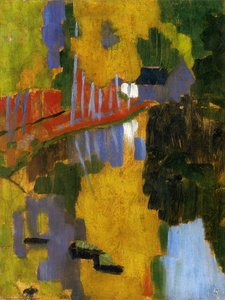
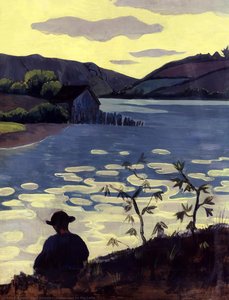
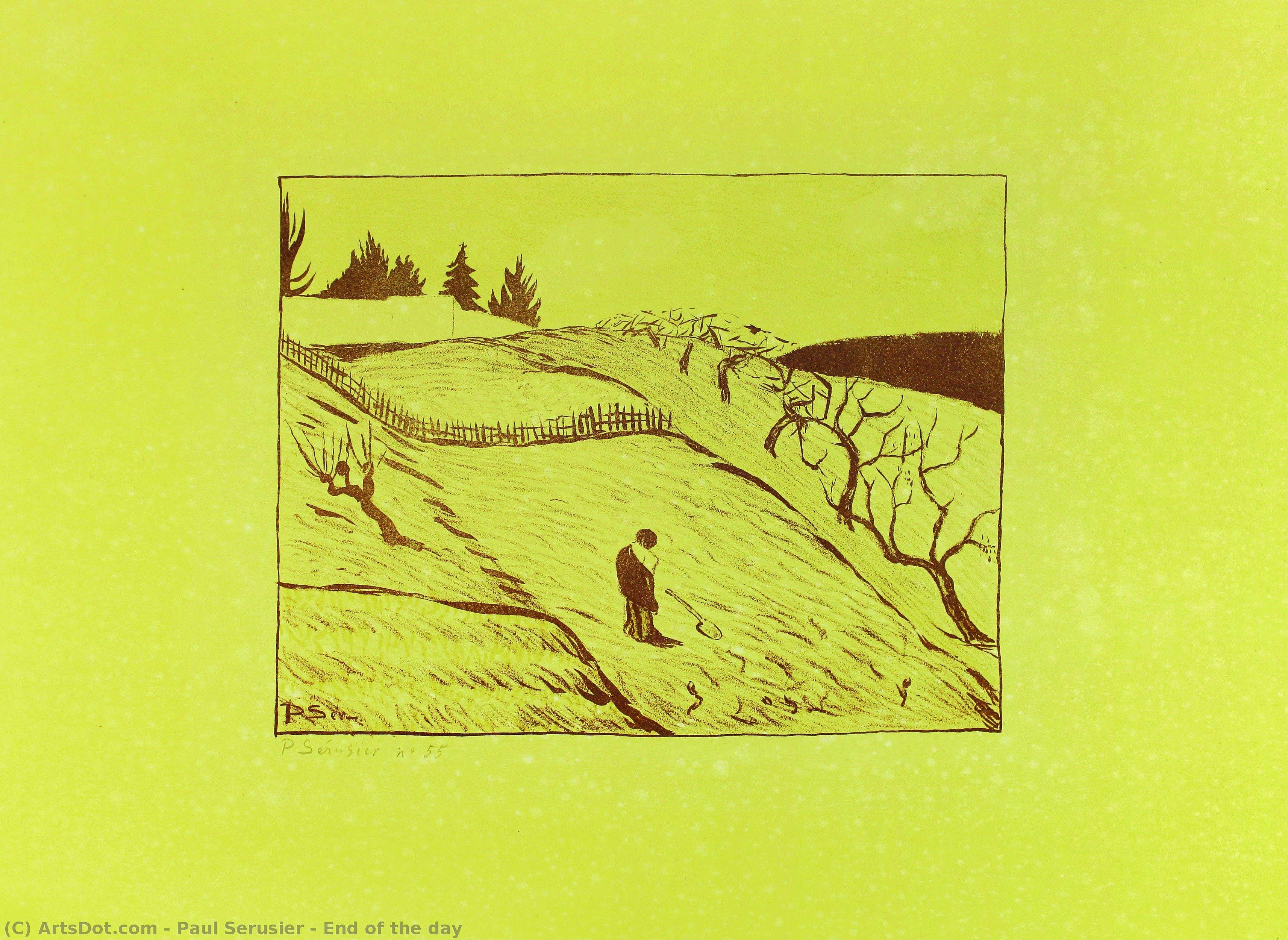
End of the day
 Acrylic On Canvas
- WallArt
- Post-Impressionism
 1893
1893- 19th Century
 23.0 x 30.0 cm
 Musée de Pont-Aven
 Read More
Hand Made Oil Reproduction
Hand-painted oil on canvas in your size and frame, made to order by our artists. ( Buy Print Buy Image)




P118B $10

P118H $10

P118W $10

P438Z $10

P508JH $12

P508YH $12

P805H $10

P805Z $10

P919BZ $10

P919G $10

P919XJ $10

P959ZH $10

P968JZ $12

W106C $8

W218G $10

W218JH $8

W218Y $10

W307PJ $10

W316G $10

W316PJ $8

W316Y $10

W398PJ $8

W4111J $10

W500HY $15

W500JH $15

W692G $12

W849H $8

W940BG $15

W953PJ $8




Pick from our preset sizes that match the artwork's original proportions.

You may enter your own dimensions to fit a specific frame or space. If your selected size does not match the original image's proportions, we will either crop the artwork or extend the painting with additional hand-painted elements. A digital mockup will be sent for your approval before production begins.
Please note that the on-screen preview does not reflect the actual cropping or extension. Only the mockup will accurately show the final composition.
While custom sizes are available, we recommend selecting a dimension from the predefined list to preserve the original proportions.
After order, ArtsDot.com team will email client for instructions and provide a mockup preview
Worldwide Delivery () in 3/4 weeks instead of standard 5 weeks. (17 August). No compromise on quality.

Free Worldwide Express Shipping

High-Quality Linen Canvas

Full Shipping Insurance

Customs Tax Refund Guarantee

True Color Matching Guarantee

60-Day Return Policy (Defects Only)

100% Money-Back Guarantee

Bulk Discount Offer
 Glass option is only available in size under 110 CM

End of the day
Reproduction Medium
Reproduction Size
-


Total Price
$ 263
Artwork Description
The End of the Day – A Pioneering Vision of Synthetism
Paul Sérusier’s “End of the Day,” painted in 1893 during his formative summer at Pont-Aven, France alongside Vincent van Gogh and Gauguin, stands as a cornerstone of Impressionist abstraction and arguably the genesis of Synthetism – a movement that would profoundly influence the artistic landscape of the early 20th century. More than just a depiction of a tranquil Breton landscape, it’s an audacious experiment in conveying emotion through simplified forms and flattened color palettes.
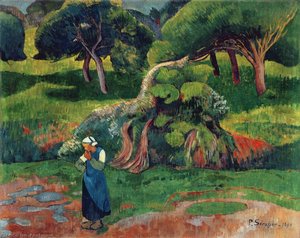
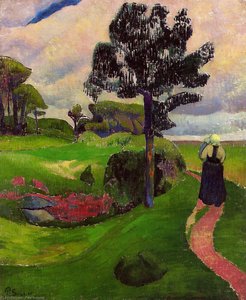
The painting captures a hazy afternoon scene: a solitary man stands amidst a field dotted with trees, bathed in muted yellows and greens. Sérusier deliberately eschewed meticulous realism, prioritizing instead the expression of feeling. This approach aligns perfectly with Gauguin’s influence – he championed a symbolic language where color and form coalesce to communicate ideas rather than merely representing visual reality.
- Style: Synthetism - Rejecting Impressionistic optical blending, Sérusier sought to distill the essence of his subject into pure pigment.
- Technique: Cloisonnism – This technique involved applying paint in separate blocks or cells of color onto a toned surface, creating a textured and visually arresting effect reminiscent of Byzantine mosaics.
- Color Palette: Dominated by warm yellows and greens, mirroring the golden light filtering through the trees—a deliberate choice to evoke serenity and contemplation.
The composition itself is strikingly simple yet powerfully evocative. The man’s posture suggests introspection, gazing towards an unseen horizon – a gesture that speaks to the broader humanist concerns of the era. Critics noted Sérusier's bold departure from traditional artistic conventions, recognizing him as a visionary who anticipated the stylistic innovations of Cubism and Futurism.
Pont-Aven: A Crucible of Artistic Innovation
Pont-Aven served as an epicenter for artistic experimentation during this period. The group of artists gathered there – Sérusier, Gauguin, Cézanne, Bernard—were united by a desire to transcend Impressionism’s limitations and explore new avenues for artistic expression. They were deeply influenced by Celtic mythology and symbolism, seeking inspiration in ancient traditions.
Sérusier's fascination with Breton landscapes stemmed from his belief that nature possessed inherent spiritual significance. He aimed to capture not just what he saw but what he *felt*, translating visual impressions into emotionally resonant color harmonies. This pursuit of subjective experience was a hallmark of the Symbolist movement, which flourished alongside Synthetism.
The Talisman: An Emblematic Synthesis
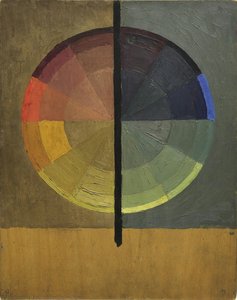
"The Talisman," painted shortly before “End of the Day,” solidified Sérusier’s reputation as a pioneer of abstraction. Considered by many to be the first truly non-representational painting in France, it exemplifies the Synthetist aesthetic with its almost entirely flat surface and restricted color range.
This artwork is notable for its deliberate rejection of illusionistic perspective—a technique championed by Cézanne—and instead prioritizing a flattened space that emphasizes color and texture. The talisman itself symbolizes protection and guidance, reflecting Sérusier’s spiritual quest and his desire to communicate profound ideas through visual language.
Legacy and Influence
Paul Sérusier's contribution to art history extends far beyond the stylistic innovations of Synthetism. He instilled a spirit of experimentation and openness in subsequent generations of artists, encouraging them to challenge conventions and pursue their own artistic visions. “End of the Day” remains an enduring testament to his pioneering spirit—a painting that continues to inspire awe and contemplation decades after its creation.
Related Artworks
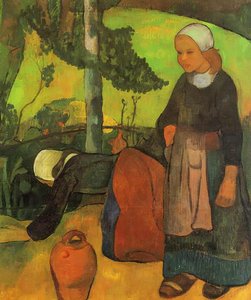
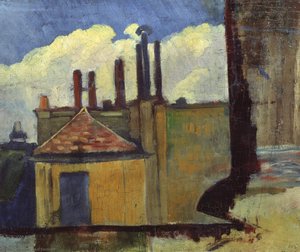
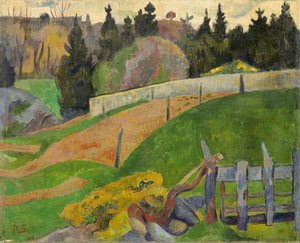
Artist Biography
early life and education
paul sérusier, a french painter, was born on november 9, 1864, in paris. he studied at the académie julian, where he became a monitor in the mid-1880s. this marked the beginning of his artistic journey, which would eventually lead him to pioneer abstract art and inspire the avant-garde nabis movement, synthetism, and cloisonnism.artistic career
in the summer of 1888, sérusier traveled to pont-aven, where he joined a small group of artists centered around paul gauguin. under gauguin's close supervision, sérusier painted "the talisman," an extreme exercise in cloisonnism that approximated pure abstraction. this piece showcased his innovative style and willingness to experiment with new techniques. as a post-impressionist painter, sérusier was part of the group les nabis, alongside pierre bonnard, édouard vuillard, and maurice denis. although not as widely recognized as some of his peers, sérusier's contributions to the development of abstract art are undeniable.notable works and legacy
some of sérusier's notable works include:- l'averse (1893), musée d'orsay, paris
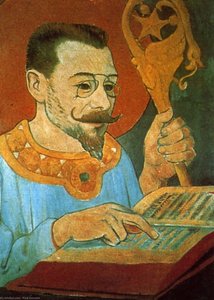
- portrait of paul ranson (1890), musée d'orsay, paris
- melancholy (1890)
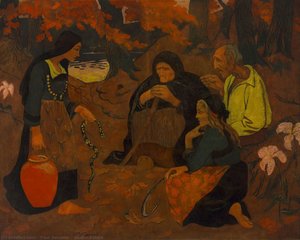
- the snake eaters (1894), muzeum narodowe, warsaw
artistic movement and influence
sérusier's work was influenced by cloisonnism, a style characterized by bold and flat forms separated by dark contours. this movement, which emerged in the late 19th century, played a significant role in shaping the development of modern art.- explore more on cloisonnism: the cloisonnism art movement
- discover sérusier's work: paul serusier | ArtsDot.com
- learn about the nabis movement: the nabis art movement
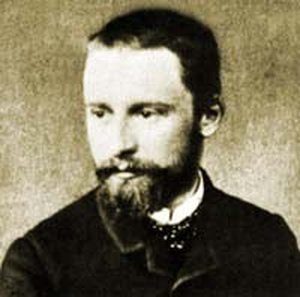
Paul Sérusier
1864 - 1927 , France
Quick Facts
- Artistic Movement Or Style: Post-Impressionism
- Artists Who Influenced This Artist:
- Paul Gauguin
- Maurice Denis
- Date Of Birth: November 9, 1864
- Full Name: Louis-Paul-Henri Sérusier
- Nationality: French
- Notable Artworks:
- The Talisman
- Landscape at the Bois d’Amour
- Place Of Birth: Paris, France
Related Articles
Verdant Visions: Exploring the Symbolism & Aesthetic Impact of Green in Art History
Explore the rich history & symbolism of green in art! Discover iconic paintings, techniques, and how to bring verdant harmony into your home with ArtsDot's expert guide.

Giclée Prints: Archival Quality & Aesthetic Nuances for the Discerning Collector
Explore the world of giclée prints with ArtsDot. Learn about archival quality, aesthetic nuances & investment potential. Expert guidance for discerning art collectors seeking museum-quality reproductions and lasting value.
Dark Olive Green Masterpieces: 10 Iconic Paintings & Decor Ideas
Explore 10 iconic paintings where dark olive green reigns supreme! From Van Gogh to Rembrandt, discover art history's most captivating masterpieces & the stories behind them. Find museum-quality reproductions and curated decor ideas at .
Golden Hues: 10 Masterpieces Dominated by Chrome Yellow | ArtsDot
Immerse yourself in golden light! Explore 10 famous paintings dominated by 'Chrome Yellow', from Van Gogh’s Sunflowers to Monet's Haystacks. Discover the stories behind these iconic Impressionist & Post-Impressionist masterpieces and find museum-quality art reproductions at ArtsDot.com.

The Enduring Legacy of Fine Art Prints: Technique, History & Aesthetic Impact
Explore the rich history & techniques of fine art prints. Discover investment potential, assess authenticity, and learn how to preserve your collection with expert guidance. Trusted insights for discerning collectors.