 Preview
 Send
Send Share
Share
 Details

 Download
 Similars
 X-Ray
X-Ray Diaporama
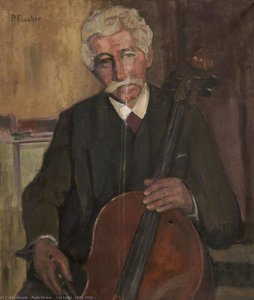
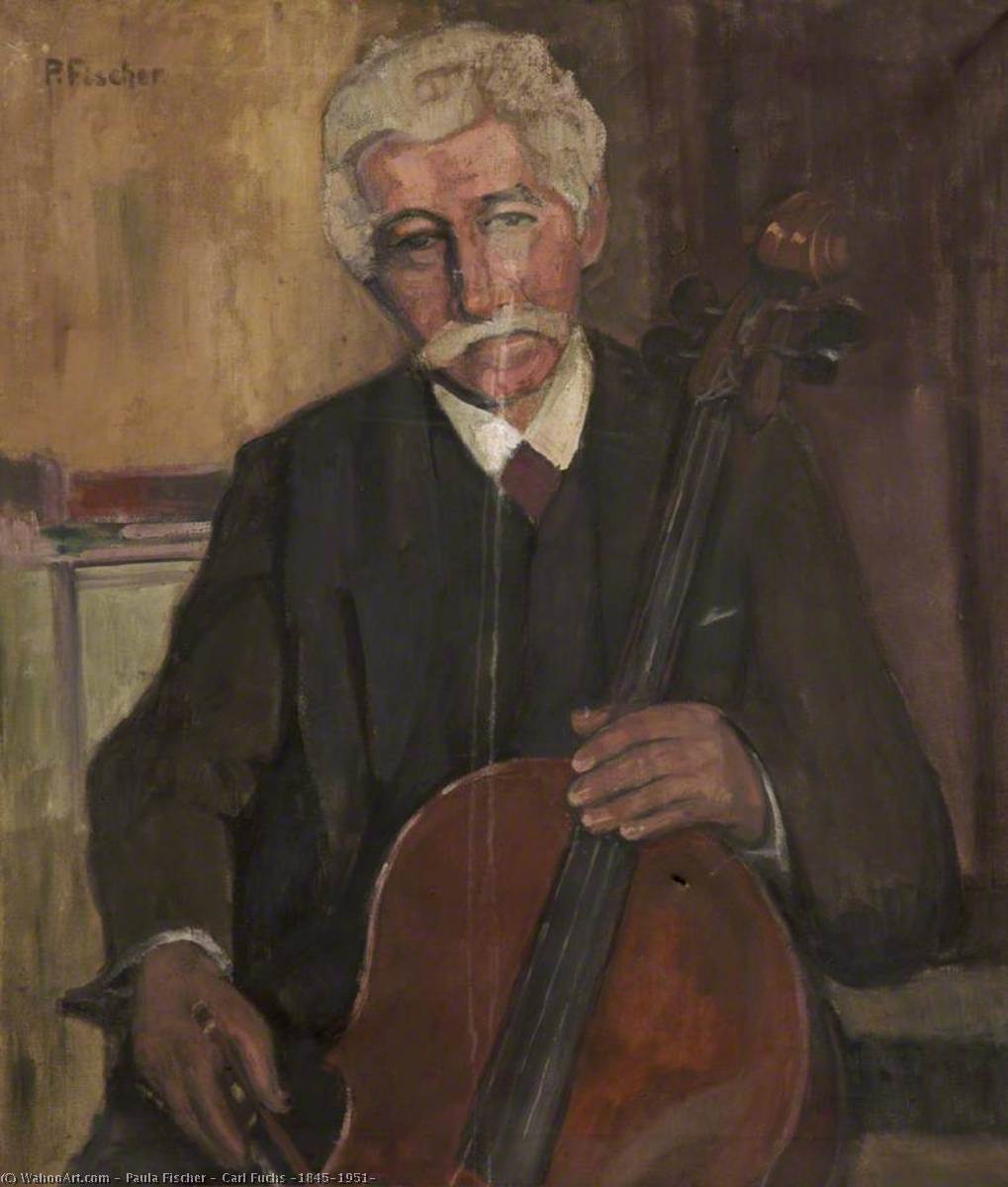
Carl Fuchs (1845–1951)
 Other
Other 78.0 x 68.0 cm
 Royal Northern College of Music
 Read More
Giclée / Art Print
Museum-quality giclée or canvas print with fast production and flexible finish options. ( Buy Hand Made Painting Buy Image)




P118B $10

P118H $10

P118W $10

P438Z $10

P508JH $12

P508YH $12

P805H $10

P805Z $10

P919BZ $10

P919G $10

P919XJ $10

P959ZH $10

P968JZ $12

W106C $8

W218G $10

W218JH $8

W218Y $10

W307PJ $10

W316G $10

W316PJ $8

W316Y $10

W398PJ $8

W4111J $10

W500HY $15

W500JH $15

W692G $12

W849H $8

W940BG $15

W953PJ $8




Pick from our preset sizes that match the artwork's original proportions.

You may enter your own dimensions to fit a specific frame or space. If your selected size does not match the original image's proportions, we will either crop the artwork or extend the image with a mirrored or solid-fill edge. A digital mockup will be sent for your approval before production begins.
Please note that the on-screen preview does not reflect the actual cropping or extension. Only the mockup will accurately show the final composition.
While custom sizes are available, we recommend selecting a dimension from the predefined list to preserve the original proportions.
Worldwide Delivery () in 2 weeks instead of standard 4/5 weeks. (22 August)

Free Worldwide Express Shipping

High-Quality Linen Canvas

Full Shipping Insurance

Customs Tax Refund Guarantee

True Color Matching Guarantee

60-Day Return Policy (Defects Only)

100% Money-Back Guarantee

Bulk Discount Offer
 Glass option is only available in size under 110 CM

Carl Fuchs (1845–1951)
Giclée / Art Print
Reproduction Size
-


Total Price
$ 63
Related Artworks
Artist Biography
A Pioneer of German Expressionism: The Life and Art of Paula Fischer
Paula Fischer, born Paula Modersohn-Becker in 1873, stands as a pivotal figure in the early development of modern art, specifically within the burgeoning Expressionist movement. Her story is one of remarkable artistic courage – a woman defying societal expectations to pursue her passion with unwavering dedication. Born into a relatively prosperous family in Bremen, Germany, Paula’s initial path seemed predetermined: marriage and motherhood. However, a deep-seated yearning for creative expression led her to study painting privately, initially under Bernhard Rode, then at art schools in Bremen and Worpswede, an artists' colony that would profoundly shape her artistic journey. It was within the bohemian atmosphere of Worpswede that she encountered fellow artists like Otto Modersohn, whom she married in 1895, and Heinrich Vogeler, figures who both supported and challenged her evolving style. Her early works reflect a blend of Realism and Impressionism, depicting rural scenes and portraits with a focus on capturing the essence of everyday life. But even within these initial explorations, a distinct emotional intensity began to emerge, hinting at the powerful artistic voice that would soon define her oeuvre.The Search for Inner Truth: Artistic Development and Style
Fischer’s artistic development was marked by a relentless pursuit of inner truth and a rejection of conventional representation. Dissatisfied with merely depicting outward appearances, she embarked on a path of simplification and abstraction, seeking to convey the emotional weight and psychological depth of her subjects. This quest led her to explore various influences, including primitive art – particularly African sculptures which she encountered in Bremen’s ethnographic museum – and the work of Vincent van Gogh, whose expressive use of color and brushwork resonated deeply with her own artistic sensibilities. Her self-portraits, a recurring motif throughout her career, are particularly revealing. They aren't simply likenesses; they are profound explorations of identity, vulnerability, and the complexities of the female experience. She deliberately distorted features, elongated forms, and employed bold color palettes to convey not just *how* she looked, but *how she felt*. This willingness to prioritize emotional honesty over realistic depiction was groundbreaking for her time. Her landscapes also underwent a transformation, becoming increasingly stylized and imbued with symbolic meaning. Trees, fields, and coastal scenes were no longer merely representations of nature; they served as vehicles for expressing her inner landscape – feelings of isolation, longing, and connection to the natural world.Major Themes and Achievements: Motherhood, Identity, and the Rural World
Several key themes dominate Fischer’s artistic output. Motherhood, experienced both physically and emotionally, became a central subject in her work. Paintings like “Mother with Child” (1907) are not idealized depictions of maternal bliss; they portray the raw physicality, exhaustion, and profound emotional connection inherent in motherhood. She challenged traditional representations of women, moving beyond passive subjects to depict them as complex individuals grappling with their own desires, anxieties, and identities. Her portraits of peasant women, often rendered with a monumental scale and stark simplicity, elevate these figures to iconic status, imbuing them with dignity and strength. The rural world surrounding Worpswede also played a significant role in her art. She captured the beauty and harshness of the landscape, but more importantly, she used it as a metaphor for the human condition – a reflection of life’s cycles, struggles, and enduring spirit. Despite facing numerous obstacles – societal constraints, financial difficulties, and critical indifference during her lifetime – Fischer produced an astonishing body of work comprising over 700 paintings, drawings, and prints. Her dedication to her art, even in the face of adversity, is a testament to her unwavering belief in its power.Historical Significance and Legacy
Paula Fischer’s impact on the development of modern art cannot be overstated. Though largely unrecognized during her lifetime – she died tragically young at the age of 49 in 1907, shortly after giving birth to her daughter – her work has since been hailed as a precursor to Expressionism and a significant contribution to feminist art history. Her bold experimentation with form, color, and subject matter paved the way for future generations of artists who sought to break free from traditional conventions. She challenged the male-dominated art world by asserting her own unique artistic vision and exploring themes that were often considered taboo or inappropriate for women at the time. Today, her paintings are held in major museums around the world, including those in Bremen and Lisbon, and she is recognized as one of the most important German artists of the early 20th century. Her legacy extends beyond her artistic achievements; it lies in her courage to be true to herself, to embrace vulnerability, and to use art as a means of exploring the complexities of human existence. She remains an inspiration for artists seeking to find their own voice and challenge the status quo.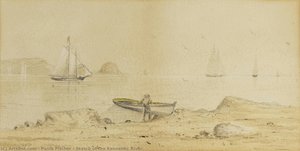
paula fischer
1873 - 1950
Quick Facts
- Artistic Movement Or Style: Expressionist Style
- Artists Or Movements Influenced By This Artist: ['German Art History']
- Artists Who Influenced This Artist: ['Paula Modersohn-Becker']
- Date Of Birth: 1873
- Date Of Death: 1950
- Full Name: Paula Fischer
- Nationality: German
- Notable Artworks:
- Carl Fuchs
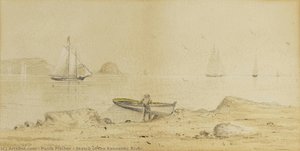
- Sketch of the Kennebec River
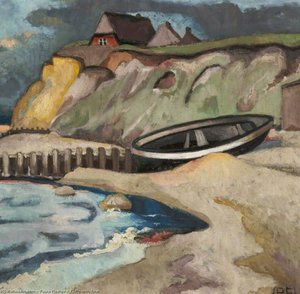
- Cliffs with Boat
- Place Of Birth: WahooArt
Related Articles
Ernst Fuchs: A Visionary of Fantastic Realism & His Enduring Legacy
Explore the captivating world of Ernst Fuchs & the Vienna School of Fantastic Realism. Discover his unique 'mischtechnik', iconic symbolism, and lasting influence on visionary art. Expert insights for collectors.

Etching Masters: 10 Legendary Prints That Revolutionized Art | ArtsDot
Journey through 10 legendary etching masterpieces by Rembrandt, Dürer & Goya. Explore the history of printmaking and discover timeless art for your home. Find museum-quality reproductions at ArtsDot.com.
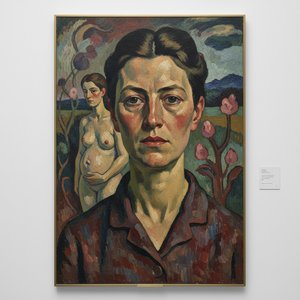
Paula Modersohn-Becker: Pioneering Expressionism & the Intimate Self
Explore the groundbreaking work of Paula Modersohn-Becker, a pioneer of Expressionism. Discover her intimate self-portraits & poignant depictions of motherhood – shaping early 20th-century art with emotional depth and innovation.
Leonardo da Vinci's Masterpieces: Explore 25 Iconic Artworks for Your Home | ArtsDot
Journey through Leonardo da Vinci's genius with our curated selection of 25 iconic artworks. Explore the stories behind Mona Lisa, The Last Supper & more Renaissance masterpieces. Find museum-quality art reproductions for your home at ArtsDot.com.
Carl Eduard Schuch: Bridging Realism & Symbolism in Late 19th-Century Austrian Painting
Explore the captivating landscapes & still lifes of Carl Eduard Schuch (1846-1903), a pivotal Austrian painter bridging realism and modernism. Discover his influences, unique style, and lasting legacy with ArtsDot.