

 Preview
 Send
Send Share
Share
 Details

 Download
 Similars
 X-Ray
X-Ray Diaporama
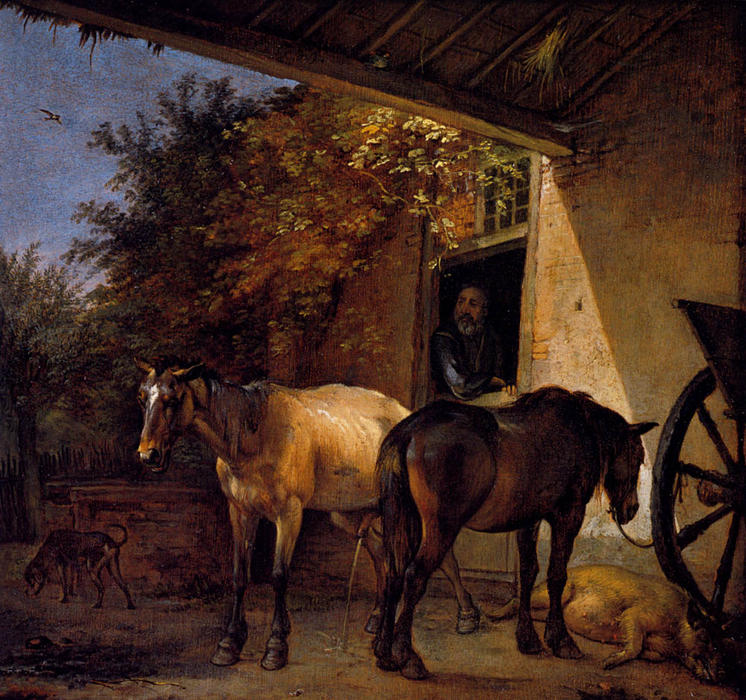
A Barnyard With Two Plough Horses

 Read More
Purchase a high-resolution, enhanced digital image, far superior to the online preview.
Each file is meticulously prepared by our in-house specialists using advanced tools and expert manual retouching. We ensure every image has exceptional clarity, precise color accuracy, and fine detail.
The final file is delivered via email within 72 hours, optimized for immediate use in professional, editorial, and print environments. This is the same quality trusted by top-tier design studios, publishers, and galleries.
Digital Image
Download a high-resolution file for personal display, printing, and creative projects. ( Buy Print Buy Hand Made Painting)
Included in Every Digital Image Order
Expert Digital Delivery, Guaranteed
When you choose ArtsDot.com, you're not just getting an image - you're receiving a professionally enhanced digital artwork, crafted with precision and backed by a satisfaction guarantee. Here's everything that comes with your order, automatically:

Fast Email Delivery
Your high-resolution digital image file will be emailed to you within 72 hours of ordering - ready for immediate use.

AI-Enhanced Digital File
Your artwork is professionally optimized using advanced AI tools and manual editing, ensuring maximum detail, clarity, and color accuracy.

Free Lifetime Re-Delivery
Accidentally deleted or lost your file? No worries - we'll resend it to you anytime, free of charge.

No Import Fees - Ever
Enjoy your artwork instantly with zero customs, duties, or delivery fees - digital downloads are always tax-free.

Color Accuracy Guarantee
We ensure your digital image reflects the original colors as closely as possible using professional tools and color management.

60-Day Satisfaction Guarantee
If you're not satisfied with your digital image, we'll revise it or refund 100% within 60 days - no questions asked.

100% Money-Back Guarantee
Not satisfied? Get a full refund within 60 days of receiving your digital file - no questions asked.

Bulk Order Discounts
Buy 3 images, save 10% - Buy 5, save 15% - Buy 10+, save 20%. Great for creative projects, galleries, and agencies.
Related Artworks
Artist Biography
Rembrandt: A Life Painted in Light and Shadow
Rembrandt Harmenszoon van Rijn, a name synonymous with artistic genius, remains one of the most profoundly influential figures in Western art history. Born in Leiden on July 15, 1606, into a family of modest means – his father a miller, his mother a baker – Rembrandt’s journey from humble beginnings to international acclaim is a testament to his extraordinary talent and relentless pursuit of artistic mastery. His life, tragically marked by financial hardship and personal loss, ultimately shaped the intensely emotional and psychologically astute works that continue to captivate audiences centuries later. He died in Amsterdam on October 4, 1669, leaving behind an unparalleled legacy of paintings, etchings, and drawings.
Rembrandt’s early artistic training was a blend of formal instruction and informal apprenticeship. He began his studies with Jacob van Swanenburgh, a painter who had recently returned from Italy, absorbing the techniques and stylistic influences of the Italian Renaissance. This initial period laid the groundwork for his later development, introducing him to perspective, anatomy, and the use of light and shadow – elements that would become hallmarks of his distinctive style. He then spent time with Pieter Lastman, a more established history painter, further refining his skills in composition and narrative storytelling. However, it was Rembrandt’s independent experimentation and willingness to break from convention that truly set him apart.
Rembrandt's artistic development during the 1620s and early 30s saw him move beyond simple commissions and begin exploring a wider range of subjects. His early works, such as *Stone Operation (Allegory of Touch)* and *Three Musicians*, demonstrate his burgeoning talent for capturing human emotion and creating dynamic compositions. These pieces, often allegorical in nature, reveal an interest in symbolism and philosophical themes – a characteristic that would become increasingly prominent throughout his career. Crucially, this period also marked the beginning of Rembrandt’s exploration of printmaking, a medium he embraced with remarkable skill and innovation. His etchings, characterized by their intricate detail and dramatic contrasts of light and dark, quickly gained recognition and established him as a master of the technique.
The Golden Age and Artistic Innovation
By the mid-1630s, Rembrandt had firmly established himself as one of the leading artists in Amsterdam. He began to receive increasingly prestigious commissions, including portraits for wealthy merchants and civic officials. His portraiture is particularly noteworthy for its psychological depth and ability to capture not just physical likeness but also the inner lives of his subjects. Works like *The Night Watch* (1642) and *The Return of the Prodigal Son* (1669) exemplify this talent, offering profound insights into human nature and emotion. These paintings are not merely representations; they are explorations of morality, faith, and redemption.
Rembrandt’s artistic style evolved significantly over his career. Initially influenced by Italian masters like Caravaggio, he developed a unique approach characterized by the masterful manipulation of light and shadow – what he termed *chiaroscuro*. This technique created dramatic contrasts, emphasizing key elements within the composition and imbuing his paintings with an intense emotional atmosphere. He also pioneered new methods of etching, experimenting with different plates and techniques to achieve unprecedented levels of detail and tonal variation. His use of color was equally innovative, employing a rich palette of earthy tones and subtle gradations to create a sense of realism and depth.
Personal Struggles and Artistic Resilience
Despite his artistic success, Rembrandt’s life was punctuated by periods of financial hardship and personal tragedy. He struggled with debt throughout much of his career, exacerbated by extravagant spending habits and the fluctuating demands of the art market. The loss of his first wife, Saskia van Uylen, in 1642, and the subsequent death of their son Titus in 1650 plunged him into deep grief, profoundly impacting his artistic output. These difficult times led to a period of relative obscurity, during which he moved to a smaller studio and faced increasing financial difficulties.
However, Rembrandt’s resilience as an artist never faltered. During this challenging period, he continued to produce some of his most profound and emotionally resonant works, including *Bathsheba at Her Bath* (1662) and *The Night Watch*. These paintings demonstrate a remarkable ability to transcend personal suffering and create art that is both deeply moving and universally relevant. His later years were marked by a renewed sense of purpose and a commitment to exploring the complexities of human experience.
Legacy and Enduring Influence
Rembrandt’s influence on subsequent generations of artists is immeasurable. His innovative techniques in painting and printmaking revolutionized the art world, paving the way for new approaches to composition, color, and light. His psychological realism and emotional depth set a new standard for portraiture, inspiring countless artists to delve into the inner lives of their subjects.
Today, Rembrandt’s works are celebrated in museums around the world, attracting millions of visitors each year. His paintings continue to resonate with audiences due to their timeless beauty, profound emotional power, and enduring relevance. Rembrandt remains a towering figure in art history – a master of light, shadow, and human emotion whose legacy continues to inspire awe and admiration.
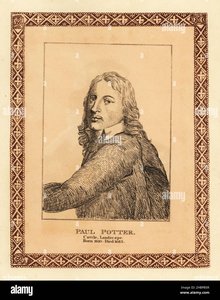
paulus pietersz potter
1625 - 1654 , Netherlands
Quick Facts
- Artistic Movement Or Style: Baroque, Dutch Golden Age
- Artists Or Movements Influenced By This Artist:
- Jan Steen
- Rembrandt School
- Artists Who Influenced This Artist:
- Titian
- Michelangelo
- Date Of Birth: July 15, 1606
- Date Of Death: October 4, 1669
- Full Name: Rembrandt Harmenszoon van Rijn
- Nationality: Dutch
- Notable Artworks:
- The Night Watch
- Belshazzar's Feast
- The Anatomy Lesson
- Place Of Birth: Leiden, Netherlands

