 Preview
 Send
Send Share
Share
 Details

 Download
 Similars
 X-Ray
X-Ray Diaporama
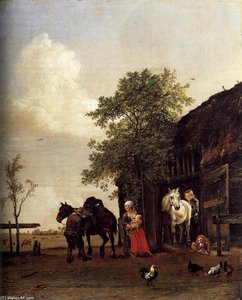
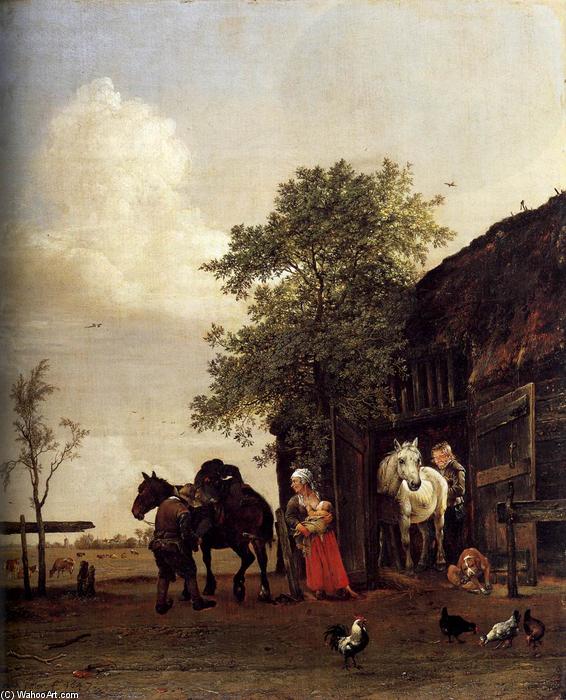
Figures with Horses by a Stable
 Acrylic On Canvas
- WallArt
- Romantic Landscape Painting
 1647
1647 45.0 x 38.0 cm
 Museum of Art
 Read More
Hand Made Oil Reproduction
Hand-painted oil on canvas in your size and frame, made to order by our artists. ( Buy Print Buy Image)




P118B $10

P118H $10

P118W $10

P438Z $10

P508JH $12

P508YH $12

P805H $10

P805Z $10

P919BZ $10

P919G $10

P919XJ $10

P959ZH $10

P968JZ $12

W106C $8

W218G $10

W218JH $8

W218Y $10

W307PJ $10

W316G $10

W316PJ $8

W316Y $10

W398PJ $8

W4111J $10

W500HY $15

W500JH $15

W692G $12

W849H $8

W940BG $15

W953PJ $8




Pick from our preset sizes that match the artwork's original proportions.

You may enter your own dimensions to fit a specific frame or space. If your selected size does not match the original image's proportions, we will either crop the artwork or extend the painting with additional hand-painted elements. A digital mockup will be sent for your approval before production begins.
Please note that the on-screen preview does not reflect the actual cropping or extension. Only the mockup will accurately show the final composition.
While custom sizes are available, we recommend selecting a dimension from the predefined list to preserve the original proportions.
After order, ArtsDot.com team will email client for instructions and provide a mockup preview
Worldwide Delivery () in 3/4 weeks instead of standard 5 weeks. (17 August). No compromise on quality.

Free Worldwide Express Shipping

High-Quality Linen Canvas

Full Shipping Insurance

Customs Tax Refund Guarantee

True Color Matching Guarantee

60-Day Return Policy (Defects Only)

100% Money-Back Guarantee

Bulk Discount Offer
 Glass option is only available in size under 110 CM

Figures with Horses by a Stable
Reproduction Medium
Reproduction Size
-


Total Price
$ 263
Artwork Description
A Window Into Dutch Baroque: Paulus Potter’s “Figures with Horses by a Stable”
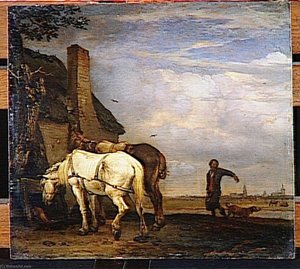
Paulus Potter (1625-1654), a name that resonates deeply within the annals of Dutch Golden Age art, stands as an unparalleled pioneer—a visionary who bridged the gap between meticulous observation and emotive expression. Born in Enkhuizen on November 20, 1625, his artistic journey commenced amidst a familial tapestry woven with threads of creative talent; his father, Pieter Symonsz Potter, was celebrated for his masterful execution of gilded leather hangings and charming genre scenes, while his mother, Aaltje Paulusdr Bartsius, carried the legacy of Willem Bartsius’s esteemed artistry. This formative environment undoubtedly instilled in young Paulus a profound appreciation for the natural world and cultivated an unwavering dedication to artistic precision—qualities that would define his oeuvre. His relocation to Leiden in 1628, followed by Amsterdam in 1631, cemented his position within a vibrant artistic ecosystem brimming with intellectual ferment and transformative influences. It was precisely in Amsterdam’s bustling studios that Potter honed his craft under the tutelage of his father, absorbing invaluable lessons in composition and rendering realistic animal forms.- Subject Matter: The painting depicts a serene tableau—a man attempting to mount his horse with assistance from another individual within the confines of a modest stable yard. This seemingly simple scene transcends mere depiction; it embodies a profound meditation on human interaction with domesticated animals, reflecting the prevailing pastoral ethos of the era.
- Style: Potter’s work exemplifies the burgeoning Romantic movement's influence on Dutch Baroque art. Unlike earlier depictions prioritizing idealized beauty, “Figures with Horses” prioritizes unflinching realism—a commitment to capturing the textures and nuances of animal musculature and behavior with breathtaking accuracy.
- Technique: Potter employed a masterful oil painting technique characterized by meticulous layering and blending—a painstaking process that allowed him to achieve an astonishing level of detail. The artist skillfully utilized chiaroscuro, employing dramatic contrasts between light and shadow to sculpt the forms of the horse and man, imbuing them with palpable physicality and conveying a sense of immediacy.
- Historical Context: Created in 1647, “Figures with Horses” emerged during a period marked by significant societal shifts—the rise of mercantilism fueled economic prosperity alongside growing anxieties about social hierarchy and moral virtue. Potter’s depiction aligns seamlessly with the broader artistic preoccupation of his time—a fascination with capturing the beauty and dignity inherent in rural life and portraying animals as subjects worthy of contemplation.
- Symbolism: Beyond its visual splendor, “Figures with Horses” carries symbolic weight. The horse itself represents strength, nobility, and dominion—themes frequently explored within Dutch art during this period. Simultaneously, the act of mounting symbolizes ambition and aspiration, mirroring the aspirations of individuals striving for social advancement.
Further Exploration
For a deeper understanding of Potter’s artistic vision and its enduring influence, consult resources such as:
* Figures with Horses by a Stable by POTTER, Paulus (Web Gallery of Art)
* Paulus Potter - Figures with Horses by a Stable(ArtsDot)
Related Artworks
Artist Biography
A Brief Life Illuminated: The World of Paulus Potter
Paulus Potter, a name synonymous with the Dutch Golden Age’s profound connection to nature, enjoyed a tragically short but remarkably impactful career. Born in Enkhuizen on November 20, 1625, and baptized the same day, his artistic journey began within a family already touched by creative inclination. His father, Pieter Symonsz Potter, was a skilled painter specializing in the intricate craft of gilded leather hangings and charming genre scenes, while his mother, Aaltje Paulusdr Bartsius, boasted familial ties to the esteemed painter Willem Bartsius. This nurturing environment undoubtedly laid the foundation for young Paulus’s artistic sensibilities. The family's relocation first to Leiden in 1628, and then to the bustling metropolis of Amsterdam in 1631, proved pivotal, providing him with access to a wider world of artistic influence and opportunity. It was in Amsterdam that he began his formal training under his father’s guidance, though some scholars suggest potential studies with Claes Moeyaert may have further shaped his early development.From Delft Guilds to Hague Landscapes
Potter's ambition led him to join the prestigious Guild of Saint Luke in Delft, a significant step for any aspiring artist in the Dutch Republic. However, it was his move to The Hague around 1649 that truly began to define his artistic path. Establishing himself near the renowned landscape painter Jan van Goyen proved incredibly influential; Van Goyen’s mastery of atmospheric effects and realistic depictions of nature would subtly permeate Potter's own style. This period also marked a turning point in Potter’s personal life. In July 1650, he married Adriana van Balckeneynde, a union that opened doors to influential circles thanks to her father, a prominent building contractor. Through this connection, Potter found himself introduced to members of Dutch high society, including the esteemed Amalia of Solms-Braunfels, who would become a patron of his work. A brief return to Amsterdam in May 1652, at the invitation of physician and art enthusiast Nicolaes Tulp – who commissioned a portrait of his son Dirck – offered further recognition. Sadly, this period of burgeoning success was cut short by illness; Paulus Potter succumbed to tuberculosis on January 17, 1654, at the young age of twenty-eight.The Pastoral Vision: Style and Major Works
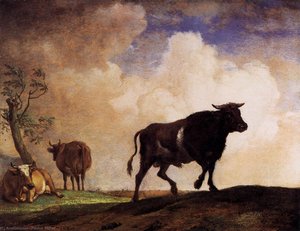
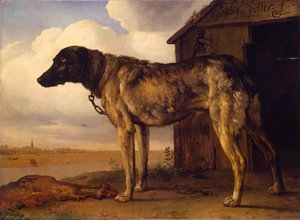
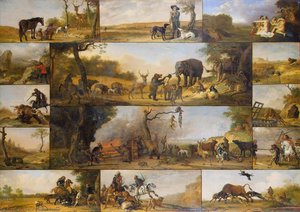
Paulus Potter carved a unique niche for himself within the vibrant landscape of Dutch Golden Age painting. He became celebrated for his captivating depictions of animals – particularly cattle – seamlessly integrated into expansive, meticulously rendered landscapes. His compositions are often characterized by a strikingly low vantage point, an artistic choice that dramatically emphasizes the scale and grandeur of nature, dwarfing even the majestic beasts he portrayed. The Young Bull, created around 1647, remains his most iconic work, now housed in the Mauritshuis in The Hague. Initially met with some critical reservation, it later gained widespread acclaim as a pioneering example of Romanticism’s nascent sensibility – a profound emotional connection to the natural world. Beyond this masterpiece, Potter produced other notable paintings such as Figures with Horses by a Stable (1647), Punishment of a Hunter (circa 1647), Two Pigs in a Sty (1649), and Wolf-hound (approximately 1650–1652). He also demonstrated his versatility through numerous etchings, often focusing on the detailed portrayal of cattle and other animals.Legacy and Lasting Influence
Though his life was tragically brief, Paulus Potter’s artistic legacy endures. His work stands as a testament to his exceptional talent and unique vision. The influence of Jan van Goyen is readily apparent in Potter's landscapes, particularly in the subtle atmospheric effects and commitment to realistic representation. However, Potter transcended mere imitation; he infused his scenes with an emotional depth that resonated deeply with viewers then, and continues to do so today. He is now recognized as a precursor to the Romantic movement, anticipating its emphasis on the sublime power of nature and the emotional response it evokes. Despite producing approximately 100 paintings during his short career, his impact was considerable. His work enjoyed renewed appreciation in the 19th century for its naturalism and profound emotional resonance. Even today, Potter is honored with a statue in his birthplace of Enkhuizen, depicting him sketching a goat – a fitting tribute to an artist who dedicated his life to capturing the beauty and majesty of the natural world.Key Artistic Characteristics
- Low Horizon Lines: Potter consistently employed low horizon lines in his compositions, creating a sense of vastness and emphasizing the scale of the landscape.
- Realistic Animal Depiction: He was renowned for his meticulous attention to detail when rendering animals, capturing their anatomy and behavior with remarkable accuracy.
- Atmospheric Effects: His landscapes frequently feature subtle atmospheric effects – light, shadow, and mist – that contribute significantly to the overall mood and realism of each scene.
- Subtle Color Palette: Potter typically favored a muted color palette dominated by earth tones, reflecting the natural hues of the Dutch countryside. This restrained approach further enhances the sense of authenticity and harmony within his paintings.
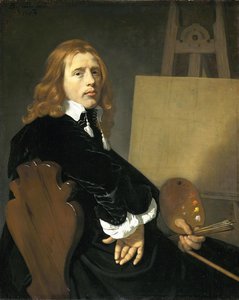
Paulus Potter
1625 - 1654 , Netherlands
Quick Facts
- Artistic Movement Or Style: Romanticism
- Artists Or Movements Influenced By This Artist: ['Romanticism']
- Artists Who Influenced This Artist: ['Jan van Goyen']
- Date Of Birth: November 20, 1625
- Date Of Death: January 17, 1654
- Full Name: Paulus Potter
- Nationality: Dutch
- Notable Artworks:
- The Young Bull
- Figures with Horses...
- Punishment of a Hunter
- Two Pigs in a Sty
- Wolf-hound
- Place Of Birth: Enkhuizen, Netherlands
Related Articles
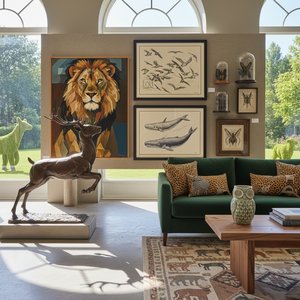
Animalia: Exploring the Enduring Presence of Animals in Art & Interior Design
Explore the rich history of animal symbolism in art, from ancient mythology to modern masterpieces. Discover how animals have inspired artists for centuries and learn how to incorporate these powerful motifs into your home décor.

Golden Age Reflections: Dutch Baroque Painting & Cultural Innovation
Explore the Dutch Golden Age of painting! Discover key artists like Vermeer & ter Borch, their innovative techniques, and the rich cultural context behind these Baroque masterpieces. Learn about collecting & appreciating this iconic art period.

Dutch Baroque Masters: 10 Paintings That Shaped an Era | ArtsDot
Journey through the Golden Age with our guide to the Top 10 Dutch Baroque masterpieces! Explore iconic paintings by Rembrandt, Vermeer & Frans Hals. Find museum-quality art reproductions and elevate your home decor at ArtsDot.com.
Beastly Brushstrokes: A Historical Journey Through Animal Painting & Aesthetic Movements
Explore the rich history of animal painting across cultures & movements. Discover iconic artists, symbolism, collecting trends & expert art consultation at ArtsDot.com.
Genre Painting: A Window into Daily Life & Societal Values of the Dutch Golden Age
Explore the captivating world of Dutch Golden Age genre painting! Discover realistic depictions of daily life, masterful artists like Ostade & Metsu, and hidden symbolism. Learn about this influential art movement with ArtsDot.