 Preview
 Send
Send Share
Share
 Details

 Download
 Similars
 X-Ray
X-Ray Diaporama
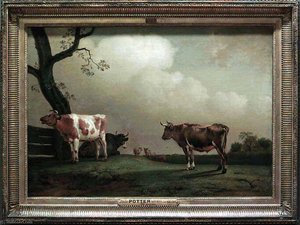
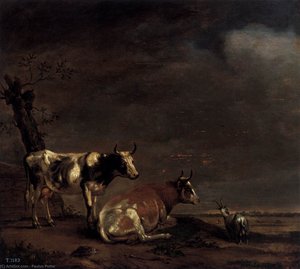
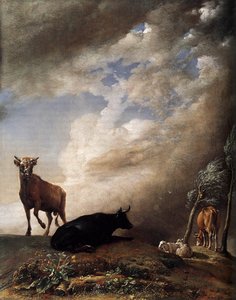
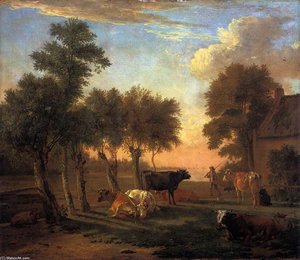
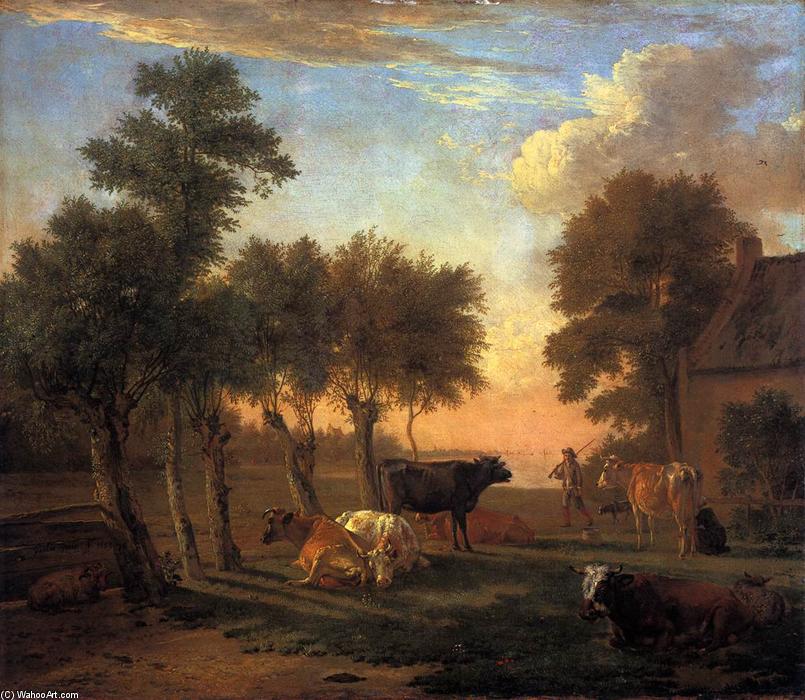
Cows in a Meadow by a Farm
 Acrylic On Canvas
- WallArt
- Romanticism
 1653
1653 58.0 x 67.0 cm
 Rijksmuseum
 Read More
Hand Made Oil Reproduction
Hand-painted oil on canvas in your size and frame, made to order by our artists. ( Buy Print Buy Image)




P118B $10

P118H $10

P118W $10

P438Z $10

P508JH $12

P508YH $12

P805H $10

P805Z $10

P919BZ $10

P919G $10

P919XJ $10

P959ZH $10

P968JZ $12

W106C $8

W218G $10

W218JH $8

W218Y $10

W307PJ $10

W316G $10

W316PJ $8

W316Y $10

W398PJ $8

W4111J $10

W500HY $15

W500JH $15

W692G $12

W849H $8

W940BG $15

W953PJ $8




Pick from our preset sizes that match the artwork's original proportions.

You may enter your own dimensions to fit a specific frame or space. If your selected size does not match the original image's proportions, we will either crop the artwork or extend the painting with additional hand-painted elements. A digital mockup will be sent for your approval before production begins.
Please note that the on-screen preview does not reflect the actual cropping or extension. Only the mockup will accurately show the final composition.
While custom sizes are available, we recommend selecting a dimension from the predefined list to preserve the original proportions.
After order, ArtsDot.com team will email client for instructions and provide a mockup preview
Worldwide Delivery () in 3/4 weeks instead of standard 5 weeks. (17 August). No compromise on quality.

Free Worldwide Express Shipping

High-Quality Linen Canvas

Full Shipping Insurance

Customs Tax Refund Guarantee

True Color Matching Guarantee

60-Day Return Policy (Defects Only)

100% Money-Back Guarantee

Bulk Discount Offer
 Glass option is only available in size under 110 CM

Cows in a Meadow by a Farm
Reproduction Medium
Reproduction Size
-


Total Price
$ 263
Artwork Description
A Pastoral Vision: Paulus Potter’s “Cows in a Meadow by a Farm”
Paulus Potter's "Cows in a Meadow by a Farm," painted in 1653, isn’t merely a depiction of livestock; it’s a profound meditation on the relationship between humanity and nature, a cornerstone of Dutch Golden Age painting. Born into an artistic family – his father, Pieter Symonsz Potter, was a celebrated master of gilded leather hangings – Paulus inherited a deep appreciation for capturing the essence of rural life. Yet, unlike his father’s decorative works, Potter sought to elevate the commonplace, transforming everyday scenes into moments of quiet contemplation and imbued with a nascent Romantic sensibility. This particular painting, housed within the Rijksmuseum in Amsterdam, offers a glimpse into a world where the rhythms of farm life are rendered with astonishing realism and a subtle, almost melancholic beauty.The Masterstroke of Low Perspective
Potter’s genius lies not just in his technical skill – meticulously rendered fur, glistening hides, and the delicate play of light on grass – but fundamentally in his innovative use of perspective. He eschews the traditional elevated viewpoint favored by many of his contemporaries, instead choosing to position himself *within* the scene, almost as if he’s a silent observer nestled amongst the cows. This low vantage point immediately draws the viewer into the pasture, fostering a sense of intimacy and immediacy. The figures are not distant subjects; they become participants in this tranquil landscape. The composition is carefully balanced, with the herd grazing peacefully against the backdrop of a subtly shaded meadow and a distant farmhouse – a visual anchor that grounds the scene in reality.A Window into 17th-Century Dutch Life
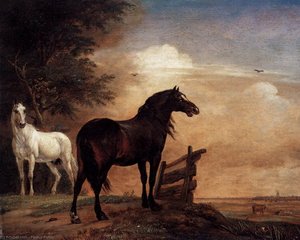
“Cows in a Meadow by a Farm” provides a valuable window into the social and economic realities of 17th-century Holland. Agriculture was, and remains, the lifeblood of the nation, and paintings like this one celebrated the prosperity and stability of rural communities. The presence of two horses further reinforces this connection to the land, suggesting a thriving farm operation. Beyond its economic significance, however, the painting reflects a broader cultural shift – a growing appreciation for the beauty and dignity of peasant life, a theme increasingly explored by artists during this period. Potter’s work aligns with the burgeoning interest in naturalism and the desire to represent the world as it truly is, rather than idealizing it through classical conventions.Symbolism and Emotional Resonance
While seemingly straightforward, “Cows in a Meadow” is rich in symbolic meaning. The cows themselves, symbols of fertility and abundance, are presented not as commodities but as creatures living within a harmonious ecosystem. The muted color palette – dominated by earthy browns, greens, and greys – contributes to the painting’s serene atmosphere, evoking feelings of peace, tranquility, and connection to nature. There's an undeniable sense of quiet contentment, a suggestion that time stands still in this idyllic setting. The subtle light filtering through the trees hints at the passage of time, but it doesn’t disrupt the overall feeling of serenity. The inclusion of the farmhouse, though distant, speaks to the human element – the farmer tending his land and providing for his family.A Legacy of Pastoral Beauty
Paulus Potter's "Cows in a Meadow by a Farm" stands as a testament to his artistic vision and technical mastery. His pioneering use of low perspective, combined with his meticulous attention to detail and evocative color palette, created a painting that continues to resonate with viewers centuries later. It’s a work that transcends its subject matter, offering a profound meditation on the beauty of nature, the rhythms of rural life, and the enduring connection between humanity and the land – a connection powerfully captured by one of the Dutch Golden Age's most remarkable artists. Reproductions of this iconic piece offer a chance to bring this timeless pastoral vision into any space, evoking a sense of calm and appreciation for the simple pleasures of life.Related Artworks
Artist Biography
A Brief Life Illuminated: The World of Paulus Potter
Paulus Potter, a name synonymous with the Dutch Golden Age’s profound connection to nature, enjoyed a tragically short but remarkably impactful career. Born in Enkhuizen on November 20, 1625, and baptized the same day, his artistic journey began within a family already touched by creative inclination. His father, Pieter Symonsz Potter, was a skilled painter specializing in the intricate craft of gilded leather hangings and charming genre scenes, while his mother, Aaltje Paulusdr Bartsius, boasted familial ties to the esteemed painter Willem Bartsius. This nurturing environment undoubtedly laid the foundation for young Paulus’s artistic sensibilities. The family's relocation first to Leiden in 1628, and then to the bustling metropolis of Amsterdam in 1631, proved pivotal, providing him with access to a wider world of artistic influence and opportunity. It was in Amsterdam that he began his formal training under his father’s guidance, though some scholars suggest potential studies with Claes Moeyaert may have further shaped his early development.From Delft Guilds to Hague Landscapes
Potter's ambition led him to join the prestigious Guild of Saint Luke in Delft, a significant step for any aspiring artist in the Dutch Republic. However, it was his move to The Hague around 1649 that truly began to define his artistic path. Establishing himself near the renowned landscape painter Jan van Goyen proved incredibly influential; Van Goyen’s mastery of atmospheric effects and realistic depictions of nature would subtly permeate Potter's own style. This period also marked a turning point in Potter’s personal life. In July 1650, he married Adriana van Balckeneynde, a union that opened doors to influential circles thanks to her father, a prominent building contractor. Through this connection, Potter found himself introduced to members of Dutch high society, including the esteemed Amalia of Solms-Braunfels, who would become a patron of his work. A brief return to Amsterdam in May 1652, at the invitation of physician and art enthusiast Nicolaes Tulp – who commissioned a portrait of his son Dirck – offered further recognition. Sadly, this period of burgeoning success was cut short by illness; Paulus Potter succumbed to tuberculosis on January 17, 1654, at the young age of twenty-eight.The Pastoral Vision: Style and Major Works
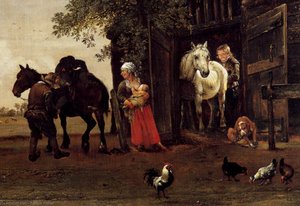
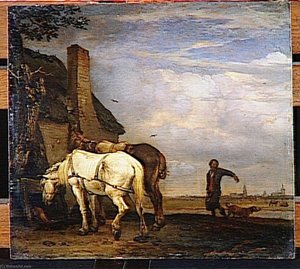
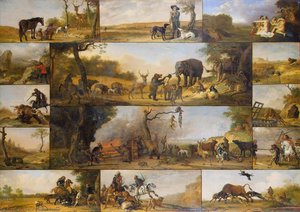
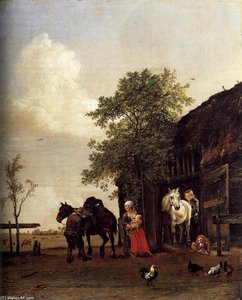
Paulus Potter carved a unique niche for himself within the vibrant landscape of Dutch Golden Age painting. He became celebrated for his captivating depictions of animals – particularly cattle – seamlessly integrated into expansive, meticulously rendered landscapes. His compositions are often characterized by a strikingly low vantage point, an artistic choice that dramatically emphasizes the scale and grandeur of nature, dwarfing even the majestic beasts he portrayed. The Young Bull, created around 1647, remains his most iconic work, now housed in the Mauritshuis in The Hague. Initially met with some critical reservation, it later gained widespread acclaim as a pioneering example of Romanticism’s nascent sensibility – a profound emotional connection to the natural world. Beyond this masterpiece, Potter produced other notable paintings such as Figures with Horses by a Stable (1647), Punishment of a Hunter (circa 1647), Two Pigs in a Sty (1649), and Wolf-hound (approximately 1650–1652). He also demonstrated his versatility through numerous etchings, often focusing on the detailed portrayal of cattle and other animals.Legacy and Lasting Influence
Though his life was tragically brief, Paulus Potter’s artistic legacy endures. His work stands as a testament to his exceptional talent and unique vision. The influence of Jan van Goyen is readily apparent in Potter's landscapes, particularly in the subtle atmospheric effects and commitment to realistic representation. However, Potter transcended mere imitation; he infused his scenes with an emotional depth that resonated deeply with viewers then, and continues to do so today. He is now recognized as a precursor to the Romantic movement, anticipating its emphasis on the sublime power of nature and the emotional response it evokes. Despite producing approximately 100 paintings during his short career, his impact was considerable. His work enjoyed renewed appreciation in the 19th century for its naturalism and profound emotional resonance. Even today, Potter is honored with a statue in his birthplace of Enkhuizen, depicting him sketching a goat – a fitting tribute to an artist who dedicated his life to capturing the beauty and majesty of the natural world.Key Artistic Characteristics
- Low Horizon Lines: Potter consistently employed low horizon lines in his compositions, creating a sense of vastness and emphasizing the scale of the landscape.
- Realistic Animal Depiction: He was renowned for his meticulous attention to detail when rendering animals, capturing their anatomy and behavior with remarkable accuracy.
- Atmospheric Effects: His landscapes frequently feature subtle atmospheric effects – light, shadow, and mist – that contribute significantly to the overall mood and realism of each scene.
- Subtle Color Palette: Potter typically favored a muted color palette dominated by earth tones, reflecting the natural hues of the Dutch countryside. This restrained approach further enhances the sense of authenticity and harmony within his paintings.
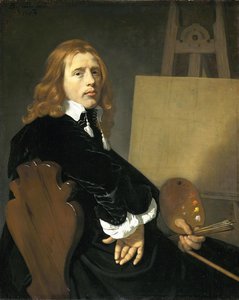
Paulus Potter
1625 - 1654 , Netherlands
Quick Facts
- Artistic Movement Or Style: Romanticism
- Artists Or Movements Influenced By This Artist: ['Romanticism']
- Artists Who Influenced This Artist: ['Jan van Goyen']
- Date Of Birth: November 20, 1625
- Date Of Death: January 17, 1654
- Full Name: Paulus Potter
- Nationality: Dutch
- Notable Artworks:
- The Young Bull
- Figures with Horses...
- Punishment of a Hunter
- Two Pigs in a Sty
- Wolf-hound
- Place Of Birth: Enkhuizen, Netherlands
Related Articles

Dutch Masters: 10 Golden Age Paintings That Still Inspire |
Journey into the Dutch Golden Age! Explore 10 iconic paintings by Rembrandt, Vermeer & Hals. Discover the stories behind these Baroque masterpieces and find museum-quality art reproductions to elevate your home decor on .

Golden Age Reflections: Dutch Baroque Painting & Cultural Innovation
Explore the Dutch Golden Age of painting! Discover key artists like Vermeer & ter Borch, their innovative techniques, and the rich cultural context behind these Baroque masterpieces. Learn about collecting & appreciating this iconic art period.

Illuminating Innovation: Exploring the Dutch Golden Age of Painting
Explore the Dutch Golden Age of painting with ArtsDot. Discover Rembrandt, Vermeer & other Masters. Learn about key characteristics, iconic artworks, and lasting influence. Expert insights for collectors & enthusiasts.
Illuminating Realism: Exploring the Dutch Golden Age of Painting (1600-1700)
Explore the Dutch Golden Age of painting (1600-1700) with ArtsDot. Discover Rembrandt, Vermeer & other masters. Learn about techniques, history & find museum-quality reproductions.
Golden Light & Dutch Skies: Bringing the Magic of Dutch Golden Age Landscapes into Your Home
Transform your home with the breathtaking light of Dutch Golden Age landscapes. Discover how hand-painted oil reproductions of masterworks like Ruisdael and Vermeer bring timeless elegance, atmosphere, and soulful texture to modern interiors. Elevate your space with museum-quality art.