 Preview
 Send
Send Share
Share
 Details

 Download
 Similars
 X-Ray
X-Ray Diaporama
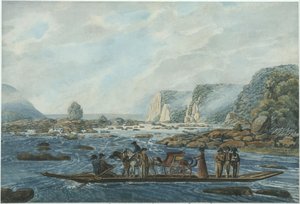
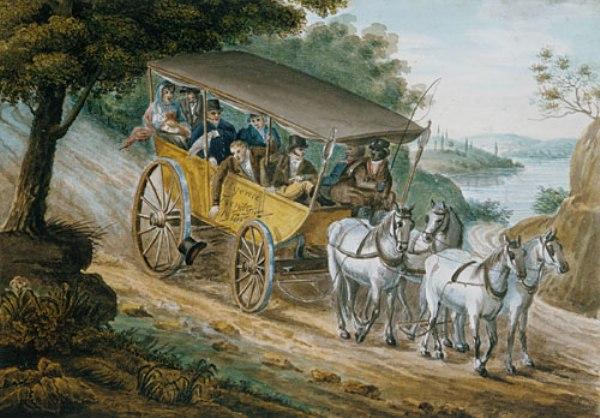
Travel by Stagecoach Near Trenton, New Jersey
 Read More
Hand Made Oil Reproduction
Hand-painted oil on canvas in your size and frame, made to order by our artists. ( Buy Print Buy Image)




































Pick from our preset sizes that match the artwork's original proportions.

You may enter your own dimensions to fit a specific frame or space. If your selected size does not match the original image's proportions, we will either crop the artwork or extend the painting with additional hand-painted elements. A digital mockup will be sent for your approval before production begins.
Please note that the on-screen preview does not reflect the actual cropping or extension. Only the mockup will accurately show the final composition.
While custom sizes are available, we recommend selecting a dimension from the predefined list to preserve the original proportions.
After order, ArtsDot.com team will email client for instructions and provide a mockup preview
Worldwide Delivery () in 3/4 weeks instead of standard 5 weeks. (16 August). No compromise on quality.

Free Worldwide Express Shipping

High-Quality Linen Canvas

Full Shipping Insurance

Customs Tax Refund Guarantee

True Color Matching Guarantee

60-Day Return Policy (Defects Only)

100% Money-Back Guarantee

Bulk Discount Offer
 Glass option is only available in size under 110 CM

Travel by Stagecoach Near Trenton, New Jersey
Reproduction Medium
Reproduction Size
-


Total Price
$ 413
Related Artworks
Artist Biography
Pavel Petrovich Svinin: The Russian Munchausen and Painter of American Dreams
Pavel Petrovich Svinin (1787-1839) remains a fascinating, if somewhat enigmatic, figure in both Russian and American art history. Often described as the “Russian Munchausen,” he built his reputation not on genuine artistic skill but on elaborate, often fantastical, accounts of his travels—a blend of truth, invention, and outright fabrication that captivated audiences and cemented his place as a prominent writer and illustrator of the early 19th century. His work offers a unique window into the burgeoning relationship between Russia and America during a period of significant cultural exchange, revealing both the allure of the New World and the creative license of a man determined to shape his own narrative.
Born in Moscow, Svinin’s early life was steeped in aristocratic privilege. He received an education at the School for the Nobility and later honed his artistic skills at the Academy of Fine Arts in St. Petersburg. However, it wasn't through traditional painting that he gained notoriety; rather, his ambition lay in documenting—and embellishing—his travels. His career began with service as a secretary to the Russian diplomatic mission in Philadelphia between 1811 and 1813, an assignment that would profoundly shape his identity and artistic output. This period marked the beginning of his deliberate construction of a persona – a seasoned traveler brimming with exotic tales and vivid illustrations.
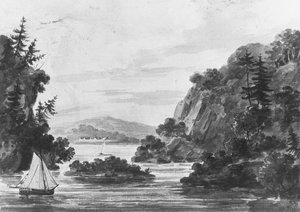
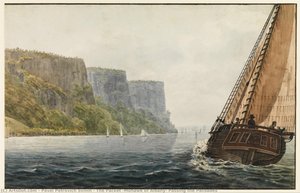
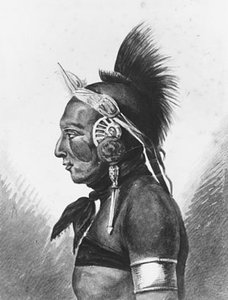
Svinin’s travels across America were not simply observations; they were meticulously crafted performances. He deliberately sought out encounters with Native Americans, immersing himself in their customs (often through questionable means) and fabricating elaborate stories about his interactions. His watercolors, particularly those depicting scenes of American life – from bustling taverns to serene landscapes – became the cornerstone of his published accounts. Works like “Shad Fishermen on the Shore of the Hudson River” exemplify this style: a romanticized depiction of rural Pennsylvania life, brimming with detail and imbued with an almost theatrical quality. The painting captures a lively scene of fishermen enjoying themselves by the riverbank, but it’s clear that Svinin wasn't simply recording reality; he was constructing a carefully curated image of America—one infused with elements of both genuine observation and deliberate invention.
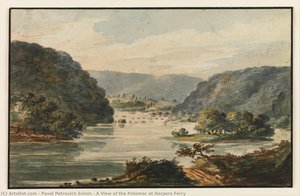
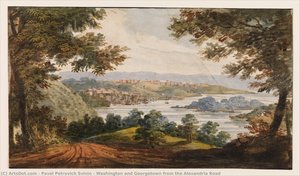
His most famous work, “A View of the Potomac at Harpers Ferry,” showcases this talent for blending realism and embellishment. The painting depicts a tranquil river landscape, but it’s clear that Svinin was more interested in creating an atmosphere than accurately representing the scene. The composition is carefully arranged to evoke a sense of grandeur and serenity, while subtle details—such as the figures strolling along the riverbank—suggest a narrative beyond the purely visual.
Beyond his artistic output, Svinin’s writings were equally significant in shaping public perception of America. His travelogue, “Voyage Pittoresque Aux Etats-Unis de l'Amérique,” became a bestseller in Russia, offering readers a romanticized and often fantastical account of the United States. He deliberately emphasized similarities between Russia and America—a shared love of liberty, a commitment to education, and a vibrant cultural scene—while downplaying any potential differences or challenges. This carefully constructed narrative served not only to entertain his audience but also to promote a positive image of America in the eyes of the Russian public.
Despite his considerable fame, Svinin’s reputation has been tarnished by accusations of fabrication and exaggeration. Critics have pointed out that many of his stories were demonstrably false, and that he deliberately manipulated historical events to suit his own narrative purposes. However, it's important to recognize that Svinin was not simply a liar; he was a skilled storyteller—a man who understood the power of imagination and the importance of shaping public perception. His work reflects the spirit of Romanticism, which emphasized emotion, subjectivity, and the exploration of the exotic – qualities that were particularly appealing in an era of rapid cultural exchange between Russia and America.
The Influence of Munchausen Tales
Svinin’s reputation as the “Russian Munchausen” is inextricably linked to the tales of Baron Munchausen, a German fabulist whose fantastical stories captivated audiences throughout Europe. Like Munchausen, Svinin delighted in stretching the truth and embellishing his experiences—often to an absurd degree. His travel accounts were filled with improbable adventures: encounters with Native Americans, daring feats of navigation, and impossible feats of strength. While there’s no evidence that Svinin consciously imitated Munchausen, it's clear that he shared a similar sensibility – a willingness to prioritize entertainment over accuracy.
However, unlike Munchausen, who was often portrayed as a mischievous trickster, Svinin presented himself as a serious traveler and observer. He carefully cultivated an image of sophistication and erudition—a cultured European gentleman who had been fortunate enough to witness the wonders of America. This distinction is crucial to understanding his appeal: Svinin wasn’t simply trying to deceive his audience; he was attempting to transport them to another world – a world of adventure, beauty, and exotic possibilities.
Artistic Techniques and Style
Svinin's artistic style is characterized by a blend of Romanticism and Realism. His watercolors are often richly detailed and evocative, capturing the atmosphere and mood of the scenes he depicts. He employed loose brushstrokes and vibrant colors to create a sense of immediacy and dynamism—a technique that was particularly effective in conveying the energy of American life. His compositions are carefully arranged to draw the viewer's eye to key elements—such as figures or landscapes—and to create a sense of depth and perspective.
He frequently utilized atmospheric effects – such as mist, fog, and sunlight – to enhance the mood of his paintings. His use of light is particularly noteworthy; he often employed dramatic contrasts between light and shadow to create a sense of drama and intensity. His work reflects a deep understanding of color theory and composition—qualities that were honed through years of artistic training.
Historical Significance
Despite the embellishments in his accounts, Svinin’s writings played a significant role in shaping public perception of America in Russia during the early 19th century. His travelogue offered readers a romanticized and accessible introduction to American culture—a culture that was largely unknown and misunderstood by most Russians at the time. His work helped to foster a sense of fascination with the New World, contributing to the growing interest in emigration and trade between Russia and America.
Furthermore, Svinin’s artistic output provides valuable insights into the cultural exchange between Russia and America during this period. His paintings capture a unique blend of European and American styles—reflecting the influences that were shaping art and culture at the time. His work serves as a reminder that cultural encounters are often complex and multifaceted – involving both genuine understanding and deliberate manipulation.
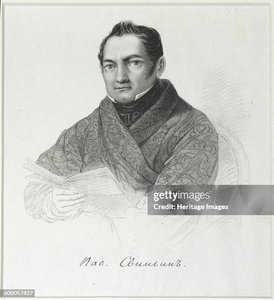
pavel petrovich svinin
1787 - 1839 , Russia
Quick Facts
- Artistic Movement Or Style: Romanticism, Travel Writing
- Artists Or Movements Influenced By This Artist: ['Munchausen Stories']
- Artists Who Influenced This Artist: ['Dmitry Senyavin']
- Date Of Birth: June 19, 1787
- Date Of Death: April 21, 1839
- Full Name: Pavel Petrovich Svinin
- Nationality: Russian
- Notable Artworks:
- Shad Fishermen
- Potomac at Harpers Ferry
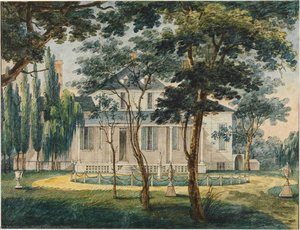
- Country Residence (Moreau)
- Place Of Birth: Efremov, Russia