 Preview
 Send
Send Share
Share
 Details

 Download
 Similars
 X-Ray
X-Ray Diaporama
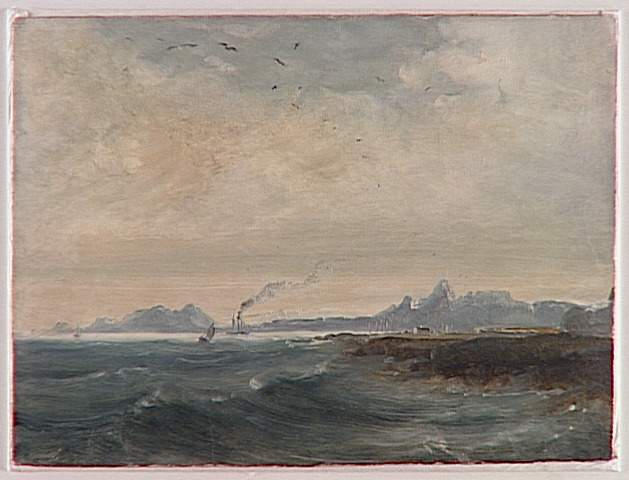
VUE DE VAER OE (AUJOURD'HUI VAEROY)


 Read More
Hand Made Oil Reproduction
Hand-painted oil on canvas in your size and frame, made to order by our artists. ( Buy Print Buy Image)




P118B $10

P118H $10

P118W $10

P438Z $10

P508JH $12

P508YH $12

P805H $10

P805Z $10

P919BZ $10

P919G $10

P919XJ $10

P959ZH $10

P968JZ $12

W106C $8

W218G $10

W218JH $8

W218Y $10

W307PJ $10

W316G $10

W316PJ $8

W316Y $10

W398PJ $8

W4111J $10

W500HY $15

W500JH $15

W692G $12

W849H $8

W940BG $15

W953PJ $8




Pick from our preset sizes that match the artwork's original proportions.

You may enter your own dimensions to fit a specific frame or space. If your selected size does not match the original image's proportions, we will either crop the artwork or extend the painting with additional hand-painted elements. A digital mockup will be sent for your approval before production begins.
Please note that the on-screen preview does not reflect the actual cropping or extension. Only the mockup will accurately show the final composition.
While custom sizes are available, we recommend selecting a dimension from the predefined list to preserve the original proportions.
After order, ArtsDot.com team will email client for instructions and provide a mockup preview
Worldwide Delivery () in 3/4 weeks instead of standard 5 weeks. (26 August). No compromise on quality.

Free Worldwide Express Shipping

High-Quality Linen Canvas

Full Shipping Insurance

Customs Tax Refund Guarantee

True Color Matching Guarantee

60-Day Return Policy (Defects Only)

100% Money-Back Guarantee

Bulk Discount Offer
 Glass option is only available in size under 110 CM

VUE DE VAER OE (AUJOURD'HUI VAEROY)
Reproduction Medium
Reproduction Size
-


Total Price
$ 263
Artwork Description
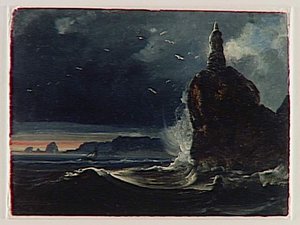
A Storm-Swept Vision: Peder Balke’s “Vue de Vaer-Öe”
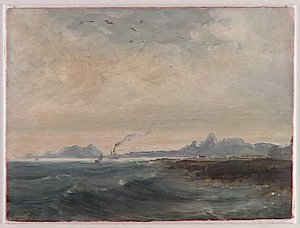
Peder Balke's "Vue de Vaer-Öe (aujourd'hui Voeröy)," a remarkably evocative sketch rendered with a palpable sense of drama and solitude, offers a profound glimpse into the heart of 19th-century Norwegian Romanticism. Born on the remote island of Helgøy in 1804, Balke’s life was inextricably linked to the rugged beauty of his homeland – a connection that profoundly shaped his artistic vision. This particular work, now housed within the Louvre's collection, isn’t merely a depiction of a coastal scene; it’s a carefully constructed meditation on nature’s power and the human condition’s relationship to it. The sketch itself, executed with a loose, almost frantic energy, hints at the urgency of capturing a fleeting moment – perhaps a particularly violent squall or the melancholic aftermath of a storm.
Composition and Atmospheric Detail
The composition immediately draws the eye towards the turbulent sea dominating the lower half of the canvas. Jagged, dark shapes—likely representing distant cliffs or islands—loom against a bruised, gray sky, creating a sense of imposing scale. A small boat, barely discernible amidst the waves, suggests human vulnerability in the face of nature’s might. The horizon line is deliberately soft and indistinct, contributing to the overall atmospheric depth rather than offering a precise delineation of land and sea. Balke masterfully employs color gradations – subtle shifts from cool blues and grays to muted browns and tans – to build spatial recession and imbue the scene with an ethereal quality. The absence of strong highlights or shadows further enhances this sense of diffused light, mirroring the prevailing weather conditions and fostering a mood of quiet contemplation.
Technique and Painterly Expression
Balke’s technique is characterized by its deliberate roughness and painterly spontaneity. Visible brushstrokes—short, broken marks applied with evident energy—create a textured surface that invites the viewer to engage with the materiality of the paint itself. This approach departs significantly from the more polished styles prevalent at the time, prioritizing emotional expression over meticulous detail. The loose handling of form allows for an immediacy and dynamism rarely found in academic landscapes. It’s as if Balke is attempting to capture not just what he *sees*, but what he *feels* – a raw, unfiltered response to the power and beauty of the natural world. The sketch's quality suggests it was intended as a preliminary study for a larger work, further emphasizing its exploratory nature.
Symbolism and Emotional Resonance
"Vue de Vaer-Öe" resonates with the core tenets of Romanticism: an appreciation for untamed nature, a fascination with the sublime, and a heightened awareness of human emotion. The turbulent sea, often associated with chaos and uncertainty, serves as a potent symbol of life’s challenges. The solitary boat represents humanity's smallness in comparison to the vastness of the natural world. The muted color palette and atmospheric perspective evoke feelings of solitude, introspection, and perhaps even melancholy—a poignant reflection on the fleeting nature of existence. Balke wasn’t simply painting a landscape; he was exploring the emotional landscape within himself, mirroring the dramatic beauty of his native Norway.
Historical Context and Artistic Legacy
Peder Balke's work emerged during a period of significant artistic and social change in Norway. The Romantic movement, with its emphasis on individualism, emotion, and the power of nature, was gaining momentum across Europe. Balke’s unique style—characterized by his dramatic use of light and color, his loose brushwork, and his deeply personal vision—established him as a pivotal figure in Norwegian art history. His legacy extends beyond his individual paintings; he helped to shape the national artistic identity of Norway, inspiring generations of artists to capture the beauty and drama of their homeland. Reproductions of “Vue de Vaer-Öe” continue to captivate viewers today, offering a timeless connection to this remarkable artist and his evocative vision.
Related Artworks
Artist Biography
A Norwegian Romantic Visionary: The Life and Art of Peder Balke
Peder Andersen Balke, born in 1804 on the humble island of Helgøya in Norway, emerged as a profoundly original voice within the landscape tradition of the 19th century. His life story is one of determined artistic pursuit against a backdrop of rural hardship and societal constraints. Growing up amidst the stark beauty of the Norwegian countryside instilled in him a deep connection to nature that would become the defining characteristic of his oeuvre. Though born into a family of farmers, Balke’s innate talent was recognized by his community, who pooled resources to support his artistic education – a testament to the value placed on creativity even within modest means. This early encouragement propelled him towards formal training, first with Heinrich August Grosch and Jacob Munch, then venturing further afield to study at the Royal Swedish Academy of Fine Arts in Stockholm under Carl Johan Fahlcrantz, and later refining his skills alongside Johan Christian Dahl.
The Shaping of a Unique Style
Balke’s artistic development was marked by a restless exploration of technique and expression. He wasn't content to simply replicate the visual world; instead, he sought to capture its emotional essence, its sublime power. His paintings are immediately recognizable for their dramatic lighting, often depicting scenes bathed in an ethereal glow or shrouded in atmospheric darkness. This fascination with light—particularly the fleeting effects of moonlight and twilight—became a hallmark of his style. He developed a distinctive brushwork characterized by textured strokes and an unconventional use of color, creating a dreamlike quality that sets his work apart from more conventional Romantic landscapes. It’s as if he wasn't merely painting what he *saw*, but rather what he *felt* in the presence of nature.
Landscapes of Norway: A National Identity on Canvas
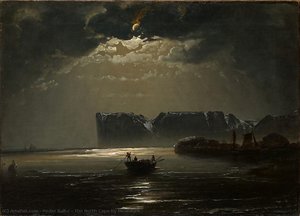
Balke is best known for his evocative depictions of the Norwegian landscape, a subject he returned to repeatedly throughout his career. Works like Vue de Christiania (aujourd'hui Oslo), painted in 1872, offer a compelling glimpse into the urban life of Norway’s capital, yet even here, the natural world looms large, framing the cityscape and reminding viewers of its connection to the surrounding wilderness. The Harbor at Skjervøy (1846) showcases his meticulous attention to detail alongside an ability to capture the bustling energy of a coastal port. Old Trees (1840), with its stark winter scene and powerful lighting, exemplifies his mastery of mood and atmosphere. Seascape (1845) and The North Cape by Moonlight (1848) further demonstrate his ability to convey the rugged beauty and untamed spirit of Norway’s coastline and northern reaches. These weren't simply picturesque views; they were statements about national identity, a celebration of Norway’s unique natural heritage.
Beyond the Canvas: A Social Conscience
Peder Balke was more than just an artist; he was a committed social reformer who actively engaged with the pressing issues of his time. He believed in using his resources and influence to improve the lives of others, most notably through the Balkeby project – a new suburb of Oslo designed to provide decent living conditions for workers. He provided loans and enforced strict building regulations, demonstrating a practical commitment to social justice. Furthermore, Balke tirelessly advocated for financial support for artists, arguing for grants and pensions for both men and women, recognizing the vital role that creativity played in society. This dedication to social causes reveals a compassionate and forward-thinking individual who saw art as intrinsically linked to human well-being.
Rediscovery and Legacy
Despite his significant contributions, Balke’s work was largely overlooked for many years after his death in 1887. It wasn't until the late 20th and early 21st centuries that a renewed appreciation for his unique vision began to emerge. Major exhibitions at prestigious institutions like the National Gallery in London (2014-2015) and the Metropolitan Museum of Art (2017) brought his paintings to a wider audience, sparking critical acclaim and scholarly interest. Today, Peder Balke is recognized as a pivotal figure in Norwegian art history, an artist whose dramatic landscapes and emotional depth continue to resonate with viewers. His influence can be seen in the work of subsequent Nordic artists, solidifying his place as a true visionary who captured the soul of Norway on canvas.
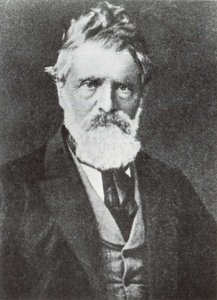
Peder Balke
1804 - 1887 , Norway
Quick Facts
- Artistic Movement Or Style: Romantic Landscape
- Artists Or Movements Influenced By This Artist:
- Nordic Art
- Romanticism
- Artists Who Influenced This Artist:
- Heinrich Grosch
- Jacob Munch
- Carl Fahlcrantz
- Johan Dahl
- Date Of Birth: 1804
- Date Of Death: 1887
- Full Name: Peder Balke
- Nationality: Norwegian
- Notable Artworks:
- Vue de Christiania
- The Harbor at Skjervøy
- Old Trees
- Seascape
- Fredrikshald
- North Cape by Moonlight
- Place Of Birth: Hegøy, Norway
Related Articles

Romantic Landscapes: 10 Masterpieces for Your Home | ArtsDot
Journey through 10 Romantic landscape masterpieces by Friedrich, Turner & Cole. Explore emotional art, sublime nature scenes & iconic 19th-century paintings. Find museum-quality reproductions for your home at ArtsDot.com – discover the full collection online!

John Constable's Masterpieces: Explore 25 Iconic Landscapes for Your Home
Journey through John Constable's 25 most celebrated landscapes. Explore Romanticism, Dedham Vale & his masterful use of light in iconic paintings like 'Hay Wain'. Find museum-quality art reproductions and elevate your home decor on ArtsDot.com.

Evocations of Place: A Historical Journey Through Landscape Art
Explore the rich history of landscape art with ArtsDot. Discover renowned artists, movements like Impressionism & Romanticism, and expert guidance for collecting timeless pieces. Find your perfect serene escape today!
Evoking the Horizon: A Historical & Artistic Exploration of Coastal Scenes in Painting
Explore the rich history of coastal scenes in painting! Discover Impressionist masterpieces, American realism & contemporary visions. Learn about renowned artists and find your perfect seascape at ArtsDot.
The Allure of the Horizon: A Comprehensive Exploration of Seascape Art Through History & Emotion
Explore the captivating world of seascape art! Discover its history, key artists & movements – from Dutch Masters to Impressionism. Expert insights for collectors and enthusiasts at ArtsDot.