 Preview
 Send
Send Share
Share
 Details

 Download
 Similars
 X-Ray
X-Ray Diaporama
Il Principe (...) dell


 Read More
Hand Made Oil Reproduction
Hand-painted oil on canvas in your size and frame, made to order by our artists. ( Buy Print Buy Image)




P118B $10

P118H $10

P118W $10

P438Z $10

P508JH $12

P508YH $12

P805H $10

P805Z $10

P919BZ $10

P919G $10

P919XJ $10

P959ZH $10

P968JZ $12

W106C $8

W218G $10

W218JH $8

W218Y $10

W307PJ $10

W316G $10

W316PJ $8

W316Y $10

W398PJ $8

W4111J $10

W500HY $15

W500JH $15

W692G $12

W849H $8

W940BG $15

W953PJ $8




Pick from our preset sizes that match the artwork's original proportions.

You may enter your own dimensions to fit a specific frame or space. If your selected size does not match the original image's proportions, we will either crop the artwork or extend the painting with additional hand-painted elements. A digital mockup will be sent for your approval before production begins.
Please note that the on-screen preview does not reflect the actual cropping or extension. Only the mockup will accurately show the final composition.
While custom sizes are available, we recommend selecting a dimension from the predefined list to preserve the original proportions.
After order, ArtsDot.com team will email client for instructions and provide a mockup preview
Worldwide Delivery () in 3/4 weeks instead of standard 5 weeks. (16 August). No compromise on quality.

Free Worldwide Express Shipping

High-Quality Linen Canvas

Full Shipping Insurance

Customs Tax Refund Guarantee

True Color Matching Guarantee

60-Day Return Policy (Defects Only)

100% Money-Back Guarantee

Bulk Discount Offer
 Glass option is only available in size under 110 CM

Il Principe (...) dell
Reproduction Medium
Reproduction Size
-


Total Price
$ 263
Artwork Description
A Vision of Equestrian Majesty
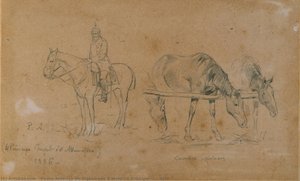
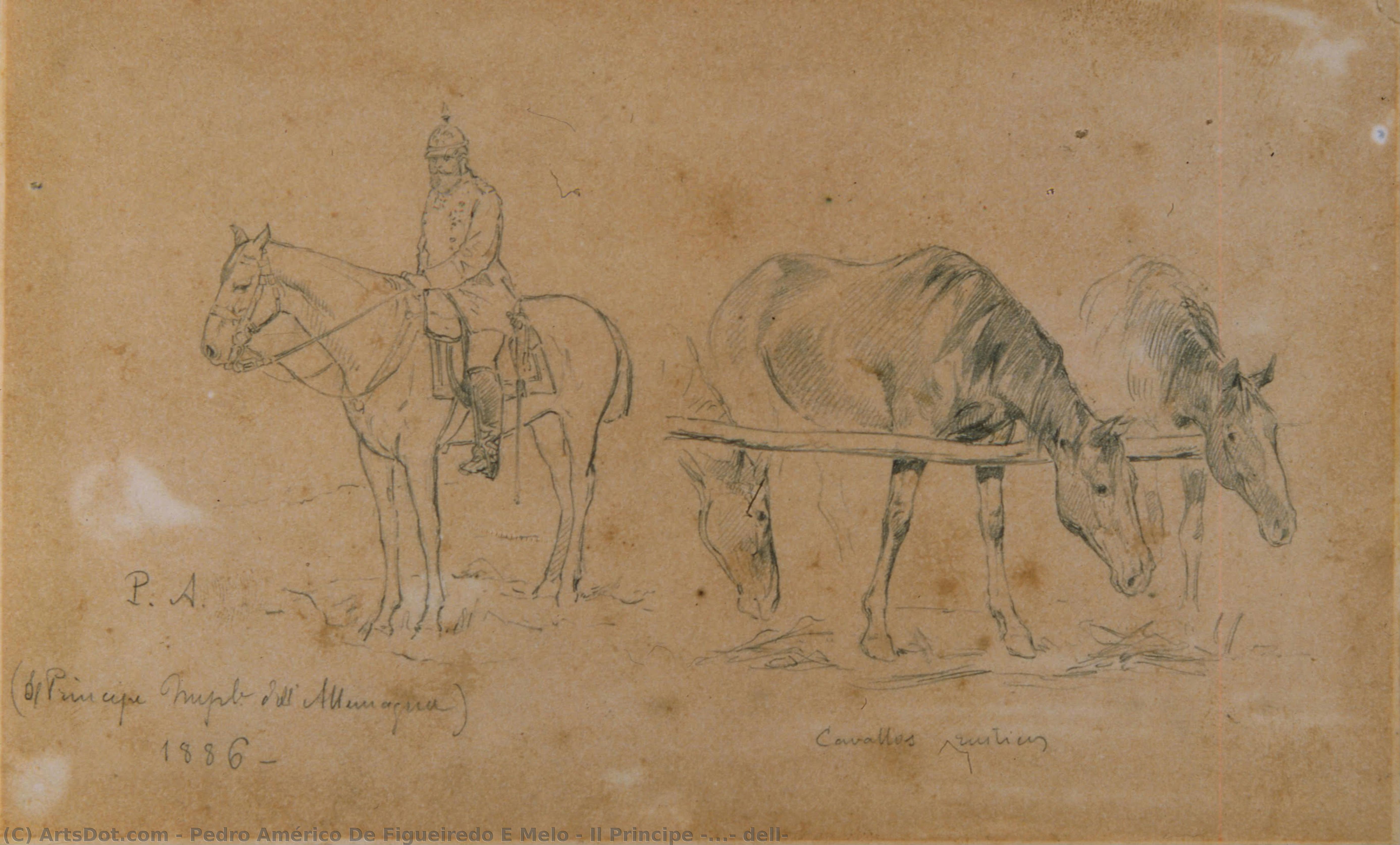
In the sweeping grandeur of late nineteenth-century academic painting, few works capture the intersection of military discipline and natural grace as effectively as Il Principe (...) dell. Created in 1886 by the illustrious Brazilian master Pedro Américo de Figueiredo e Melo, this piece serves as a profound study of authority and movement. The composition centers on a commanding figure mounted upon a horse, whose presence radiates a quiet yet undeniable strength. Flanked by other horses that form a rhythmic line behind him, the scene is not merely a portrait of a man, but an exploration of the symbiotic relationship between rider and steed. The meticulous attention to the uniform's details suggests a high-ranking officer, grounding the work in a sense of historical reality and institutional prestige.
The artist’s technique is a masterful fusion of neoclassical precision and romantic drama. Américo, a prodigy who refined his craft in the prestigious studios of Paris, employs a level of detail that invites the viewer to linger on every texture—from the subtle sheen of the horse's coat to the intricate embroidery of the military attire. His ability to capture the anatomical accuracy of the horses while imbuing them with a sense of spirited vitality is a testament to his academic training. The light plays across the scene with a soft, atmospheric quality, creating depth and a three-dimensional presence that makes the figures appear as though they might emerge from the canvas into the very room where the painting hangs.
Historical Resonance and Aesthetic Splendor
Beyond its technical brilliance, the artwork carries the weight of historical narrative. Pedro Américo was a painter deeply invested in the national identity and the epic scale of history, often portraying pivotal moments of power and ceremony. In this particular work, we see the echoes of that grand tradition. The arrangement of the horses, positioned in a deliberate, staggered formation, creates a sense of progression and momentum, much like a procession through time itself. This structural choice lends the piece an architectural stability, making it a cornerstone of classical composition that speaks to themes of leadership, duty, and the enduring legacy of the cavalry.
For the discerning collector or interior designer, this reproduction offers more than just a visual ornament; it provides a focal point of intellectual and emotional depth. The painting’s palette and subject matter evoke an era of elegance and structured nobility, making it an ideal acquisition for spaces that demand a sense of heritage and sophistication. Whether placed in a stately library, a formal dining room, or a curated gallery wall, the work commands attention through its quiet dignity. It is a piece that does not merely decorate a wall but enriches the atmosphere of a home, offering a window into a vanished world of splendor and disciplined beauty.
Related Artworks
Artist Biography
Early Life and Education
- Born: April 29, 1843, in Areia, Brazil
- Died: October 7, 1905
- Pedro Américo de Figueiredo e Melo displayed artistic talent from a young age, considered a child prodigy.
- He participated as a draftsman on an expedition of naturalists through the Brazilian Northeast, receiving government support for his studies.
- Furthered his education in Paris, studying with renowned painters and also dedicating himself to science and philosophy.
Artistic Style and Major Works
- Pedro Américo's style fused neoclassical, romantic, and realistic elements, establishing him as a key figure in Brazilian academic painting.
- His works are characterized by their historical significance and enduring presence in the national imagination.
- Notable Works:
- Batalha de Avaí (Battle of Avai) - Depicts a pivotal battle in Brazilian history.
- Fala do Trono (Speech from the Throne) – A portrayal of imperial power and ceremony.
- Independência ou Morte! (Independence or Death!) – Captures a dramatic moment of national significance.
- Tiradentes Esquartejado (Tiradentes Quartered) - Illustrates a tragic event in Brazilian history, showcasing the brutality of colonial rule.
- In the later part of his career, he shifted towards oriental, allegorical, and biblical themes.
Influences and Development
- Early exposure to art through family members fostered a passion for drawing from a young age.
- Studies in Paris exposed him to European artistic traditions, particularly neoclassical and romantic styles.
- His scientific pursuits influenced his approach to realism, emphasizing accuracy and detail in his depictions.
- Pedro Américo’s work reflects the broader cultural and political context of 19th-century Brazil, including its aspirations for modernization and nation-building.
Legacy and Historical Significance
- Pedro Américo is considered one of the most important academic painters in Brazilian history.
- His paintings are celebrated for their artistic merit and historical importance, often serving as visual representations of key moments in Brazil's past.
- He left a significant written legacy on aesthetics, art history, and philosophy, emphasizing education’s role in progress.
- Despite facing criticism from avant-garde movements for his adherence to academic traditions, Pedro Américo remains a pivotal figure in Brazilian culture.
- His works can be found in museums such as the Museu Histórico Nacional in Rio de Janeiro and are available on platforms like ArtsDot.com.
Recognition and Honors
- Historical Painter of the Imperial Chamber
- Order of the Rose
- Order of the Holy Sepulchre
- Bachelor of Arts in Social Sciences from the Sorbonne
- PhD in Natural Sciences from the Free University of Brussels
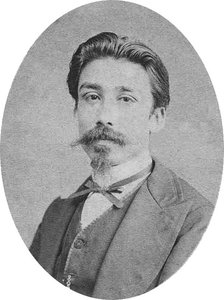
pedro américo de figueiredo e melo
1843 - 1905 , Brazil
Quick Facts
- Artistic Movement Or Style: Academicism, Realism, Neoclassicism
- Date Of Birth: April 29, 1843
- Date Of Death: October 7, 1905
- Full Name: Pedro Américo de Figueiredo e Melo
- Nationality: Brazilian
- Notable Artworks:
- Batalha de Avaí
- Fala do Trono
- Independência ou Morte!
- Tiradentes Esquartejado
- Place Of Birth: Areia, Brazil
Related Articles

Elevating Workspace Aesthetics: Top 5 Art Styles for Contemporary Offices
Elevate your office aesthetic with 's expert guide to the top 5 art styles for contemporary workspaces. Boost productivity & inspire creativity – discover the perfect look today!
Academic Realism's Finest: 10 Masterpieces for Art Lovers & Home Decor
Explore 10 defining Academic Realism masterpieces by Bouguereau, Gérôme & Cabanel. Discover the stories behind these iconic paintings and bring timeless art into your home with museum-quality reproductions from ArtsDot.com. Explore the full collection online!
Academic Art: Tradition, Technique & the Pursuit of Ideal Form in the 19th Century
Explore the world of Academic Art! Discover its history, key artists like Ingres & Bouguereau, defining techniques, and lasting influence on 19th-century painting. Learn about the Salon system and its legacy.

Academic Portraiture: Tradition, Technique & the Evolution of Representational Art
Explore the rich history & masterful techniques of academic portraiture. Discover iconic artists, learn about collecting, and commission a bespoke oil painting reproduction with ArtsDot.
Academic Art: Tradition, Technique & the Rise of Modernism
Explore the rich history of Academic Art – its techniques, key masters like Bouguereau & Ingres, and influence on 19th-century painting. Discover this enduring tradition.