 Preview
 Send
Send Share
Share
 Details

 Download
 Similars
 X-Ray
X-Ray Diaporama
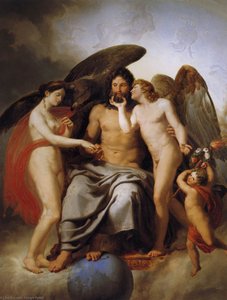
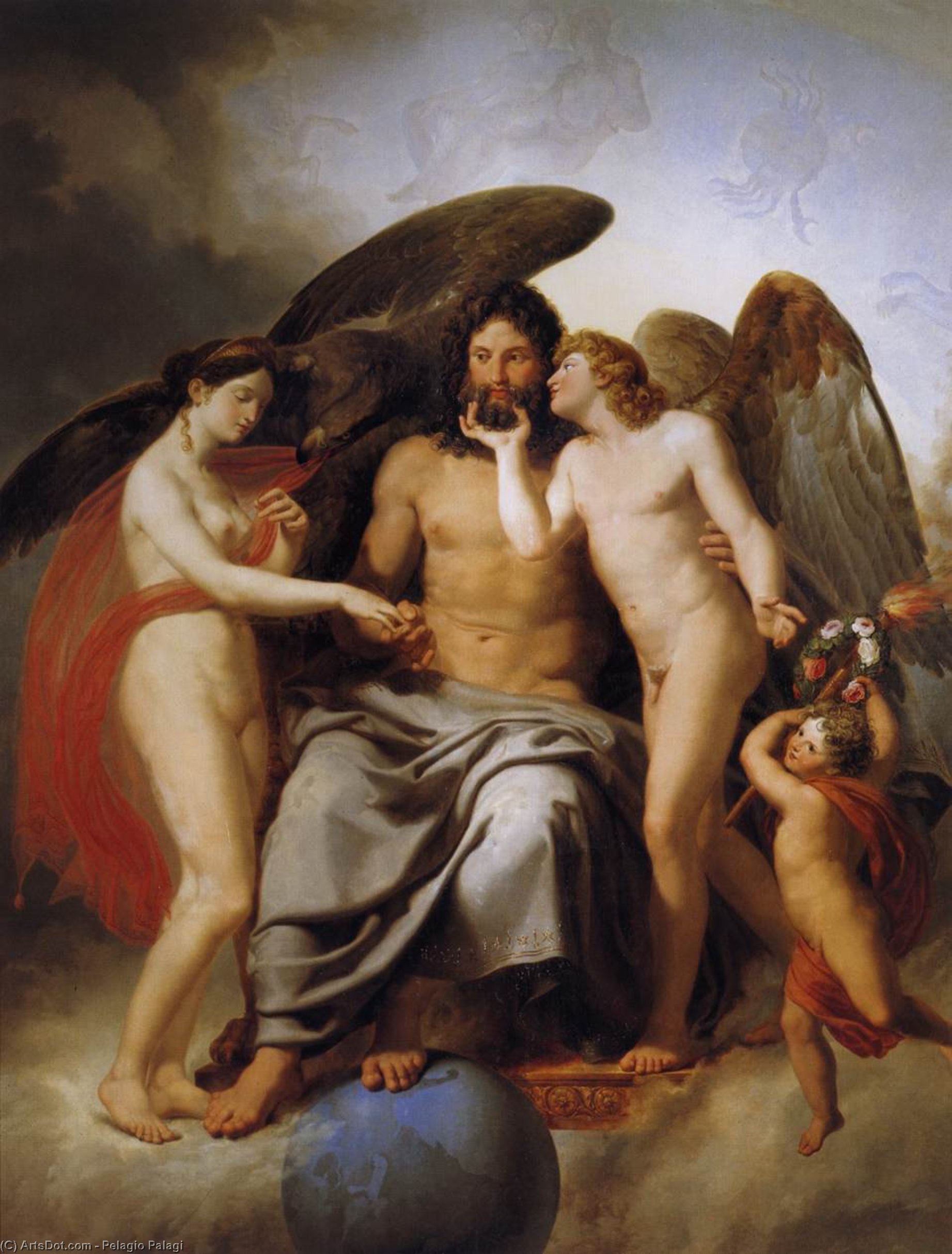
The Nuptials of Cupid and Psyche
 Oil On Canvas
- WallArt
- Neoclassical Italian
 1808
1808 254.0 x 188.0 cm
 Detroit Institute of Arts
 Read More
Hand Made Oil Reproduction
Hand-painted oil on canvas in your size and frame, made to order by our artists. ( Buy Print Buy Image)




P118B $10

P118H $10

P118W $10

P438Z $10

P508JH $12

P508YH $12

P805H $10

P805Z $10

P919BZ $10

P919G $10

P919XJ $10

P959ZH $10

P968JZ $12

W106C $8

W218G $10

W218JH $8

W218Y $10

W307PJ $10

W316G $10

W316PJ $8

W316Y $10

W398PJ $8

W4111J $10

W500HY $15

W500JH $15

W692G $12

W849H $8

W940BG $15

W953PJ $8




Pick from our preset sizes that match the artwork's original proportions.

You may enter your own dimensions to fit a specific frame or space. If your selected size does not match the original image's proportions, we will either crop the artwork or extend the painting with additional hand-painted elements. A digital mockup will be sent for your approval before production begins.
Please note that the on-screen preview does not reflect the actual cropping or extension. Only the mockup will accurately show the final composition.
While custom sizes are available, we recommend selecting a dimension from the predefined list to preserve the original proportions.
After order, ArtsDot.com team will email client for instructions and provide a mockup preview
Worldwide Delivery () in 3/4 weeks instead of standard 5 weeks. (16 August). No compromise on quality.

Free Worldwide Express Shipping

High-Quality Linen Canvas

Full Shipping Insurance

Customs Tax Refund Guarantee

True Color Matching Guarantee

60-Day Return Policy (Defects Only)

100% Money-Back Guarantee

Bulk Discount Offer
 Glass option is only available in size under 110 CM

The Nuptials of Cupid and Psyche
Reproduction Medium
Reproduction Size
-


Total Price
$ 263
Artwork Description
The Nuptials of Cupid and Psyche – A Symphony of Neoclassical Grace
Pelagio Palagi’s “The Nuptials of Cupid and Psyche,” painted in 1808, is more than a depiction of a mythological romance; it's a meticulously crafted tableau of classical ideals, imbued with the burgeoning spirit of Neoclassicism and reflecting the artistic currents flowing from Rome to Bologna. The painting captures a pivotal moment – the union of Cupid, god of love, and Psyche, his devoted bride – within a setting that seamlessly blends earthly elegance with celestial splendor. Palagi’s genius lies not merely in recreating a myth but in imbuing it with a profound sense of harmony, balance, and restrained emotion, hallmarks of the era.
The composition immediately draws the eye to the central figures: Cupid and Psyche, seated upon a richly adorned chair. He gestures towards her with an expression of tender adoration, while she observes him with a serene grace. Surrounding them is a carefully orchestrated assembly of angelic beings – a chorus of cherubs and messengers – each rendered with exquisite detail and contributing to the overall sense of divine celebration. Note the subtle variations in their poses and expressions; they aren’t merely passive observers but active participants in this sacred union, radiating an aura of benevolent grace.
Palagi's technical mastery is evident in every brushstroke. The painting is executed with a smooth, polished finish, characteristic of Neoclassical style, reflecting the influence of artists like Canova and Antonio Canova. He employs a delicate layering of colors – soft blues, pinks, and golds – to create an atmosphere of ethereal beauty. The drapery, particularly that adorning the chair and the figures’ garments, is handled with remarkable skill, conveying both weight and fluidity. The artist's attention to detail extends to the intricate patterns on the fabrics, the delicate folds of the angels’ wings, and the subtle nuances in their facial expressions – all contributing to a remarkably lifelike quality.
A Myth Reimagined: Symbolism and Narrative
The story of Cupid and Psyche is a timeless allegory of love, devotion, and overcoming adversity. Initially, Psyche was renowned for her unparalleled beauty, attracting the envious attention of Venus, goddess of love. To protect her from the wrath of her rival, Venus commanded Cupid to fall in love with another woman. However, Cupid fell deeply in love with Psyche, and their romance was fraught with trials and tribulations orchestrated by Venus. Psyche endured a series of arduous tests designed to break her spirit, ultimately requiring the intervention of Cupid himself.
Palagi’s painting captures this narrative arc with remarkable subtlety. The setting itself – a luxurious interior bathed in soft light – suggests a realm beyond earthly concerns, reflecting Psyche's journey into the divine sphere. The presence of the angels symbolizes divine assistance and protection, underscoring the theme of overcoming obstacles through love and faith. Cupid’s gesture is particularly significant; it represents not just romantic affection but also the power of his love to conquer all challenges.
Historical Context: Neoclassicism in Bologna
“The Nuptials of Cupid and Psyche” was created during a pivotal moment in Italian art history – the transition from Rococo extravagance to the ideals of Neoclassicism. Following the Napoleonic era, there was a renewed interest in classical antiquity, inspiring artists to emulate the forms, principles, and values of ancient Greece and Rome. Bologna, under the influence of Count Carlo Filippo Aldrovandi, became a vibrant center for Neoclassical art, fostering an environment where young talents like Palagi could flourish.
Palagi’s artistic formation within Aldrovandi's circle profoundly shaped his style. The Count’s home served as a veritable academy, providing access to a vast collection of prints and offering rigorous life drawing classes. This immersion in classical art instilled in Palagi a deep appreciation for perspective, architecture, figurative painting, portraiture, and the art of collecting itself. The influence of artists like Vincenzo Canova is readily apparent in the painting’s emphasis on idealized forms, balanced compositions, and restrained emotion.
A Legacy of Grace: Reproduction and Interpretation
Today, “The Nuptials of Cupid and Psyche” stands as a testament to Palagi's artistic skill and his ability to capture the essence of Neoclassical ideals. Reproductions offer an accessible way to experience the beauty and sophistication of this remarkable painting, bringing its timeless message of love and devotion into contemporary spaces.
Whether adorning a grand salon or a more intimate setting, a high-quality reproduction of “The Nuptials of Cupid and Psyche” will undoubtedly evoke a sense of serenity, elegance, and romantic grace. It’s a piece that speaks to the enduring power of love, faith, and the pursuit of beauty – qualities that continue to resonate with audiences today.
Related Artworks

Artist Biography
Early Life and Artistic Foundations
Pelagio Palagi, born in Bologna in 1775, embarked on an artistic journey nurtured from a remarkably young age. His formative years were profoundly shaped by Count Carlo Filippo Aldrovandi, a discerning patron who recognized and fostered the budding talent within the boy. Aldrovandi’s home was not merely a residence but a veritable academy, brimming with an extensive collection of prints and offering rigorous life drawing classes at the esteemed Accademia Clementina. This environment instilled in Palagi a deep appreciation for classical forms and techniques, providing him with a solid foundation in perspective, architecture, figurative painting, portraiture, and the art of collecting itself. It was a period of intense study and observation, laying the groundwork for his future versatility as an artist. Interestingly, these early artistic explorations coincided with the tumultuous arrival of Napoleon’s forces in Bologna, leading to unexpected commissions – designs for uniforms, medals, and emblems emblazoned with the revolutionary ideals of “Liberté, Égalité, Fraternité.” These initial projects demonstrated Palagi's adaptability and willingness to engage with the political currents of his time.From Roman Grandeur to Milanese Society
Palagi’s artistic development took a significant turn in 1806 when he journeyed to Rome, seeking further refinement at the Accademia di San Luca. It is believed that he may have studied under the tutelage of Vincenzo Camuccini, whose emphasis on historical accuracy and meticulous detail would leave an indelible mark on Palagi’s style. This Roman period proved pivotal, yielding notable works such as “Portrait of Giuseppe Guizzardi in Antique Costume” (1807) and the allegorical "Marriage of Amore and Psyche" (1808). He also undertook ambitious historical paintings like “Mario a Minturno,” showcasing his growing mastery of narrative composition. Beyond easel painting, Palagi’s talents were sought for large-scale decorative projects, including frescoes at the Palazzo del Quirinale and Palazzo Torlonia, demonstrating his ability to seamlessly blend artistic vision with architectural space. In 1815, Palagi relocated to Milan, establishing a private school that directly challenged the established authority of the Accademia di Brera. This bold move underscored his confidence in his pedagogical approach and his commitment to fostering independent artistic expression. During this Milanese chapter, he focused primarily on portraiture, capturing the likenesses of prominent figures like Giuseppe Bossi and Andrea Appiani, solidifying his reputation as a sought-after artist within elite social circles.Royal Patronage and Artistic Maturity
A new era dawned in 1832 when Palagi secured the patronage of King Carlo Alberto of Sardinia. This royal endorsement opened doors to significant commissions for various royal residences, transforming his career trajectory. He became deeply involved in ambitious enlargement projects at the Castle of Racconigi and modernization initiatives at the Palazzo Reale in Turin, showcasing not only his painting skills but also his aptitude for architectural design and interior decoration. His contributions were formally recognized with appointments as head of pictorial and decorative restoration projects and to the chair of decoration (cattedra di ornato) at the Accademia Albertina, cementing his position as a leading figure in the Italian art world. Perhaps the most magnificent testament to his artistic prowess during this period is “The Dance of the Hours,” a breathtaking ceiling painting commissioned for the ballroom at the Palazzo Reale in Turin. This work exemplifies Palagi’s ability to synthesize classical principles with a burgeoning Romantic sensibility, creating a dynamic and emotionally resonant composition that continues to captivate viewers today.A Synthesis of Styles and Enduring Legacy
Pelagio Palagi's artistic style represents a fascinating synthesis of Neoclassical rigor and emerging Romantic tendencies. His early training instilled in him a profound respect for clarity, order, and adherence to classical forms – qualities evident in his meticulously rendered portraits and historical paintings. However, influenced by artists like Francesco Hayez, he gradually incorporated elements of dramatic composition and emotional expression into his work, resulting in pieces such as “Gian Galeazzo Sforza” and “Ratto delle Sabine.” This willingness to embrace new artistic currents while remaining grounded in classical principles defines the unique character of his oeuvre. Beyond his accomplishments as a painter and sculptor, Palagi was an avid collector, amassing an impressive assemblage of Greek, Egyptian, Etruscan, and Roman sculpture, objects, and coins. Upon his death in 1860, he generously bequeathed this remarkable collection, along with his library, archive, and drawings, to the Comune di Bologna. Today, these treasures are housed at the Museo Civico Archeologico, Museo Civico Medievale, and Biblioteca Comunale dell'Archiginnasio, ensuring that Palagi’s legacy as a versatile artist, discerning collector, and influential figure in 19th-century Italian art endures for generations to come. His contributions extended beyond the canvas and chisel; he was a true polymath who left an indelible mark on the cultural landscape of his time.
Pelagio Palagi
1775 - 1860 , Italy
Quick Facts
- Artistic Movement Or Style: Neoclassical, Romanticism
- Artists Who Influenced This Artist:
- Carlo Aldrovandi
- Vincenzo Camuccini
- Francesco Hayez
- Date Of Birth: 1775
- Date Of Death: 1860
- Full Name: Pelagio Palagi
- Nationality: Italian
- Notable Artworks:
- Portrait of Conte Lucini
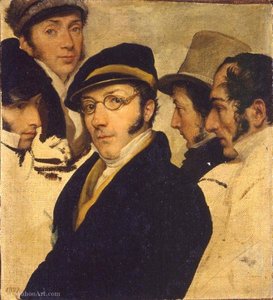
- Self-portrait w/ friends
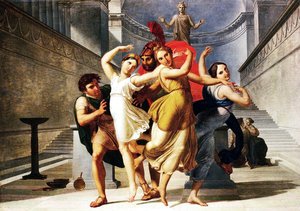
- The Dance of the Hours
- Mario a Minturno
- Marriage of Amore & Psyche
- Place Of Birth: Bologna, Italy
Related Articles
Neo-Classicism's Greatest Hits: 10 Masterpieces for Your Home |
Journey through Neo-Classicism's finest! Explore 10 iconic masterpieces by David, Ingres & Canova. Discover art history, techniques & timeless beauty – perfect for inspiring your home decor. Find museum-quality reproductions at
The Enduring Legacy of Classicism: Principles, Evolution & Influence in Western Art
Explore the enduring legacy of Classicism in Western art! Discover its historical context, key principles, iconic masterpieces & lasting influence. Learn about Renaissance and Neoclassical movements with ArtsDot.
Timeless Resonance: Exploring Classic Vibe in Art – A Historical & Aesthetic Analysis
Explore the rich history & enduring aesthetic of Classicism art! Discover key movements, iconic artists like Raphael & David, and its lasting influence on Western art. Deepen your appreciation today.
The Enduring Legacy of Classical Style: Form, Narrative & Influence in Art
Explore the enduring legacy of classical art – from ancient Greece & Rome to Neoclassicism. Discover key artists, philosophical roots & build a timeless collection with ArtsDot's expert guidance.
The Enduring Legacy of Classicism: Harmony, Reason & Ideal Form in Western Art
Explore the enduring legacy of Classicism in Western art. Discover Renaissance & Neoclassical masterpieces, key artists, and build a timeless collection with ArtsDot's expert guidance.