 Preview
 Send
Send Share
Share
 Details

 Download
 Similars
 X-Ray
X-Ray Diaporama
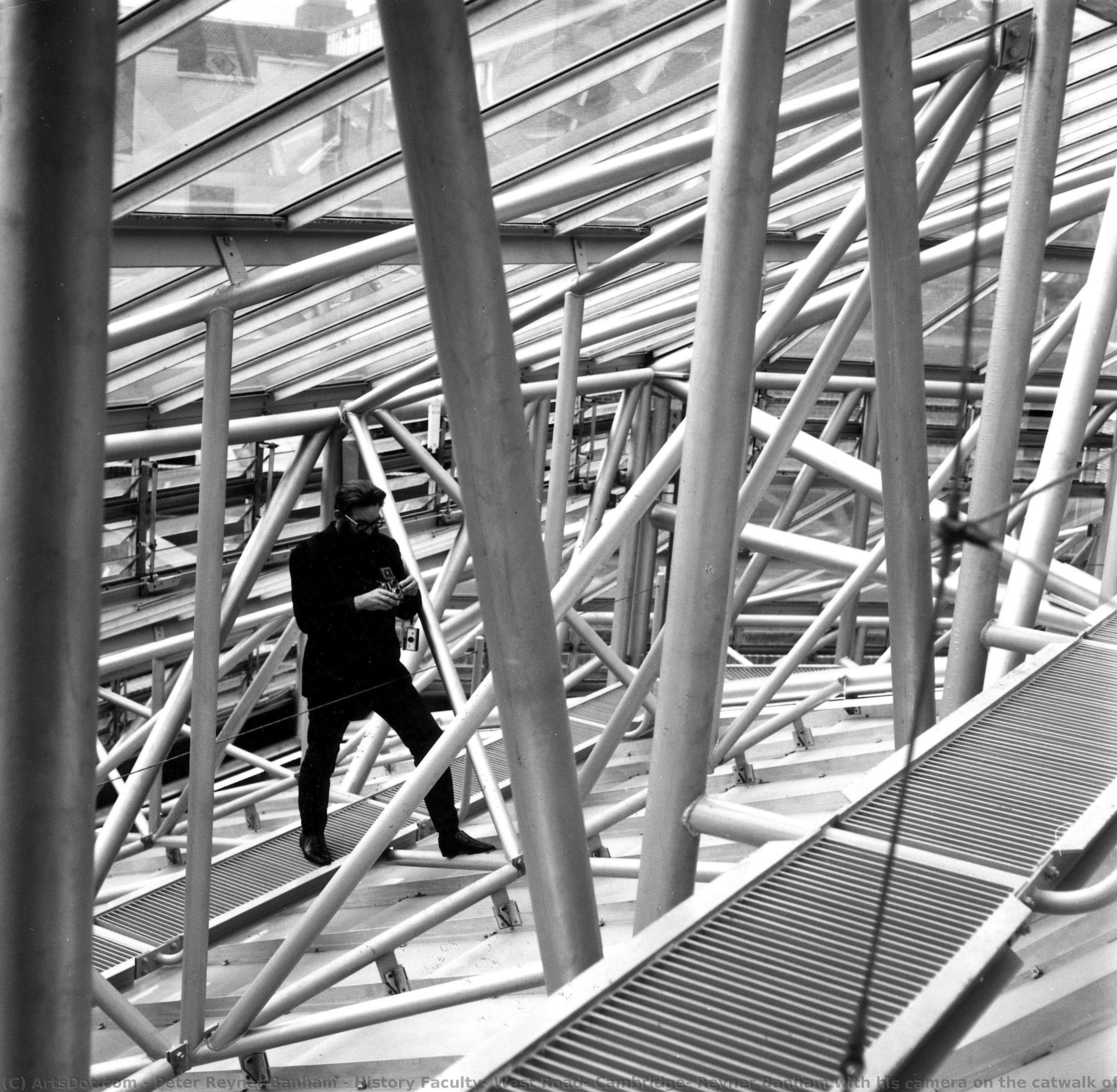
History Faculty, West Road, Cambridge: Reyner Banham with his camera on the catwalk of the roof-truss system


 Read More
Hand Made Oil Reproduction
Hand-painted oil on canvas in your size and frame, made to order by our artists. ( Buy Print Buy Image)




P118B $10

P118H $10

P118W $10

P438Z $10

P508JH $12

P508YH $12

P805H $10

P805Z $10

P919BZ $10

P919G $10

P919XJ $10

P959ZH $10

P968JZ $12

W106C $8

W218G $10

W218JH $8

W218Y $10

W307PJ $10

W316G $10

W316PJ $8

W316Y $10

W398PJ $8

W4111J $10

W500HY $15

W500JH $15

W692G $12

W849H $8

W940BG $15

W953PJ $8




Pick from our preset sizes that match the artwork's original proportions.

You may enter your own dimensions to fit a specific frame or space. If your selected size does not match the original image's proportions, we will either crop the artwork or extend the painting with additional hand-painted elements. A digital mockup will be sent for your approval before production begins.
Please note that the on-screen preview does not reflect the actual cropping or extension. Only the mockup will accurately show the final composition.
While custom sizes are available, we recommend selecting a dimension from the predefined list to preserve the original proportions.
After order, ArtsDot.com team will email client for instructions and provide a mockup preview
Worldwide Delivery () in 3/4 weeks instead of standard 5 weeks. (22 August). No compromise on quality.

Free Worldwide Express Shipping

High-Quality Linen Canvas

Full Shipping Insurance

Customs Tax Refund Guarantee

True Color Matching Guarantee

60-Day Return Policy (Defects Only)

100% Money-Back Guarantee

Bulk Discount Offer
 Glass option is only available in size under 110 CM

History Faculty, West Road, Cambridge: Reyner Banham with his camera on the catwalk of the roof-truss system
Reproduction Medium
Reproduction Size
-


Total Price
$ 263
Related Artworks

Artist Biography
The Intersection of Engineering and Artistry
Born in the historic city of Norwich in 1922, Peter Reyner Banham possessed a mind uniquely forged at the crossroads of technical precision and aesthetic inquiry. His early life was shaped by the tumultuous era of the Second World War, during which he earned an engineering degree from Bristol Aircraft. This rigorous foundation in the mechanics of flight and machinery would later become the essential lens through which he viewed the built environment. When he transitioned to study at the Courtauld Institute of Art in London, he brought with him a rare ability to synthesize the cold logic of engineering with the nuanced language of art history, creating a perspective that was as much about structural integrity as it was about visual impact.Defining the Machine Age
Banham emerged as a formidable and provocative voice in architectural criticism, most notably through his profound exploration of how technology reshapes human perception. In his seminal 1960 work, Theory and Design in the First Machine Age, he dissected the aesthetic soul of modernism, looking beyond mere structure to find the spirit of the machine within design. He did not merely observe architecture; he interrogated its relationship with the rapid technological advancements of the twentieth century. As an editor for the prestigious Architectural Review, his influence permeated the global discourse of his era, challenging architects to embrace the dynamism of a world increasingly defined by movement, mass production, and mechanical innovation.The Ecology of the Urban Sprawl
As his intellectual journey progressed, Banham’s gaze shifted from the singular object to the vast, sprawling complexities of the urban landscape. His fascination with the American West culminated in the 1971 masterpiece, Los Angeles: The Architecture of Four Ecologies. In this work, he moved away from traditional notions of urban density to celebrate the unique, decentralized vitality of Los Angeles. He viewed the city not as a failure of planning, but as a complex ecosystem of highways, suburbs, and technological networks. Through his writing, the car-centric sprawl was reimagined as a legitimate and fascinating way of life, deeply intertwined with the very technologies he had studied since his youth in England.A Legacy of Critical Vision
The historical significance of Reyner Banham lies in his ability to predict and interpret the shifting boundaries of modern existence. He was a critic who understood that architecture is never static; it is a living response to the tools, transport, and technologies of its time. His contributions left an indelible mark on architectural theory, ensuring that the dialogue between human habitation and technological progress remained at the forefront of critical thought. Though he passed away in London in 1988, his intellectual legacy continues to resonate within the study of urban ecology and the enduring fascination with the machine aesthetic, reminding us that our built environment is a reflection of our technological soul.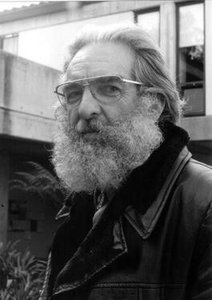
peter reyner banham
1922 - 1988 , United Kingdom
Quick Facts
- Artistic Movement Or Style: Architectural criticism
- Date Of Birth: 1922
- Date Of Death: 1988
- Full Name: Peter Reyner Banham
- Nationality: British
- Notable Artworks:
- Theory and Design in the First Machine Age
- Los Angeles: Architecture of Four Ecologies
- Place Of Birth: Norwich, United Kingdom
Related Articles

Monochrome Visions: Exploring the Aesthetic & Historical Significance of Black & White Photography
Explore the rich history & artistic power of black and white photography. From early techniques to iconic masters like Ansel Adams, discover why monochrome continues to captivate art lovers today. Expert insights for collectors.
Beyond the Lens: Photography's Enduring Influence on Modern & Contemporary Art
Explore photography's pivotal role in shaping modern & contemporary art. Discover key movements, influential artists like Stieglitz, and expert collecting advice from ArtsDot.

Pictorialism: A Search for Artistic Photography's Soul – Aesthetics, Techniques & Legacy
Explore the captivating world of Pictorialism – a pivotal movement that transformed photography into fine art. Discover key artists like Stieglitz & Käsebier, techniques, and collecting tips from experts.

Witnessing History Through Lens & Light: Documentary Photography's Enduring Legacy
Explore the powerful history of documentary photography – from its origins to contemporary masters like Gordon Parks & W. Eugene Smith. Discover how this art form shapes our understanding of society and witness pivotal moments in time.

Documentary Photography's Defining Moments: 10 Masterpieces for Your Home |
Explore 10 defining documentary photography masterpieces – from Dorothea Lange to Robert Capa. Discover powerful stories, iconic images & timeless art for your home. Museum-quality prints at .