 Preview
 Send
Send Share
Share
 Details

 Download
 Similars
 X-Ray
X-Ray Diaporama
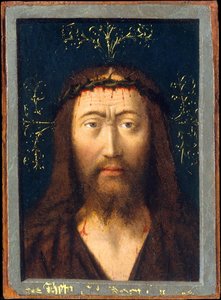
Head of Christ
 Northern Renaissance
 1445
1445 15.0 x 11.0 cm
 Metropolitan Museum of Art
 Read More
Hand Made Oil Reproduction
Hand-painted oil on canvas in your size and frame, made to order by our artists. ( Buy Print Buy Image)




P118B $10

P118H $10

P118W $10

P438Z $10

P508JH $12

P508YH $12

P805H $10

P805Z $10

P919BZ $10

P919G $10

P919XJ $10

P959ZH $10

P968JZ $12

W106C $8

W218G $10

W218JH $8

W218Y $10

W307PJ $10

W316G $10

W316PJ $8

W316Y $10

W398PJ $8

W4111J $10

W500HY $15

W500JH $15

W692G $12

W849H $8

W940BG $15

W953PJ $8




Pick from our preset sizes that match the artwork's original proportions.

You may enter your own dimensions to fit a specific frame or space. If your selected size does not match the original image's proportions, we will either crop the artwork or extend the painting with additional hand-painted elements. A digital mockup will be sent for your approval before production begins.
Please note that the on-screen preview does not reflect the actual cropping or extension. Only the mockup will accurately show the final composition.
While custom sizes are available, we recommend selecting a dimension from the predefined list to preserve the original proportions.
After order, ArtsDot.com team will email client for instructions and provide a mockup preview
Worldwide Delivery () in 3/4 weeks instead of standard 5 weeks. (16 August). No compromise on quality.

Free Worldwide Express Shipping

High-Quality Linen Canvas

Full Shipping Insurance

Customs Tax Refund Guarantee

True Color Matching Guarantee

60-Day Return Policy (Defects Only)

100% Money-Back Guarantee

Bulk Discount Offer
 Glass option is only available in size under 110 CM

Head of Christ
Reproduction Medium
Reproduction Size
-


Total Price
$ 263
Artwork Description
The Weight of Sorrow: Petrus Christus’s ‘Head of Christ’
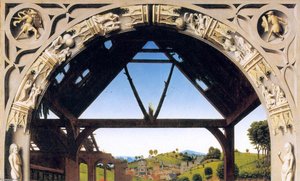
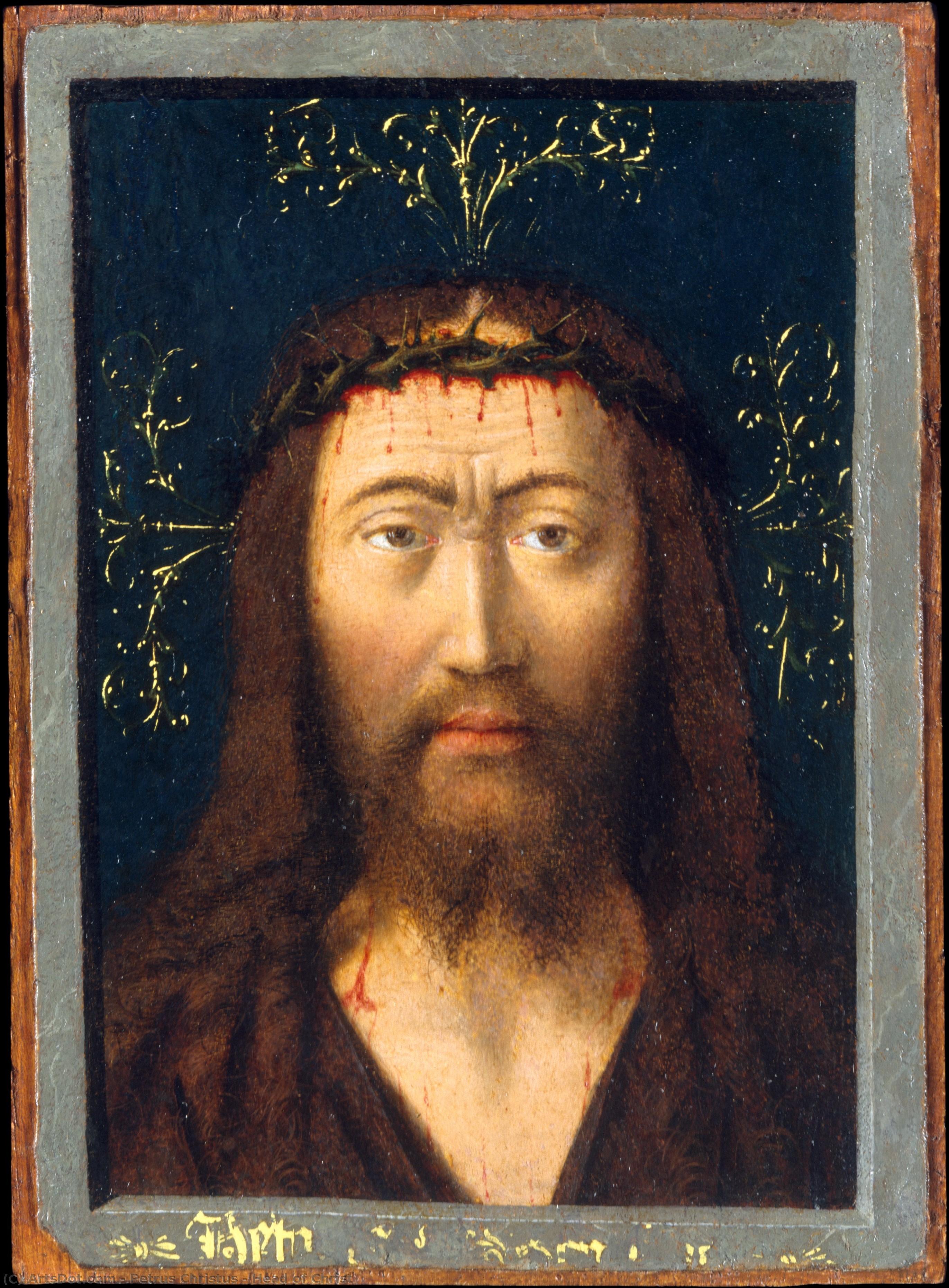
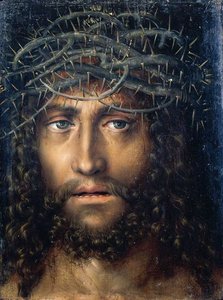
Petrus Christus's “Head of Christ,” painted in 1445, is not merely a portrait; it’s an intimate encounter with the profound sorrow and sacrifice at the heart of Christian faith. This small panel, measuring just over 15 by 11 centimeters, transcends its modest size to deliver a powerfully emotive image—a testament to the artist's skill in capturing both physical likeness and spiritual depth. It resides within the collection of the Metropolitan Museum of Art, offering viewers a rare glimpse into a pivotal moment in the development of Northern Renaissance painting.
The genesis of this work is shrouded in intriguing speculation. Often attributed to Jan van Eyck, a master whose influence permeated the artistic landscape of Bruges, “Head of Christ” ultimately stands as an independent creation by Christus himself. Following Van Eyck’s death in 1441, Christus stepped into his workshop, inheriting not just a studio but also a legacy of meticulous detail and innovative techniques. The painting departs subtly from the prototype attributed to Van Eyck, introducing a palpable sense of anguish—a furrowed brow, the weight of the crown of thorns pressing against his forehead, and droplets of blood tracing paths down his chest. These details elevate the image beyond a simple depiction of Christ’s face; they embody the totality of his suffering.
A Masterclass in Technique and Composition
Christus's approach to portraiture was revolutionary for its time. He moved away from the flat, stylized backgrounds favored by earlier Flemish artists, instead creating a convincing illusion of depth through a carefully constructed frame—a deliberate act that emphasized the physicality and immediacy of Christ’s presence. The painting is executed in oil on parchment laid down on wood, a technique that allowed for remarkable detail and luminosity. Christus employed a layering of thin glazes, building up color gradually to achieve subtle tonal variations and an almost velvety texture. This meticulous approach, reminiscent of the detailed illuminations found in medieval manuscripts, speaks volumes about his dedication to craft.
The composition itself is deceptively simple yet profoundly effective. Christ’s head occupies nearly half the panel, drawing the viewer's attention directly to his face—a study in sorrowful serenity. The subtle asymmetry of the features, the delicate rendering of the wrinkles around his eyes and mouth, and the realistic portrayal of the bloodstains all contribute to a sense of raw vulnerability. The use of light is masterful, illuminating Christ’s face while casting deep shadows that accentuate his suffering.
Symbolism and Spiritual Resonance
Beyond its technical brilliance, “Head of Christ” is rich in symbolic meaning. The crown of thorns, the bloodstains, and the furrowed brow are all potent reminders of Christ's Passion—his arrest, scourging, crucifixion, and death. The painting’s title, “Ecce Homo,” Latin for "Behold the Man," directly references the Gospel account where Pilate presents Jesus to a jeering crowd before his execution. The inclusion of the frame, reminiscent of depictions of the Holy Face, further underscores Christ's humanity and invites viewers to contemplate his sacrifice.
The painting’s emotional impact is undeniable. It doesn’t offer easy answers or comforting platitudes; instead, it confronts the viewer with the stark reality of suffering and redemption. Christ’s gaze—direct, unwavering, and filled with a profound sadness—seems to pierce through time and connect with the viewer on a deeply personal level. This enduring power is what secures “Head of Christ” as a masterpiece of Northern Renaissance art.
A Legacy in Miniature
Petrus Christus’s “Head of Christ” stands as a pivotal work, bridging the gap between the meticulous realism of Jan van Eyck and the burgeoning naturalism of the later Renaissance. It demonstrates his innovative approach to portraiture, his mastery of oil painting techniques, and his profound understanding of religious symbolism. The painting's small scale belies its immense emotional weight, making it a deeply intimate and profoundly moving work of art—a timeless meditation on faith, suffering, and redemption.
Related Artworks
Artist Biography
A Master of Bruges: The Life and Art of Petrus Christus
Petrus Christus, a name perhaps less immediately recognizable than his contemporaries Jan van Eyck or Rogier van der Weyden, nevertheless occupies a pivotal position in the development of Early Netherlandish painting. Born around 1465 in Baarle-Hertog, a small duchy straddling the border between Belgium and the Netherlands, Christus emerged as one of the leading artists working in Bruges during a period of unprecedented artistic innovation. While biographical details remain scarce – a common fate for many painters of the era – his surviving works speak volumes about his technical prowess, intellectual curiosity, and profound understanding of both religious symbolism and the burgeoning possibilities of oil paint. He wasn’t merely a follower in the footsteps of Van Eyck; he was an innovator who subtly yet significantly pushed the boundaries of realism and perspective, leaving an indelible mark on the artistic landscape of the 15th century.Early Career and Artistic Foundations
Christus first appears in historical records in 1444 as a master painter in Bruges, suggesting he underwent a thorough apprenticeship – though the identity of his teacher remains unknown. What *is* clear is that he quickly established himself within the city’s thriving artistic community. Following the death of Jan van Eyck in 1441, Christus stepped into a void, becoming one of the most sought-after artists in Bruges. His early work demonstrates a keen awareness of Van Eyck's techniques – the meticulous detail, the luminous quality of oil paint, and the symbolic richness embedded within seemingly ordinary objects. However, he wasn’t simply imitating his predecessor. Christus began to develop a distinctive style characterized by a greater emphasis on clarity, architectural settings, and an increasingly sophisticated understanding of linear perspective. He absorbed influences from Rogier van der Weyden as well, particularly in his ability to convey emotional depth and spiritual intensity.Innovations in Perspective and Realism
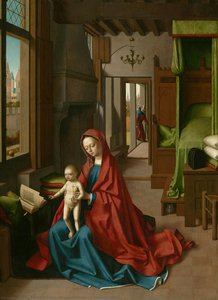
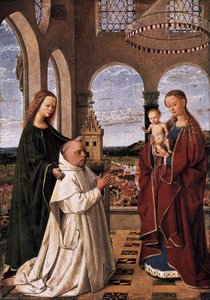
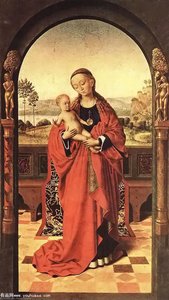
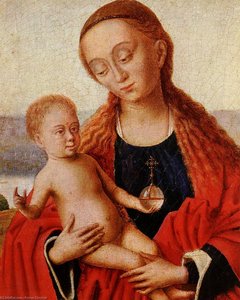
Christus’s most significant contribution lies in his masterful application of linear perspective. While Van Eyck had employed a degree of spatial recession in his work, Christus took it further, creating paintings with a remarkably convincing sense of depth and three-dimensionality. This is particularly evident in works like the Virgin Mary with the Child, now housed at the National Gallery, where the architectural backdrop recedes into the distance with mathematical precision. He didn’t simply create realistic spaces; he used perspective to draw the viewer *into* the scene, fostering a more intimate connection with the subject matter. This wasn't merely a technical exercise; it served to heighten the painting’s spiritual impact, inviting contemplation and devotion. His meticulous technique – layering thin glazes of oil paint to achieve unparalleled luminosity and detail – further enhanced this sense of realism. Every texture, from the folds of fabric to the gleam of metal, is rendered with astonishing accuracy.Major Works and Symbolic Language
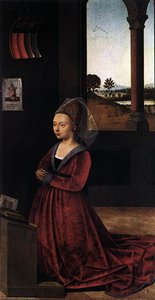
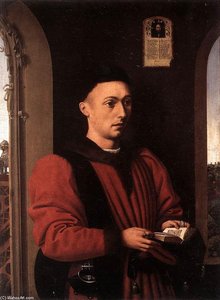
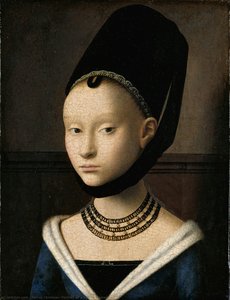
Beyond the Virgin Mary with the Child, Christus produced a number of other notable works that showcase his artistic skill and intellectual depth. The Portrait of a Young Man, currently at the Museo Thyssen-Bornemisza, is a particularly compelling example of his ability to capture human character. The sitter’s gaze is direct and engaging, conveying a sense of intelligence and self-awareness. The painting also reveals Christus's subtle use of symbolism – the single lit candle may represent Christ as the light of the world, while the orange on the windowsill could allude to purity and virtue. He frequently incorporated such symbolic elements into his paintings, enriching their meaning beyond the purely visual. Another important work is The Last Judgment, a complex composition that demonstrates his skill in depicting multiple figures within a dynamic space.Legacy and Historical Significance
Petrus Christus died in Bruges in 1476, leaving behind a relatively small but profoundly influential body of work. His innovations with linear perspective and meticulous technique had a lasting impact on subsequent generations of painters. While he didn’t found a large workshop or attract numerous followers, his style was absorbed by other artists working in the region, contributing to the broader development of Northern Renaissance painting. He bridged the gap between the International Gothic style and the more naturalistic tendencies of the 15th century, paving the way for artists like Hans Memling and Hugo van der Goes. Today, Petrus Christus is recognized as a key figure in Early Netherlandish art – a master craftsman whose paintings continue to captivate viewers with their beauty, realism, and intellectual depth. His work offers a unique window into the artistic and religious world of 15th-century Bruges, reminding us of the power of painting to both reflect and shape our understanding of reality.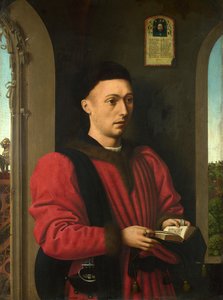
petrus christus
1465 - 1476 , Belgium
Quick Facts
- Artistic Movement Or Style: Early Netherlandish Art
- Artists Or Movements Influenced By This Artist:
- Jan van Eyck
- Rogier van der Weyden
- Artists Who Influenced This Artist:
- Jan van Eyck
- Rogier van der Weyden
- Date Of Birth: 1465
- Date Of Death: 1476
- Full Name: Petrus Christus
- Nationality: Belgian
- Notable Artworks:
- Virgin Mary with the Child
- Portrait of a Young Man
- Place Of Birth: Baarle-Hertog, Belgium
Related Articles
Northern Renaissance Masters: 10 Artworks That Shaped History |
Journey through the Northern Renaissance! Explore 10 iconic paintings by Jan van Eyck, Dürer & Bosch. Discover their stories, techniques & lasting impact. Find museum-quality art reproductions & elevate your home decor on .
The Northern Renaissance: A Flourishing of Realism, Religious Reform & Artistic Innovation
Explore the Northern Renaissance! Discover Jan van Eyck's innovations, religious shifts, & key artists of this influential period. Expert analysis and insights into Early Netherlandish painting at ArtsDot.
Martin Johnson Heade: Luminism, American Identity & the Poetic Still Life
Explore the captivating world of Martin Johnson Heade, a master of Luminism. Discover his serene landscapes, vibrant still lifes & profound connection to American identity. Learn about his techniques and legacy.

Fra Angelico's Masterpieces: 25 Renaissance Paintings for Your Home | ArtsDot
Explore 25 breathtaking masterpieces by Fra Angelico, a Renaissance master. Discover the stories behind his iconic frescoes, Annunciations & religious art. Find museum-quality reproductions and elevate your home decor with ArtsDot.com.
Alte Pinakothek's Masterpieces: 25 Iconic Paintings for Art Lovers | ArtsDot
Journey through Alte Pinakothek's 25 most iconic paintings! Explore masterpieces by Dürer, Rembrandt & Rubens. Discover art history, techniques & find museum-quality reproductions for your home at ArtsDot.com.