 Preview
 Send
Send Share
Share
 Details

 Download
 Similars
 X-Ray
X-Ray Diaporama
 Stats
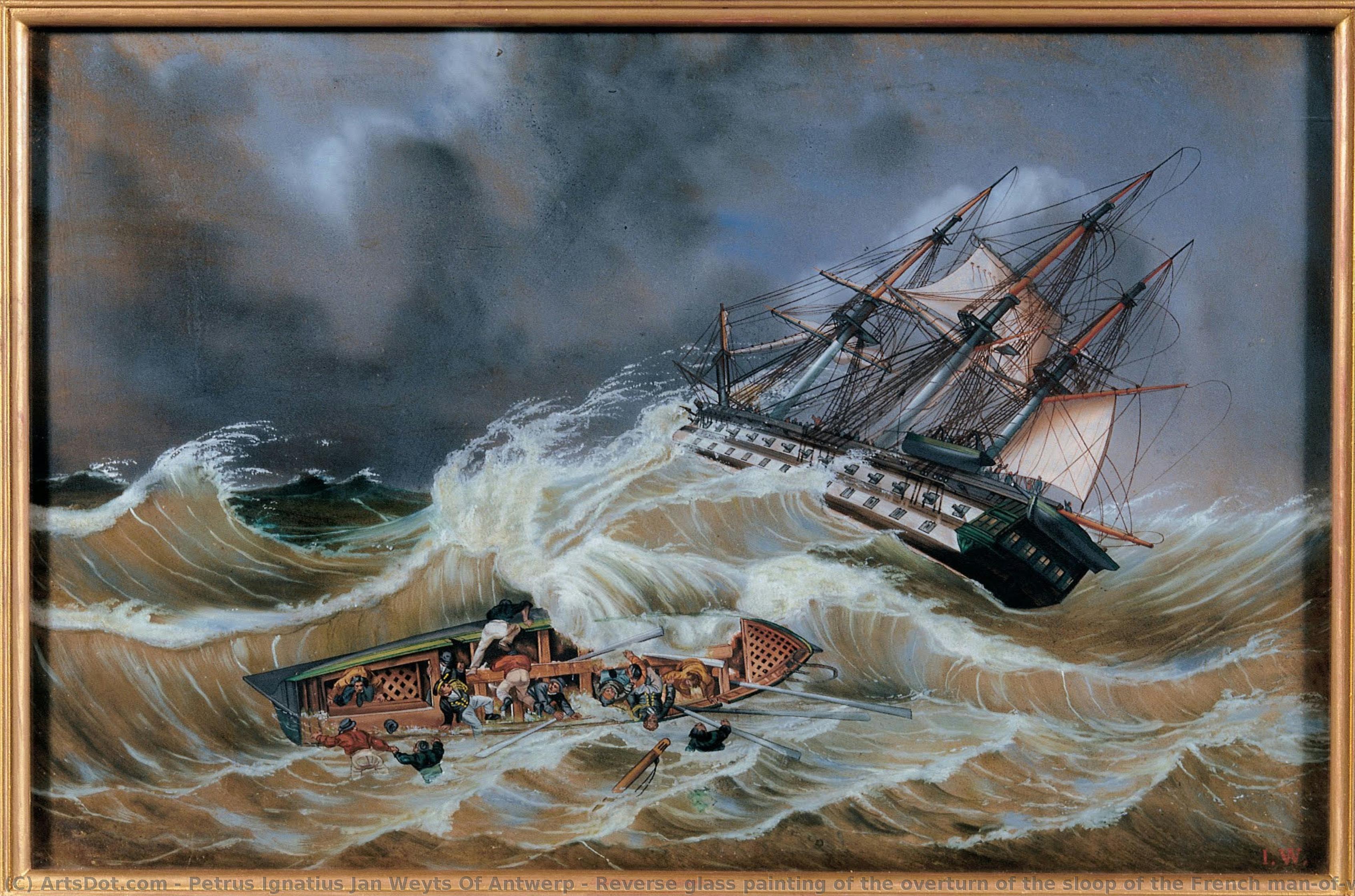
StatsReverse glass painting of the overturn of the sloop of the French man-of-war


 Read More
Hand Made Oil Reproduction
Hand-painted oil on canvas in your size and frame, made to order by our artists. ( Switch to Print Switch to Digital Image)




































Pick from our preset sizes that match the artwork's original proportions.

You may enter your own dimensions to fit a specific frame or space. If your selected size does not match the original image's proportions, we will either crop the artwork or extend the painting with additional hand-painted elements. A digital mockup will be sent for your approval before production begins.
Please note that the on-screen preview does not reflect the actual cropping or extension. Only the mockup will accurately show the final composition.
While custom sizes are available, we recommend selecting a dimension from the predefined list to preserve the original proportions.
After order, ArtsDot.com team will email client for instructions and provide a mockup preview
Worldwide Delivery () in 3/4 weeks instead of standard 5 weeks. (9 September). No compromise on quality.

Free Worldwide Express Shipping

High-Quality Linen Canvas

Full Shipping Insurance

Customs Tax Refund Guarantee

True Color Matching Guarantee

100-Day Return Policy (Defects Only)

100% Money-Back Guarantee

Bulk Discount Offer
 Glass option is only available in size under 110 CM

Reverse glass painting of the overturn of the sloop of the French man-of-war
Reproduction Medium
Reproduction Size
-


Total Price
$ 438
Related Artworks
Artist Biography
The Luminous Legacy of Petrus Ignatius Jan Weyts
In the annals of nineteenth-century Belgian art, few names evoke the shimmering, ethereal beauty of the Romantic era quite like Petrus Ignatius Jan Weyts. Born in the vibrant artistic hub of Antwerp around 1840, Weyts emerged as a master of a most peculiar and demanding medium: reverse glass painting. This technique, which requires the artist to apply pigment to the underside of a glass pane, demands a reversal of traditional logic, forcing the painter to compose details from the foreground backward toward the horizon. Through this inverted process, Weyts achieved a level of luminosity and depth that transformed simple glass into windows onto turbulent, salt-sprayed worlds.
Weyts’s life and work were deeply rooted in the Romantic movement, a period characterized by an intense fascination with the sublime power of nature and the dramatic struggles of humanity. His canvases—or rather, his glass surfaces—often depicted the raw, unbridled energy of the sea. One can almost feel the spray of the Atlantic or the North Sea when viewing his depictions of maritime disasters, such as his celebrated rendering of the overturn of a sloop from a French man-of-war. In these works, the artist does not merely observe a scene; he captures the very essence of chaos and survival, using the translucent quality of glass to mimic the churning, light-refracting nature of cresting waves.
Mastery of the Reverse Technique
The technical brilliance of Weyts lies in his ability to navigate the immense difficulty of his chosen medium. Unlike oil painting, where layers are built up to create texture, reverse glass painting requires a meticulous, additive approach to detail. To create a sense of true three-dimensionality, Weyts had to paint the finest details—the rigging of a ship, the white foam of a breaking wave, or the desperate reach of a sailor—before the background elements could even be considered. This method demands an extraordinary foresight and a disciplined hand, as any error in the initial layers would be permanently trapped beneath the surface.
This painstaking process resulted in works that possess a unique, jewel-like brilliance. Because the light passes through the pigment and reflects off the back of the glass, the colors appear more saturated and vibrant than they might on canvas. This effect allowed Weyts to masterfully execute:
- Dramatic Seascape Compositions: Utilizing deep blues and moody grays to evoke the weight of a storm-tossed ocean.
- Intricate Ship Portraits: Capturing the structural complexity of sailing vessels with surgical precision.
- Atmospheric Light Effects: Using the transparency of the medium to simulate the fleeting, golden light of a setting sun or the misty shroud of a coastal fog.
Historical Significance and Artistic Spirit
While biographical details regarding Weyts’s early training remain somewhat elusive, his connection to the artistic traditions of Antwerp is undeniable. He breathed the same air as the great masters of Belgian Romanticism, absorbing the emotional intensity found in the works of figures like Eugène Delacroix. His ability to marry technical innovation with profound narrative weight ensured that his work resonated far beyond the borders of Belgium. He was not merely a decorator of glass; he was a storyteller of the high seas, a chronicler of naval history, and a poet of the maritime struggle.
Today, the surviving works of Petrus Ignatius Jan Weyts are regarded as rare treasures of nineteenth-century art. Because the medium is so susceptible to the passage of time and environmental damage, very few of his masterpieces have survived in pristine condition. Yet, for those who encounter them, the impact remains undiminished. His legacy persists as a testament to the power of looking through—rather than just at—the world, inviting viewers to peer into a luminous past where the boundaries between art, light, and nature are beautifully blurred.

petrus ignatius jan weyts of antwerp
1840 - 1889 , Belgium
Quick Facts
- Artistic Movement Or Style: Romanticism
- Date Of Birth: 1840
- Date Of Death: 1889
- Full Name: Petrus Ignatius Jan Weyts
- Nationality: Belgian
- Notable Artworks: ['The overturn of the sloop of the French man-of-war algésiras in 1831']
- Place Of Birth: Antwerp, Belgium
Related Articles
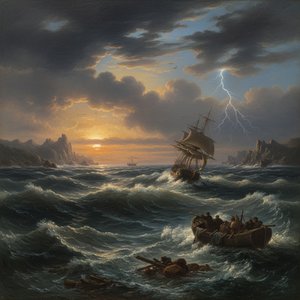
Philip James de Loutherbourg: Romantic Visions of Maritime Life & the Sublime
Explore the dramatic naval scenes & landscapes of Philip James de Loutherbourg (1740-1812), a key figure in Romantic painting. Discover his legacy, theatrical innovations & iconic works like 'The Battle of the Nile' at ArtsDot.
Romantic Masterpieces: 10 Artworks to Stir Your Soul |
Fall in love with art! Explore 10 iconic romantic paintings – from Renaissance classics to Impressionist masterpieces. Discover the stories behind artists like Monet & Klimt, and find museum-quality reproductions for your home at .
Romantic Masterpieces: 10 Artworks for a Timeless Home Decor Aesthetic
Fall in love with art! Explore 10 iconic romantic paintings – from Monet & Bouguereau to Fragonard. Discover the stories behind these masterpieces and find museum-quality reproductions for your home decor at .

Romantic Landscapes: 10 Masterpieces for Your Home | ArtsDot
Journey through 10 Romantic landscape masterpieces by Friedrich, Turner & Cole. Explore emotional art, sublime nature scenes & iconic 19th-century paintings. Find museum-quality reproductions for your home at ArtsDot.com – discover the full collection online!

Romantic Realism's Finest: 10 Masterpieces for Your Home | ArtsDot
Explore 10 defining masterpieces of Romantic Realism! Discover Courbet, Millet & Daumier's powerful paintings—capturing emotion and social realities. Find museum-quality reproductions for your home at ArtsDot.com.