 Preview
 Send
Send Share
Share
 Details

 Download
 Similars
 X-Ray
X-Ray Diaporama
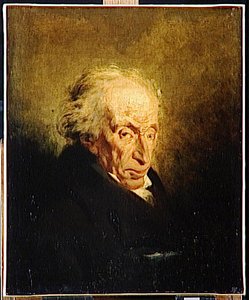
FILIPPO BUONAROTTI (1761 1837)


 Read More
Hand Made Oil Reproduction
Hand-painted oil on canvas in your size and frame, made to order by our artists. ( Buy Print Buy Image)




P118B $10

P118H $10

P118W $10

P438Z $10

P508JH $12

P508YH $12

P805H $10

P805Z $10

P919BZ $10

P919G $10

P919XJ $10

P959ZH $10

P968JZ $12

W106C $8

W218G $10

W218JH $8

W218Y $10

W307PJ $10

W316G $10

W316PJ $8

W316Y $10

W398PJ $8

W4111J $10

W500HY $15

W500JH $15

W692G $12

W849H $8

W940BG $15

W953PJ $8




Pick from our preset sizes that match the artwork's original proportions.

You may enter your own dimensions to fit a specific frame or space. If your selected size does not match the original image's proportions, we will either crop the artwork or extend the painting with additional hand-painted elements. A digital mockup will be sent for your approval before production begins.
Please note that the on-screen preview does not reflect the actual cropping or extension. Only the mockup will accurately show the final composition.
While custom sizes are available, we recommend selecting a dimension from the predefined list to preserve the original proportions.
After order, ArtsDot.com team will email client for instructions and provide a mockup preview
Worldwide Delivery () in 3/4 weeks instead of standard 5 weeks. (21 August). No compromise on quality.

Free Worldwide Express Shipping

High-Quality Linen Canvas

Full Shipping Insurance

Customs Tax Refund Guarantee

True Color Matching Guarantee

60-Day Return Policy (Defects Only)

100% Money-Back Guarantee

Bulk Discount Offer
 Glass option is only available in size under 110 CM

FILIPPO BUONAROTTI (1761 1837)
Reproduction Medium
Reproduction Size
-


Total Price
$ 263
Artwork Description
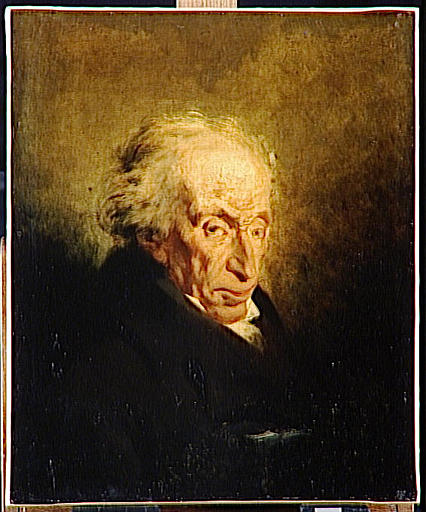
A Portrait of Quiet Strength: Filippo Buonarotti by Philippe-Auguste Jeanron
The canvas before you holds more than just paint; it cradles a moment in time, a carefully constructed portrait of Filippo Buonarotti, a figure both historically significant and imbued with an undeniable sense of contemplative dignity. Painted in 1837 by the French artist Philippe-Auguste Jeanron, this work transcends a simple likeness, offering instead a glimpse into the soul of a man shaped by revolution and steeped in intellectual pursuits. The painting’s muted palette—earthy browns, ochres, creams, and the subtle darkness of shadow—immediately establishes an atmosphere of quiet introspection, inviting the viewer to linger and contemplate the subject's inner world.
Jeanron’s technique is rooted firmly in 19th-century portraiture, yet it possesses a remarkable sensitivity. Visible brushstrokes, particularly evident in the unruly white hair and the textured folds of his clothing, speak to an impasto approach—a deliberate layering of paint that adds depth and physicality to the image. The artist masterfully employs chiaroscuro, dramatically illuminating Buonarotti’s face from a light source positioned slightly off-center, casting intriguing shadows that accentuate the lines etched by time and experience. These aren't merely wrinkles; they are maps of a life lived fully, marked by both hardship and profound thought.
The Echoes of Revolution
Understanding this portrait requires acknowledging its historical context. Filippo Buonarotti (1761-1837) was a pivotal figure in the French Revolution, serving as a key organizer and propagandist for the republican cause. He famously penned the “Manifesto to the Inhabitants of Paris,” a fiery call to arms that ignited the revolutionary fervor of 1792. Jeanron’s decision to immortalize Buonarotti is therefore deeply significant—a testament to the enduring legacy of this revolutionary spirit. The artist, himself a staunch republican and influenced by his own family's involvement in the Bastille storming, likely sought to capture not just Buonarotti’s physical likeness but also the weight of his convictions.
Further research reveals Jeanron’s connection to Buonarroti—the renowned Renaissance sculptor. This familial link subtly reinforces the portrait’s themes of artistic legacy and intellectual heritage. The subject's gaze, direct and unwavering, suggests a quiet confidence born from a deep understanding of history and human nature. There is a palpable sense of wisdom in his eyes, hinting at the burdens he carried and the battles he fought for a more just society.
Symbolism and Emotional Resonance
The composition itself contributes to the painting’s emotional impact. The subject is positioned slightly off-center, drawing the viewer's attention to his face—the focal point of the entire work. The subtle turn of his head invites a direct engagement, as if Buonarotti is sharing a private thought or offering a silent reflection. The arrangement of his hands, resting gently on his lap, conveys a sense of composure and inner strength.
The aged appearance of Buonarotti—the deep lines around his eyes, the slight stoop of his shoulders—evokes themes of time, experience, and mortality. Yet, rather than presenting a portrait of despair, Jeanron imbues the subject with an aura of quiet dignity and resilience. The painting suggests that wisdom is often forged in the crucible of adversity, and that true strength lies not in youthful vigor but in the ability to bear witness to the passage of time with grace and integrity.
A Timeless Masterpiece
“Filippo Buonarotti (1761 1837)” is more than just a portrait; it’s a historical document, an artistic statement, and a poignant meditation on human experience. Philippe-Auguste Jeanron's skillful rendering of this revolutionary figure captures not only his physical likeness but also the essence of his spirit—a testament to the enduring power of conviction and the quiet dignity of a life dedicated to ideals.
Related Artworks

Artist Biography
A Revolutionary Spirit on Canvas: The Life and Art of Philippe-Auguste Jeanron
Born in 1809 amidst the echoes of revolution, Philippe-Auguste Jeanron was a painter whose life and work were deeply intertwined with the political and social currents of 19th-century France. His origins themselves spoke to a lineage steeped in republican ideals; his grandfather had actively participated in the storming of the Bastille, instilling within the family a fervent belief in liberty and equality. This heritage profoundly shaped Jeanron’s artistic vision, guiding him toward a path that blended aesthetic skill with unwavering political conviction. He received his initial training under Xavier Sigalon, honing his skills in drawing and painting while simultaneously immersing himself in the intellectual ferment of Parisian society. His time at the Bourbon college brought him into contact with republican activists—including those associated with Philippe Buonarroti—further solidifying his commitment to progressive causes. Early artistic endeavors included meticulous study; he spent considerable time copying Veronese’s monumental “The Wedding at Cana” within the hallowed halls of the Louvre, and furthered his education at the Swiss Academy, laying a foundation for his future explorations in both style and subject matter.From Rural Landscapes to Social Commentary
Jeanron's early career saw him fulfilling commissions for Parisian churches—Saint-Vincent-de-Paul and Saint-Louis-en-l'Ile among them—but it was the landscapes inspired by the Barbizon school that truly began to define his artistic voice. These works, imbued with a naturalistic sensibility, captured the beauty of the French countryside, foreshadowing his later focus on depicting the lives of those who inhabited it. However, Jeanron’s art wasn't merely about aesthetic representation; it was increasingly driven by his republican beliefs. He began to shift toward genre painting, portraying everyday life and social issues with a realism that challenged conventional artistic norms. His canvases became windows into the struggles and experiences of common people—the laborers, peasants, and ordinary citizens who formed the backbone of French society. This commitment to representing the lives of the marginalized set him apart from many of his contemporaries, establishing him as a precursor to the more overt social realism that would emerge later in the century. He wasn’t simply painting what he saw; he was making a statement about *who* deserved to be seen and remembered.A Director's Vision: Democratizing the Louvre
The year 1848 marked a turning point, not only for France but also for Jeanron’s career. Following the February Revolution, he was appointed head of National Museums and Director of the Louvre—a position that allowed him to translate his ideals into tangible institutional change. He approached this role with a radical vision: to democratize access to art and culture. He prioritized the preservation and classification of the museum's vast collections, improving storage conditions and implementing innovative methods for their arrangement. Crucially, he championed the inclusion of workers in museum projects, believing that all members of society should have a stake in its cultural heritage. Jeanron actively sought to broaden the Louvre’s appeal by showcasing works by artists like Chardin and the Le Nain brothers—painters whose subjects resonated with the lives of ordinary people. He also provided support for contemporary artists such as Charles Jacque and Jean-François Millet, recognizing their potential to capture the spirit of the age. He clearly delineated the roles of the Louvre and the Musée du Luxembourg, reserving the latter for contemporary art while solidifying the Louvre’s position as a repository of historical masterpieces. His tenure was marked by a commitment to inclusivity and accessibility, transforming the Louvre from an elitist institution into a public space for learning and inspiration.Legacy of a Republican Artist
Beyond his curatorial achievements, Jeanron continued to paint throughout his life, often returning to the landscapes and people of the Limousin region—the estate of Comborn having become his family home through marriage. These later works reflect a deep connection to the land and its inhabitants, capturing their dignity and resilience with sensitivity and skill. His commitment to republican ideals and social justice remained unwavering, influencing both his artistic output and his administrative decisions. Philippe-Auguste Jeanron’s legacy lies in his multifaceted contributions to French art and culture. He was not only a talented painter but also a visionary museum director who fundamentally reshaped the way art was presented and experienced. He commissioned Eugène Delacroix for a significant project within the Apollon gallery, demonstrating his respect for artistic collaboration and innovation. His work helped pave the way for the rise of realism in French art, challenging traditional hierarchies and promoting a more inclusive view of cultural heritage. He remains a compelling figure—a testament to the power of art to reflect, challenge, and ultimately transform society.Notable Works
- L’Ile Calypso: A captivating example of his genre scenes, showcasing his ability to capture everyday life with nuance and detail.
- Paysans Limousins: Illustrates his deep connection to the rural landscapes and people of the Limousin region.
- Autoportrait: Offers a glimpse into the man behind the art, revealing a determined and thoughtful individual.
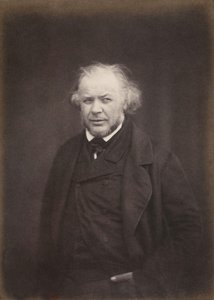
Philippe-Auguste Jeanron
1877 - 1877 , France
Quick Facts
- Artistic Movement Or Style: Realism, Genre painting
- Artists Or Movements Influenced By This Artist:
- Charles Jacque
- Jean-François Millet
- Artists Who Influenced This Artist:
- Xavier Sigalon
- Veronese
- Date Of Birth: 1809
- Date Of Death: 1877
- Full Name: Philippe-Auguste Jeanron
- Nationality: French
- Notable Artworks:
- L’Ile Calypso
- PAYSANS LIMOUSINS
- Autoportrait
- Place Of Birth: Boulogne-sur-Mer, France
Related Articles
Renoir's Masterpieces: Explore 25 Iconic Paintings & Bring Art Home | ArtsDot
Explore 25 iconic Pierre-Auguste Renoir paintings! Discover the stories behind Impressionist masterpieces like 'Dance at Le Moulin de la Galette' & 'Luncheon of the Boating Party'. Find museum-quality art reproductions and elevate your home decor with ArtsDot.com.

The Enduring Legacy of Oil on Canvas: Technique, History & Aesthetic Impact
Explore the rich history & techniques of oil painting – from Renaissance masters to Impressionism. Discover pigments, layering methods, and why this timeless medium endures. Expert insights for artists & art enthusiasts.

Oil on Canvas: A Historical & Technical Exploration of a Timeless Artistic Medium
Explore the rich history & enduring techniques of oil painting on canvas. Discover the science behind its longevity, conservation practices, and contemporary relevance. Expert insights for art enthusiasts.

The Enduring Power of Painting: A Historical & Contemporary Exploration of Form and Emotion
Explore the rich history & enduring techniques of oil painting with ArtsDot. Discover masterpieces, learn about art collecting, and find authentic handmade reproductions crafted by skilled artists.

19th Century Masterpieces: 10 Paintings That Defined an Era | ArtsDot
Journey through 19th century art with ArtsDot! Explore 10 iconic paintings – from Monet & Renoir to Courbet – and discover the stories behind Romanticism, Realism & Impressionism. Find museum-quality reproductions for your home decor. Explore the full collection online!