 Preview
 Send
Send Share
Share
 Details

 Download
 Similars
 X-Ray
X-Ray Diaporama
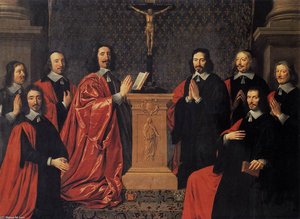
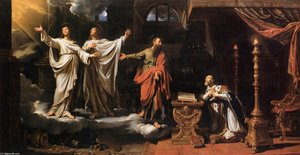
The Presentation of the Temple
 Acrylic On Canvas
- WallArt
- Baroque
 1648
1648 257.0 x 197.0 cm
 Musées Royaux des Beaux-Arts
 Read More
Hand Made Oil Reproduction
Hand-painted oil on canvas in your size and frame, made to order by our artists. ( Buy Print Buy Image)




P118B $10

P118H $10

P118W $10

P438Z $10

P508JH $12

P508YH $12

P805H $10

P805Z $10

P919BZ $10

P919G $10

P919XJ $10

P959ZH $10

P968JZ $12

W106C $8

W218G $10

W218JH $8

W218Y $10

W307PJ $10

W316G $10

W316PJ $8

W316Y $10

W398PJ $8

W4111J $10

W500HY $15

W500JH $15

W692G $12

W849H $8

W940BG $15

W953PJ $8




Pick from our preset sizes that match the artwork's original proportions.

You may enter your own dimensions to fit a specific frame or space. If your selected size does not match the original image's proportions, we will either crop the artwork or extend the painting with additional hand-painted elements. A digital mockup will be sent for your approval before production begins.
Please note that the on-screen preview does not reflect the actual cropping or extension. Only the mockup will accurately show the final composition.
While custom sizes are available, we recommend selecting a dimension from the predefined list to preserve the original proportions.
After order, ArtsDot.com team will email client for instructions and provide a mockup preview
Worldwide Delivery () in 3/4 weeks instead of standard 5 weeks. (16 August). No compromise on quality.

Free Worldwide Express Shipping

High-Quality Linen Canvas

Full Shipping Insurance

Customs Tax Refund Guarantee

True Color Matching Guarantee

60-Day Return Policy (Defects Only)

100% Money-Back Guarantee

Bulk Discount Offer
 Glass option is only available in size under 110 CM

The Presentation of the Temple
Reproduction Medium
Reproduction Size
-


Total Price
$ 263
Artwork Description
A Moment of Grace: Deconstructing “The Presentation of the Temple”
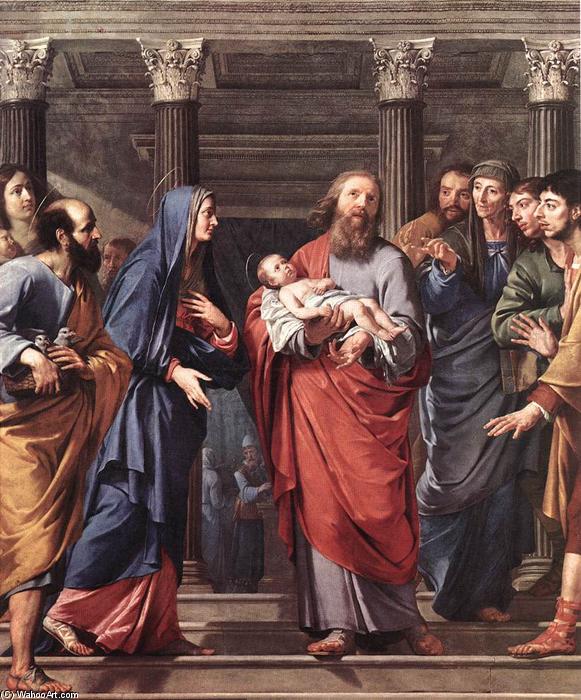
Philippe de Champaigne’s “The Presentation of the Temple,” painted in 1648, isn't merely a depiction of a biblical scene; it’s a profound meditation on faith, family, and the divine. This monumental work, measuring an impressive 257 x 197 cm, transcends its religious subject matter to become a powerful exploration of human emotion and spiritual yearning. The painting captures a pivotal moment – the formal presentation of infant Jesus at the Temple in Jerusalem – yet it’s far more than a straightforward narrative illustration. Champaigne masterfully employs Baroque techniques to imbue the scene with an intense sense of drama, light, and palpable tenderness.
The composition immediately draws the eye to Mary, centrally positioned and radiating a quiet dignity. Her youthful face is framed by flowing auburn hair, her gaze directed towards her son, a gesture of profound love and devotion. Joseph stands beside her, his posture conveying a sense of protective guardianship – not with forceful authority, but with gentle attentiveness. The surrounding figures—the priest, the older woman (Simeon), and the other onlookers—are rendered with remarkable detail, each contributing to the bustling atmosphere of the Temple courtyard. Notice how Champaigne uses subtle variations in clothing and gesture to differentiate these characters, creating a believable and dynamic tableau.
Baroque Drama: Light, Shadow, and Emotional Intensity
Champaigne’s mastery lies not just in his ability to depict figures accurately but in his command of Baroque principles. The painting is saturated with dramatic chiaroscuro – the stark contrast between light and shadow – a technique perfected by Caravaggio and embraced by Champaigne. Light streams down from an unseen source, illuminating Mary and Jesus while casting deep shadows across the faces of the other characters, intensifying their expressions and adding layers of emotional complexity. This interplay of light and dark isn’t merely aesthetic; it serves to heighten the sense of drama and spiritual significance.
The artist's use of color is equally deliberate. Rich reds dominate Mary’s garments, symbolizing her purity and royalty, while cooler blues and greens are employed for the more subdued figures in the background. The overall effect is one of vibrant energy tempered by a sense of solemn reverence. Champaigne’s brushwork is loose and expressive, contributing to the painting's dynamic quality – a hallmark of Baroque art that prioritizes movement and emotion over rigid realism.
Symbolism and Spiritual Resonance
Beyond its immediate narrative, “The Presentation of the Temple” is laden with symbolic meaning. Simeon’s prophecy—“Behold, this child is set for the fall and rising of many in Israel”— foreshadows Jesus' role as a messianic figure, destined to bring both suffering and redemption. The presence of Anna, representing prophetic wisdom, underscores the importance of faith and divine guidance. The act of presenting the infant Jesus at the Temple itself symbolizes his dedication to God from birth, a theme central to Christian theology.
Furthermore, the painting’s setting—the bustling courtyard of the Temple—represents the heart of Jewish religious life during this period. It's a space of ritual, sacrifice, and spiritual contemplation. Champaigne skillfully integrates these elements into his composition, creating a scene that is both historically accurate and deeply evocative.
A Legacy of Faith: Reproduction and Artistic Inspiration
“The Presentation of the Temple” remains one of Philippe de Champaigne’s most celebrated works, admired for its dramatic intensity, technical brilliance, and profound spiritual depth. Reproductions offer a remarkable opportunity to experience this masterpiece firsthand, bringing its beauty and emotional power into any setting. When selecting a reproduction, consider the quality of the print and the accuracy of the colors – aiming for an image that faithfully captures the nuances of Champaigne’s original painting. This artwork continues to inspire artists and collectors alike, serving as a timeless testament to the enduring power of faith, family, and artistic expression.
Related Artworks
Artist Biography
A Life Etched in Light and Shadow
Philippe de Champaigne, born in Brussels in 1602, emerged as a pivotal figure within the French Baroque landscape, though his origins lay outside the kingdom’s borders. His journey began not amidst privilege, but within a modest family, where an early artistic inclination was nurtured by initial studies under Jacques Fouquieres, a landscape painter who provided foundational skills. This grounding proved crucial when, in 1621, the young artist ventured to Paris – a city poised to become both his adopted home and the canvas for his burgeoning talent. There, he apprenticed with Nicolas Poussin, an encounter that indelibly shaped his understanding of composition and draftsmanship. The Palais du Luxembourg became an early proving ground, as de Champaigne contributed to its decoration under Nicolas Duchesne, a formative experience that set the course for his artistic trajectory. It was a period of absorbing influences, laying the groundwork for a style that would eventually blend Baroque drama with a uniquely French sensibility.The Brushstrokes of Power and Piety
De Champaigne’s name became synonymous with both religious painting and portraiture – twin pillars reflecting the dominant currents of his era. His canvases weren't merely depictions; they were statements, imbued with emotional intensity and a masterful command of chiaroscuro, that dramatic interplay of light and shadow which defined Baroque aesthetics. Works like Saint Jerome in the Wilderness, Portrait of Omer Talon, and Moses Holding the Tablets of the Law stand as testaments to his skill, each brushstroke revealing a profound understanding of human form and spiritual weight. He wasn’t confined to smaller works either; numerous paintings for Notre Dame Cathedral showcased his ability to conceive and execute large-scale compositions with intricate detail. However, it was his series of portraits of Cardinal Richelieu that cemented his place in history. Eleven distinct portrayals of the powerful statesman – each capturing a different facet of his authority – were commissioned, reflecting not only de Champaigne’s artistic prowess but also a close relationship with one of France's most influential figures. These weren’t simply likenesses; they were carefully constructed images designed to project power and control.A Founding Father of French Art
De Champaigne wasn’t merely a painter; he was an architect of the French art world itself. As a founding member of the Académie royale de peinture et de sculpture, he played a vital role in formalizing artistic training and establishing standards of excellence within the Kingdom. This institution became the cornerstone of French artistic identity, fostering a distinctive style that balanced Baroque dynamism with classical restraint – a blend to which de Champaigne significantly contributed. His influence extended far beyond his own lifetime, paving the way for subsequent generations of French artists who would build upon the foundations he helped lay. Today, his works grace prestigious museums worldwide, including the Louvre and Notre Dame Cathedral, ensuring his legacy continues to inspire awe and admiration. The impact of his dedication to artistic rigor is still felt in art education today.Evolving Visions and Spiritual Depths
Throughout his career, de Champaigne’s style underwent a subtle yet significant evolution. His later works reveal an increasing somberness and introspection, particularly evident in his religious paintings. Biblical scenes were no longer simply narratives; they became vehicles for profound spiritual contemplation, imbued with a sense of quiet reverence. This shift was partly influenced by the theological currents of Jansenism – a Catholic movement emphasizing divine grace and human depravity – which found expression in the mood and subject matter of some of his most compelling pieces. He explored themes of humility, sacrifice, and the search for redemption, creating images that resonated with a growing sense of religious fervor within French society. Even within his portraits, a new level of psychological depth emerged, revealing not just outward appearances but also the inner lives of his subjects. The artistic journey of Philippe de Champaigne was one of continuous refinement, culminating in works that spoke to both the intellect and the soul. His son, Jean-Baptiste de Champaigne, followed in his footsteps as a painter, continuing the family’s commitment to artistic pursuits and ensuring the continuation of their creative legacy.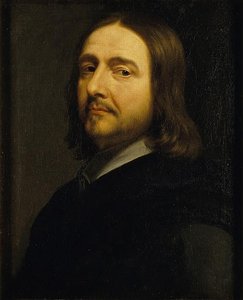
Philippe de Champaigne
1602 - 1674 , Netherlands
Quick Facts
- Artistic Movement Or Style: Baroque
- Artists Or Movements Influenced By This Artist: ['French School']
- Artists Who Influenced This Artist: ['Nicolas Poussin']
- Date Of Birth: 1602
- Date Of Death: 1674
- Full Name: Philippe de Champaigne
- Nationality: French
- Notable Artworks:
- Saint Jerome in the Wilderness
- Portrait of Omer Talon
- Moses Holding the Tablets
- Cardinal Richelieu
- Ex Voto
- Annunciation
- Place Of Birth: Brussels, Netherlands
Related Articles

Demandes Commerciales
APS ofrece reproducciones de bellas artes y encargos personalizados desde 2004. Confían en nosotros corporaciones, hoteles y coleccionistas selectos para obras de arte de calidad museística, servicio discreto y soluciones artísticas completas. ¡Póngase en contacto con nosotros para obtener un presupuesto personalizado!

Goya's Masterpieces: Explore 25 Iconic Paintings & Art Prints | ArtsDot
Delve into the world of Francisco Goya with ArtsDot. Explore 25 iconic paintings – from 'The Third of May' to his haunting Black Paintings. Discover the stories, techniques & emotions behind these Spanish masterpieces. Find museum-quality art reproductions for your home at ArtsDot.com!

The Dramatic Flourish: Exploring the Baroque Movement's Enduring Legacy in Art History
Explore the dramatic world of Baroque art! Discover iconic artists like Caravaggio & Rubens, defining techniques, and its lasting impact on art history. Expert insights for collectors & enthusiasts at ArtsDot.

A riguardo di noi
Découvrez notre histoire ! Nous apportons l'art de classe mondiale dans votre vie grâce à une sélection experte, des créations personnalisées et des aperçus gratuits. Approuvé par les particuliers et les entreprises depuis 2000.

The Golden Age Reforged: Dramatic Realism & Religious Zeal in Spanish Baroque Art
Explore the dramatic world of Spanish Baroque art! Discover masters like Zurbarán & the powerful influence of religious zeal on painting techniques – a guide for collectors and enthusiasts.