

 Send
Send Share
Share
 Details

 Download
 Similars
 Diaporama
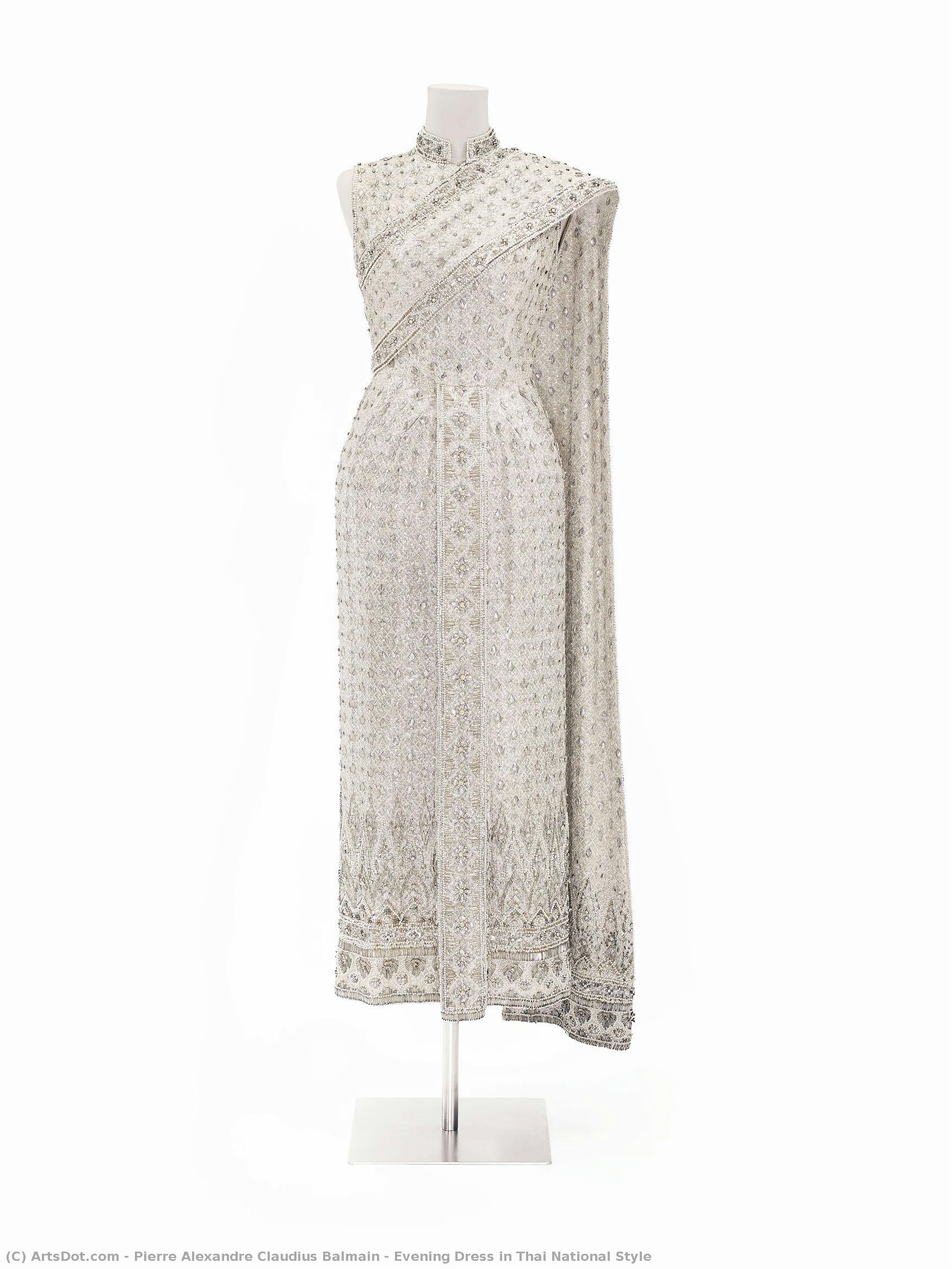
Evening Dress in Thai National Style


 Read More
Purchase a high-resolution, enhanced digital image, far superior to the online preview.
Each file is meticulously prepared by our in-house specialists using advanced tools and expert manual retouching. We ensure every image has exceptional clarity, precise color accuracy, and fine detail.
The final file is delivered via email within 72 hours, optimized for immediate use in professional, editorial, and print environments. This is the same quality trusted by top-tier design studios, publishers, and galleries.
Digital Image
Download a high-resolution file for personal display, printing, and creative projects. ( Buy Print Buy Hand Made Painting)
Included in Every Digital Image Order
Expert Digital Delivery, Guaranteed
When you choose ArtsDot.com, you're not just getting an image - you're receiving a professionally enhanced digital artwork, crafted with precision and backed by a satisfaction guarantee. Here's everything that comes with your order, automatically:

Fast Email Delivery
Your high-resolution digital image file will be emailed to you within 72 hours of ordering - ready for immediate use.

AI-Enhanced Digital File
Your artwork is professionally optimized using advanced AI tools and manual editing, ensuring maximum detail, clarity, and color accuracy.

Free Lifetime Re-Delivery
Accidentally deleted or lost your file? No worries - we'll resend it to you anytime, free of charge.

No Import Fees - Ever
Enjoy your artwork instantly with zero customs, duties, or delivery fees - digital downloads are always tax-free.

Color Accuracy Guarantee
We ensure your digital image reflects the original colors as closely as possible using professional tools and color management.

60-Day Satisfaction Guarantee
If you're not satisfied with your digital image, we'll revise it or refund 100% within 60 days - no questions asked.

100% Money-Back Guarantee
Not satisfied? Get a full refund within 60 days of receiving your digital file - no questions asked.

Bulk Order Discounts
Buy 3 images, save 10% - Buy 5, save 15% - Buy 10+, save 20%. Great for creative projects, galleries, and agencies.
Collectible Description
A Glimpse of Imperial Grace: The Evening Dress in Thai National Style
Pierre Alexandre Claudius Balmain’s “Evening Dress in Thai National Style,” created in 1967, is more than just a garment; it's a vibrant intersection of cultures and a testament to the enduring allure of exquisite craftsmanship. This photograph, captured with meticulous detail by Pierre Alexandre Claudius Balmain, offers a rare glimpse into a world where European haute couture seamlessly blends with the rich traditions of Thailand. The dress itself—a shimmering cascade of silk brocade interwoven with threads of gold and silver—immediately commands attention, its opulence hinting at an official state visit to Iran in April of that year. Yet, it’s not merely about lavishness; within this intricate design lies a profound story of cultural exchange and artistic collaboration.
The photograph's composition is strikingly simple yet profoundly effective. The mannequin, posed against the stark black backdrop, becomes a stage for the dress to take center stage. The verticality of the garment emphasizes its length and flowing silhouette, while the careful lighting—diffused and even—allows every bead, paillette, and thread to shimmer with life. Balmain’s eye for detail is evident in the precise rendering of the embroidery, a complex tapestry of floral motifs and geometric patterns that speak to both Thai artistic heritage and European design sensibilities. The photograph's perspective offers a frontal view, allowing us to fully appreciate the dress’s intricate construction and the sheer volume of embellishment.
The Fusion of East and West: Design and Inspiration
Balmain’s creation represents a pivotal moment in fashion history—a conscious effort to bridge the gap between European luxury and Southeast Asian artistry. The choice of Thai silk brocade, renowned for its intricate weaving techniques and vibrant colors, immediately establishes a strong connection to Thailand's rich textile tradition. However, the incorporation of metal threads – gold and silver – alongside crystal, beadwork, and paillettes firmly roots the design within the context of 1960s Parisian haute couture. This deliberate juxtaposition speaks volumes about Balmain’s vision: he wasn’t simply replicating a Thai style; he was reimagining it through a European lens, creating something entirely new and uniquely beautiful.
Further research reveals that this particular dress was commissioned for Queen Sirikit of Thailand's state visit to Iran in 1960. Her Majesty’s desire for a national costume suitable for formal occasions prompted the collaboration between Balmain and François Lesage, resulting in eight distinct designs – the Chut Thai Ruean-Ton, Chitlada, Amarin, Boromphiman, Chakkri, Dusit, Chakkraphat and Siwalai. The photograph captures one of these stunning creations, showcasing the meticulous attention to detail that characterized Balmain’s work. The use of “yok” weaving technique in the sbai (top) – a traditional Thai method creating additional thickness without adding supplementary threads – highlights the respect for local craftsmanship.
Symbolism and Emotional Resonance
Beyond its aesthetic beauty, the dress is laden with symbolic meaning. The elaborate embellishments—the shimmering beads, the delicate paillettes, the intricate embroidery—evoke a sense of opulence, luxury, and sophistication. They represent not just wealth but also artistry, skill, and cultural pride. The Mandarin collar, a hallmark of Thai national dress, adds an element of formality and tradition, while the flowing silhouette suggests grace and elegance. The photograph’s stark black background serves to isolate the dress, drawing our attention to its intricate details and emphasizing its inherent beauty.
Looking at this image today, one can't help but feel a sense of nostalgia for a bygone era—a time when fashion was seen as an art form, a means of expressing cultural identity, and a symbol of diplomatic relations. The “Evening Dress in Thai National Style” is a powerful reminder of the enduring legacy of Pierre Balmain’s creativity and his ability to seamlessly blend diverse influences into works of breathtaking beauty. It's a piece that speaks volumes about the power of collaboration, the importance of cultural exchange, and the timeless appeal of exquisite craftsmanship.
Technical Details & Reproduction Considerations
The photograph itself is a testament to meticulous documentation—a straightforward representation of the dress’s textures and patterns achieved through studio lighting. The lack of significant manipulation suggests a focus on capturing the garment's inherent beauty with minimal artistic intervention. This clarity allows for an appreciation of the intricate details, from the subtle variations in the silk brocade to the precise placement of each bead and paillette.
For those considering a hand-painted reproduction, it’s crucial to note the dress’s layered construction—the delicate lace or similar fabric beneath the opulent embroidery. Reproducing this level of detail requires exceptional skill and patience. The use of high-quality materials – particularly silk brocade and metal threads – is essential to capturing the original's luster and depth. A skilled artisan will carefully replicate each stitch, ensuring that the reproduction faithfully reflects the artistry and elegance of Balmain’s original design.
Related Artworks
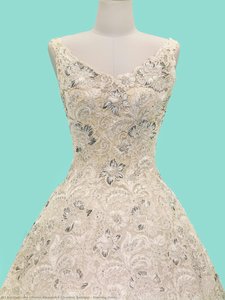
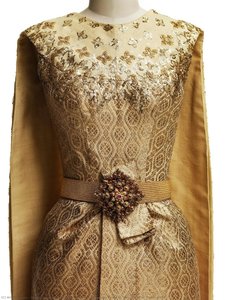
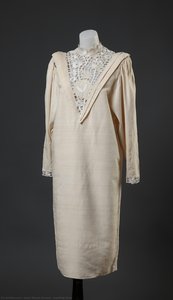
Artist Biography
A Legacy of Post-War Elegance: The World of Pierre Balmain
Pierre Alexandre Claudius Balmain, a name synonymous with post-war Parisian couture, emerged as a beacon of refinement and elegance in a world yearning for beauty after the austerity of conflict. Born in 1914 in Saint-Jean-de-Maurienne, France, Balmain’s path to becoming one of fashion's most celebrated designers was subtly shaped by his upbringing. His mother, Françoise, managed a fashionable boutique, Galeries Parisiennes, and this early exposure ignited within him a fascination with the artistry of dressmaking. While he initially pursued studies in architecture at the École des Beaux-Arts in 1933, it wasn’t long before Balmain found himself drawn to the more immediate allure of fashion, beginning freelance work sketching designs for Robert Piguet. This shift marked the true commencement of a career that would redefine post-war style.From Apprenticeship to Independent Vision
Balmain's formative years were spent honing his skills under the tutelage of established designers. He worked with Edward Molyneux for five years, absorbing invaluable experience in haute couture techniques and construction. A pivotal moment arrived when he joined Lucien Lelong during World War II, a period that also saw him forge a connection with a rising star – Christian Dior. This wartime collaboration proved significant, as both men would soon become leading figures in the revitalization of French fashion. In 1945, Balmain boldly established his own fashion house, an act of entrepreneurial spirit and artistic confidence. His debut collection immediately captured attention, presenting designs that embraced a distinctly feminine silhouette – long, bell-shaped skirts nipped at the waist, embodying a return to luxury and grace. This aesthetic resonated deeply with a public eager to shed the constraints of wartime practicality and embrace a renewed sense of optimism and glamour.Defining the ‘New Look’ and Expanding Horizons
Balmain's designs quickly became emblematic of what would be known as the “New Look,” though he was not its sole originator, his contribution was undeniably significant. He masterfully blended structure with fluidity, creating garments that celebrated the female form while maintaining an air of sophisticated restraint. His signature style featured impeccably tailored jackets with defined waists and accentuated shoulders, luxurious fabrics like velvet and silk, and a meticulous attention to detail. Beyond clothing, Balmain expanded his creative vision into fragrance, launching successful perfumes such as *Vent Vert* and *Elysees 64-83*, which further solidified the brand’s identity as a purveyor of refined elegance. His influence extended beyond the Parisian ateliers; in 1951, he brought his designs to the United States, earning recognition with a Neiman Marcus Fashion Award in 1955. Throughout the 1960s and 70s, Balmain’s reach broadened further as he designed uniforms for TWA and Malaysia-Singapore Airlines cabin crews, demonstrating his ability to seamlessly blend fashion with functionality. Even Air France's first female pilot donned a Balmain uniform in 1975, a testament to the brand’s prestige and versatility.A Lasting Impression: Legacy and Enduring Style
Pierre Balmain passed away in 1982, leaving behind a legacy that continues to inspire designers and captivate fashion enthusiasts today. His clientele read like a roll call of royalty and Hollywood stars – the Duchess of Windsor, Marlene Dietrich, Katharine Hepburn, and Queen Sirikit of Thailand were among those who favored his creations. Even decades after his death, Balmain’s vintage couture gowns are still sought after by celebrities such as Angelina Jolie, Penélope Cruz, and Kate Moss, proving the timeless appeal of his designs. His emphasis on impeccable tailoring, luxurious fabrics, and a celebration of feminine form remains a cornerstone of modern fashion. Balmain's vision wasn’t merely about creating beautiful clothes; it was about crafting an experience of elegance and sophistication that empowered women and reflected a renewed sense of hope in the post-war era. He understood that dressmaking was, as he himself eloquently stated, “the architecture of movement,” and his designs continue to move and inspire generations.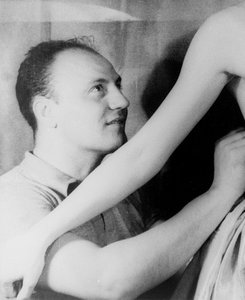
Pierre Alexandre Claudius Balmain
1914 - 1982 , France
Quick Facts
- Artistic Movement Or Style: Haute Couture, New Look
- Artists Or Movements Influenced By This Artist:
- Fashion design
- Post-war elegance
- Artists Who Influenced This Artist:
- Robert Piguet
- Edward Molyneux
- Lucien Lelong
- Christian Dior
- Date Of Birth: May 18, 1914
- Date Of Death: June 29, 1982
- Full Name: Pierre Alexandre Claudius Balmain
- Nationality: French
- Notable Artworks:
- Ball gown of coral velvet
- Suit
- Coat
- Evening Dress in Thai Style
- Place Of Birth: Saint-Jean-de-Maurienne, France

