 Preview
 Send
Send Share
Share
 Details

 Download
 Similars
 X-Ray
X-Ray Diaporama
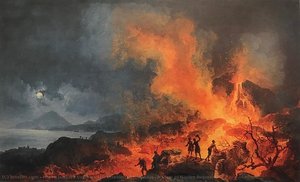
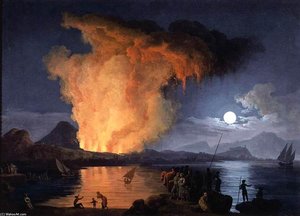
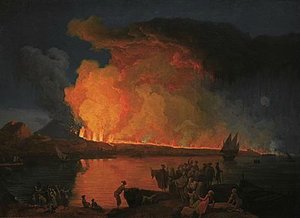
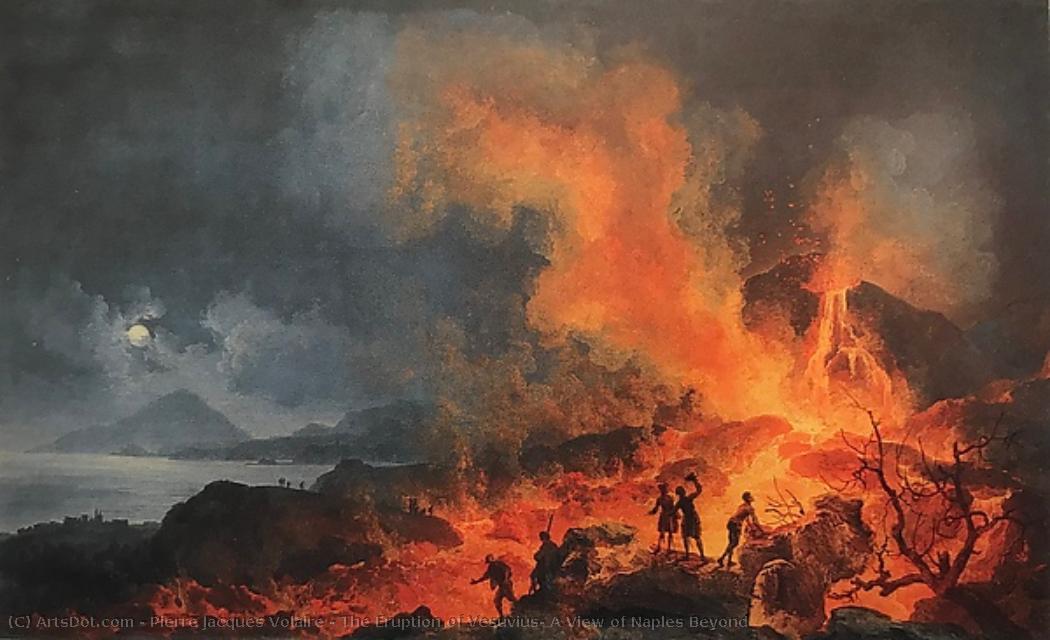
The Eruption of Vesuvius, A View of Naples Beyond
 Oil On Canvas
- WallArt
- Romantic Landscape Painting
 1776
1776 71.0 x 115.0 cm
 Metropolitan Museum of Art
 Read More
Hand Made Oil Reproduction
Hand-painted oil on canvas in your size and frame, made to order by our artists. ( Buy Print Buy Image)




P118B $10

P118H $10

P118W $10

P438Z $10

P508JH $12

P508YH $12

P805H $10

P805Z $10

P919BZ $10

P919G $10

P919XJ $10

P959ZH $10

P968JZ $12

W106C $8

W218G $10

W218JH $8

W218Y $10

W307PJ $10

W316G $10

W316PJ $8

W316Y $10

W398PJ $8

W4111J $10

W500HY $15

W500JH $15

W692G $12

W849H $8

W940BG $15

W953PJ $8




Pick from our preset sizes that match the artwork's original proportions.

You may enter your own dimensions to fit a specific frame or space. If your selected size does not match the original image's proportions, we will either crop the artwork or extend the painting with additional hand-painted elements. A digital mockup will be sent for your approval before production begins.
Please note that the on-screen preview does not reflect the actual cropping or extension. Only the mockup will accurately show the final composition.
While custom sizes are available, we recommend selecting a dimension from the predefined list to preserve the original proportions.
After order, ArtsDot.com team will email client for instructions and provide a mockup preview
Worldwide Delivery () in 3/4 weeks instead of standard 5 weeks. (3 September). No compromise on quality.

Free Worldwide Express Shipping

High-Quality Linen Canvas

Full Shipping Insurance

Customs Tax Refund Guarantee

True Color Matching Guarantee

60-Day Return Policy (Defects Only)

100% Money-Back Guarantee

Bulk Discount Offer
 Glass option is only available in size under 110 CM

The Eruption of Vesuvius, A View of Naples Beyond
Reproduction Medium
Reproduction Size
-


Total Price
$ 263
The Eruption of Vesuvius, A View of Naples Beyond
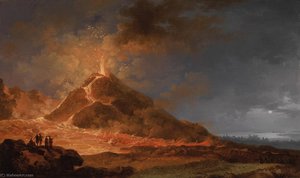
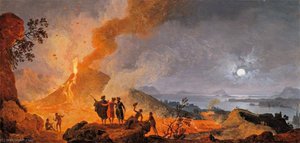
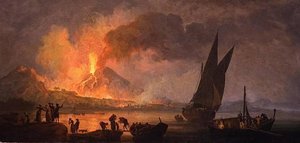
Pierre Jacques Volaire’s “The Eruption of Vesuvius” stands as a testament to the Romantic fascination with untamed nature and the sublime—a visual embodiment of awe and terror inspired by one of Europe's most dramatic geological events. Painted in 1776, this monumental landscape captures not merely an eruption but also its profound psychological impact on those who witnessed it, reflecting a burgeoning artistic sensibility that sought to convey emotion rather than simply represent reality.A Synthesis of Vernet’s Influence and Personal Vision
Volaire's artistic journey began under the mentorship of Claude Joseph Vernet, arguably the foremost marine painter of the Enlightenment, whose mastery of tonal gradation and atmospheric perspective profoundly shaped Volaire’s stylistic approach. Vernet instilled in him a meticulous attention to detail—particularly concerning light effects—skills that would become hallmarks of Volaire’s oeuvre. However, unlike Vernet's predominantly maritime canvases, Volaire skillfully harnessed his technical prowess to depict the visceral grandeur of Mount Vesuvius, transforming it into an emblem of both destructive power and sublime beauty. This decision wasn’t merely stylistic; it signaled a deliberate embrace of Romantic ideals—a movement that prioritized emotion and imagination over rational observation.The Sublime Landscape: Pompeii's Legacy
The painting’s subject matter is inextricably linked to the historical context of its creation. Following the rediscovery of Pompeii in 1748, European intellectuals and artists alike were captivated by the ruins of this ancient Roman city—destroyed by the eruption of Vesuvius in AD 79 CE. This event served as a potent symbol of human vulnerability against the forces of nature, prompting artists to explore themes of terror, grandeur, and transcendence. Volaire’s depiction aligns perfectly with this aesthetic preoccupation, portraying Mount Vesuvius not as merely a geological phenomenon but as an agent of divine retribution—a spectacle that overwhelms the senses and confronts viewers with the immensity of creation's power. Tiny human figures are dwarfed by the volcano’s fiery eruption, emphasizing the insignificance of humankind in comparison to the sublime majesty of nature.Technique and Composition: Mastering Light and Drama
Volaire employed a masterful technique characterized by meticulous tonal gradation—a technique honed during his formative years with Vernet—to convey the dramatic intensity of the eruption. Thick brushstrokes capture the turbulent movement of lava flows and ash clouds, while subtle variations in color illuminate the fiery glow of Mount Vesuvius’s summit. The composition is carefully balanced, drawing the eye upwards towards the volcano's apex and simultaneously anchoring it within the expansive Bay of Naples—a juxtaposition that reinforces the painting’s thematic concerns about scale and perspective. The artist skillfully utilized atmospheric haze to heighten the sense of drama and create an illusion of depth, mirroring Vernet’s influence and elevating “The Eruption of Vesuvius” to a pinnacle of Romantic landscape painting.A Symbol of Transformation: From Enlightenment Reason to Emotional Expression
Ultimately, "The Eruption of Vesuvius" represents more than just a depiction of a natural disaster; it embodies the transition from Enlightenment rationalism to Romantic emotional expression. By prioritizing feeling over intellect—a hallmark of the Romantic movement—Volaire achieved an unparalleled level of artistic impact. The painting continues to resonate with audiences today, serving as a powerful reminder of humanity’s relationship with the forces of nature and inspiring contemplation on themes of beauty, terror, and transcendence. Its enduring appeal lies in its ability to capture not just what was seen but what was felt—a feat accomplished through meticulous observation and masterful artistic execution.Related Artworks
Artist Biography
The Legacy of Pierre Jacques Volaire: A Master of the Sublime
Born in the coastal elegance of Toulon, France, in 1729, Pierre Jacques Volaire was destined for a life steeped in the nuances of visual storytelling. As the son of a distinguished writer and the official city painter of Toulon, his very foundation was built upon the intersection of narrative and imagery. This unique lineage provided him with an early, profound appreciation for the dramatic potential of the canvas, setting the stage for a career that would eventually capture the most terrifying and awe-inspiring spectacles of the natural world. His upbringing in a household where art and intellect converged allowed him to approach landscape painting not merely as a study of scenery, but as a medium for conveying deep, emotional truths.
The trajectory of Volaire’s artistry was irrevocably altered through his transformative apprenticeship under Claude Joseph Vernet. For eight pivotal years, Volaire studied under the guidance of the era's most celebrated marine painter, absorbing the secrets of atmospheric perspective and the delicate interplay of light upon water. From Vernet, he inherited a mastery of tonal gradation and a sophisticated understanding of how to manipulate oil paint to evoke the vastness of the sea. This mentorship did more than refine his technical skill; it instilled in him a lifelong fascination with the maritime atmosphere and the dramatic lighting that would become the hallmark of his mature style.
Capturing the Fiery Majesty of Vesuvius
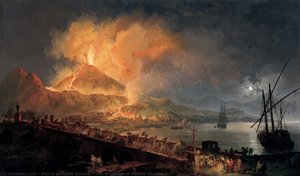
As Volaire’s reputation grew, his work began to transcend traditional coastal vistas, moving toward the burgeoning ideals of the Romantic movement. He became particularly renowned for his depictions of volcanic eruptions, most notably the cataclysmic power of Mount Vesuvius. These paintings were not merely topographical records but were profound explorations of the sublime—that specific aesthetic quality that evokes a sense of overwhelming awe and existential terror in the face of nature's uncontrollable force. In masterpieces such as “The Eruption of the Vesuvius” (1767), Volaire utilized fiery textures and chaotic compositions to immerse the viewer in the heat and destruction of the volcanic event.
His fascination with these geological spectacles resonated deeply with the 18th-century Grand Tourists. During this era, travelers journeying through Naples sought out works that reflected both the scientific curiosity regarding natural phenomena and a romanticized longing for the ancient world. Volaire’s paintings served as exquisite, high-status souvenirs, capturing the tension between the beauty of the Italian landscape and the violent unpredictability of its volcanic heart. Through his brush, the destruction of the earth was transformed into a captivating spectacle of light, shadow, and motion.
Artistic Mastery and Historical Significance
The enduring significance of Pierre Jacques Volaire lies in his ability to bridge the gap between the disciplined realism of the Enlightenment and the emotional turbulence of Romanticism. His technical prowess allowed him to render the spray of a crashing wave or the glowing embers of a lava flow with remarkable precision, yet it was his artistic vision that gave these scenes their soul. By blending the marine expertise learned from Vernet with his own obsession with the volcanic sublime, he created a body of work that remains a vital testament to the era's shifting aesthetic values.
Volaire’s contributions to the genre of landscape and marine painting can be summarized through several key artistic pillars:
- Technical Precision: A masterful command of oil textures and light, perfected under the tutelage of Claude Joseph Vernet.
- The Aesthetic of the Sublime: The ability to evoke profound emotion by depicting the terrifying grandeur of natural disasters.
- Cultural Resonance: Creating works that functioned as both scientific interest pieces and romanticized souvenirs for the European elite.
- Narrative Landscapes: Moving beyond simple scenery to tell stories of elemental struggle and geological transformation.
Though his life concluded in the late 1790s, Volaire’s impact persists in the way we perceive the power of the natural world through art. His works remain essential windows into an age that was beginning to look upon the chaos of nature not with mere fear, but with a profound, artistic reverence.
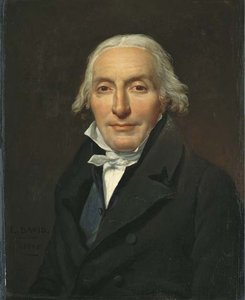
pierre jacques volaire
1729 - 1799 , France
Quick Facts
- Artistic Movement Or Style: Romantic Landscape Art
- Artists Who Influenced This Artist: ['Claude Joseph Vernet']
- Date Of Birth: 1729 Toulon France
- Date Of Death: Naples 1790s
- Full Name: Pierre Jacques Volaire
- Nationality: French
- Notable Artworks:
- The Eruption of Vesuvius
- Mediterranean Harbor Scene
- View of the Eruption of Mount Vesuvius
- Place Of Birth: Toulon France
Related Articles

Romantic Landscapes: 10 Masterpieces for Your Home | ArtsDot
Journey through 10 Romantic landscape masterpieces by Friedrich, Turner & Cole. Explore emotional art, sublime nature scenes & iconic 19th-century paintings. Find museum-quality reproductions for your home at ArtsDot.com – discover the full collection online!
The Sublime and the Picturesque: Exploring Emotion & Nature in Romantic Landscape Painting
Explore the emotional power of Romantic landscape painting! Discover the sublime & picturesque traditions, key artists like Friedrich & Cole, and find your perfect artwork at ArtsDot.
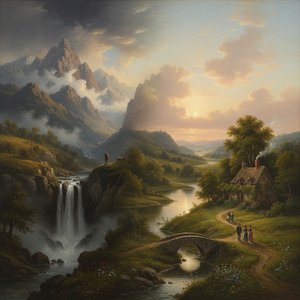
The Sublime and the Picturesque: Exploring Emotion & Nature in Romantic Landscape Painting
Explore the emotional power of Romantic landscape painting! Discover the sublime & picturesque aesthetics, key artists like Friedrich & Cole, and lasting influence on art history. Find your perfect piece at ArtsDot.
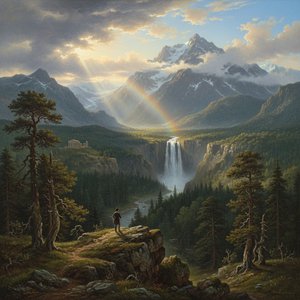
Evoking Nature's Sublime: A Comprehensive Exploration of 19th-Century Landscape Painting
Explore the captivating world of 19th-century landscape painting! Discover renowned artists like Friedrich & Monet, key movements, and find the perfect artwork to bring nature's serenity into your home. Expert insights at ArtsDot.
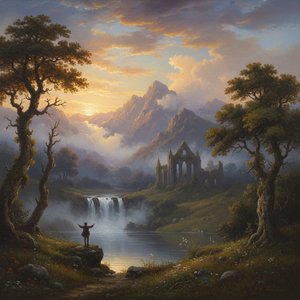
Evoking Emotion & Transcendence: Romantic Landscape Painting (18th-19th Century)
Explore the emotional depth of Romantic landscape painting (18th-19th century). Discover key artists like Friedrich & Cole, and the concepts of the sublime. Expert insights for art lovers & collectors.