 Send
Send Share
Share
 Details

 Download
 Similars
 Diaporama
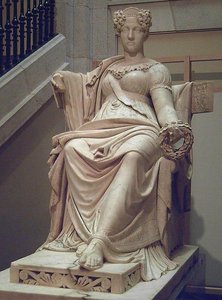
Cornelia, Mother of the Gracchi


 Read More
Giclée / Art Print
Museum-quality giclée or canvas print with fast production and flexible finish options. ( Buy Hand Made Painting Buy Image)




































Pick from our preset sizes that match the artwork's original proportions.

You may enter your own dimensions to fit a specific frame or space. If your selected size does not match the original image's proportions, we will either crop the artwork or extend the image with a mirrored or solid-fill edge. A digital mockup will be sent for your approval before production begins.
Please note that the on-screen preview does not reflect the actual cropping or extension. Only the mockup will accurately show the final composition.
While custom sizes are available, we recommend selecting a dimension from the predefined list to preserve the original proportions.
Worldwide Delivery () in 2 weeks instead of standard 4/5 weeks. (25 August)

Free Worldwide Express Shipping

High-Quality Linen Canvas

Full Shipping Insurance

Customs Tax Refund Guarantee

True Color Matching Guarantee

60-Day Return Policy (Defects Only)

100% Money-Back Guarantee

Bulk Discount Offer
 Glass option is only available in size under 110 CM

Cornelia, Mother of the Gracchi
Giclée / Art Print
Reproduction Size
-


Total Price
$ 63
Collectible Description
The Embodiment of Roman Virtue
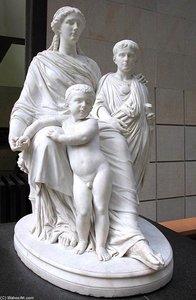
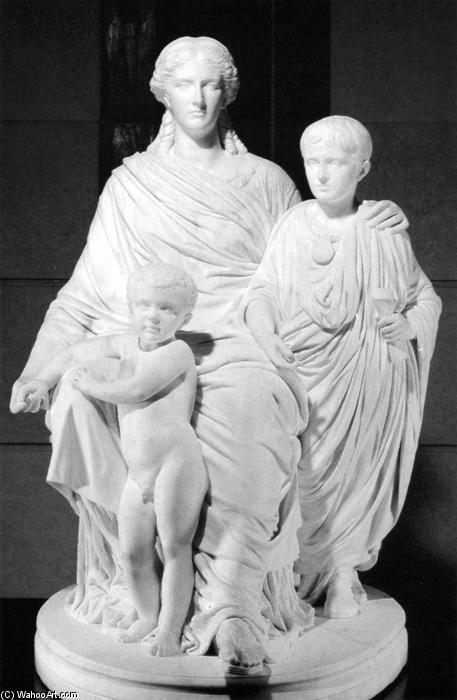
To stand before Cornelia, Mother of the Gracchi is to encounter not merely carved marble, but the very spirit of Roman ideals made tangible. Pierre Jules Cavelier’s masterful sculpture captures a moment steeped in profound familial gravity and unwavering moral fortitude. The composition centers on Cornelia, depicted with an air of serene dignity, flanked by her two young sons. One boy clings tenderly to her leg, while another rests his arm upon her shoulder, creating a tableau that speaks volumes without uttering a single word. This is the portrait of motherhood elevated to civic virtue—a powerful meditation on legacy and duty.
Neoclassical Grace and Sculptural Mastery
Stylistically, the work resonates deeply with Neoclassicism, an era obsessed with reviving the perceived purity and grandeur of classical antiquity. Cavelier’s technique showcases a profound understanding of human anatomy and drapery. Observe the meticulous rendering of Cornelia's attire; the folds of her garment are not simply carved surfaces but seem to possess weight and natural fall, suggesting the luxurious flow of fabric against polished marble. The artist has achieved an almost breathtaking illusion of texture—the smoothness of skin contrasted with the deep, intricate carving defining the cloth. This technical brilliance allows the viewer's eye to wander across every plane, appreciating the sculptor’s virtuosity.
Symbolism Woven in Marble
The symbolism inherent in this piece is rich and deeply resonant for the art connoisseur. Cornelia herself represents a pinnacle of Roman *pietas*—a devotion encompassing duty to family, state, and gods. The presence of the boys transforms the sculpture from a mere portrait into an allegory of continuity. They are not just children; they are the future, the inheritors of virtue that Cornelia embodies. The overall emotional impact is one of quiet strength; it suggests that true power lies not in martial display, but in the steadfast nurturing of character and lineage.
A Timeless Presence for Modern Interiors
For the discerning collector or designer seeking an anchor piece for a grand hall or library, this reproduction offers unparalleled depth. The soft, diffused lighting captured by the original marble translates beautifully into a reproduced form, lending an ethereal quality to any space. It is art that commands contemplation, inviting conversations about history, duty, and the enduring bonds of family. Owning a representation of Cornelia, Mother of the Gracchi means bringing home not just sculpture, but a piece of idealized cultural narrative—a constant reminder of timeless grace.
Related Artworks
Artist Biography
The Sculptural Legacy of Pierre-Jules Cavelier
In the vibrant, shifting landscape of nineteenth-century Paris, few artists captured the delicate tension between classical restraint and Romantic fervor as gracefully as Pierre-Jules Cavelier. Born in 1814 to a family of skilled artisans—his father being a silversmith and furniture maker—Cavelier was destined for a life defined by the tactile mastery of form and material. This early immersion in the precision of craftsmanship provided the bedrock upon which he would build an illustrious career, eventually ascending to become one of the most respected figures in French academic sculpture. His journey from the workshops of Paris to the prestigious halls of the Villa Medici is a testament to a talent that could bridge the gap between the rigorous discipline of antiquity and the emotive depth of the Romantic era.
Cavelian’s artistic evolution was deeply shaped by his encounters with the masters of his time. Studying under the legendary sculptor David d’Angers and the painter Paul Delaroche, he learned to navigate the complexities of human anatomy and historical narrative. This period of intense training culminated in his monumental achievement in 1842: winning the Prix de Rome with his plaster statue, Diomedes Entering the Palladium. This victory was more than a personal triumph; it granted him entry into the Villa Medici, an experience that would serve as the crucible for his mature style. Surrounded by a cohort of future luminaries such as Édouard Lantéri and Eugène Guillaume, Cavelier spent his years in Rome absorbing the grandeur of classical antiquity, refining a technique that allowed marble and bronze to breathe with a lifelike, poetic vitality.
A Synthesis of Neoclassicism and Romanticism
The true brilliance of Cavelier’s work lies in his ability to synthesize disparate artistic movements into a singular, cohesive voice. While his foundations were firmly rooted in the Neoclassical tradition—characterized by anatomical accuracy and a reverence for Greek and Roman ideals—his soul belonged to the Romantic movement. He possessed a rare ability to imbue static stone with a sense of psychological depth and transient emotion. In works such as Cornélie, one can observe how he utilizes the purity of classical form to convey profound human sentiment, creating figures that seem to exist in a state of eternal, quiet contemplation.
His mastery extended beyond the intimate scale of portraiture into the grand architectural landscape of Paris. Cavelier’s contributions to the city's visual identity are marked by a sense of drama and movement, as seen in his evocative Angel on the Bell Tower. His sculptures often feature:
- Fluidity of Form: A seamless transition between muscular tension and graceful repose.
- Narrative Depth: The ability to tell complex historical or mythological stories through a single, poignant gesture.
- Material Mastery: An expert command over the textures of marble and bronze, making stone appear as soft as skin or as light as drapery.
Historical Significance and Enduring Influence
As the nineteenth century progressed, Cavelier’s influence rippled through the academic institutions of France. His role as a teacher and a pillar of the artistic community ensured that his commitment to technical excellence and emotional sincerity would be passed down to subsequent generations of sculptors. His works, now housed in some of the world's most esteemed collections, including the Musée d'Orsay and the Louvre, serve as enduring windows into a period when art sought to reconcile the permanence of history with the fleeting beauty of human emotion.
Today, Pierre-Jules Cavelier is remembered not merely as a practitioner of academic sculpture, but as a poet in stone. His legacy remains a vital part of the French sculptural canon, reminding us of a time when the pursuit of beauty was inextricably linked to the exploration of the human spirit. Through his hands, the cold rigidity of classical tradition was transformed into a living, breathing testament to the Romantic imagination.
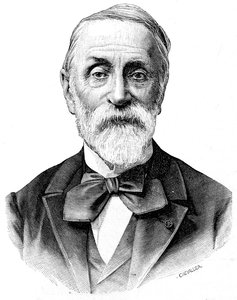
pierre jules cavelier
1814 - 1894 , France
Quick Facts
- Artistic Movement Or Style: Neoclassical & Romantic Sculpture
- Artists Or Movements Influenced By This Artist: ['Romanticism']
- Artists Who Influenced This Artist:
- David d'Angers
- Paul Delaroche
- Date Of Birth: August 30, 1814
- Full Name: Pierre Jules Cavelier
- Nationality: French
- Notable Artworks:
- Cornélie
- Angel on the Bell Tower
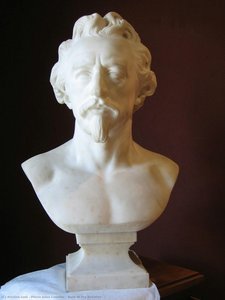
- Bust of Ary Scheffer
- Place Of Birth: Paris, France
Related Articles
The Enduring Allure of Marble in Art History: From Classical Sculpture to Modern Abstraction
Explore the captivating history of marble sculpture from ancient Greece to modern art. Discover renowned artists like Canova & Michelangelo, carving techniques, and investment insights at ArtsDot.

Bronze Sculptures That Defined Art History | ArtsDot
Journey through art history with our Top 10 bronze sculptures! Explore masterpieces by Rodin, Michelangelo & more. Discover stories behind iconic statues and find museum-quality reproductions for your home decor at ArtsDot.com.

The Enduring Form: Exploring Themes & Techniques in Sculpture Across Historical Periods
Explore the rich history of sculpture from ancient masterpieces to contemporary innovations. Discover key techniques, influential artists & investment potential for discerning art collectors.

Bronze Age to Modern Masters: 10 Sculptures That Redefined Art | ArtsDot
Journey through art history with 10 legendary bronze sculptures – from Michelangelo's David to Rodin’s Thinker. Explore the stories, techniques & timeless beauty of these masterpieces. Find museum-quality reproductions & elevate your home decor on ArtsDot.com.
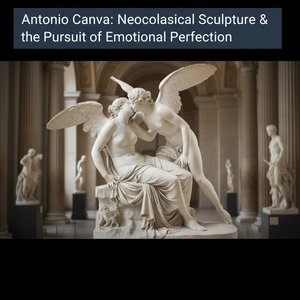
Antonio Canova: Neoclassical Sculpture & the Pursuit of Emotional Perfection
Explore the life & art of Antonio Canova, the greatest Neoclassical sculptor. Discover his masterpieces, innovative techniques, and lasting influence on fine art collecting. Expert insights for discerning investors.