

 Preview
 Send
Send Share
Share
 Details

 Download
 Similars
 X-Ray
X-Ray Diaporama
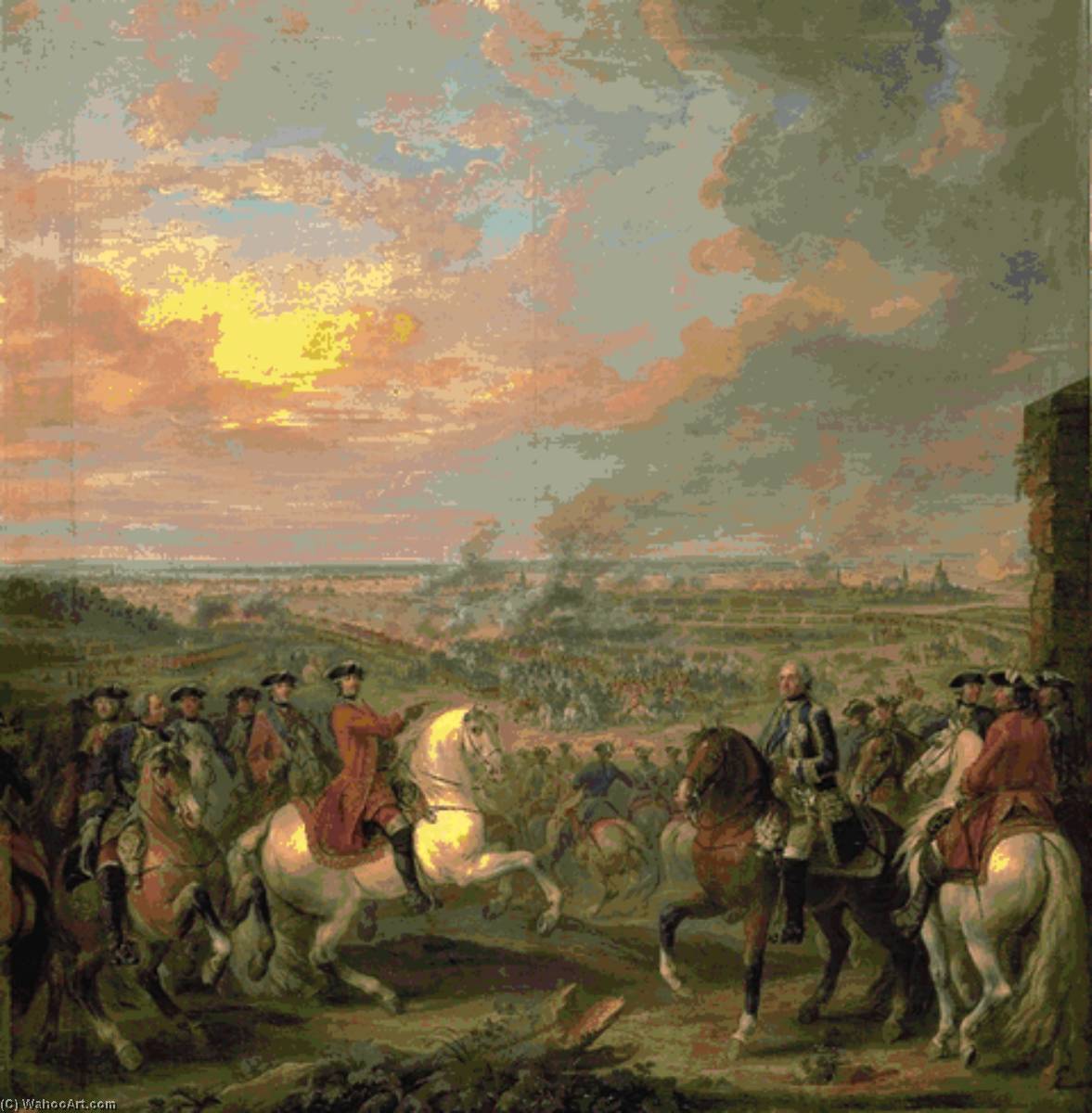
EPISODE DU COMBAT DE MELLE.1745 DIT AUTREFOIS BATAILLE DE FONTENOY


 Read More
Purchase a high-resolution, enhanced digital image, far superior to the online preview.
Each file is meticulously prepared by our in-house specialists using advanced tools and expert manual retouching. We ensure every image has exceptional clarity, precise color accuracy, and fine detail.
The final file is delivered via email within 72 hours, optimized for immediate use in professional, editorial, and print environments. This is the same quality trusted by top-tier design studios, publishers, and galleries.
Digital Image
Download a high-resolution file for personal display, printing, and creative projects. ( Buy Print Buy Hand Made Painting)
Included in Every Digital Image Order
Expert Digital Delivery, Guaranteed
When you choose ArtsDot.com, you're not just getting an image - you're receiving a professionally enhanced digital artwork, crafted with precision and backed by a satisfaction guarantee. Here's everything that comes with your order, automatically:

Fast Email Delivery
Your high-resolution digital image file will be emailed to you within 72 hours of ordering - ready for immediate use.

AI-Enhanced Digital File
Your artwork is professionally optimized using advanced AI tools and manual editing, ensuring maximum detail, clarity, and color accuracy.

Free Lifetime Re-Delivery
Accidentally deleted or lost your file? No worries - we'll resend it to you anytime, free of charge.

No Import Fees - Ever
Enjoy your artwork instantly with zero customs, duties, or delivery fees - digital downloads are always tax-free.

Color Accuracy Guarantee
We ensure your digital image reflects the original colors as closely as possible using professional tools and color management.

60-Day Satisfaction Guarantee
If you're not satisfied with your digital image, we'll revise it or refund 100% within 60 days - no questions asked.

100% Money-Back Guarantee
Not satisfied? Get a full refund within 60 days of receiving your digital file - no questions asked.

Bulk Order Discounts
Buy 3 images, save 10% - Buy 5, save 15% - Buy 10+, save 20%. Great for creative projects, galleries, and agencies.
Collectible Description
A Vision of Valor: Pierre L'Enfant’s “Episode du Combat de Melle.1745”
The painting "Episode du Combat de Melle.1745," also known as the Battle of Fontenoy, stands as a monumental testament to Pierre Charles L’Enfant’s artistic prowess and his pivotal role in shaping the landscape of Washington D.C., though it predates the city's formal establishment by several decades. Executed around 1771, this dramatic depiction captures a moment frozen in time—the fervent anticipation preceding a decisive clash between French and Prussian armies during the Seven Years’ War. More than just a historical record, L’Enfant’s masterpiece embodies the spirit of Enlightenment idealism and reflects his profound understanding of military strategy interwoven with artistic expression.- Subject Matter: The scene portrays a battlefield tableau—a squadron of French cavalry charging into action against Prussian forces. The artist meticulously rendered the dynamism of movement, conveying the urgency and intensity of the impending battle.
- Style & Technique: L’Enfant adhered to the principles of Neoclassicism, drawing inspiration from classical sculpture and architecture. His brushstrokes are deliberate and controlled, prioritizing clarity and precision—a hallmark of the style—to achieve a sense of grandeur and solemnity. The palette is muted yet impactful, utilizing earthy tones to emphasize the seriousness of the subject matter.
- Historical Context: Fontenoy was a crucial engagement in the larger conflict between Britain and France for dominance over Europe. L’Enfant's painting served as a visual chronicle of this pivotal moment, reflecting the anxieties and aspirations of the era. It speaks to the broader narrative of colonial ambition and the struggle for national identity.
- Symbolism: The central figure—a French officer astride a white horse—represents leadership and courage amidst adversity. The horse itself symbolizes nobility and strength, mirroring the ideals of republican virtue championed during the American Revolution. L’Enfant skillfully employed visual cues to communicate these concepts, elevating the painting beyond mere depiction into a statement about moral fortitude.
- Emotional Impact: Viewing “Episode du Combat de Melle.1745” evokes feelings of awe and contemplation. The artist's masterful composition compels the viewer to confront the realities of warfare while simultaneously celebrating human resilience—a duality that underscores L’Enfant’s artistic vision.
Related Artworks


Artist Biography
A Life Bridging Worlds: Pierre Charles L'Enfant and the Birth of a Capital
Pierre Charles L’Enfant, a name often synonymous with the grand design of Washington, D.C., was far more than just an architect or city planner. Born in Paris on August 2, 1754, into a family steeped in artistic tradition – his father, Pierre L'Enfant, served as a painter to King Louis XV – young Charles’s early life unfolded amidst the elegance and intellectual ferment of pre-revolutionary France. He received a rigorous education at the Royal Academy in the Louvre, honing his skills not only in painting but also in engraving and architecture under his father’s tutelage. However, destiny beckoned him across the Atlantic, drawn by the burgeoning spirit of rebellion in the American colonies. A pivotal encounter with Pierre Augustin Caron de Beaumarchais, the playwright and secret agent, led to L'Enfant’s enlistment as a military engineer in support of the Continental Army in 1777. This decision marked a dramatic shift, transforming him from a French artist into an active participant in the forging of a new nation. He even adopted the more Americanized name “Peter” upon his arrival, signaling a conscious embrace of his chosen allegiance.From Battlefield Engineer to Portraitist of Revolutionaries
L’Enfant's service during the Revolutionary War was distinguished and multifaceted. He quickly rose through the ranks, becoming a captain in the Corps of Engineers by 1779, serving with Major General Lafayette and even finding himself on General George Washington’s staff at Valley Forge. It was during this period that his artistic talents found renewed expression, though now directed towards capturing the likenesses of key figures and documenting the realities of war. The Marquis de Lafayette commissioned him to paint a portrait of Washington, a testament to L'Enfant’s growing reputation as an artist capable of conveying both physical resemblance and character. Beyond this significant commission, he created numerous pencil portraits of Washington and other Continental Army officers, offering intimate glimpses into the faces that shaped American independence. He also documented scenes of encampments, providing visual records of the hardships and resilience of the soldiers. Wounded at the Siege of Savannah in 1779 and later captured during the surrender of Charleston in 1780, L’Enfant endured the trials of war firsthand before being exchanged in 1780 and continuing his service until the army's disbandment in 1783. His wartime experiences instilled within him a deep admiration for the American ideals of liberty and self-governance, shaping his future endeavors.A Vision for the New Republic: Designing Washington, D.C.
Following the war, L’Enfant established himself as a successful civil engineer in New York City, undertaking projects ranging from furniture design to architectural renovations – notably redesigning New York City Hall for the First Congress of the United States (resulting in Federal Hall). However, his most enduring legacy would be his visionary plan for the nation's capital. In 1791, President George Washington tasked L’Enfant with designing a federal city on the Potomac River, a project born from political compromise between northern and southern states. The “Residence Act” had established the location, but it was L’Enfant who transformed this nascent idea into a breathtaking reality. His plan, presented in 1791 – often referred to as the "L'Enfant Plan" – was revolutionary for its time. It incorporated grand avenues radiating from prominent circles and squares, monumental public buildings strategically positioned to emphasize civic power, and a harmonious blend of natural landscapes with carefully planned urban spaces. He envisioned a city that would not merely function as a seat of government but also inspire awe and embody the ideals of the new republic. The plan drew heavily on European Baroque and Neoclassical principles, reflecting L’Enfant's artistic training, yet adapted them to the American context, creating something uniquely its own.Legacy and Lasting Influence
Though his relationship with the commissioners overseeing the project became strained due to his strong personality and uncompromising vision – leading to his eventual dismissal in 1792 – L’Enfant's fundamental plan for Washington, D.C., remained largely intact. The city that rose from the shores of the Potomac stands as a testament to his genius, a living embodiment of his artistic and engineering prowess. His influence extends beyond the physical layout of the capital; he established principles of urban planning that continue to inform civic design today. L’Enfant also contributed to other aspects of national symbolism, designing the badge for the Society of the Cincinnati, an organization of former Continental Army officers, and even working on designs for American coinage. He spent his later years largely in relative obscurity, struggling financially despite his significant contributions. He died in 1825, but his vision lives on, etched into the very fabric of the nation’s capital. Pierre Charles L'Enfant was a true Renaissance man, seamlessly blending artistic sensibility with engineering expertise and unwavering dedication to the ideals of the American Revolution, leaving an indelible mark on the landscape – and the spirit – of the United States.
pierre l'enfant
1754 - 1825 , France
Quick Facts
- Artistic Movement Or Style: Neoclassical
- Artists Or Movements Influenced By This Artist:
- City planning
- American architecture
- Artists Who Influenced This Artist: ["Pierre L'Enfant (father)"]
- Date Of Birth: August 2, 1754
- Date Of Death: 1825
- Full Name: Pierre Charles L'Enfant
- Nationality: French-American
- Notable Artworks:
- L'Enfant Plan
- Washington portraits
- Federal Hall design
- Place Of Birth: Paris, France

