 Preview
 Send
Send Share
Share
 Details

 Download
 Similars
 X-Ray
X-Ray Diaporama
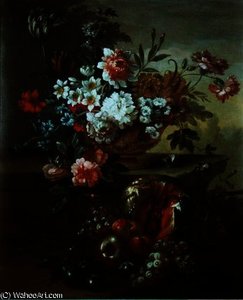
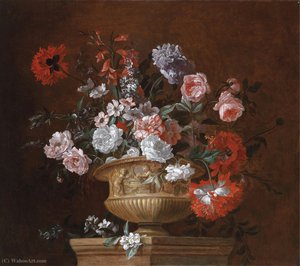
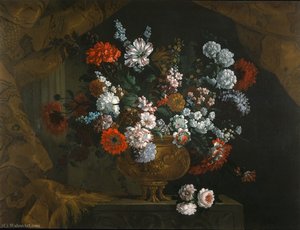
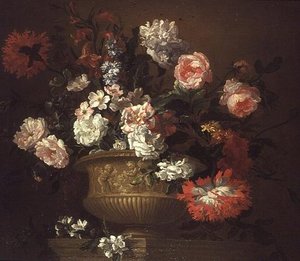
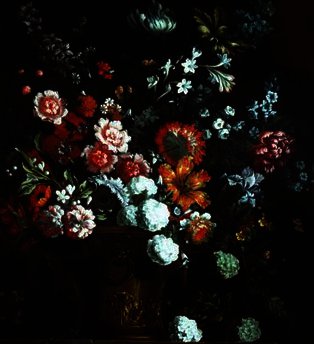
Flowers in a bronze urn
 Read More
Hand Made Oil Reproduction
Hand-painted oil on canvas in your size and frame, made to order by our artists. ( Buy Print Buy Image)




































Pick from our preset sizes that match the artwork's original proportions.

You may enter your own dimensions to fit a specific frame or space. If your selected size does not match the original image's proportions, we will either crop the artwork or extend the painting with additional hand-painted elements. A digital mockup will be sent for your approval before production begins.
Please note that the on-screen preview does not reflect the actual cropping or extension. Only the mockup will accurately show the final composition.
While custom sizes are available, we recommend selecting a dimension from the predefined list to preserve the original proportions.
After order, ArtsDot.com team will email client for instructions and provide a mockup preview
Worldwide Delivery () in 3/4 weeks instead of standard 5 weeks. (22 August). No compromise on quality.

Free Worldwide Express Shipping

High-Quality Linen Canvas

Full Shipping Insurance

Customs Tax Refund Guarantee

True Color Matching Guarantee

60-Day Return Policy (Defects Only)

100% Money-Back Guarantee

Bulk Discount Offer
 Glass option is only available in size under 110 CM

Flowers in a bronze urn
Reproduction Medium
Reproduction Size
-


Total Price
$ 263
Related Artworks
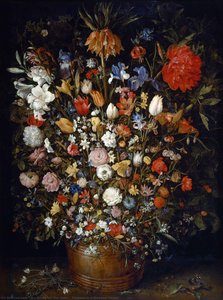
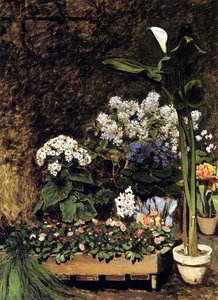
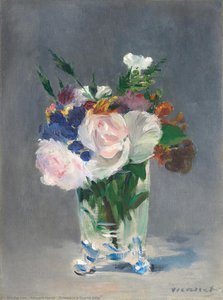

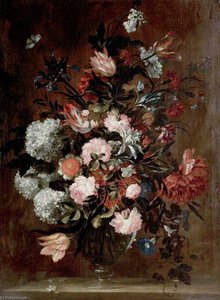
Artist Biography
Pieter Casteels III: Bridging Floral Elegance and Decorative Innovation in Eighteenth Century England
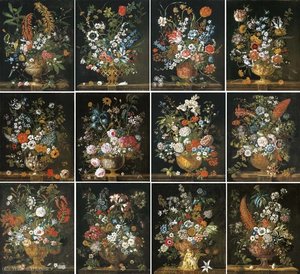
Pieter Casteels III (1684-1749) stands as a fascinating figure within the artistic landscape of the Dutch Golden Age, whose career unfolded spectacularly across the Atlantic Ocean. Born in Antwerp to Elisabeth Bosschaert and Pieter Casteels II—a painter celebrated for his landscapes and history canvases—Casteels inherited an artistic lineage steeped in tradition yet possessed a restless spirit that propelled him toward groundbreaking experimentation. His formative years were spent honing his skills under his father’s tutelage, establishing a solid foundation before embarking on a transformative journey to England in 1708. This relocation marked the beginning of Casteels' multifaceted engagement with British artistic circles. Recognizing the potential for collaboration and innovation, he joined forces with Peter tillemans, venturing into London where they secured commissions from Turner—a prominent portrait painter—to recreate esteemed Old Master paintings. This experience instilled in him a meticulous approach to reproduction and cemented his understanding of stylistic conventions prevalent at the time. Casteels swiftly integrated himself into the burgeoning artistic community, affiliating with the Kneller Academy of Painting and Drawing and becoming a member of the Rose and Crown Club – institutions that fostered intellectual exchange and propelled artistic advancement. Returning briefly to Antwerp in 1712, Casteels reaffirmed his connection to his homeland by enrolling in the guild of Saint Luke, demonstrating his commitment to upholding established artistic standards. However, London beckoned again, and Casteels permanently settled there around 1717, establishing a thriving practice as a painter of flowers and exotic birds—a genre that catered specifically to the opulent tastes of aristocratic clientele. Simultaneously, he pursued diverse avenues of professional activity, functioning as an art dealer and importing artworks from Europe, thereby contributing significantly to the dissemination of artistic treasures. Notably, his patronage extended to James Stanley, 10th Earl of Derby, who acquired both original Casteels paintings and imported pieces—a testament to Casteels’s reputation for excellence and influence. A pivotal moment arrived in 1726 when Casteels initiated a subscription project for twelve prints depicting birds—a venture inspired by his own meticulously crafted designs. The resounding success of this undertaking fueled further ambition, prompting him to undertake two additional publications: ‘The Twelve Months of Flowers’ and ‘The Twelve Months of Fruit.’ These ambitious projects weren't merely aesthetically pleasing; Casteels consciously positioned them as patterns for artisans involved in luxury industries—a shrewd demonstration of his understanding of the broader cultural context. His talent extended beyond painting, notably into textile design where he skillfully utilized his illustrations to elevate decorative fabrics. By 1735, Casteels relinquished painting altogether, dedicating his remaining years to a collaborative role with Martin Abbey near Tooting, Surrey, and subsequently briefly residing in Richmond, London—a period marked by quiet contemplation and continued engagement with the artistic world. He passed away peacefully on May 16th, 1749, leaving behind an enduring legacy as one of the foremost floral painters of his era and a pioneer in bridging art and decorative design—a contribution that continues to resonate within the annals of eighteenth-century British art history.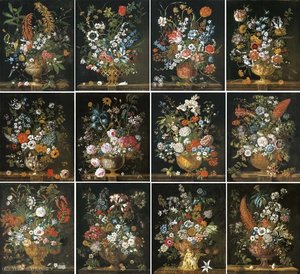
Pieter Casteels III
1684 - 1749
Quick Facts
- Artistic Movement Or Style: Dutch Golden Age
- Artists Or Movements Influenced By This Artist: ['Baroque']
- Artists Who Influenced This Artist: ['Elisabeth Bosschaert']
- Date Of Birth: 1684
- Date Of Death: 1749
- Full Name: Pieter Casteels III
- Nationality: Flemish
- Notable Artworks:
- Bouquet of flowers in an urn on postamente
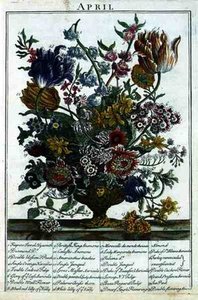
- April, From 'the Flower Garden Displayed' By Robert.
- Place Of Birth: Antwerp, Belgium