 Preview
 Send
Send Share
Share
 Details

 Download
 Similars
 X-Ray
X-Ray Diaporama
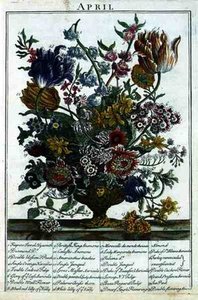
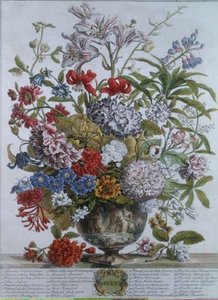
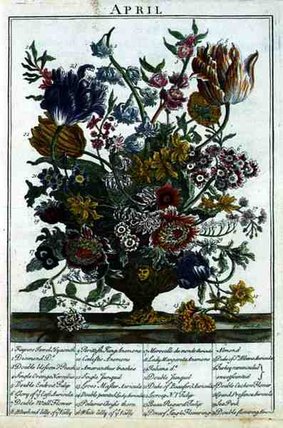
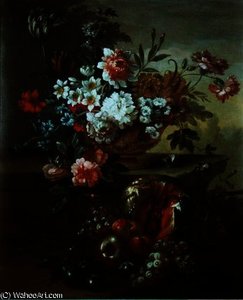
April, From 'the Flower Garden Displayed' By Robert.

 Read More
Hand Made Oil Reproduction
Hand-painted oil on canvas in your size and frame, made to order by our artists. ( Buy Print Buy Image)




































Pick from our preset sizes that match the artwork's original proportions.

You may enter your own dimensions to fit a specific frame or space. If your selected size does not match the original image's proportions, we will either crop the artwork or extend the painting with additional hand-painted elements. A digital mockup will be sent for your approval before production begins.
Please note that the on-screen preview does not reflect the actual cropping or extension. Only the mockup will accurately show the final composition.
While custom sizes are available, we recommend selecting a dimension from the predefined list to preserve the original proportions.
After order, ArtsDot.com team will email client for instructions and provide a mockup preview
Worldwide Delivery () in 3/4 weeks instead of standard 5 weeks. (27 August). No compromise on quality.

Free Worldwide Express Shipping

High-Quality Linen Canvas

Full Shipping Insurance

Customs Tax Refund Guarantee

True Color Matching Guarantee

60-Day Return Policy (Defects Only)

100% Money-Back Guarantee

Bulk Discount Offer
 Glass option is only available in size under 110 CM

April, From 'the Flower Garden Displayed' By Robert.
Reproduction Medium
Reproduction Size
-


Total Price
$ 263
Related Artworks
Artist Biography
A Legacy of Botanical Splendor and Decorative Mastery
Pieter Casteels III stands as a luminous figure within the artistic tapestry of the early eighteenth century, a creator whose life and work bridged the gap between the venerable traditions of the Flemish Golden Age and the burgeoning decorative elegance of Georgian England. Born in 1684 in Antwerp, Casteels was an artist born into a lineage of mastery; he was the son of Elisabeth Bosschaert and Pieter Casteels II, inheriting a profound connection to the botanical and landscape traditions that had defined his homeland. His early years were spent under the meticulous tutelage of his father, absorbing the technical rigors of composition and the delicate nuances of light that characterize the great Dutch and Flemish masters. This foundational training provided him with more than just skill; it instilled in him a reverence for the natural world that would later blossom into a career defined by vibrant floral arrangements and exotic avian subjects.
The trajectory of Casteels' life took a transformative turn in 1708 when, accompanied by his brother-in-law Peter Tillemans, he ventured toward the promising shores of England. This migration was not merely a change in geography but a profound expansion of his artistic horizons. In London, Casteels immersed himself in a thriving cosmopolitan scene, collaborating with prominent figures such as the portraitist Turner to recreate the grandeur of Old Master paintings. His integration into British society was seamless and strategic; he became an active participant in the Kneller Academy of Painting and Drawing and joined the prestigious Rose and Crown Club. These affiliations allowed him to navigate the upper echelons of the London art market, eventually establishing a permanent residence around 1717 where his practice flourished among an aristocratic clientele hungry for the opulent and the exotic.
The Intersection of Fine Art and Decorative Design
What truly distinguishes Pieter Casteels III from his contemporaries was his remarkable versatility and his ability to transcend the boundaries of traditional canvas painting. While he achieved great renown as a still life painter, his vision was never confined to the frame. He possessed a rare, multidisciplinary genius that allowed him to move effortlessly between the roles of painter, engraver, and textile designer. His work often served a grander decorative purpose, specifically designed to adorn the architectural features of stately homes, such as overdoors and magnificent chimney-pieces. This ability to harmonize fine art with interior architecture made him an indispensable figure in the creation of the eighteenth-century aesthetic.
His contributions to printmaking further solidified his historical significance. Through ambitious subscription projects, Casteels brought the beauty of nature to a wider audience. Notable achievements include:
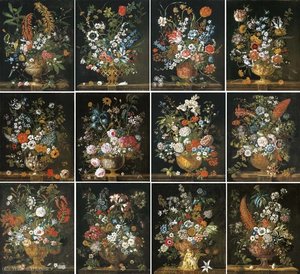
- The Twelve Months of Flowers: A breathtaking series of engravings that captured the seasonal rhythm of botanical life with unparalleled precision.
- The Twelve Months of Fruit: An exploration of texture and ripeness, showcasing his mastery of light and organic form.
- Bird Series: Exquisite etchings based on his own designs, which celebrated the vibrant plumage and delicate anatomy of exotic species.
These publications were more than mere collections of art; they were influential design manuals. Casteels explicitly promoted his illustrations as patterns for artisans in luxury industries, effectively bridging the gap between high art and the decorative arts. His prints provided a blueprint for weavers and textile manufacturers, ensuring that his botanical motifs danced across the silks and calicos of the era.
Final Years and Enduring Influence
As the decades progressed, Casteels’ career underwent another fascinating evolution. In 1735, he made the unconventional decision to retire from the active life of a painter to pursue a role as a residential artist for a calico manufacturer. This final chapter of his professional life, spent working in places like Martin Abbey near Tooting and later in Richmond, underscores his lifelong commitment to the marriage of art and industry. Even in this capacity, he remained a vital link in the chain of decorative innovation, applying his painterly eye to the burgeoning textile trade that was central to England's economic and cultural identity.
The historical significance of Pieter Casteels III lies in his role as a cultural conduit. He carried the sophisticated botanical language of Flanders into the heart of the British Empire, adapting it to suit the evolving tastes of a new age. His work remains a testament to a period when art was not merely something to be observed on a wall, but a living element of the environment—woven into fabrics, carved into wood, and breathed into the very fabric of domestic luxury. Today, his legacy endures through the vibrant, life-affirming beauty of his compositions, which continue to captivate the modern eye with their timeless elegance and scientific precision.
Pieter Casteels III
1684 - 1749
Quick Facts
- Artistic Movement Or Style: Dutch Golden Age
- Artists Or Movements Influenced By This Artist: ['Baroque']
- Artists Who Influenced This Artist: ['Elisabeth Bosschaert']
- Date Of Birth: 1684
- Date Of Death: 1749
- Full Name: Pieter Casteels III
- Nationality: Flemish
- Notable Artworks:
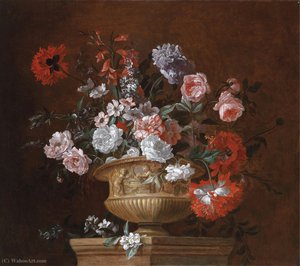
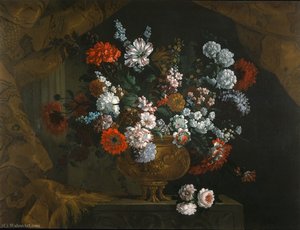
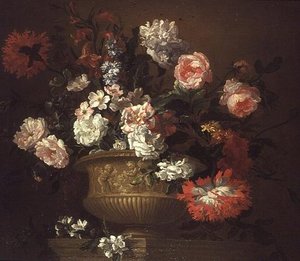
- Bouquet of flowers in an urn on postamente
- April, From 'the Flower Garden Displayed' By Robert.
- Place Of Birth: Antwerp, Belgium
Related Articles
The Flourishing Canvas: A Historical & Artistic Exploration of Botanical Illustration
Explore the rich history of botanical illustration! Discover key artists like Havell & Barraband, learn about scientific accuracy & aesthetic beauty. Shop museum-quality reproductions at ArtsDot.
The Flourishing Canvas: A Historical Journey Through Botanical Illustration
Explore the captivating history of botanical illustration! Discover renowned artists like Robert Havell & Mary Walcott, learn about techniques, and find museum-quality art at ArtsDot.com.
Engraving: A Historical Survey of Technique, Artistic Expression & Enduring Legacy
Explore the rich history of engraving with ArtsDot. Discover techniques, iconic artists like Dürer & Callot, collecting tips, and expert guidance for preserving your art investment. Learn about intaglio printing & more!
Victorian Botanical Painting: Science, Art & Aesthetic Sensibility
Explore the exquisite world of Victorian botanical art! Discover the science & artistry behind stunning floral illustrations by Gould, Muckley & more. Learn about collecting, value & investment at ArtsDot.
Engraving's Golden Age: 10 Masterpieces That Redefined Art | ArtsDot
Journey through art history with our Top 10 Legendary Engravings! Explore masterpieces by Dürer, Rembrandt & Goya. Discover the stories behind these iconic prints and find museum-quality reproductions for your home at ArtsDot.com.