

 Preview
 Send
Send Share
Share
 Details

 Download
 Similars
 X-Ray
X-Ray Diaporama
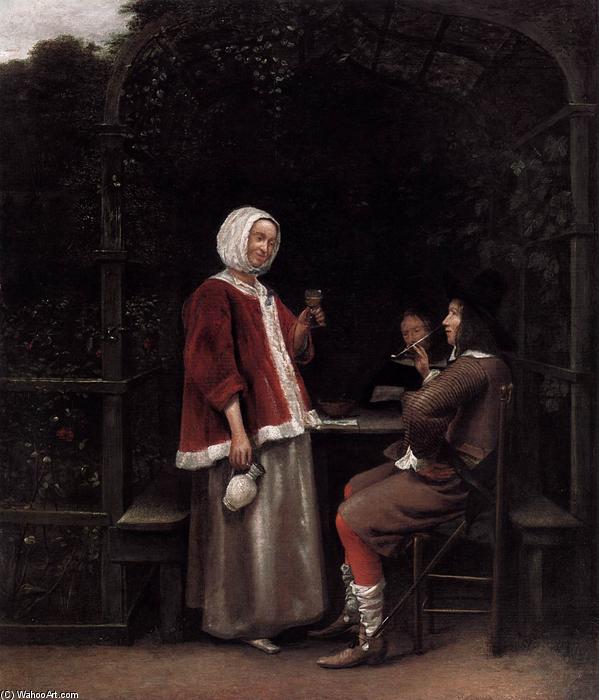
A Woman and Two Men in an Arbour
 Acrylic
- WallArt
- Dutch Baroque
 1657
1657 44.0 x 38.0 cm
 Metropolitan Museum of Art
 Read More
Purchase a high-resolution, enhanced digital image, far superior to the online preview.
Each file is meticulously prepared by our in-house specialists using advanced tools and expert manual retouching. We ensure every image has exceptional clarity, precise color accuracy, and fine detail.
The final file is delivered via email within 72 hours, optimized for immediate use in professional, editorial, and print environments. This is the same quality trusted by top-tier design studios, publishers, and galleries.
Digital Image
Download a high-resolution file for personal display, printing, and creative projects. ( Buy Print Buy Hand Made Painting)
Included in Every Digital Image Order
Expert Digital Delivery, Guaranteed
When you choose ArtsDot.com, you're not just getting an image - you're receiving a professionally enhanced digital artwork, crafted with precision and backed by a satisfaction guarantee. Here's everything that comes with your order, automatically:

Fast Email Delivery
Your high-resolution digital image file will be emailed to you within 72 hours of ordering - ready for immediate use.

AI-Enhanced Digital File
Your artwork is professionally optimized using advanced AI tools and manual editing, ensuring maximum detail, clarity, and color accuracy.

Free Lifetime Re-Delivery
Accidentally deleted or lost your file? No worries - we'll resend it to you anytime, free of charge.

No Import Fees - Ever
Enjoy your artwork instantly with zero customs, duties, or delivery fees - digital downloads are always tax-free.

Color Accuracy Guarantee
We ensure your digital image reflects the original colors as closely as possible using professional tools and color management.

60-Day Satisfaction Guarantee
If you're not satisfied with your digital image, we'll revise it or refund 100% within 60 days - no questions asked.

100% Money-Back Guarantee
Not satisfied? Get a full refund within 60 days of receiving your digital file - no questions asked.

Bulk Order Discounts
Buy 3 images, save 10% - Buy 5, save 15% - Buy 10+, save 20%. Great for creative projects, galleries, and agencies.
Collectible Description
Pieter de Hooch’s Masterpiece: Capturing Quietude and Refinement
Pieter de Hooch (1629–1694), a luminary of the Dutch Golden Age, stands as one of the foremost painters of interior scenes—a genre that profoundly shaped artistic sensibilities during his era. His oeuvre is characterized by an unwavering dedication to realism, masterful use of light and shadow, and an ability to distill complex emotions into deceptively simple compositions. “A Woman and Two Men in an Arbor,” created around 1657–58, exemplifies these qualities, offering a glimpse into the burgeoning bourgeois lifestyle of seventeenth-century Holland and cementing de Hooch’s reputation as a pioneer of psychological portraiture.- Subject Matter: The painting depicts three figures seated beneath an arbor—a woman adorned in crimson attire and facing away from the viewer, accompanied by two men engaged in conversation. This intimate tableau captures a moment of serene companionship, reflecting the values of privacy and refined leisure that were becoming increasingly prevalent within Dutch society at the time.
- Style: De Hooch’s style is undeniably Baroque, yet tempered with an understated elegance that distinguishes it from its more flamboyant counterparts. He eschewed dramatic gestures or theatrical poses, favoring instead subtle expressions and carefully observed details to convey mood and atmosphere. This approach aligns perfectly with his fascination for portraying the inner lives of individuals—a hallmark of his artistic vision.
- Technique: De Hooch’s meticulous technique is evident in every brushstroke. He employed a layered glazing method, applying thin washes of color over subsequent layers to achieve luminous effects and create depth within the scene. The artist skillfully manipulated light to illuminate specific areas of interest—particularly the woman's face—drawing the viewer's gaze inward and fostering contemplation.
Historical Context: Reflecting Dutch Bourgeois Values
“A Woman and Two Men in an Arbor” emerged during a period of significant social transformation in Holland. The rise of the merchant class fueled economic prosperity and fostered a culture of intellectual curiosity and artistic patronage. Artists like de Hooch responded to these developments by depicting scenes from everyday life—domestic interiors, taverns, and gardens—that resonated with the aspirations of their clientele. These paintings served not merely as decorative objects but also as emblems of social status and moral virtue—values that were highly esteemed during the Baroque period.Symbolism: Light, Privacy, and Domestic Harmony
The arbor itself functions as a powerful symbol—representing seclusion, tranquility, and the idealized domestic sphere. The vine climbing over its archway reinforces this notion of natural beauty intertwined with human comfort. Furthermore, the woman’s posture—facing away from the viewer—suggests introspection and vulnerability, inviting viewers to contemplate her inner thoughts and emotions. The subtle gestures of the men convey a sense of camaraderie and mutual respect—underscoring the importance of social bonds within the bourgeois household.Emotional Impact: A Moment Frozen in Time
Ultimately, “A Woman and Two Men in an Arbor” succeeds in conveying a profound emotional resonance. De Hooch’s masterful use of light and color creates a palpable atmosphere—one of warmth, intimacy, and understated elegance. The painting captures a fleeting moment of human connection—a quiet conversation beneath the shade of an arbor—that speaks to universal themes of companionship, contemplation, and the pursuit of happiness. It remains a testament to de Hooch’s ability to transform ordinary scenes into enduring expressions of artistic beauty and psychological insight.Related Artworks
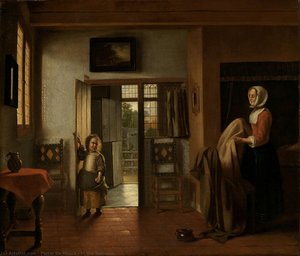
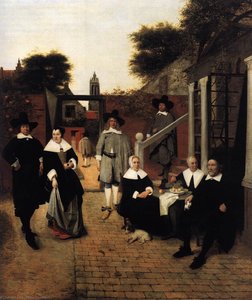
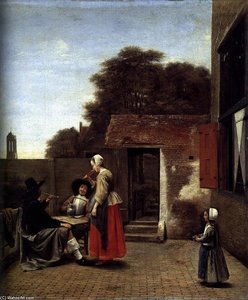
Artist Biography
early life and training
pieter de hooch, a prominent figure in the dutch golden age, was born on december 20, 1629, in rotterdam, netherlands. he was the eldest of five children to hendrick hendricksz de hooch, a bricklayer, and annetge pieters, a midwife. little is known about his early life, but it is believed that he worked in rotterdam, delft, and amsterdam. de hooch's artistic training took place in haarlem under the landscape painter nicolaes berchem, alongside jacob ochtervelt. this period laid the foundation for his future success as a painter of quiet domestic scenes with an open doorway.artistic style and themes
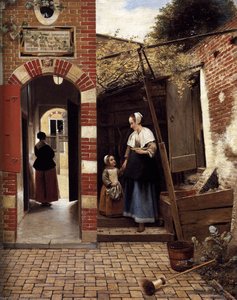
de hooch's work is characterized by its attention to detail, naturalism, and use of light. his paintings often featured everyday life, reflecting the values and aspirations of the emerging middle class. a notable example of this style is "the courtyard of a house in delft" (1658), which showcases his ability to capture the mundane details of everyday life. de hooch's work also shares themes and compositions with emanuel de witte, but his focus on people and their relationships sets him apart. this is evident in "woman nursing" (1658) and "woman with a baby on her lap" (1658), which demonstrate his interest in domestic scenes.notable works and legacy
some of de hooch's most notable works include:- "the merry drinker" (c. 1650)
- "cardplayers in a sunlit room" (1658)
- "a woman preparing bread and butter for a boy" (1661)
museums and collections
de hooch's work can be found in various museums, including the koninklijk museum voor schone kunsten in antwerp, belgium, which features a vast collection of european art from the 15th to the 20th centuries. discover more about pieter de hooch and his works on ArtsDot: [https://ArtsDot.com/@/pieter-de-hooch](https://ArtsDot.com/@/pieter-de-hooch) /en/art/show/art-d3b4kt-en/ (discover the masterpieces of koninklijk museum voor schone kunsten, belgium) note: the provided links are from ArtsDot and are relevant to the topic. no external links were added as per the instructions.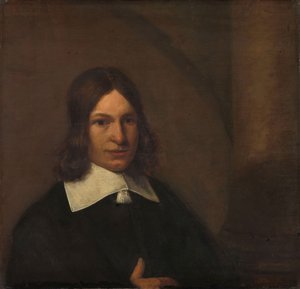
Pieter de Hooch
1629 - 1694 , Netherlands
Quick Facts
- Artistic Movement Or Style: Delft School, Dutch Golden Age
- Artists Or Movements Influenced By This Artist: ['Jan Vermeer']
- Artists Who Influenced This Artist: ['Nicolaes Berchem']
- Date Of Birth: December 20, 1629
- Full Name: Pieter Hendricksz de Hooch
- Nationality: Dutch
- Notable Artworks:
- The Empty Glass
- Woman Reading a Letter
- Cardplayers in a sunlit room
- A woman preparing bread and butter
- Place Of Birth: Rotterdam, Netherlands

