 Send
Send Share
Share
 Details

 Download
 Similars
 Diaporama
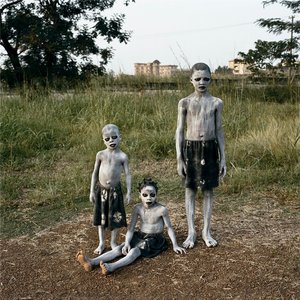
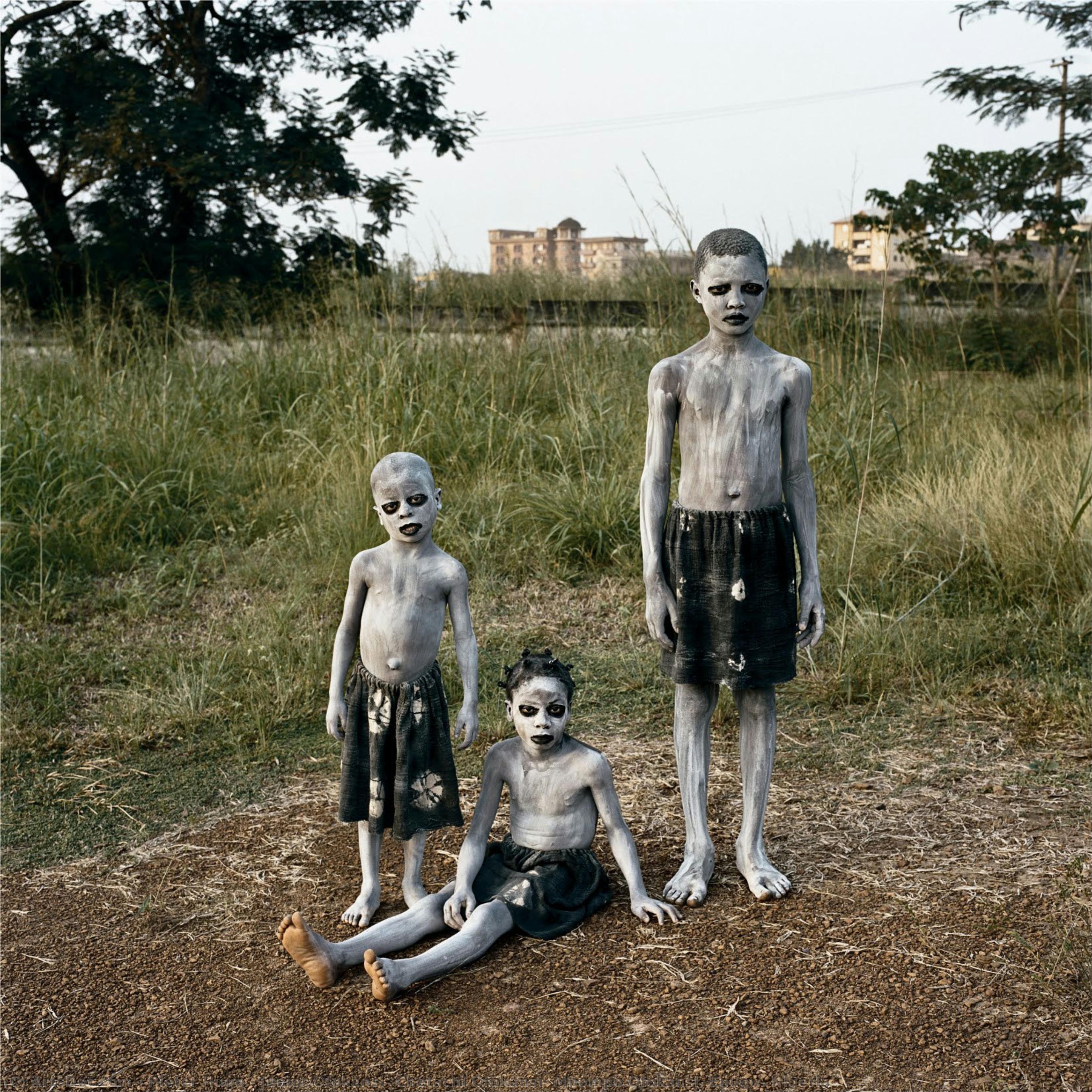
Junior Ofokansi, Chetachi Ofokansi, Mpompo Ofokansi. Enugu, Nigeria
 Black and White Photography
- Photo
- Contemporary Realism
 Contemporary
 110.0 x 110.0 cm
 Read More
Hand Made Oil Reproduction
Hand-painted oil on canvas in your size and frame, made to order by our artists. ( Buy Print Buy Image)




































Pick from our preset sizes that match the artwork's original proportions.

You may enter your own dimensions to fit a specific frame or space. If your selected size does not match the original image's proportions, we will either crop the artwork or extend the painting with additional hand-painted elements. A digital mockup will be sent for your approval before production begins.
Please note that the on-screen preview does not reflect the actual cropping or extension. Only the mockup will accurately show the final composition.
While custom sizes are available, we recommend selecting a dimension from the predefined list to preserve the original proportions.
After order, ArtsDot.com team will email client for instructions and provide a mockup preview
Worldwide Delivery () in 3/4 weeks instead of standard 5 weeks. (29 August). No compromise on quality.

Free Worldwide Express Shipping

High-Quality Linen Canvas

Full Shipping Insurance

Customs Tax Refund Guarantee

True Color Matching Guarantee

60-Day Return Policy (Defects Only)

100% Money-Back Guarantee

Bulk Discount Offer
 Glass option is only available in size under 110 CM

Junior Ofokansi, Chetachi Ofokansi, Mpompo Ofokansi. Enugu, Nigeria
Reproduction Medium
Reproduction Size
-


Total Price
$ 263
A Cinematic Encounter with Reality
In the evocative black and white photograph Junior Ofokansi, Chetachi Ofokansi, Mpompo Ofokansi, South African photographer Pieter Hugo invites us into a world that exists in the liminal space between documentary truth and cinematic fiction. Captured in Enugu, Nigeria, this striking piece is part of Hugo's celebrated Nollywood series, where he explores the vibrant, often surreal energy of the Nigerian film industry. The image presents a hauntingly beautiful tableau: three children sit closely on the ground, their arms entwined in a gesture of profound connection, while two men stand sentinel behind them. Their faces, adorned with traces of paint or makeup, suggest a ritualistic or theatrical preparation, pulling the viewer into a narrative that feels both deeply personal and staged for an unseen camera.
The composition is masterfully balanced, utilizing the stark contrasts of monochrome to emphasize texture and form. The absence of color strips away the distractions of the modern world, forcing the eye to focus on the raw emotion etched in the subjects' expressions and the tactile quality of the makeup on their skin. In the background, the presence of a parked car and distant trees provides a grounded, everyday context that clashes beautifully with the otherworldly appearance of the group. This juxtaposition is central to Hugo’s technique; he captures what feels like a "false" still from a film, creating an atmosphere that is simultaneously intimate and enigmatic.
The Weight of Identity and Performance
To understand this work, one must look toward the cultural landscape of Nollywood—the second most prolific film industry in the world. Hugo’s approach was not to document the chaotic film sets themselves, but to ask his subjects to inhabit the archetypal poses found within these low-budget, high-drama productions. Consequently, the photograph becomes a meditation on performance and identity. The children and men are not merely posing; they are embodying the exaggerated drama, the superstition, and the tragicomedy that define Nigerian cinema. There is a profound symbolism in their togetherness, a sense of community that persists even when draped in the masks of fiction.
For the collector or the interior designer, this piece offers more than just visual interest; it provides a conversational centerpiece that challenges the viewer to look closer. The image carries an emotional weight that resonates through its stillness, evoking themes of childhood innocence, the construction of persona, and the resilience of human connection amidst the artifice of media. It is a work that demands contemplation, making it an ideal acquisition for those who appreciate contemporary photography that bridges the gap between the sociological study and the poetic dreamscape.
Whether displayed in a minimalist modern gallery setting or as a soulful addition to a curated residential collection, this reproduction of Hugo's vision serves as a window into a world where the boundaries of reality are beautifully blurred. It is an invitation to look "aside," to find beauty in the overlooked, and to find truth within the theatrical.
Related Artworks

Artist Biography
A Photographer of the In-Between: Pieter Hugo and the Weight of Identity
Pieter Hugo, born in Johannesburg, South Africa, in 1976, is a photographer whose work resonates with a profound sense of unease and empathy. He doesn’t offer easy narratives or picturesque representations; instead, he confronts viewers with complex portraits that grapple with issues of identity, community, and the lingering scars of history. Growing up during the tumultuous transition from Apartheid, Hugo experienced a unique disconnect—feeling deeply connected to his homeland yet perpetually positioned as an outsider within its social fabric. This sense of alienation became a driving force in his artistic practice, fueling a desire to explore the marginalized and often overlooked corners of South African society, and beyond. His early career saw him working within the film industry in Cape Town, but it was a two-year residency at Fabrica research centre in Italy that truly solidified his path as a photographic artist. This period allowed him to hone his distinctive style—a blend of studio portraiture, documentary observation, and carefully staged compositions.The Hyena and Beyond: Early Work and Emerging Themes
Hugo’s breakthrough project, The Hyena & Other Men (2007), immediately established him as a significant voice in contemporary photography. The series depicts Nigerian men who travel with hyenas or baboons, using them to perform tricks for money and, more disturbingly, to intimidate and collect debts. These images are not simply ethnographic documentation; they are deeply unsettling explorations of power dynamics, economic desperation, and the blurring lines between human and animal. Hugo’s approach is deliberately confrontational—the portraits are starkly lit, often unflinching in their gaze, forcing viewers to engage with the subjects on a visceral level. He avoids romanticizing or exoticizing his subjects, instead presenting them with a raw honesty that challenges conventional notions of representation. This project sparked considerable debate, raising questions about exploitation and the ethics of portraying vulnerable communities. However, it also garnered widespread acclaim for its artistic merit and its willingness to tackle difficult subject matter. Following this success, Hugo continued to explore similar themes in projects like Messina/Mussina (2007), which documented life on the border between Zimbabwe and South Africa, focusing on the impact of economic migration and the AIDS epidemic.Expanding Horizons: From Local Narratives to Global Concerns
Hugo’s work gradually expanded beyond the specific context of South Africa, though it never lost its underlying concern with social justice and human dignity. Nollywood (2009) offered a fascinating glimpse into the vibrant yet chaotic world of the Nigerian film industry, while Permanent Error (2011) explored the environmental consequences of electronic waste in Ghana. These projects demonstrated Hugo’s ability to connect local narratives to broader global issues—the exploitation of labor, the impact of consumerism, and the challenges of postcolonial development. He doesn't shy away from complexity; his images often reveal layers of contradiction and ambiguity, refusing easy answers or simplistic interpretations. His work is characterized by a meticulous attention to detail—from the carefully chosen backgrounds to the subtle nuances of expression on his subjects’ faces. This deliberate approach reflects his desire to create portraits that are both visually striking and intellectually engaging.1994: A Generation Defined
Perhaps one of Hugo's most poignant projects is 1994, a series focusing on children born in Rwanda and South Africa after the pivotal year marking the end of Apartheid and the Rwandan genocide. These portraits, often featuring children dressed in fanciful clothing posed within natural landscapes, are imbued with a sense of hope tempered by the weight of history. The project is deeply personal for Hugo, as 1994 was also the year he turned eighteen—a time of immense political change and personal awakening. He sought to capture the resilience and potential of this generation, while acknowledging the indelible mark left by past trauma. 1994 is not simply a celebration of new beginnings; it’s a meditation on memory, identity, and the enduring legacy of oppression.A Lasting Impact: Hugo's Historical Significance
Pieter Hugo has become one of the most influential photographers of his generation. His work challenges viewers to confront uncomfortable truths about power, privilege, and representation. He is not simply documenting reality; he is actively engaging with it—questioning its assumptions and exposing its contradictions. His influence can be seen in the work of numerous contemporary artists who are similarly grappling with issues of social justice and human dignity. Hugo’s photographs have been exhibited in major museums around the world, including the Rijksmuseum, the National Portrait Gallery in London, and the Tate Modern. He has received numerous awards and accolades for his artistic achievements, solidifying his position as a leading figure in contemporary photography. His legacy lies not only in the beauty and power of his images but also in his unwavering commitment to ethical representation and his willingness to challenge conventional norms.
pieter hugo
1976 - , South Africa
Quick Facts
- Artistic Movement Or Style: Portraiture, Documentary
- Date Of Birth: 1976
- Full Name: Pieter Hugo
- Nationality: South African
- Notable Artworks:
- The Hyena and Other Men
- Looking Aside
- Messina/Mussina
- Nollywood
- Permanent Error
- Place Of Birth: Johannesburg, South Africa
Related Articles

White on Canvas: 10 Masterpieces & Timeless Elegance for Your Home Decor
Explore 10 iconic white paintings by Monet, Whistler & Rothko! Discover the stories behind these serene masterpieces and their impact on art history. Find museum-quality reproductions for your home decor at .

Dark Masterpieces: 10 Iconic Paintings Dominated by Black Tones |
Explore 10 iconic paintings dominated by black tones, from Rembrandt’s chiaroscuro to Goya's dark expressions. Discover the stories behind these masterpieces & find museum-quality art reproductions for your home at .

Monochrome Visions: Exploring the Aesthetic & Historical Significance of Black & White Photography
Explore the rich history & artistic power of black and white photography. From early techniques to iconic masters like Ansel Adams, discover why monochrome continues to captivate art lovers today. Expert insights for collectors.
Mars Black Masterpieces: 10 Iconic Paintings & Timeless Art Decor Ideas
Delve into the power of 'Mars Black' with 10 iconic paintings by masters like Rembrandt & Caravaggio. Explore dramatic chiaroscuro, gothic art, and timeless beauty. Find museum-quality reproductions & elevate your home decor on .

The Subtleties of White: Exploring Absence, Light & Symbolism in Art History
Explore the profound symbolism & history of white in art! From ancient purity to modern abstraction, discover how artists have used absence & light. Expert insights from ArtsDot.