

 Preview
 Send
Send Share
Share
 Details

 Download
 Similars
 X-Ray
X-Ray Diaporama
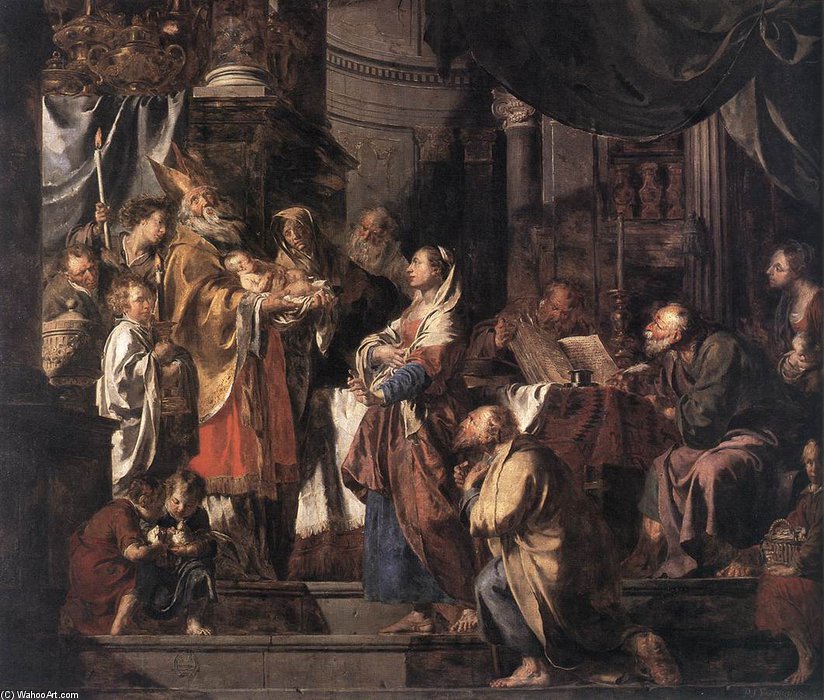
The Presentation In The Temple
 Read More
Purchase a high-resolution, enhanced digital image, far superior to the online preview.
Each file is meticulously prepared by our in-house specialists using advanced tools and expert manual retouching. We ensure every image has exceptional clarity, precise color accuracy, and fine detail.
The final file is delivered via email within 72 hours, optimized for immediate use in professional, editorial, and print environments. This is the same quality trusted by top-tier design studios, publishers, and galleries.
Digital Image
Download a high-resolution file for personal display, printing, and creative projects. ( Buy Print Buy Hand Made Painting)
Included in Every Digital Image Order
Expert Digital Delivery, Guaranteed
When you choose ArtsDot.com, you're not just getting an image - you're receiving a professionally enhanced digital artwork, crafted with precision and backed by a satisfaction guarantee. Here's everything that comes with your order, automatically:

Fast Email Delivery
Your high-resolution digital image file will be emailed to you within 72 hours of ordering - ready for immediate use.

AI-Enhanced Digital File
Your artwork is professionally optimized using advanced AI tools and manual editing, ensuring maximum detail, clarity, and color accuracy.

Free Lifetime Re-Delivery
Accidentally deleted or lost your file? No worries - we'll resend it to you anytime, free of charge.

No Import Fees - Ever
Enjoy your artwork instantly with zero customs, duties, or delivery fees - digital downloads are always tax-free.

Color Accuracy Guarantee
We ensure your digital image reflects the original colors as closely as possible using professional tools and color management.

60-Day Satisfaction Guarantee
If you're not satisfied with your digital image, we'll revise it or refund 100% within 60 days - no questions asked.

100% Money-Back Guarantee
Not satisfied? Get a full refund within 60 days of receiving your digital file - no questions asked.

Bulk Order Discounts
Buy 3 images, save 10% - Buy 5, save 15% - Buy 10+, save 20%. Great for creative projects, galleries, and agencies.
Related Artworks
Artist Biography
Anton Raphael Mengs: The Architect of Neoclassicism
Anton Raphael Mengs, a name often overshadowed by the titans of the Baroque and Rococo eras, nevertheless stands as a pivotal figure in the transition to Neoclassicism – a movement that would profoundly shape European art for centuries. Born in 1728 in Ústí nad Labem, Bohemia (now part of the Czech Republic), Mengs’s life was marked by both privilege and circumstance, ultimately forging him into an artist deeply influenced by classical antiquity and a key advocate for its revival. His story is not simply one of artistic talent; it's a tale interwoven with family secrets, transatlantic journeys, and a passionate dedication to rediscovering the ideals of ancient Greece and Rome.Early Life and Influences
Mengs’s origins were far from conventional. He was the illegitimate son of Ismael Mengs, a Danish-born painter who had secured a position at the court of Saxony, and Charlotte Bormann, the family housekeeper. This unconventional birth necessitated a clandestine upbringing, with the family briefly relocating to Ústí nad Labem before returning to Dresden. This early experience instilled in him a certain awareness of social boundaries and perhaps a sensitivity to the complexities of identity – themes that would subtly permeate his work. His formal artistic training began under his father, Ismael Mengs, who provided a solid foundation in painting techniques. However, it was a trip to Rome in 1749, alongside his sister Therese, that proved transformative. There, he immersed himself in the art of Raphael and other Renaissance masters, developing an enduring admiration for their mastery of form, composition, and idealized beauty. The influence of his father’s miniature copies of Raphael's frescoes for Frederick Augustus further cemented this early fascination with classical ideals.Rome and the Rise of Neoclassicism
Mengs’s time in Rome became a crucible where he refined his artistic vision and began to champion the principles of Neoclassicism. He married Margarita Guazzi, a model who also happened to be the sister of Giovanni Battista Guazzi, a prominent art historian and theorist. This connection exposed Mengs to contemporary debates about art and aesthetics, further fueling his commitment to reviving classical forms. He quickly gained recognition for his portraits, often characterized by their elegant grace and refined elegance – a hallmark of the style he was developing. A particularly significant commission came in 1752 when he undertook the monumental task of replicating Raphael’s *The School of Athens* for the Earl of Northumberland's residence in London. This ambitious undertaking not only showcased his technical skill but also demonstrated his understanding of classical principles and his willingness to adapt them to a new context. The resulting painting, now housed at the Victoria and Albert Museum, remains a testament to Mengs’s vision.Parnassus and the Validation of Neoclassicism
Mengs's most celebrated achievement was undoubtedly *Parnassus*, a monumental fresco executed between 1761 and 1763 for the Villa Albani in Rome. Commissioned by Cardinal Alessandro Albani, this work represented a culmination of Mengs’s artistic and intellectual journey. *Parnassus* depicted the nine Muses presiding over the arts and sciences, drawing inspiration from classical mythology and philosophy. The fresco was an immediate sensation, lauded for its harmonious composition, meticulous detail, and profound understanding of classical ideals. It served as a powerful endorsement of Neoclassicism, establishing Mengs as the leading proponent of this new artistic style. The work’s influence extended far beyond Rome, inspiring artists across Europe to embrace the principles of order, clarity, and restraint that characterized Neoclassical art.Later Years and Legacy
Following *Parnassus*, Mengs continued to paint portraits and decorate palaces in Spain and Italy, including the Camera dei Papiri in the Vatican. He also served as a teacher at the Academy of Florence, where he instilled his Neoclassical principles in a new generation of artists. Despite facing competition from other prominent painters like Pompeo Batoni, Mengs maintained a respected position throughout his career. He died in Rome on June 29, 1779, leaving behind a significant body of work that profoundly shaped the course of European art. While often overshadowed by figures like Raphael and Caravaggio, Anton Raphael Mengs deserves recognition as a crucial architect of Neoclassicism – an artist who not only mastered classical techniques but also championed their revival with unwavering conviction. His legacy endures in the works of countless artists who followed in his footsteps, carrying forward the ideals of order, reason, and beauty that defined this transformative artistic movement.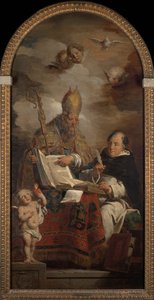
pieter jozef verhaghen
1728 - 1811 , Belgium
Quick Facts
- Artistic Movement Or Style: Neoclassical
- Artists Or Movements Influenced By This Artist:
- Winckelmann
- Neoclassicism
- Artists Who Influenced This Artist:
- Raphael
- Correggio
- Titian
- Date Of Birth: March 22, 1728
- Date Of Death: June 29, 1779
- Full Name: Anton Raphael Mengs
- Nationality: German (Saxon)
- Notable Artworks:
- Parnassus
- The School of Athens
- Place Of Birth: Ústí nad Labem, Bohemia

