 Send
Send Share
Share
 Details

 Download
 Similars
 Diaporama
Revolution of Troelstra Dutch Ivora Plate
 Ceramic
- Sculpture
- Decorative Ceramics
 1918
1918- Modern
 23.0 x 2.0 cm
 University of Pretoria Museums
 Read More
Giclée / Art Print
Museum-quality giclée or canvas print with fast production and flexible finish options. ( Buy Hand Made Painting Buy Image)




































Pick from our preset sizes that match the artwork's original proportions.

You may enter your own dimensions to fit a specific frame or space. If your selected size does not match the original image's proportions, we will either crop the artwork or extend the image with a mirrored or solid-fill edge. A digital mockup will be sent for your approval before production begins.
Please note that the on-screen preview does not reflect the actual cropping or extension. Only the mockup will accurately show the final composition.
While custom sizes are available, we recommend selecting a dimension from the predefined list to preserve the original proportions.
Worldwide Delivery () in 2 weeks instead of standard 4/5 weeks. (26 August)

Free Worldwide Express Shipping

High-Quality Linen Canvas

Full Shipping Insurance

Customs Tax Refund Guarantee

True Color Matching Guarantee

60-Day Return Policy (Defects Only)

100% Money-Back Guarantee

Bulk Discount Offer
 Glass option is only available in size under 110 CM

Revolution of Troelstra Dutch Ivora Plate
Giclée / Art Print
Reproduction Size
-


Total Price
$ 63
Collectible Description
A Ceramic Chronicle of Revolution and Resistance
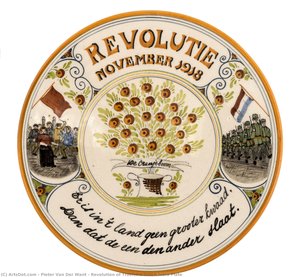
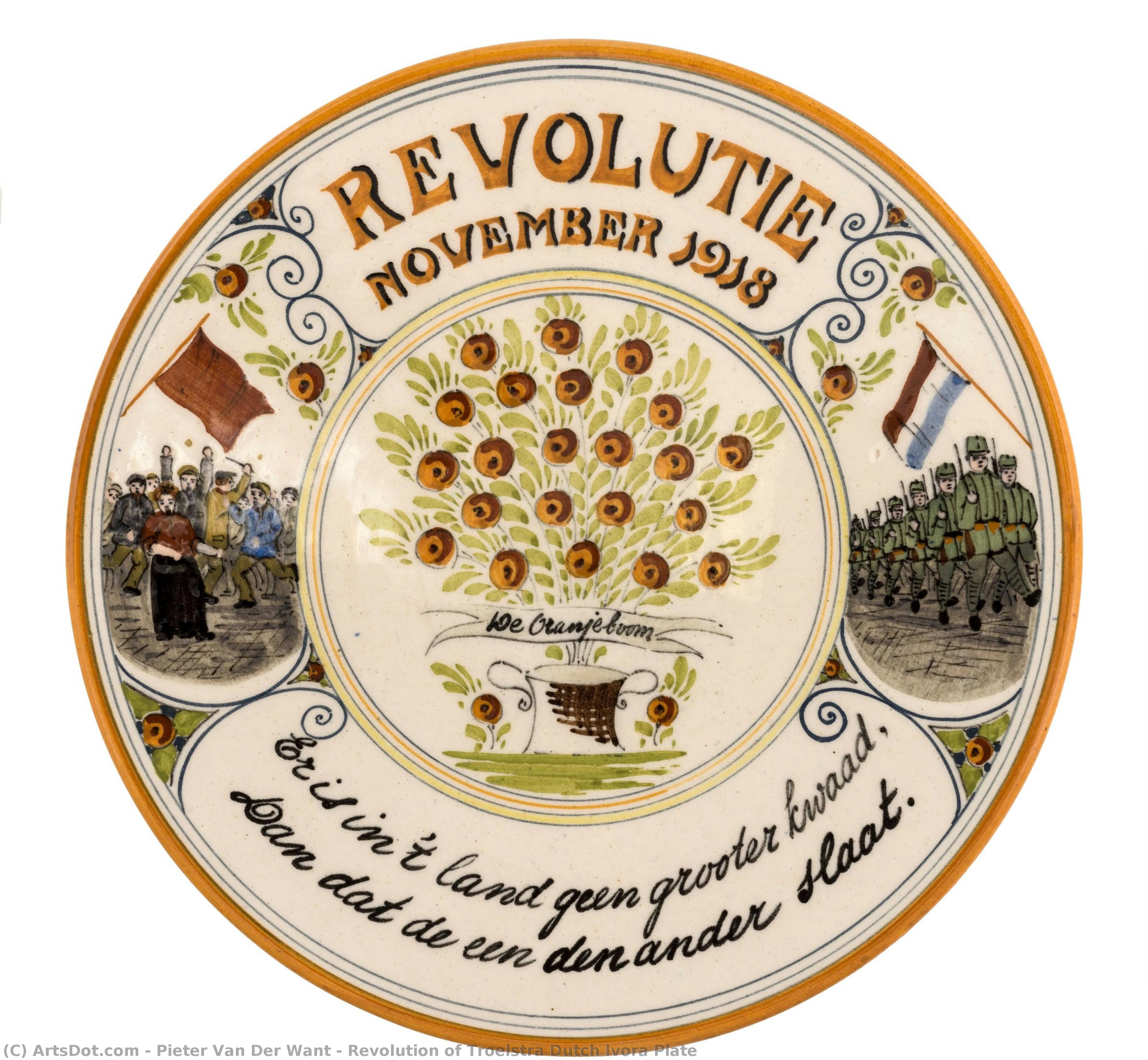
In the delicate curvature of the Revolution of Troelstra Dutch Ivora Plate, one finds much more than a mere decorative object; it is a frozen moment of political upheaval captured in clay. Created by the masterful Dutch ceramicist Pieter van der Want, this exquisite piece serves as a narrative window into the turbulent days of November 1918 in the Netherlands. The plate commemorates the failed socialist revolution led by P.J. Troelstra in Leeuwarden, an era defined by the tension between radical change and the enduring strength of tradition. As one gazes upon its surface, the viewer is transported to a time of profound social friction, where the whispers of revolution met the steadfast loyalty of the Orange-Nassau monarchy.
The composition is a masterclass in circular storytelling, utilizing a flattened perspective that evokes the charm of 19th-century Dutch folk art while maintaining a sophisticated, illustrative realism. At the heart of this ceramic universe stands a central motif—a symbolic tree that represents both the organic growth of new political ideologies and the deep-rooted stability of the nation. Surrounding this centerpiece is a bustling tapestry of figures, soldiers, and architectural elements, all meticulously rendered to guide the eye in a continuous loop of historical drama. The use of geometric shapes and bold, defining lines creates a rhythmic energy, making the plate feel alive with the movement of the crowds and the weight of the era's political slogans.
Technique, Texture, and Timeless Elegance
The artistry behind this piece lies in the seamless marriage of medium and message. Van der Want utilized hand-painting techniques on a glazed ceramic surface, likely employing underglaze pigments to achieve the intricate details of the figures and the subtle gradations of color within the landscape. The resulting texture is one of soft luster, where the light dances across the glaze to highlight the delicate patterns and the raised rim that frames the historical scene. This interplay of light and shadow lends a sense of depth to an otherwise two-dimensional composition, inviting collectors to examine the fine linework that defines every flag, building, and revolutionary banner.
For the discerning collector or interior designer, this plate offers a profound emotional resonance. It is not merely a piece of history, but a conversation starter that brings a sense of intellectual depth and cultural heritage to any space. Whether displayed as a focal point in a curated gallery or used to add a touch of historical gravity to a sophisticated study, the Revolution of Troelstra Plate radiates an aura of importance. It stands as a testament to the power of decorative arts to preserve the soul of a nation, making it an invaluable acquisition for those who seek art that is as intellectually stimulating as it is visually captivating.
Related Artworks

Artist Biography
**early life and background**
pieter van der want, also known as p van der want, was a dutch ceramic artist born in amsterdam, netherlands in 1935. this enigmatic figure left an indelible mark on the world of ceramics with his unique creations.**artistic contributions and notable works**
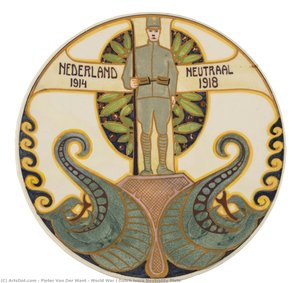
* **world war i dutch ivory neutrality plate (1918)**: university of pretoria museums (pretoria, south africa), ceramic. this plate is a testament to van der want's skill in capturing the essence of neutrality during world war i. * **other notable works**:- gray day by eduard karsen (rijksmuseum amsterdam, netherlands), oil on canvas. this piece showcases the influence of van der want's contemporaries.
- king david by aert de gelder (rijksmuseum amsterdam, netherlands), oil on canvas. this work highlights the diverse range of artistic styles during van der want's time.
**artistic style and influences**
van der want's work in ceramics is characterized by intricate designs and delicate patterns, reflecting his dutch heritage. his style, though not widely documented, is a blend of traditional techniques with modern flair.**legacy and passing**
pieter van der want passed away in 2010, leaving behind a legacy in the world of ceramics. his work can be found in various collections, including those at ArtsDot.com, which provides an extensive platform for art enthusiasts to explore his creations.**further exploration and resources**
* for more on van der want's works and similar artists, visit [https://ArtsDot.com/@/pieter-van-der-want](https://ArtsDot.com/@/pieter-van-der-want) * explore the rijksmuseum amsterdam's collection at [https://ArtsDot.com/@@/a@d3blav-the-rijksmuseum-amsterdam-netherlands](https://ArtsDot.com/@@/a@d3blav-the-rijksmuseum-amsterdam-netherlands)- **key dates:** * born in 1935 * passed away in 2010

pieter van der want
1935 - 2010 , Netherlands
Quick Facts
- Artistic Movement Or Style: Ceramics
- Date Of Birth: 1935
- Full Name: Pieter van der Want
- Nationality: Dutch
- Notable Artworks:
- World War I Dutch Ivory Plate
- Gray Day
- King David
- Place Of Birth: Amsterdam, Netherlands
Related Articles

Rembrandt's Masterpieces: Explore 25 Iconic Paintings & Prints | ArtsDot
Journey through Rembrandt van Rijn's 25 most iconic paintings & etchings. Explore Dutch Golden Age masterpieces, dramatic chiaroscuro, and timeless portraits. Find museum-quality art reproductions to elevate your home decor on ArtsDot.com.
Early Netherlandish Masters: 10 Paintings That Revolutionized Art & Decor
Journey into the Early Netherlandish Renaissance! Explore 10 iconic paintings by Jan van Eyck, Rogier van der Weyden & more. Discover stunning detail, symbolism, and oil painting techniques. Find museum-quality art reproductions for your home at ArtsDot.com.
Hugo van der Goes: Devotion, Innovation & the Psychological Depth of Early Netherlandish Painting
Explore the revolutionary art of Hugo van der Goes – a master of Early Netherlandish painting renowned for his dramatic realism, psychological depth & profound influence on Renaissance artists. Discover his iconic works and lasting legacy.
Early Netherlandish Masters: 10 Paintings That Revolutionized Art & Decor
Journey into the world of Early Netherlandish painting! Explore 10 masterpieces by Jan van Eyck, Rogier van der Weyden & more. Discover stunning detail, symbolism & Renaissance art for your home decor. Find museum-quality reproductions on ArtsDot.com
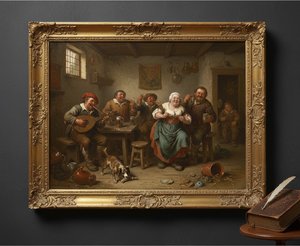
Adriaen van Ostade: A Master of Dutch Genre Painting & Social Commentary
Explore the life & work of Adriaen van Ostade, a leading Dutch Golden Age painter. Discover his realistic genre scenes, social commentary, and lasting influence on art history. Learn more at ArtsDot.