 Preview
 Send
Send Share
Share
 Details

 Download
 Similars
 X-Ray
X-Ray Diaporama
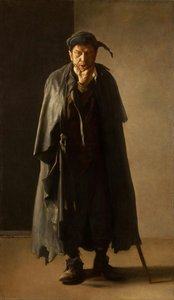
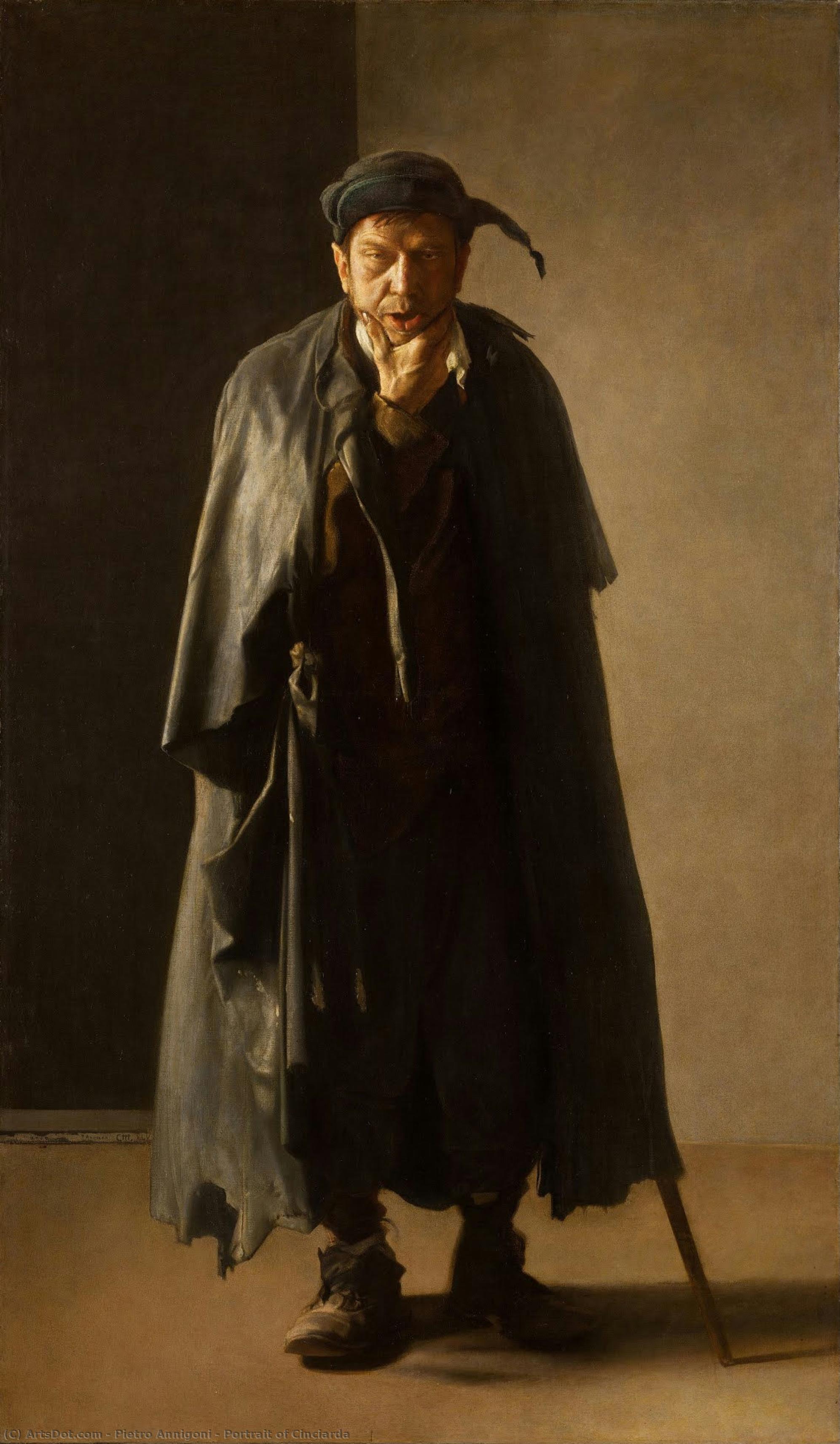
Portrait of Cinciarda
 Acrylic On Canvas
- WallArt
- Contemporary Realism
 100.0 x 180.0 cm
 Fondazione Cariplo
 Read More
Giclée / Art Print
Museum-quality giclée or canvas print with fast production and flexible finish options. ( Buy Hand Made Painting Buy Image)




P118B $10

P118H $10

P118W $10

P438Z $10

P508JH $12

P508YH $12

P805H $10

P805Z $10

P919BZ $10

P919G $10

P919XJ $10

P959ZH $10

P968JZ $12

W106C $8

W218G $10

W218JH $8

W218Y $10

W307PJ $10

W316G $10

W316PJ $8

W316Y $10

W398PJ $8

W4111J $10

W500HY $15

W500JH $15

W692G $12

W849H $8

W940BG $15

W953PJ $8




Pick from our preset sizes that match the artwork's original proportions.

You may enter your own dimensions to fit a specific frame or space. If your selected size does not match the original image's proportions, we will either crop the artwork or extend the image with a mirrored or solid-fill edge. A digital mockup will be sent for your approval before production begins.
Please note that the on-screen preview does not reflect the actual cropping or extension. Only the mockup will accurately show the final composition.
While custom sizes are available, we recommend selecting a dimension from the predefined list to preserve the original proportions.
Worldwide Delivery () in 2 weeks instead of standard 4/5 weeks. (17 August)

Free Worldwide Express Shipping

High-Quality Linen Canvas

Full Shipping Insurance

Customs Tax Refund Guarantee

True Color Matching Guarantee

60-Day Return Policy (Defects Only)

100% Money-Back Guarantee

Bulk Discount Offer
 Glass option is only available in size under 110 CM

Portrait of Cinciarda
Giclée / Art Print
Reproduction Size
-


Total Price
$ 63
Collectible Description
A Portrait of Quiet Majesty: Pietro Annigoni’s “Portrait of Cinciarda”
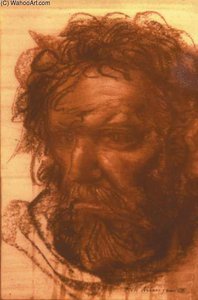
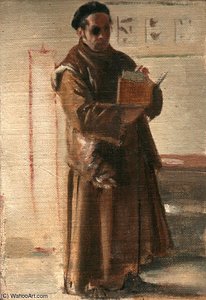
Pietro Annigoni's "Portrait of Cinciarda," painted in 1945, isn’t merely a likeness; it’s a carefully constructed tableau of observation and quiet contemplation. This compelling work, currently residing within the Art Collection of the Fondazione Guelpa in Ivrea, Italy, offers a rare glimpse into the artist's fascination with marginalized figures – a recurring theme that defined much of his oeuvre. The painting depicts Cinciarda, a nameless beggar from Florence, rendered not as a symbol of poverty but as a subject worthy of profound artistic attention. Annigoni’s choice to focus on this seemingly unremarkable individual speaks volumes about the artist's belief in the inherent dignity and complexity within every human being.
The painting itself is executed in tempera grassa on canvas, a technique that lends a remarkable richness and luminosity to the surface. Annigoni’s meticulous attention to detail—the subtle play of light across Cinciarda's face, the worn texture of his cloak, the carefully rendered hands—demonstrates a commitment to realism rarely seen in contemporary Italian art at the time. He deliberately employs a Flemish influence, evident in the careful modeling of form and the atmospheric perspective, creating a sense of depth and immediacy that draws the viewer into the scene. The muted palette – dominated by browns, greys, and ochres – further enhances the painting’s somber mood, reflecting the subject's difficult circumstances while simultaneously imbuing it with an understated beauty.
The Echoes of Northern Painting & a Flemish Influence
Annigoni’s stylistic choices are deeply rooted in the traditions of Northern European art, particularly the work of artists like Jan van Eyck and Rogier van der Weyden. The meticulous rendering of textures—the rough wool of the cloak, the sheen of the metal buttons—is a hallmark of Flemish painting, emphasizing the tactile qualities of the subject matter. Furthermore, Annigoni’s use of light is masterful, creating dramatic contrasts between shadow and highlight that sculpt the figure's form and draw attention to key details. This technique, reminiscent of the Northern masters, serves not only to illuminate the subject but also to evoke a sense of mystery and introspection.
The painting’s composition—Cinciarda standing before a wall, his hands clasped behind him in a gesture of quiet contemplation—is deliberately ambiguous. He is neither actively engaged nor passively resigned; rather, he exists in a state of suspended animation, inviting the viewer to project their own interpretations onto the scene. This deliberate lack of narrative prompts a deeper engagement with the subject’s presence and suggests a profound understanding of human psychology.
Symbolism & The Human Condition
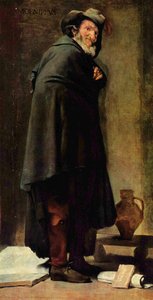
Beyond its technical brilliance, “Portrait of Cinciarda” is laden with symbolic meaning. The artist's choice to depict a marginalized figure—a ‘Cinciarda,’ a nickname for a sickly and often drunk beggar—reflects a broader concern with the plight of the dispossessed in post-war Italy. The painting can be interpreted as an allegory of human vulnerability, resilience, and the enduring search for dignity amidst hardship. Annigoni’s comparison to Diego Velasquez's "Menippo" – a work known for its unflinching portrayal of human misery – underscores this thematic resonance.
The figure’s posture—a hand resting on his chin, an inquisitive expression on his face—suggests a contemplative spirit, a quiet awareness of his own situation. He is not simply a victim of circumstance; he is a subject worthy of respect and understanding. Annigoni himself described the painting as capturing “the uncertainty of our future,” reflecting a shared sense of anxiety and disorientation in the wake of World War II. The portrait becomes a poignant meditation on the human condition, reminding us of the inherent worth of every individual, regardless of their social status or circumstances.
A Legacy of Realism & Psychological Insight
“Portrait of Cinciarda” stands as a pivotal work in Pietro Annigoni’s artistic development and a testament to his enduring commitment to realism. It exemplifies his ability to capture not only the physical likeness of his subjects but also their inner lives, revealing a profound psychological insight that elevates the painting beyond mere portraiture. The painting's continued relevance lies in its timeless exploration of human vulnerability, dignity, and the enduring power of art to illuminate the complexities of the human experience. Reproductions of this powerful image offer a valuable opportunity to engage with Annigoni’s vision and contemplate the universal themes he so masterfully conveyed.
Related Artworks

Artist Biography
A Renaissance Soul in the Modern Age: The Life and Art of Pietro Annigoni
Pietro Annigoni, a name synonymous with meticulous realism and a revival of classical techniques, emerged as a powerful artistic force in a 20th century increasingly dominated by abstraction. Born in Milan in 1910, his journey was one of unwavering dedication to representational art—a path often at odds with the prevailing modernist currents. From an early age, Annigoni displayed a remarkable aptitude for drawing and painting, nurtured not within a traditionally artistic family – his father was an engineer – but by an innate passion that propelled him towards Florence and its rich artistic heritage. He enrolled at the Academy of Fine Arts in Florence in 1927, immersing himself in the study of painting under Felice Carena, sculpture with Giuseppe Graziosi, and etching alongside Celestino Celesti. This rigorous academic foundation instilled within him a profound respect for the masters of the Renaissance, shaping his aesthetic sensibilities and technical prowess. Further honing his skills at the Florentine Circolo degli Artisti, focusing on nude drawing, Annigoni laid the groundwork for a career defined by its exacting detail and lifelike portrayals.Bridging Tradition and Modernity: Artistic Development and Influences
Annigoni’s artistic development was deeply rooted in the Italian Renaissance—a period he revered for its mastery of form, composition, and emotional depth. He wasn't merely replicating the styles of the past; rather, he absorbed their principles and adapted them to his own vision. This influence is readily apparent in his meticulous attention to detail, the subtle modeling of light and shadow, and the psychological insight conveyed through his portraits. His early works showcased a burgeoning talent for both portraiture and fresco painting, gaining recognition through exhibitions in Florence during the 1930s. However, Annigoni wasn’t content to remain solely within the confines of tradition. He actively engaged with the artistic debates of his time, recognizing the need to articulate a counter-narrative to the rising tide of abstract expressionism. In 1947, he co-founded the “Manifesto of Modern Realist Painters,” alongside other artists who championed representational art and sought to reclaim its rightful place within the artistic landscape. This act wasn’t simply a stylistic preference; it was a philosophical statement—a belief in the power of art to connect with viewers through recognizable imagery and enduring values.Royal Commissions and International Acclaim: A Defining Legacy
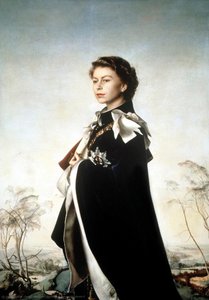
Pietro Annigoni's name became internationally recognized, not just within artistic circles but among global audiences, largely due to his iconic portraits of Queen Elizabeth II. Commissioned by the Worshipful Company of Fishmongers in 1954, the first portrait unveiled in 1955 at the Royal Academy’s Summer Exhibition caused a sensation. The sheer realism and regal presence captured on canvas drew record crowds—nearly 300,000 visitors—making it the most popular exhibition in over half a century. The Times quickly produced limited-edition prints that sold out immediately, and Sir Alfred Munnings, then President of the Royal Academy, hailed Annigoni as “the greatest painter of the age.” This success led to further commissions from the British royal family, including portraits of Prince Philip and Princess Margaret. But his talent wasn’t confined to royalty; Annigoni's brush immortalized a diverse array of prominent figures—Pope John XXIII, U.S. Presidents John F. Kennedy and Lyndon B. Johnson, the Shah and Empress of Iran, ballet stars Margot Fonteyn and Rudolf Nureyev, and Indian princess Gayatri Devi of Jaipur, among many others. His selection to paint President Kennedy for the cover of Time magazine in 1962 solidified his reputation as a leading portrait artist of his time, bringing his work into homes across the world.A Lasting Impression: Style, Significance and Final Years
Annigoni’s artistic style was characterized by an unwavering commitment to realism and detail—a meticulous approach that demanded both technical skill and profound observation. He employed traditional techniques, such as oil tempera, to achieve a luminosity and depth of color rarely seen in contemporary painting. His portraits weren't merely likenesses; they were psychological studies, capturing the essence of his subjects with remarkable accuracy and sensitivity. In an era dominated by abstraction, Annigoni’s dedication to representational art was both a challenge and a statement. He represented a bridge between the artistic traditions of the Renaissance and the demands of modern portraiture—a testament to the enduring power of classical techniques. He continued painting and exhibiting throughout his later years, maintaining a devoted following internationally. In 1976 he married Rossella Segreto, who also served as one of his models. Sadly, Annigoni passed away on October 28, 1988, in Florence, succumbing to kidney failure following surgery for a perforated ulcer. He was laid to rest at the Basilica di San Miniato al Monte overlooking the city that had so profoundly shaped his artistic vision—a fitting final resting place for an artist who dedicated his life to preserving and celebrating the beauty of the past while forging his own unique path in the present.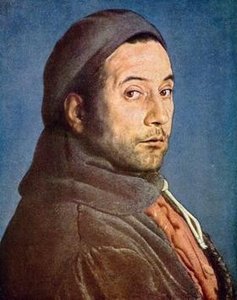
Pietro Annigoni
1910 - 1988 , Italy
Quick Facts
- Artistic Movement Or Style: Realism
- Artists Or Movements Influenced By This Artist: ['Modern Realist Painters']
- Artists Who Influenced This Artist: ['Renaissance masters']
- Date Of Birth: June 7, 1910
- Date Of Death: October 28, 1988
- Full Name: Pietro Annigoni
- Nationality: Italian
- Notable Artworks:
- Queen Elizabeth II portrait
- Anacoreti nel Deserto
- Princess Margaret portrait
- Prince Philip portrait
- Place Of Birth: Milan, Italy
Related Articles
Romantic Realism's Finest: 10 Masterpieces for Your Home | ArtsDot
Explore 10 defining masterpieces of Romantic Realism! Discover Courbet, Millet & Daumier's powerful paintings—capturing emotion and social realities. Find museum-quality reproductions for your home at ArtsDot.com.
Echoes of Society: Exploring Social Realism's Enduring Legacy in Art
Explore the powerful world of Social Realism art! Discover key artists, masterpieces & its profound social commentary. Expert insights into this influential movement's history and enduring legacy.
The Evocative Embrace of Reality: Exploring Romantic Realism in 19th-Century Painting
Explore the captivating world of Romantic Realism! Discover key artists like Courbet & Millet, masterpieces, and the social context behind this influential art movement. Expert insights for collectors at ArtsDot.
The Poetic Truth of Observation: Exploring 19th-Century Realism in Painting
Explore the captivating world of 19th-century Realism! Discover key artists like Courbet & Millet, masterpieces, and the powerful social commentary behind this influential art movement. Expert insights at ArtsDot.
Academic Realism's Finest: 10 Masterpieces for Art Lovers & Home Decor
Explore 10 defining Academic Realism masterpieces by Bouguereau, Gérôme & Cabanel. Discover the stories behind these iconic paintings and bring timeless art into your home with museum-quality reproductions from ArtsDot.com. Explore the full collection online!