 Preview
 Send
Send Share
Share
 Details

 Download
 Similars
 X-Ray
X-Ray Diaporama
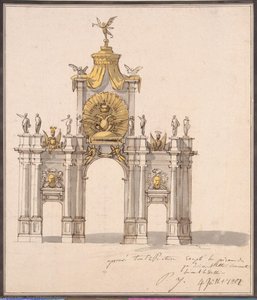
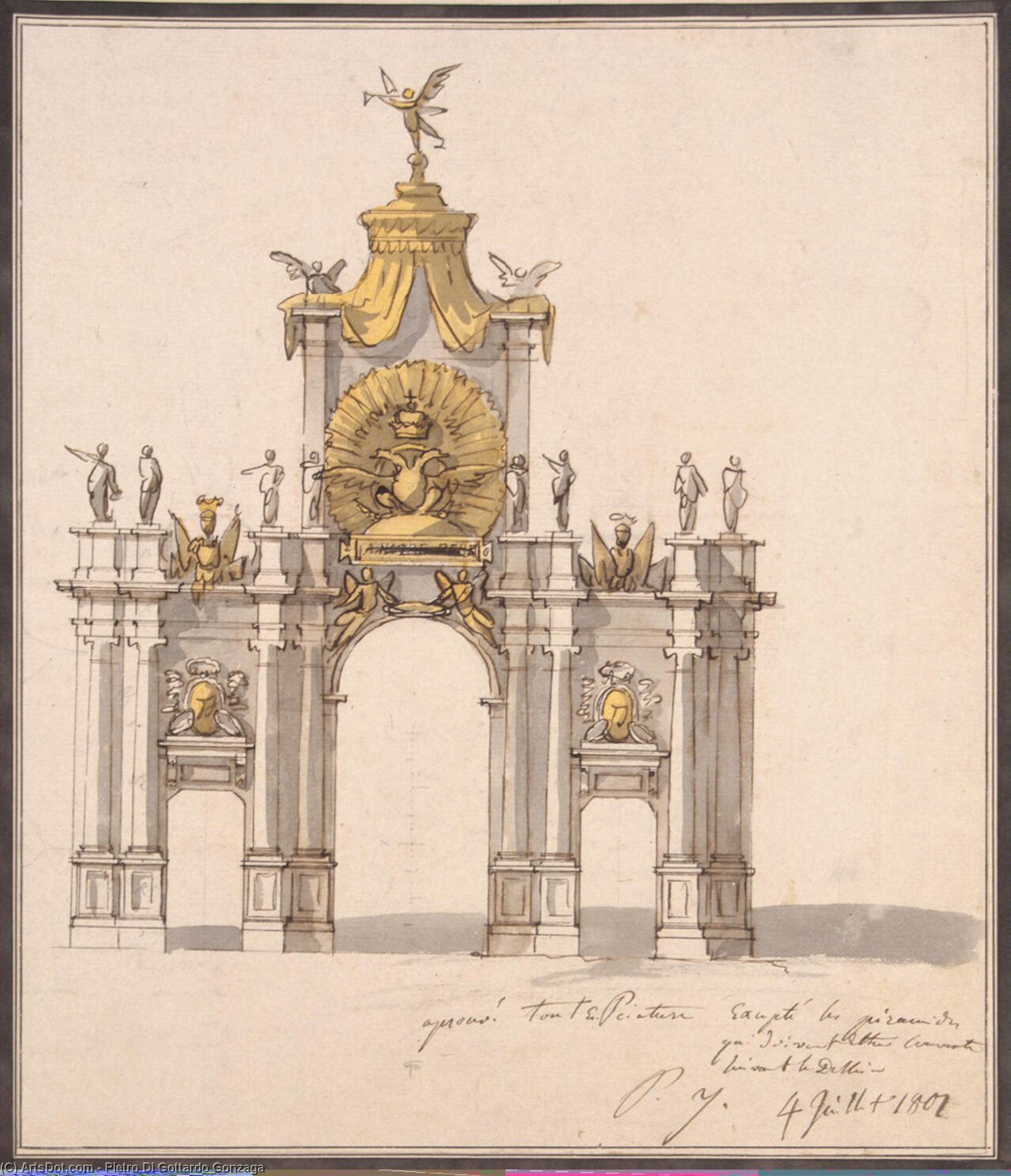
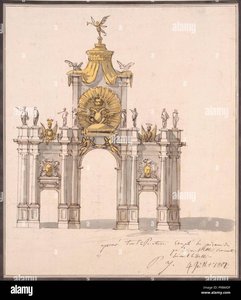
Design of the Decoration for the Triumphal Red Gate in Moscow
 Acrylic On Canvas
- WallArt
- Romanticism
 1797
1797 365.0 x 320.0 cm
 Hermitage Museum
 Read More
Giclée / Art Print
Museum-quality giclée or canvas print with fast production and flexible finish options. ( Buy Hand Made Painting Buy Image)




P118B $10

P118H $10

P118W $10

P438Z $10

P508JH $12

P508YH $12

P805H $10

P805Z $10

P919BZ $10

P919G $10

P919XJ $10

P959ZH $10

P968JZ $12

W106C $8

W218G $10

W218JH $8

W218Y $10

W307PJ $10

W316G $10

W316PJ $8

W316Y $10

W398PJ $8

W4111J $10

W500HY $15

W500JH $15

W692G $12

W849H $8

W940BG $15

W953PJ $8




Pick from our preset sizes that match the artwork's original proportions.

You may enter your own dimensions to fit a specific frame or space. If your selected size does not match the original image's proportions, we will either crop the artwork or extend the image with a mirrored or solid-fill edge. A digital mockup will be sent for your approval before production begins.
Please note that the on-screen preview does not reflect the actual cropping or extension. Only the mockup will accurately show the final composition.
While custom sizes are available, we recommend selecting a dimension from the predefined list to preserve the original proportions.
Worldwide Delivery () in 2 weeks instead of standard 4/5 weeks. (5 September)

Free Worldwide Express Shipping

High-Quality Linen Canvas

Full Shipping Insurance

Customs Tax Refund Guarantee

True Color Matching Guarantee

60-Day Return Policy (Defects Only)

100% Money-Back Guarantee

Bulk Discount Offer
 Glass option is only available in size under 110 CM

Design of the Decoration for the Triumphal Red Gate in Moscow
Giclée / Art Print
Reproduction Size
-


Total Price
$ 63
Design of the Decoration for the Triumphal Red Gate in Moscow
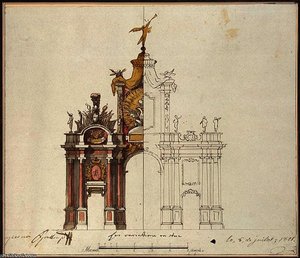
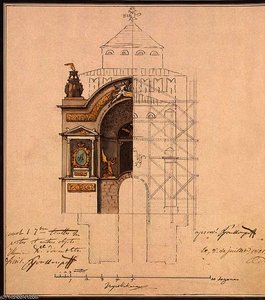
Pietro di Gottardo Gonzaga’s “Design of the Decoration for the Triumphal Red Gate in Moscow” stands as a testament to Venetian artistic sensibilities during the Enlightenment, capturing not merely architectural grandeur but also an ambitious vision of imperial celebration. Executed in 1797, this drawing—a cornerstone of Gonzaga's oeuvre—offers a glimpse into his meticulous approach to temple design and his masterful command of trompe-l’œil illusionism, techniques that elevate it beyond a simple schematic representation.- Subject Matter: The artwork depicts a triumphal arch adorned with statues – specifically, a central clock surrounded by figures symbolizing victory and grandeur. Two birds perched atop the arch further contribute to its decorative richness, embodying aspiration and nobility.
- Style & Technique: Gonzaga’s style aligns squarely with Romanticism, prioritizing expressive detail and dramatic perspective. Employing pen and brush alongside Indian ink and watercolor, he achieved remarkable realism through careful shading and meticulous rendering of textures—a hallmark of Venetian art at the time. The use of trompe-l'œil creates an illusion of depth and enhances the visual impact of the composition.
- Historical Context: Commissioned during Pavel I’s coronation ceremony in St. Petersburg, this design reflects the fervor for commemorating imperial achievements prevalent in Russia during the Napoleonic Wars. Gonzaga’s work embodies the artistic ideals of his era—a desire to inspire awe and convey a sense of monumental importance.
- Symbolism: The clock symbolizes time and progress, representing Pavel I's reign as a pivotal moment in Russian history. The statues embody triumph and majesty, reinforcing the grandeur of the occasion. The birds symbolize aspiration and nobility, elevating the arch’s design to a realm of symbolic significance.
- Emotional Impact: Gonzaga’s meticulous attention to detail aims to evoke admiration for architectural prowess and artistic skill. The drawing's serene yet imposing aesthetic invites contemplation on themes of power, commemoration, and beauty—elements that resonate deeply with viewers seeking inspiration or appreciating the legacy of Venetian art.
Related Artworks

Artist Biography
The Architect of Illusions: The Life and Vision of Pietro di Gottardo Gonzaga
Born in the serene landscape of Longarone, Italy, in 1751, Pietro di Gottardo Gonzaga emerged as a singular force within the Venetian artistic tradition. While many of his contemporaries sought the patronage of grand ecclesiastical institutions or the opulent halls of Italian palaces, Gonzaga carved out a niche that bridged the gap between architectural precision and theatrical enchantment. His early life was deeply rooted in the tactile world of art; as the son of the painter and sculptor Giovanni Battista Gonzaga, he was raised amidst the scent of pigments and the dust of marble. This familial immersion provided him with a foundational mastery of form and light, which he would later refine under the guidance of Giuseppe Bolognese, a master of chiaroscuro whose influence is visible in the dramatic shadows and luminous depths of Gonzaga’s most celebrated works.
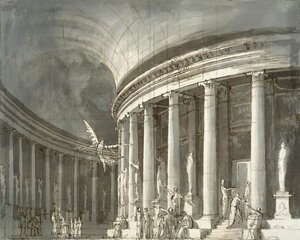
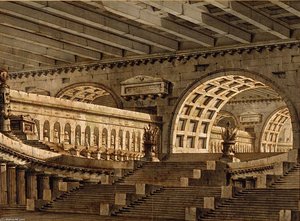
As his career matured, Gonzaga’s artistry transcended simple representation, evolving into what he himself poetically described as "music for the eyes." This philosophy—the idea that perspective and visual composition could mirror the emotional fluctuations of a musical score—became the heartbeat of his creative output. He was not merely a painter but a master of trompe-l’œil, an artist capable of deceiving the eye through the sheer brilliance of his technical skill. His work often functioned as a bridge between reality and fantasy, particularly in his renowned stage designs. Whether working in Italy or later within the Russian Empire, Gonzaga possessed the uncanny ability to manipulate space, using pen, ink, and wash to create architectural vistas that felt both monumentally solid and ethereally dreamlike.
A Legacy of Stone and Stage
The breadth of Gonzaga’s oeuvre is a fascinating study in duality, ranging from the rigorous technicality of architectural studies to the sweeping grandeur of imperial celebrations. His sketches for temple designs and religious iconography reflect the Enlightenment's reverence for classical antiquity and humanist ideals. In these works, one finds a profound engagement with the principles of Andrea Palladio, as he sought to revive the dignity of ancient Roman structures through meticulous detail and balanced composition. His contributions to San Pietro Martire in Venice stand as enduring testaments to this period, where his frescoes breathed life into sacred spaces through dynamic narratives and a luminous palette.
However, it was perhaps in the realm of the theatrical and the monumental that Gonzaga’s imagination truly soared. His designs for the Russian court, particularly during the reign of Emperor Paul I, showcased an ambitious vision of imperial splendor. Notable achievements include:
- The Triumphal Red Gate in Moscow: A breathtaking 1797 design that utilized trompe-l’œil illusionism to celebrate imperial victory, featuring intricate statues and symbolic figures that embodied the nobility of the era.
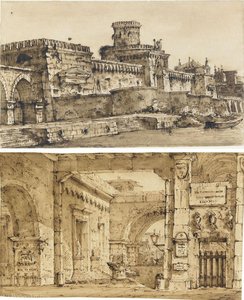
- Architectural Vedutismo: His precise sepia drawings, such as those depicting the Nikolskaya Tower in Moscow, which serve as vital historical documents of urban grandeur and technical precision.
- Theatrical Set Design: Innovative stagecraft that utilized light and shadow to create "fantastic yet deceptively realistic" environments, influencing the evolution of scenic design across Europe.
Ultimately, the historical significance of Pietro di Gottardo Gonzaga lies in his ability to harmonize the technical demands of an architect with the emotive power of a storyteller. He did not merely document the world; he reimagined it through a lens of classical beauty and theatrical wonder. Even as the centuries have passed, his "music for the eyes" continues to resonate, inviting viewers to step through the thresholds of his imagined temples and into a realm where art and architecture become one.
pietro di gottardo gonzaga
1751 - 1831 , Italy
Quick Facts
- Artistic Movement Or Style: Venetian Art
- Artists Or Movements Influenced By This Artist: ['']
- Artists Who Influenced This Artist: ['']
- Date Of Birth: 1751
- Full Name: Pietro di Gottardo Gonzag
- Nationality: Italian
- Notable Artworks: ['Temple design']
- Place Of Birth: Longarone, Italy
Related Articles

Jacopo Tintoretto's Masterpieces: 25 Paintings That Define Venetian Drama | ArtsDot
Explore 25 breathtaking masterpieces by Jacopo Tintoretto, the Venetian master of drama and light. Discover the stories behind iconic Renaissance paintings & find museum-quality art reproductions to elevate your home decor on ArtsDot.com.
Neo-Classicism's Greatest Hits: 10 Masterpieces for Your Home |
Journey through Neo-Classicism's finest! Explore 10 iconic masterpieces by David, Ingres & Canova. Discover art history, techniques & timeless beauty – perfect for inspiring your home decor. Find museum-quality reproductions at

The Eloquent Line: Exploring the Artistic Significance of Sketches Across Movements and Media
Explore the profound artistic significance of sketches throughout history. From Renaissance masters to modern innovators like Van Gogh & Guston, discover how these foundational works reveal technique, emotion, and vision. Learn more at ArtsDot.
The Enduring Legacy of Classicism: Principles, Evolution & Influence in Western Art
Explore the enduring legacy of Classicism in Western art! Discover its historical context, key principles, iconic masterpieces & lasting influence. Learn about Renaissance and Neoclassical movements with ArtsDot.
Timeless Resonance: Exploring Classic Vibe in Art – A Historical & Aesthetic Analysis
Explore the rich history & enduring aesthetic of Classicism art! Discover key movements, iconic artists like Raphael & David, and its lasting influence on Western art. Deepen your appreciation today.