 Preview
 Send
Send Share
Share
 Details

 Download
 Similars
 X-Ray
X-Ray Diaporama
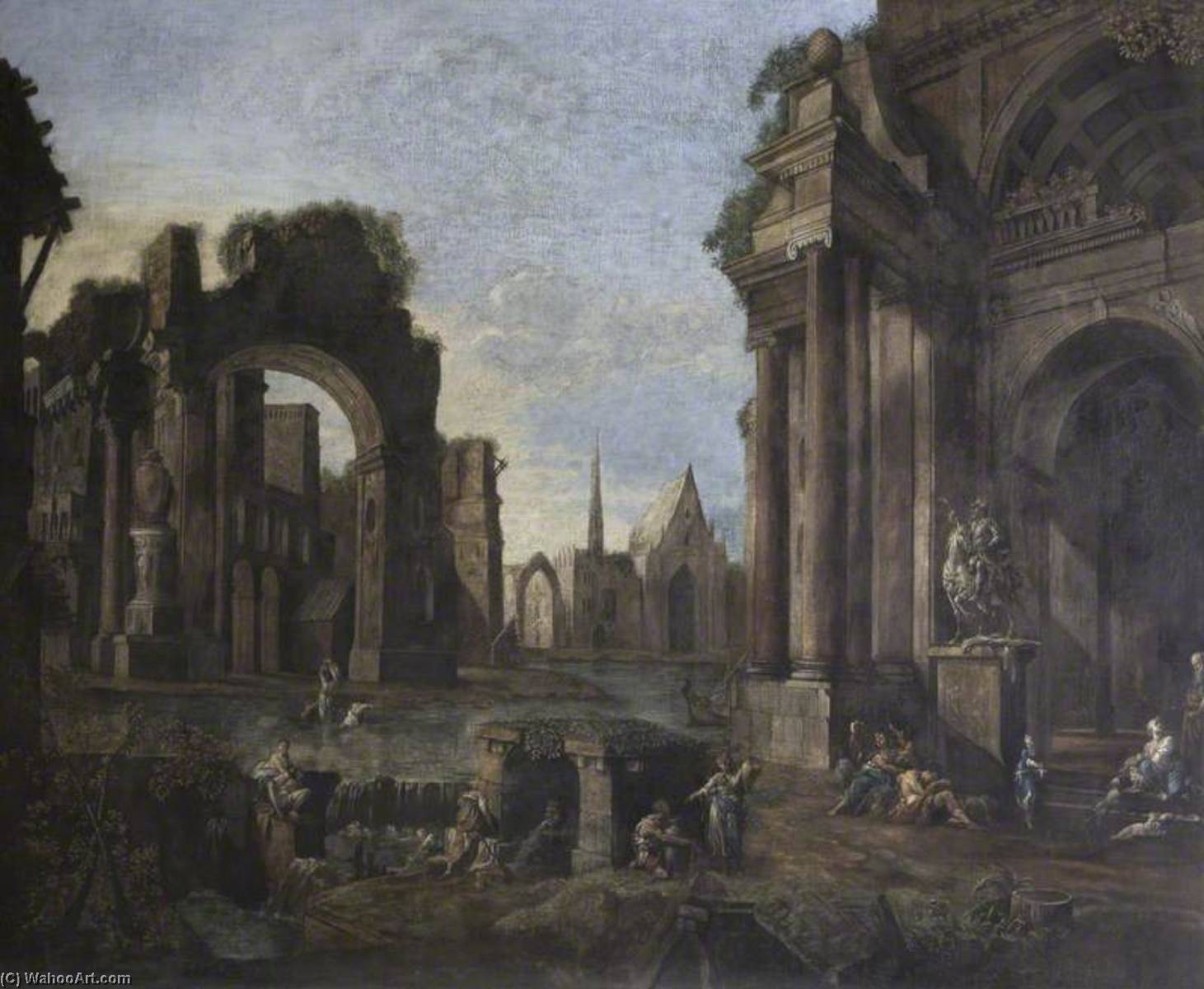
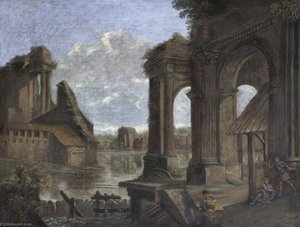
Capriccio Antique Ruins and a Distant Town
 1740
1740 274.0 x 363.0 cm
 National Trust
 Read More
Hand Made Oil Reproduction
Hand-painted oil on canvas in your size and frame, made to order by our artists. ( Buy Print Buy Image)




































Pick from our preset sizes that match the artwork's original proportions.

You may enter your own dimensions to fit a specific frame or space. If your selected size does not match the original image's proportions, we will either crop the artwork or extend the painting with additional hand-painted elements. A digital mockup will be sent for your approval before production begins.
Please note that the on-screen preview does not reflect the actual cropping or extension. Only the mockup will accurately show the final composition.
While custom sizes are available, we recommend selecting a dimension from the predefined list to preserve the original proportions.
After order, ArtsDot.com team will email client for instructions and provide a mockup preview
Worldwide Delivery () in 3/4 weeks instead of standard 5 weeks. (26 August). No compromise on quality.

Free Worldwide Express Shipping

High-Quality Linen Canvas

Full Shipping Insurance

Customs Tax Refund Guarantee

True Color Matching Guarantee

60-Day Return Policy (Defects Only)

100% Money-Back Guarantee

Bulk Discount Offer
 Glass option is only available in size under 110 CM

Capriccio Antique Ruins and a Distant Town
Reproduction Medium
Reproduction Size
-


Total Price
$ 263
Related Artworks








Artist Biography
The Architect of Illusions: The Life and Vision of Pietro Paltronieri
In the golden twilight of the Italian Baroque, few artists possessed the ability to weave reality with fantasy as masterfully as Pietro Paltronieri. Known to his contemporaries as Il Mirandolese dalle Prospettive, he was a painter who did not merely depict landscapes but constructed entire worlds from the fragments of antiquity. Born in 1673, Paltronieri emerged from a lineage deeply rooted in the structural arts; his father, Giovanni Battista Paltronieri, was a distinguished sculptor and architect. This early immersion in the logic of stone and the geometry of space provided Pietro with a foundational understanding of form that would later allow him to manipulate architectural ruins with unparalleled precision and poetic grace.
His artistic journey was shaped by the rigorous intellectual atmosphere of Bologna and the transformative light of Rome. Under the tutelage of masters such as Giovanni Francesco Cassana and Marcantonio Chiarini, Paltronieri honed a technique that balanced the precision of disegno with the atmospheric allure of the Baroque. His training was not merely about the imitation of nature but about the mastery of quadratura—the art of illusionistic architectural painting. This skill allowed him to collaborate effectively with artists like Ercole Graziani the Younger, creating spaces that seemed to extend far beyond the physical confines of the canvas, inviting the viewer into a realm where the boundaries between the tangible and the imagined were perpetually blurred.
The Mastery of the Capriccio and the Beauty of Decay
Paltronieri’s true legacy lies in his profound contribution to the capriccio genre. While many artists of his era sought to document the grandeur of classical architecture, Paltronieri found a more haunting beauty in its dissolution. His works are characterized by atmospheric landscapes where ancient Roman ruins—broken columns, crumbling pediments, and weathered arches—serve as the protagonists of a silent drama. These were not mere depictions of wreckage; they were carefully composed fantasies that utilized the concept of time as a medium. By juxtaposing the permanence of classical forms with the ephemeral nature of light and shadow, he captured the sublime essence of decay.
The emotional resonance of his work stems from this delicate balance of elements:
- Architectural Precision: A meticulous rendering of classical structures that lends an air of historical authenticity to even his most fantastical compositions.
- Atmospheric Depth: The use of light and shadow to create a sense of vast, receding space, often evoking the hazy, nostalgic glow of a setting sun over a lost civilization.
- Narrative Mystery: The inclusion of small, often enigmatic figures that inhabit these ruins, suggesting stories of past glory and present solitude.
His movement through the major cultural hubs of Europe—from the academic traditions of Bologna to the vibrant artistic scene in Rome and eventually to Vienna—allowed his vision to permeate different corners of the continent. In each city, he brought a unique ability to evoke nostalgia for an idealized antiquity, making him a pivotal figure in the late Baroque movement.
Historical Significance and Artistic Legacy
As the 18th century progressed, the fascination with ruins and the capriccio became a cornerstone of European aesthetic taste. Paltronieri stands as a vital link in this tradition, bridging the gap between the structured architectural fantasies of the early Baroque and the more romanticized, evocative landscapes that would follow. His ability to distinguish himself from contemporaries—earning him a specific moniker to separate his perspectival mastery from other artists of his region—speaks to the singular nature of his talent.
Though his life ended in 1741, the impact of his "perspectives" remains etched in the history of landscape painting. He taught viewers how to look at the broken pieces of the past not as mere debris, but as windows into a sublime, imagined eternity. Through his brush, the ruins of Rome and Bologna were transformed into eternal monuments of the human imagination, ensuring that while the stones themselves might crumble, the vision of Pietro Paltronieri would remain structurally sound for centuries to come.
pietro paltronieri
1673 - 1741
Quick Facts
- Artistic Movement Or Style: Baroque
- Artists Or Movements Influenced By This Artist: ['Italian Baroque Art']
- Artists Who Influenced This Artist: ['Gian Lorenzo Bernini']
- Date Of Birth: 1673
- Full Name: Pietro Paltronieri
- Nationality: Italian
- Notable Artworks:
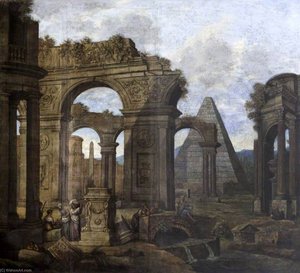
- Capriccio Antique Ruins with a Pyramid
- Capriccio Antique Ruins and a Distant Town
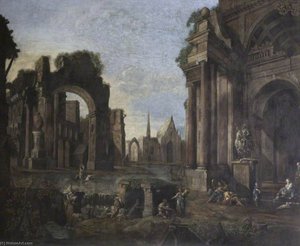
- Capriccio Roman Ruins at Bologna
- Place Of Birth: Rome, Italy