 Preview
 Send
Send Share
Share
 Details

 Download
 Similars
 X-Ray
X-Ray Diaporama
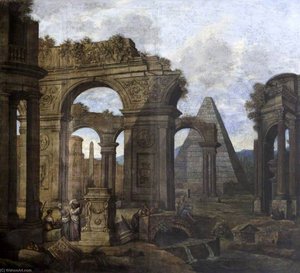
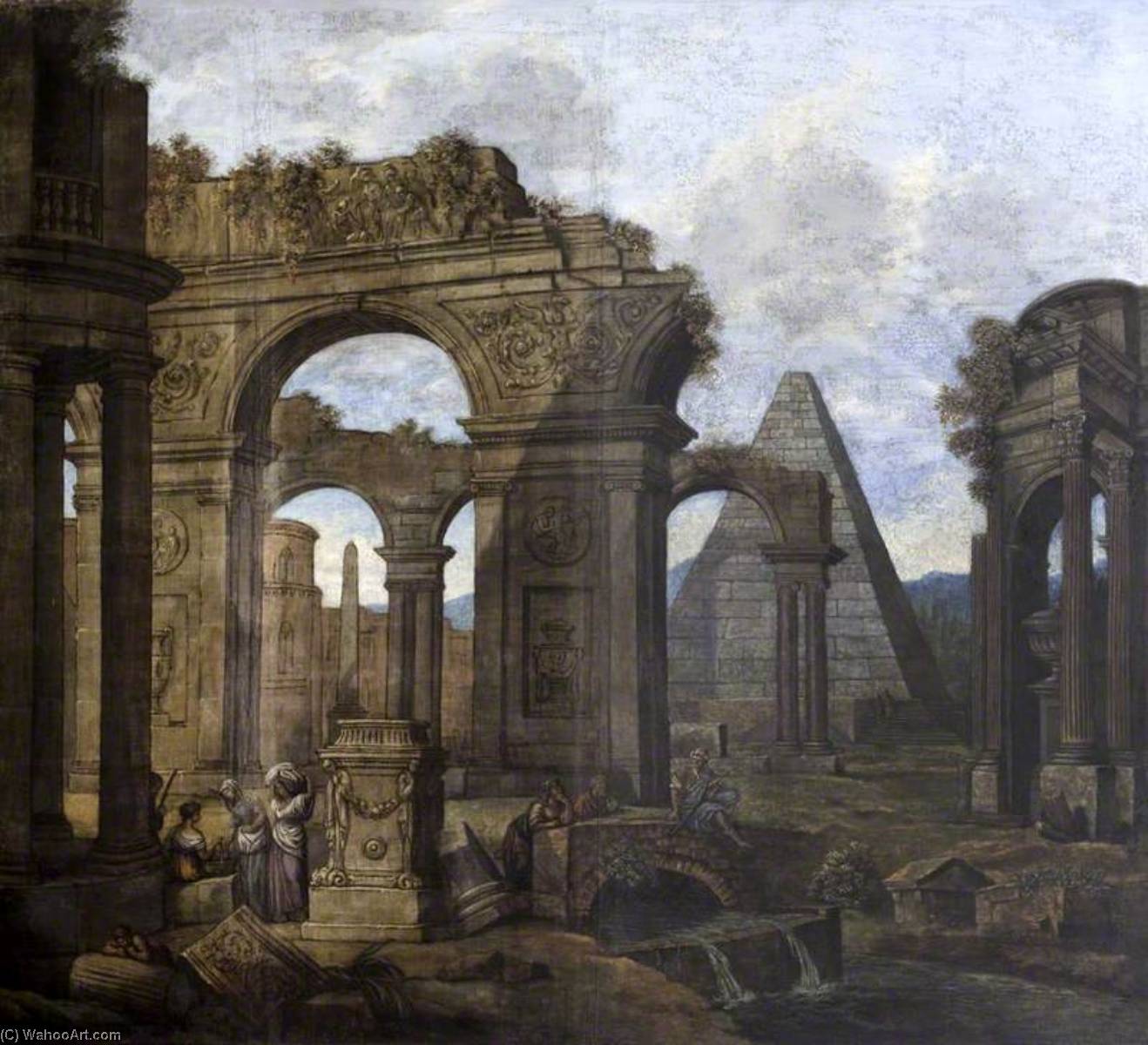
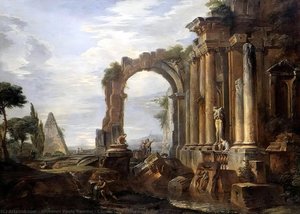
Capriccio Antique Ruins with a Pyramid
 Baroque
 1740
1740 274.0 x 300.0 cm
 National Trust
 Read More
Hand Made Oil Reproduction
Hand-painted oil on canvas in your size and frame, made to order by our artists. ( Buy Print Buy Image)




P118B $10

P118H $10

P118W $10

P438Z $10

P508JH $12

P508YH $12

P805H $10

P805Z $10

P919BZ $10

P919G $10

P919XJ $10

P959ZH $10

P968JZ $12

W106C $8

W218G $10

W218JH $8

W218Y $10

W307PJ $10

W316G $10

W316PJ $8

W316Y $10

W398PJ $8

W4111J $10

W500HY $15

W500JH $15

W692G $12

W849H $8

W940BG $15

W953PJ $8




Pick from our preset sizes that match the artwork's original proportions.

You may enter your own dimensions to fit a specific frame or space. If your selected size does not match the original image's proportions, we will either crop the artwork or extend the painting with additional hand-painted elements. A digital mockup will be sent for your approval before production begins.
Please note that the on-screen preview does not reflect the actual cropping or extension. Only the mockup will accurately show the final composition.
While custom sizes are available, we recommend selecting a dimension from the predefined list to preserve the original proportions.
After order, ArtsDot.com team will email client for instructions and provide a mockup preview
Worldwide Delivery () in 3/4 weeks instead of standard 5 weeks. (17 August). No compromise on quality.

Free Worldwide Express Shipping

High-Quality Linen Canvas

Full Shipping Insurance

Customs Tax Refund Guarantee

True Color Matching Guarantee

60-Day Return Policy (Defects Only)

100% Money-Back Guarantee

Bulk Discount Offer
 Glass option is only available in size under 110 CM

Capriccio Antique Ruins with a Pyramid
Reproduction Medium
Reproduction Size
-


Total Price
$ 263
Related Artworks
Artist Biography
Pietro Paltronieri: Master of Roman Ruins and Baroque Fantasies
Pietro Paltronieri (1673 – 1741) stands as a singular figure in Italian Baroque art, celebrated primarily for his captivating capricci—atmospheric landscapes infused with fantastical elements and meticulously rendered ruins. Unlike many of his contemporaries who focused on grand narratives or idealized portraits, Paltronieri dedicated himself to capturing the sublime beauty of decay and illusion, establishing him as an innovator whose vision continues to resonate with viewers today. His artistic legacy resides not merely in quantity but in quality—a profound understanding of perspective, color theory, and compositional dynamism that elevates his paintings beyond mere visual representation into immersive experiences.Early Life and Artistic Training
Born in Bologna, Paltronieri’s formative years were steeped in the intellectual ferment of the Habsburg dominions. His father, Giovanni Battista Paltronieri, was a prominent sculptor and architect, instilling in Pietro a deep appreciation for classical forms and sculptural craftsmanship. Recognizing his son's talent early on, Giovanni Battista ensured that Pietro received comprehensive artistic training under Giuseppe Cibernetto, a renowned Bolognese painter known for his mastery of illusionistic painting techniques—a cornerstone of Baroque aesthetics. This rigorous instruction honed Paltronieri’s skills in disegno (drawing) and preparazione (underpainting), equipping him with the foundational knowledge necessary to pursue his distinctive style.The Roman Period: Capturing Decay and Illusion
Paltronieri's artistic breakthrough occurred during his relocation to Rome around 1700, where he quickly gained recognition for his ability to evoke emotion through carefully crafted landscapes. He embraced the prevailing fascination with ruins—fragments of ancient grandeur transformed into symbols of time’s relentless passage—and skillfully incorporated them into his capricci. Unlike earlier artists who treated ruins as mere decorative motifs, Paltronieri imbued them with psychological depth and spiritual significance. His canvases depict crumbling temples, decaying villas, and desolate landscapes bathed in ethereal light, creating an atmosphere of melancholy contemplation. Influenced by Piranesi’s etchings of Roman subterranean spaces—a genre that explored the interplay between reality and imagination—Paltronieri pushed the boundaries of artistic representation, prioritizing mood and suggestion over literal accuracy.Notable Works and Artistic Style
Among Paltronieri's most celebrated paintings are “Capriccio Antique Ruins with a Pyramid” (1740), housed in Palazzo Pitti, Florence, and “Capriccio Antique Ruins and a Distant Town,” which resides in the Galleria Nazionale di Bologna. These monumental canvases exemplify his signature style—characterized by masterful perspective, luminous color palettes, and an uncanny ability to convey atmosphere. Paltronieri’s technique involved meticulous layering of glazes—thin translucent washes of pigment—to achieve remarkable tonal gradations and simulate the effects of light and shadow with breathtaking realism. He skillfully manipulated atmospheric haze and reflected light to heighten the sense of depth and create a dreamlike quality, mirroring the Baroque preoccupation with illusion and sublime beauty. Furthermore, Paltronieri’s compositions often featured fantastical figures—angels, mythological creatures, and human forms—interwoven seamlessly into the ruined landscape, symbolizing humanity's relationship with eternity and reminding viewers that even in decay, there exists an enduring grandeur.Legacy and Influence
Pietro Paltronieri’s contribution to Baroque art extends beyond his individual masterpieces; he profoundly influenced subsequent generations of painters who sought to emulate his evocative style. His exploration of ruin imagery—a motif that would become increasingly prominent throughout the eighteenth century—established him as a pioneer in landscape painting and cemented his place among the foremost artists of his time. Though overshadowed by more prolific contemporaries, Paltronieri’s paintings continue to captivate audiences with their haunting beauty and intellectual depth—testaments to his unwavering commitment to artistic innovation and his profound understanding of the human condition. His work serves as a poignant reminder that art can transcend mere visual spectacle, transporting viewers into realms of imagination and contemplation where time itself seems to dissolve before the gaze.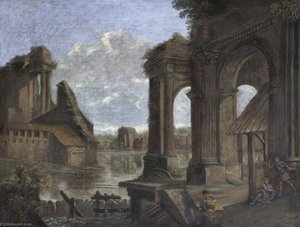
pietro paltronieri
1673 - 1741
Quick Facts
- Artistic Movement Or Style: Baroque
- Artists Or Movements Influenced By This Artist: ['Italian Baroque Art']
- Artists Who Influenced This Artist: ['Gian Lorenzo Bernini']
- Date Of Birth: 1673
- Full Name: Pietro Paltronieri
- Nationality: Italian
- Notable Artworks:
- Capriccio Antique Ruins with a Pyramid
- Capriccio Antique Ruins and a Distant Town
- Capriccio Roman Ruins at Bologna
- Place Of Birth: Rome, Italy
Related Articles

Baroque Masterpieces: 10 Paintings That Defined an Era |
Journey through the drama & grandeur of Baroque art! Explore 10 masterpieces by Caravaggio, Rembrandt, Rubens & more. Discover stunning oil paintings, rich colors & timeless stories. Find museum-quality reproductions at .

Baroque Drama: Bringing Opulence & Emotion into Contemporary Interiors
Explore the opulent world of Baroque interior design! Discover key elements, modern applications & how to bring dramatic elegance into your home with 's authentic reproductions.

The Visceral Stage: Exploring Dramatic Narratives & Emotional Intensity in Baroque Art
Explore the dramatic world of Baroque art! Discover iconic masters like Caravaggio & Rembrandt, their techniques, and the movement's lasting impact. Expert insights for collectors & enthusiasts at ArtsDot.

Theatricality & Triumph: Baroque Drama in Painting & Sculpture
Explore the dramatic world of Baroque art! Discover its history, defining characteristics, & lasting influence on painting & sculpture. Expert insights into Caravaggio, Zurbarán, and Bernini – plus high-quality reproductions at ArtsDot.
Baroque Painting's Greatest Hits: 10 Masterpieces for Your Home | ArtsDot
Journey through Baroque painting's glory! Explore 10 masterpieces by Caravaggio, Rembrandt & Vermeer. Discover dramatic lighting, rich colors & timeless stories. Find museum-quality art reproductions for your home at ArtsDot.com.