 Preview
 Send
Send Share
Share
 Details

 Download
 Similars
 X-Ray
X-Ray Diaporama
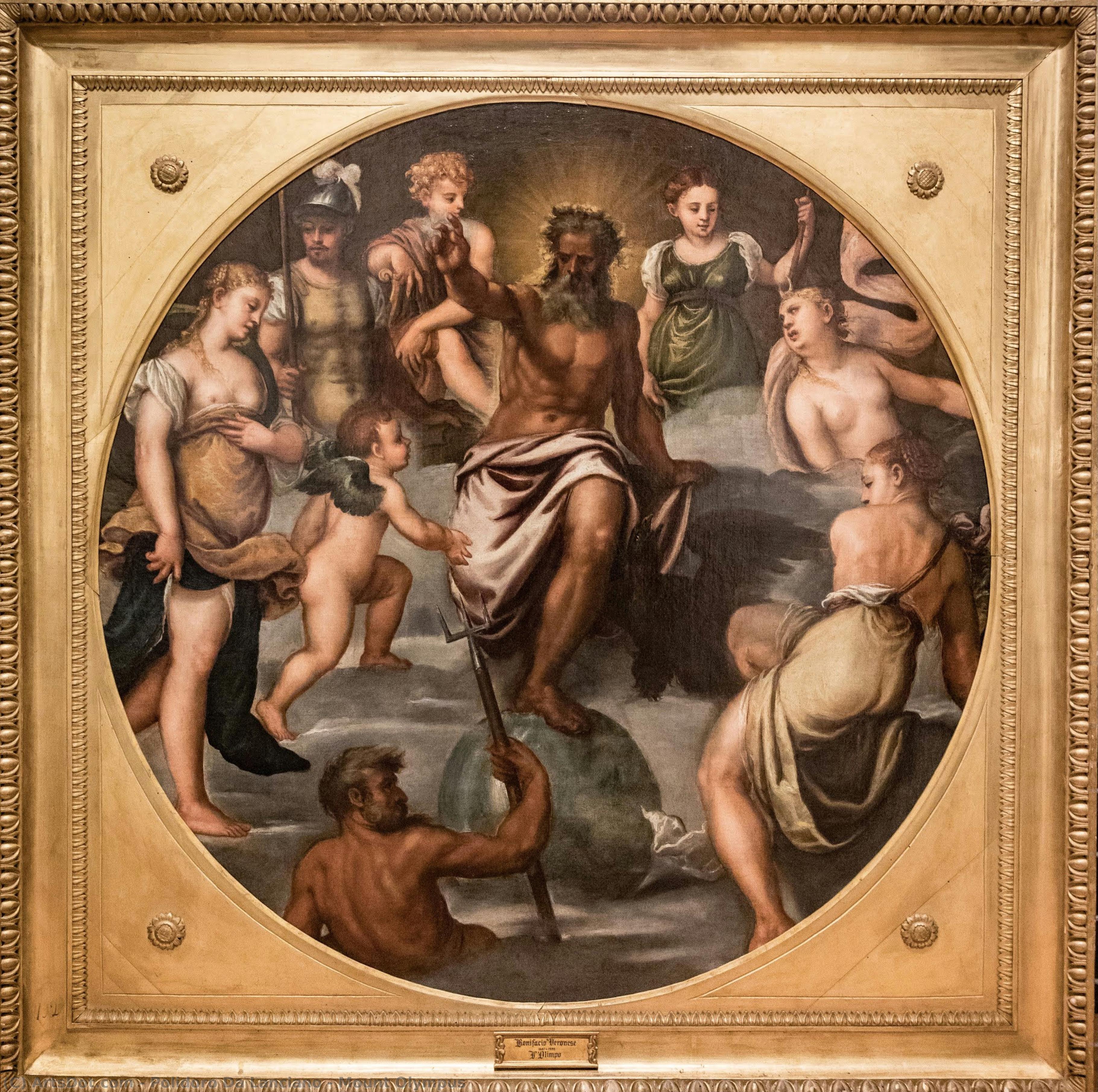
Mount Olympus


 Read More
Hand Made Oil Reproduction
Hand-painted oil on canvas in your size and frame, made to order by our artists. ( Buy Print Buy Image)




P118B $10

P118H $10

P118W $10

P438Z $10

P508JH $12

P508YH $12

P805H $10

P805Z $10

P919BZ $10

P919G $10

P919XJ $10

P959ZH $10

P968JZ $12

W106C $8

W218G $10

W218JH $8

W218Y $10

W307PJ $10

W316G $10

W316PJ $8

W316Y $10

W398PJ $8

W4111J $10

W500HY $15

W500JH $15

W692G $12

W849H $8

W940BG $15

W953PJ $8




Pick from our preset sizes that match the artwork's original proportions.

You may enter your own dimensions to fit a specific frame or space. If your selected size does not match the original image's proportions, we will either crop the artwork or extend the painting with additional hand-painted elements. A digital mockup will be sent for your approval before production begins.
Please note that the on-screen preview does not reflect the actual cropping or extension. Only the mockup will accurately show the final composition.
While custom sizes are available, we recommend selecting a dimension from the predefined list to preserve the original proportions.
After order, ArtsDot.com team will email client for instructions and provide a mockup preview
Worldwide Delivery () in 3/4 weeks instead of standard 5 weeks. (16 August). No compromise on quality.

Free Worldwide Express Shipping

High-Quality Linen Canvas

Full Shipping Insurance

Customs Tax Refund Guarantee

True Color Matching Guarantee

60-Day Return Policy (Defects Only)

100% Money-Back Guarantee

Bulk Discount Offer
 Glass option is only available in size under 110 CM

Mount Olympus
Reproduction Medium
Reproduction Size
-


Total Price
$ 263
Artwork Description
The Divine Majesty of Mount Olympus
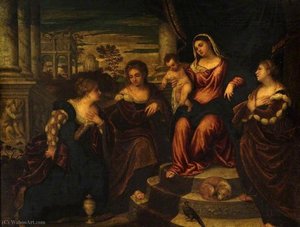
To gaze upon Polidoro da Lanciano's depiction of Mount Olympus is to be transported across the veil of time, directly into the heart of classical mythology. This grand oil on canvas does more than merely hang on a wall; it invites the viewer into a realm where gods walked among mortals and divine power held sway. The sheer scale suggested by the composition speaks to the overwhelming grandeur of the Olympian peak itself—a mountain not just of stone, but of mythic significance.
At the focal point, one senses the presence of Zeus, perhaps seated upon a prominent rock formation, his arms raised in a gesture that is both commanding and benevolent. He embodies the apex of divine authority, yet the surrounding figures—some standing in contemplation, others kneeling in reverence or engaged in various activities—suggest a vibrant ecosystem of celestial life. Even the inclusion of a single bird soaring above adds a delicate touch of ephemeral movement against the monumental backdrop, reminding us that even divinity is subject to the passage of time and breath.
Renaissance Echoes and Mythological Narrative
Painted around the year 1500, this work places us squarely within the rich tapestry of the early Renaissance, a period obsessed with rediscovering classical ideals. Polidoro da Lanciano, though perhaps an artist whose name echoes softly in comparison to his contemporaries, channels the vibrant spirit of Venetian artistic sensibilities. His handling of such a monumental subject suggests a deep immersion in both Neoplatonic philosophy and the enduring power of Greek storytelling.
The technique employed in this oil on canvas allows for a breathtaking interplay between solid, earthly rock formations and the ethereal quality of divine beings. One can almost feel the weight of the pigment, the careful layering that gives depth to the robes and the musculature of the gods. It is a masterful balance: the solidity required to depict an eternal mountain juxtaposed with the fluidity needed to capture divine emotion.
Symbolism and Emotional Resonance
The symbolism woven throughout this piece is rich and multilayered. Mount Olympus itself represents the pinnacle of human aspiration—the highest achievement, the ultimate source of inspiration, and the place where order confronts chaos. The gathering of figures speaks to the complex dynamics of power, lineage, and divine law within the mythological structure. For the modern collector or decorator, this painting offers more than mere decoration; it is a contemplation piece.
It evokes feelings of awe, wonder, and profound connection to enduring human narratives. To place such an artwork in a space is to imbue that room with a sense of timeless drama and elevated culture, transforming the mundane into something mythic.
A Masterpiece for the Connoisseur's Collection
For those who appreciate art history, mythology, or simply breathtaking craftsmanship, this reproduction offers an unparalleled opportunity. While Polidoro da Lanciano’s hand has guided this vision through centuries, owning a high-quality rendition allows one to bring the majesty of his original intent into contemporary life. It serves as a powerful conversation starter, drawing admiration for its composition, its narrative depth, and the sheer skill required to render such an epic scene with such grace.
It is a testament to the enduring power of art to make us feel small before the sublime, yet connected to something infinitely grander. This piece promises not just visual splendor, but a journey back to the golden age of storytelling and divine artistry.
Related Artworks

Artist Biography
Polidoro da Lanciano: Venetian Echoes of Renaissance Genius
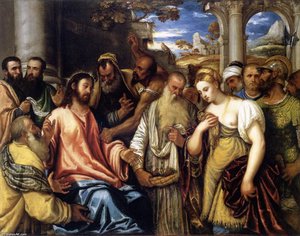
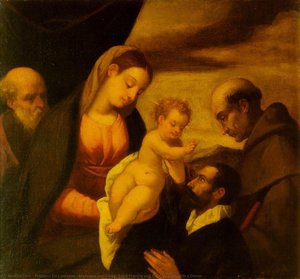
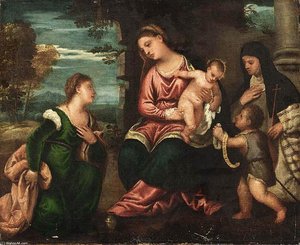
Polidoro da Lanciano (c. 1515 – 1565), born Alessandro Lanzani in Lanciano, Italy—a town nestled a few miles inland from Ortona on the Adriatic coast—remains an artist shrouded in relative obscurity despite producing remarkable paintings that resonate with Venetian artistic sensibilities of his time. Biographical details are scarce, yet scholarly research suggests he was profoundly influenced by the artistic currents swirling around Venice during the High Renaissance, establishing himself as a significant contributor to the region’s vibrant visual culture. His grandfather, Alessandro Rienzo, practiced ceramic painting in Lanciano, hinting at an early exposure to artistic traditions rooted in the local vernacular. Precise birthdate estimations place him around 1515, fueled by Venetian documents that corroborate his formative years. Remarkably adept from a young age, Polidoro embarked on a journey toward artistic mastery, relocating to Venice where he adopted the Venetian form of his name—Lanzani—a common practice for artists seeking prestige and patronage within the city’s artistic elite. Records indicate Polidoro's presence in Venice as early as 1536, several years before official documentation confirms his arrival. He diligently pursued training under luminaries like Titian (1488–1576), Bonifacio Veronese (c. 1487–1557), and Pordenone (1484–1539)—artists whose stylistic innovations profoundly shaped Polidoro’s artistic vision. Venetian legal documents attest to his involvement as a witness in various transactions between 1536 and 1549, demonstrating his social standing and engagement within the city's commercial life. His final will, dated July 20, 1565, provides invaluable insight into his personal circumstances and confirms his passing just days later—a poignant end to a prolific artistic career. Polidoro’s oeuvre is characterized by intimate depictions of the Holy Family—particularly Madonna and Child with Saints—landscapes imbued with serene beauty, and compositions reflecting Venetian elegance and refinement. His style exhibits a distinctive blend of Venetian realism and Mannerist tendencies, mirroring the stylistic evolution occurring throughout Venice during his lifetime. The influence of Veronese is palpable in certain works, highlighting the interconnectedness of artistic dialogues within the Renaissance landscape. Among Polidoro’s celebrated paintings are “Madonna and Child with Saints” (circa 1540), a masterpiece showcasing meticulous detail and symbolic richness; "Virgin and Child with Saint Luke and a Kneeling Donor (Vision of Saint Stanislaus)" (circa 1545), which exemplifies Venetian artistic virtuosity; and “Christ and the Adulteress” (circa 1560), demonstrating dramatic flair and masterful technique. These paintings are housed in prestigious collections worldwide, testifying to their enduring artistic merit and historical significance. Polidoro da Lanciano’s legacy continues to inspire admiration for his contribution to Venetian Renaissance art—a testament to his talent and the transformative power of artistic exchange.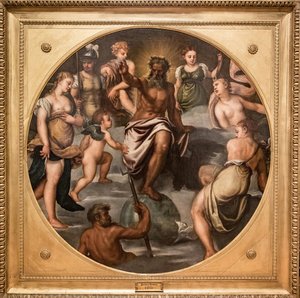
Polidoro da Lanciano
1515 - 1565 , Italy
Quick Facts
- Artistic Movement Or Style: Venetian painting
- Artists Or Movements Influenced By This Artist: ['Bonifacio Veronese']
- Artists Who Influenced This Artist: ['Titian']
- Date Of Birth: ca. 1515
- Date Of Death: 1565
- Full Name: Polidoro da Lanciano
- Nationality: Italian
- Notable Artworks:
- Madonna and Child with Saints
- Virgin and Child with Saint Luke and a Kneeling Donor (Vision of Saint Stanislaus)
- Christ and the Adulteress
- Place Of Birth: Lanciano, Italy
Related Articles

Leonardo da Vinci's Masterpieces: Explore 25 Iconic Artworks for Your Home | ArtsDot
Journey through Leonardo da Vinci's genius with our curated selection of 25 iconic artworks. Explore the stories behind Mona Lisa, The Last Supper & more Renaissance masterpieces. Find museum-quality art reproductions for your home at ArtsDot.com.

Leonardo da Vinci: A Renaissance Master’s Synthesis of Art, Science & Human Observation – Reinterpreted for the Collector
Explore Leonardo da Vinci’s timeless masterpieces with ArtsDot. Discover insights into his art, science, and legacy – trusted expertise for discerning collectors seeking authentic reproductions & investment opportunities.
Renaissance Humanism's Greatest Art: 10 Masterpieces for Your Home
Explore 10 Renaissance Humanism masterpieces by Leonardo da Vinci, Michelangelo & Raphael. Discover the stories behind these iconic paintings & sculptures and bring timeless art into your home with museum-quality reproductions from ArtsDot.com. Explore the full collection online!
Antonello da Messina: Innovation, Devotion & the Sicilian Renaissance Master's Enduring Legacy
Explore the groundbreaking art of Antonello da Messina, a pivotal figure of the Renaissance. Discover his innovative oil painting techniques, captivating portraits, and lasting influence on Italian masters. Learn more at ArtsDot.
Mario Sironi: A Poetic of Modern Italian Identity Through Symbolism & Social Commentary
Explore the profound works of Mario Sironi, a key figure in Italian Modernism. Discover his evolution from Futurism to Metaphysical painting and his powerful social commentary. Learn about his legacy at ArtsDot.