

 Preview
 Send
Send Share
Share
 Details

 Download
 Similars
 X-Ray
X-Ray Diaporama
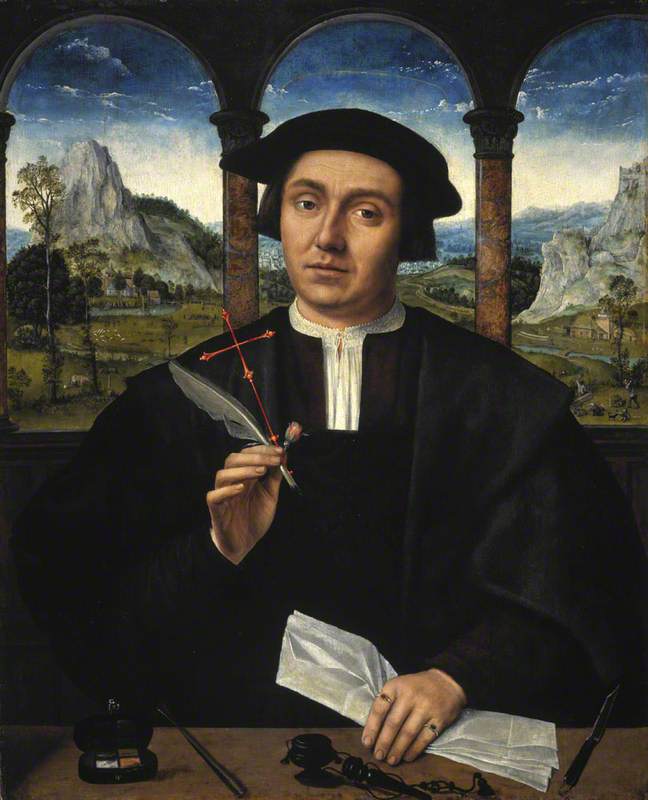
Portrait of a Man
 1520
1520 80.0 x 65.0 cm
 Read More
Purchase a high-resolution, enhanced digital image, far superior to the online preview.
Each file is meticulously prepared by our in-house specialists using advanced tools and expert manual retouching. We ensure every image has exceptional clarity, precise color accuracy, and fine detail.
The final file is delivered via email within 72 hours, optimized for immediate use in professional, editorial, and print environments. This is the same quality trusted by top-tier design studios, publishers, and galleries.
Digital Image
Download a high-resolution file for personal display, printing, and creative projects. ( Buy Print Buy Hand Made Painting)
Included in Every Digital Image Order
Expert Digital Delivery, Guaranteed
When you choose ArtsDot.com, you're not just getting an image - you're receiving a professionally enhanced digital artwork, crafted with precision and backed by a satisfaction guarantee. Here's everything that comes with your order, automatically:

Fast Email Delivery
Your high-resolution digital image file will be emailed to you within 72 hours of ordering - ready for immediate use.

AI-Enhanced Digital File
Your artwork is professionally optimized using advanced AI tools and manual editing, ensuring maximum detail, clarity, and color accuracy.

Free Lifetime Re-Delivery
Accidentally deleted or lost your file? No worries - we'll resend it to you anytime, free of charge.

No Import Fees - Ever
Enjoy your artwork instantly with zero customs, duties, or delivery fees - digital downloads are always tax-free.

Color Accuracy Guarantee
We ensure your digital image reflects the original colors as closely as possible using professional tools and color management.

60-Day Satisfaction Guarantee
If you're not satisfied with your digital image, we'll revise it or refund 100% within 60 days - no questions asked.

100% Money-Back Guarantee
Not satisfied? Get a full refund within 60 days of receiving your digital file - no questions asked.

Bulk Order Discounts
Buy 3 images, save 10% - Buy 5, save 15% - Buy 10+, save 20%. Great for creative projects, galleries, and agencies.
Collectible Description
Composition and Symbolism
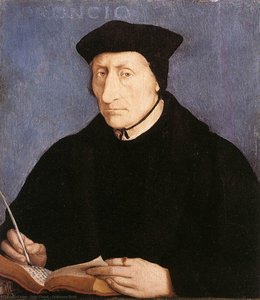
The composition of the painting is notable for its use of symbolism. The two pillars in the background represent stability and strength, while the clock at the top left corner symbolizes the passing of time. The open book on the center of the image is a significant element, as it highlights the importance of knowledge and learning. The man's attire and demeanor suggest that he is a scholar or a member of the clergy. Key elements of the painting include:- The use of chiaroscuro to create depth and volume
- The intricate details on the man's clothing and accessories
- The subtle expression on the man's face, conveying a sense of introspection
Artistic Significance
The Portrait of a Man is a significant work in the context of Northern Renaissance art. It showcases Quinten Massys' skill in capturing the essence of his subjects and creating a sense of depth and atmosphere. For more information on Quinten Massys and his works, visit ArtsDot.com. To learn more about the National Galleries of Scotland, where the painting is housed, check out their collection on Wikipedia: National Galleries of Scotland.The Portrait of a Man by Quinten Massys is a masterpiece that continues to captivate art lovers and scholars alike. Its intricate details, symbolism, and composition make it a significant work in the history of art.
Related Artworks




Artist Biography
Quinten Massys: The Shadowy Genius of Antwerp’s School
Quentin Massys, a name often overshadowed by his more celebrated contemporaries, stands as a pivotal figure in the development of Flemish Renaissance art and the foundation of the Antwerp School. Born around 1466 in Leuven, Belgium – a city steeped in medieval history and burgeoning mercantile activity – Massys’s life was one of quiet transformation, moving from blacksmithing to the captivating world of painting. While his early years remain shrouded in relative obscurity, tracing his artistic lineage reveals a complex interplay of influences, ultimately shaping a uniquely introspective and subtly satirical style that profoundly impacted generations of artists.
Tradition holds that Massys’s artistic journey began not with formal training but through an unexpected romance. Legend recounts that he fell for an artist’s daughter, prompting him to abandon his family’s blacksmithing trade and pursue a career in painting. Though the veracity of this tale remains debated by scholars, it underscores the romanticized notion of the artist as a figure driven by passion rather than purely professional ambition. Regardless of its origins, Massys's early life was deeply intertwined with the artisan traditions of Leuven, providing him with a foundational understanding of materials and craftsmanship that would later inform his meticulous technique.
Massys’s career truly blossomed in Antwerp, a vibrant hub of artistic innovation during the first half of the 16th century. Here, he joined the city's painter’s guild and established himself as a respected master, attracting students and commissions alike. His workshop flourished for decades, producing a diverse body of work encompassing religious scenes, portraits, and allegorical compositions. Unlike the grand, overtly dramatic style favored by some of his contemporaries, Massys cultivated a more intimate and psychologically nuanced approach to painting. He was particularly adept at capturing subtle expressions of emotion and conveying complex narratives through carefully observed details.
The Anatomy of Satire: Massys’s Distinctive Style
Massys's artistic signature is characterized by a remarkable blend of realism, psychological insight, and often, a quietly subversive sense of humor. He was a master of capturing the nuances of human character, meticulously rendering individual features with an almost photographic precision. However, it wasn’t merely technical skill that defined his work; Massys possessed a keen eye for detail and a subtle ability to expose the foibles and contradictions of human nature. This is most evident in his iconic “The Ugly Duchess” (also known as “The Lady with the Beastly Face”), a portrait that brilliantly satirizes aristocratic vanity through an unflattering depiction of its subject’s features.
Furthermore, Massys's work frequently incorporates elements of allegory and moralizing themes. He often depicted biblical scenes not as straightforward narratives but as opportunities to explore complex ethical dilemmas. His compositions are typically crowded with figures, creating a sense of visual density that mirrors the complexities of human experience. The use of exaggerated physiognomy – distorted features designed to emphasize particular traits – is another hallmark of his style, serving both to heighten dramatic effect and to subtly critique social conventions.
Religious Narratives and Early Netherlandish Influences
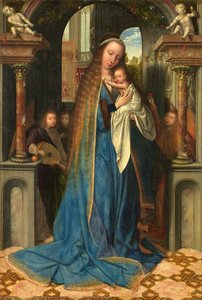
While Massys’s satirical works are undoubtedly memorable, he was equally skilled in portraying religious subjects. His paintings of the Virgin Mary, for example, demonstrate a remarkable sensitivity to her maternal role and a profound understanding of Christian iconography. These scenes are not merely decorative; they are imbued with emotional depth and psychological realism, reflecting Massys's broader artistic concerns.
Massys’s work is deeply rooted in the traditions of Early Netherlandish painting, inheriting influences from artists such as Jan van Eyck and Rogier van der Weyden. However, he developed his own distinctive style, characterized by a greater emphasis on psychological realism and a subtle undercurrent of irony. His landscapes, often reminiscent of those created by Joachim Patinir – another prominent Antwerp artist – provide a rich and atmospheric backdrop for his narrative scenes.
Legacy and Historical Significance
Despite being largely overshadowed during his lifetime, Quentin Massys’s influence on the development of Flemish Renaissance art is undeniable. He is widely considered to be the founder of the Antwerp School, a movement that profoundly shaped the artistic landscape of the Low Countries in the 16th century. Artists such as Jan Massys and Cornelis Massys – his sons – continued his legacy, building upon his innovations and further refining his distinctive style.
Massys’s work continues to fascinate art historians and viewers alike. His subtle satire, psychological insight, and meticulous technique offer a unique window into the complexities of Renaissance society. He represents a crucial link between the medieval traditions of Flemish painting and the burgeoning artistic innovations of the High Renaissance, solidifying his place as a significant, though often overlooked, figure in the history of art.
Quick Facts
- Artistic Movement Or Style: Antwerp School, Mannerism
- Artists Or Movements Influenced By This Artist:
- Jan Massys
- Cornelis Massys
- Artists Who Influenced This Artist: ['Joachim Patinir']
- Date Of Birth: c. 1466
- Date Of Death: 1530
- Full Name: Quentin Massys
- Nationality: Flemish
- Notable Artworks:
- The Ugly Duchess
- Portrait of a Man
- Christ as Redeemer
- Christ on the Cross
- Place Of Birth: Leuven, Belgium

