 Preview
 Send
Send Share
Share
 Details

 Download
 Similars
 X-Ray
X-Ray Diaporama
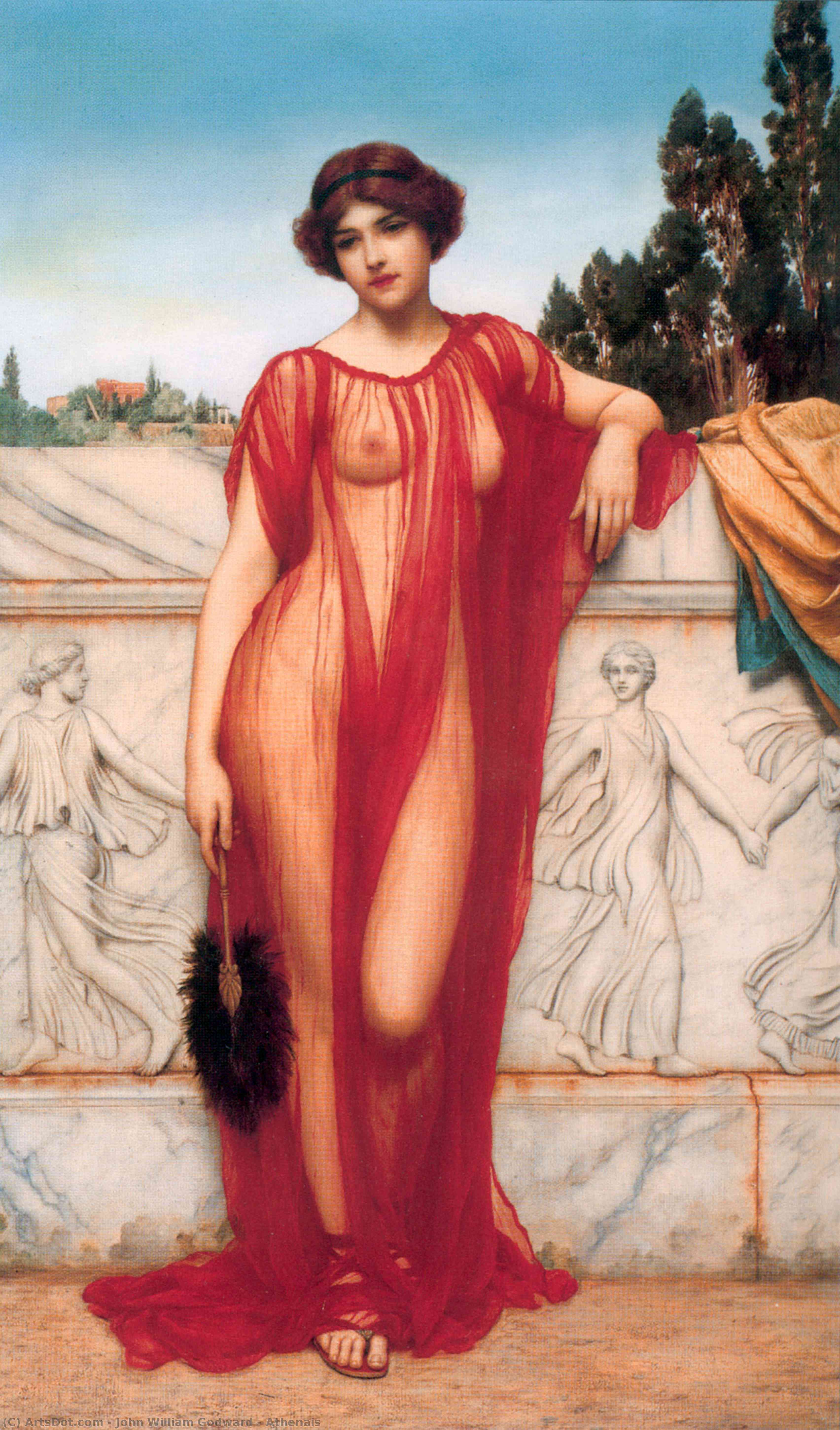
Athenais
 Oil On Canvas
- WallArt
- Neo-Classicism
 1908
1908- 19th Century
 101.0 x 61.0 cm
 Read More
Hand Made Oil Reproduction
Hand-painted oil on canvas in your size and frame, made to order by our artists. ( Buy Print Buy Image)




P118B $10

P118H $10

P118W $10

P438Z $10

P508JH $12

P508YH $12

P805H $10

P805Z $10

P919BZ $10

P919G $10

P919XJ $10

P959ZH $10

P968JZ $12

W106C $8

W218G $10

W218JH $8

W218Y $10

W307PJ $10

W316G $10

W316PJ $8

W316Y $10

W398PJ $8

W4111J $10

W500HY $15

W500JH $15

W692G $12

W849H $8

W940BG $15

W953PJ $8




Pick from our preset sizes that match the artwork's original proportions.

You may enter your own dimensions to fit a specific frame or space. If your selected size does not match the original image's proportions, we will either crop the artwork or extend the painting with additional hand-painted elements. A digital mockup will be sent for your approval before production begins.
Please note that the on-screen preview does not reflect the actual cropping or extension. Only the mockup will accurately show the final composition.
While custom sizes are available, we recommend selecting a dimension from the predefined list to preserve the original proportions.
After order, ArtsDot.com team will email client for instructions and provide a mockup preview
Worldwide Delivery () in 3/4 weeks instead of standard 5 weeks. (16 August). No compromise on quality.

Free Worldwide Express Shipping

High-Quality Linen Canvas

Full Shipping Insurance

Customs Tax Refund Guarantee

True Color Matching Guarantee

60-Day Return Policy (Defects Only)

100% Money-Back Guarantee

Bulk Discount Offer
 Glass option is only available in size under 110 CM

Athenais
Reproduction Medium
Reproduction Size
-


Total Price
$ 263
Artwork Description
A Vision of Classical Splendor
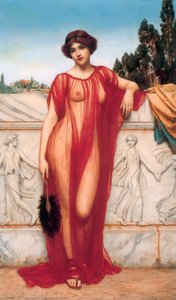
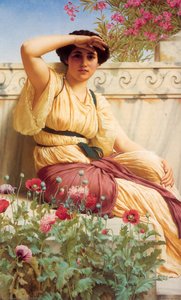
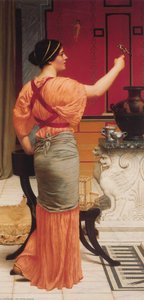
In the luminous realm of Neo-Classicism, few works capture the serene intersection of human grace and architectural grandeur as exquisitely as John William Godward’s Athenais. Painted in 1908, this masterpiece serves as a breathtaking window into a lost era of antiquity, reimagined through the meticulous lens of the late Victorian era. The painting presents us with a central figure of incomparable elegance, draped in a flowing, vibrant red gown that commands the viewer's gaze. As she stands with a poised hand upon her hip, her presence is not merely decorative but foundational to the composition, embodying a sense of quiet confidence and timeless beauty. The rich, crimson hue of her attire creates a striking visual dialogue with the pale, marble textures surrounding her, ensuring that the subject remains the beating heart of this classical dreamscape.
The setting of Athenais is nothing short of theatrical, designed to transport the observer to a world of myth and marble. Godward surrounds his protagonist with an array of sculpted figures—Greek gods and goddesses carved into architectural elements—which lend the scene an air of sacred permanence. These statues, rendered with such precision that one can almost feel the coolness of the stone, provide a structural rhythm to the piece. The inclusion of delicate birds, fluttering near the periphery, introduces a subtle layer of life and movement, breaking the stillness of the marble and infusing the atmosphere with a sense of tranquil harmony. This careful balance between the static permanence of architecture and the fleeting vitality of nature is what makes the work so profoundly captivating.
Mastery of Technique and Light
To behold Athenais is to witness the pinnacle of academic realism and the masterful application of oil on canvas. Godward’s technique is characterized by an extraordinary attention to texture; he layers his pigments with a devotion that allows the viewer to distinguish between the soft, supple folds of silk and the hard, weathered grain of ancient stone. The lighting within the painting is masterfully diffused, casting gentle shadows that sculpt the woman's form and provide a realistic sense of depth. This soft illumination avoids harsh contrasts, instead bathing the entire scene in a warm, nostalgic glow that enhances the romanticism of the subject matter.
The color palette is a sophisticated study in balance, dominated by deep reds, pristine whites, and muted earth tones. These colors work in concert to create a sense of stability and order, reflecting the core tenets of the Neo-Classical movement. The lines are predominantly smooth and flowing, guiding the eye through the organic curves of the human form and into the geometric precision of the classical backdrop. For the discerning collector or interior designer, this painting offers more than just visual beauty; it provides a sophisticated focal point that brings an aura of cultured refinement and historical depth to any space.
Symbolism and Lasting Emotional Resonance
Beyond its aesthetic brilliance, Athenais is steeped in symbolic resonance. The figure herself, often interpreted through the lens of classical mythology, evokes themes of purity, vulnerability, and the eternal nature of beauty. The architectural setting—a monument to civilization and human achievement—serves as a powerful counterpoint to the organic grace of the woman, suggesting a harmonious coexistence between humanity and the enduring legacies of the past. There is a profound sense of nostalgia in Godward's work, a longing for the perceived order and moral seriousness of the ancient world.
For those seeking to adorn their homes with art that inspires contemplation, this painting offers an emotional journey into the sublime. It invites the viewer to pause, to breathe in the stillness of the scene, and to reconnect with the classical ideals of beauty and grace. Whether viewed as a historical document of the late 19th-century academic style or as a timeless piece of decorative art, Athenais remains an enduring testament to the power of the brush to resurrect the splendor of antiquity.
Related Artworks
Artist Biography
John William Godward: A Victorian Neo-Classical Master
Early Life and Background
- Born: August 9, 1861, Wimbledon, England.
- Died: December 13, 1922, London, England.
- John William Godward was the eldest of five children born to John Godward, an investment clerk, and Sarah Eboral.
- His early life was marked by a reclusive nature, largely attributed to his parents’ overbearing personalities. This introversion profoundly influenced his artistic sensibilities.
Artistic Development and Influences
- Early Training: Godward received formal art training, though specific details remain scarce due to the destruction of his personal papers.
- Key Influences: He was heavily influenced by Sir Lawrence Alma-Tadema and Frederic Leighton, both prominent figures in Victorian Neo-Classicism.
- Like Alma-Tadema, Godward demonstrated a meticulous attention to detail in rendering classical architecture and textures. However, he developed his own distinct style characterized by vibrant colors and idealized depictions of beauty.
Career and Major Works
- Royal Academy Exhibitions: Godward first exhibited at the Royal Academy in 1887, marking the beginning of his public recognition.
- Notable Paintings:
- Dolce far Niente (1904): Perhaps his most famous work, purchased by Andrew Lloyd Webber in 1995.
- When the Heart is Young (1902): Exemplifies Godward’s ability to capture youthful innocence and beauty.
- The Mirror (1899): Showcases his skill in contrasting textures and creating a sense of depth.
- In the Tepidarium (1913): A semi-nude figure demonstrating his versatility within the Neo-Classical genre.
- Athenais: A stunning example of his idealized female figures in classical settings.
- Move to Italy: In 1912, Godward moved to Rome with one of his models, a decision that led to estrangement from his family.
Style and Themes
- Neo-Classical Style: Godward’s work is characterized by its adherence to classical forms, themes, and aesthetics.
- Recurring Motifs: He frequently depicted beautiful women in classical attire, often engaged in moments of repose or contemplation.
- Technical Mastery: Godward was renowned for his meticulous attention to detail, particularly in rendering textures such as marble, fur, and fabrics. His use of vibrant colors further distinguished his style.
- He is often described as a ‘High Victorian Dreamer’ due to the idealized and romanticized nature of his paintings.
Tragic End and Legacy
- Death: Godward tragically took his own life in 1922 at the age of 61.
- Family Reaction: His family, ashamed of his suicide, destroyed his papers and attempted to erase his memory.
- Historical Significance: Despite the attempts to suppress his legacy, Godward’s work has experienced a resurgence in popularity. He remains a significant figure in Victorian Neo-Classicism, celebrated for his technical skill, idealized beauty, and evocative depictions of classical themes.
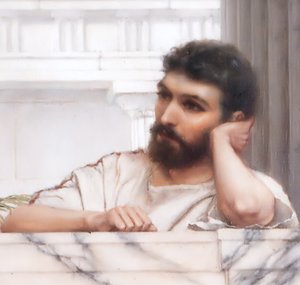
r.b.a john william godward
1861 - 1922
Quick Facts
- Birth Date: 1861
- Death Date: 1922
- Influenced By:
- Sir Lawrence Alma-Tadema
- Frederic Leighton
- Movement: Neo-Classicism, Victorian painting
- Name: John William Godward
- Nationality: British
- Notable Works:
- Dolce far Niente
- When the Heart is Young
- The Mirror
- In the Tepidarium
- Athenais
- Expectancy
Related Articles
Neo-Classicism's Greatest Hits: 10 Masterpieces for Your Home |
Journey through Neo-Classicism's finest! Explore 10 iconic masterpieces by David, Ingres & Canova. Discover art history, techniques & timeless beauty – perfect for inspiring your home decor. Find museum-quality reproductions at
R.B.A. John William Godward: A Study in Neoclassical Sensibility & Decadence
Explore the captivating Neo-Classical world of John William Godward. Discover his exquisite paintings, artistic influences, and investment potential. Expert analysis for discerning collectors.

John Singer Sargent's 25 Masterpieces: Portraits & Beyond | ArtsDot
Explore 25 iconic John Singer Sargent paintings – from dazzling portraits to Impressionist landscapes. Discover the stories behind Madame X, El Jaleo & more! Find museum-quality art reproductions and elevate your home decor with ArtsDot.com.

John Constable's Masterpieces: Explore 25 Iconic Landscapes for Your Home
Journey through John Constable's 25 most celebrated landscapes. Explore Romanticism, Dedham Vale & his masterful use of light in iconic paintings like 'Hay Wain'. Find museum-quality art reproductions and elevate your home decor on ArtsDot.com.
The Enduring Allure of the Nude: A Historical & Artistic Exploration of the Human Form
Explore the captivating history of nude art! Discover iconic paintings & artists from classical to modern eras. Uncover symbolism, techniques & find museum-quality reproductions at ArtsDot.