 Preview
 Send
Send Share
Share
 Details

 Download
 Similars
 X-Ray
X-Ray Diaporama
Virgin with the Child, St. Joseph and St. John the Evangelist


 Read More
Giclée / Art Print
Museum-quality giclée or canvas print with fast production and flexible finish options. ( Buy Hand Made Painting Buy Image)




P118B $10

P118H $10

P118W $10

P438Z $10

P508JH $12

P508YH $12

P805H $10

P805Z $10

P919BZ $10

P919G $10

P919XJ $10

P959ZH $10

P968JZ $12

W106C $8

W218G $10

W218JH $8

W218Y $10

W307PJ $10

W316G $10

W316PJ $8

W316Y $10

W398PJ $8

W4111J $10

W500HY $15

W500JH $15

W692G $12

W849H $8

W940BG $15

W953PJ $8




Pick from our preset sizes that match the artwork's original proportions.

You may enter your own dimensions to fit a specific frame or space. If your selected size does not match the original image's proportions, we will either crop the artwork or extend the image with a mirrored or solid-fill edge. A digital mockup will be sent for your approval before production begins.
Please note that the on-screen preview does not reflect the actual cropping or extension. Only the mockup will accurately show the final composition.
While custom sizes are available, we recommend selecting a dimension from the predefined list to preserve the original proportions.
Worldwide Delivery () in 2 weeks instead of standard 4/5 weeks. (31 August)

Free Worldwide Express Shipping

High-Quality Linen Canvas

Full Shipping Insurance

Customs Tax Refund Guarantee

True Color Matching Guarantee

60-Day Return Policy (Defects Only)

100% Money-Back Guarantee

Bulk Discount Offer
 Glass option is only available in size under 110 CM

Virgin with the Child, St. Joseph and St. John the Evangelist
Giclée / Art Print
Reproduction Size
-


Total Price
$ 63
A Divine Gathering in Florentine Grace
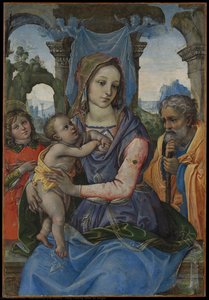
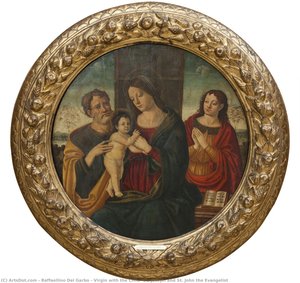
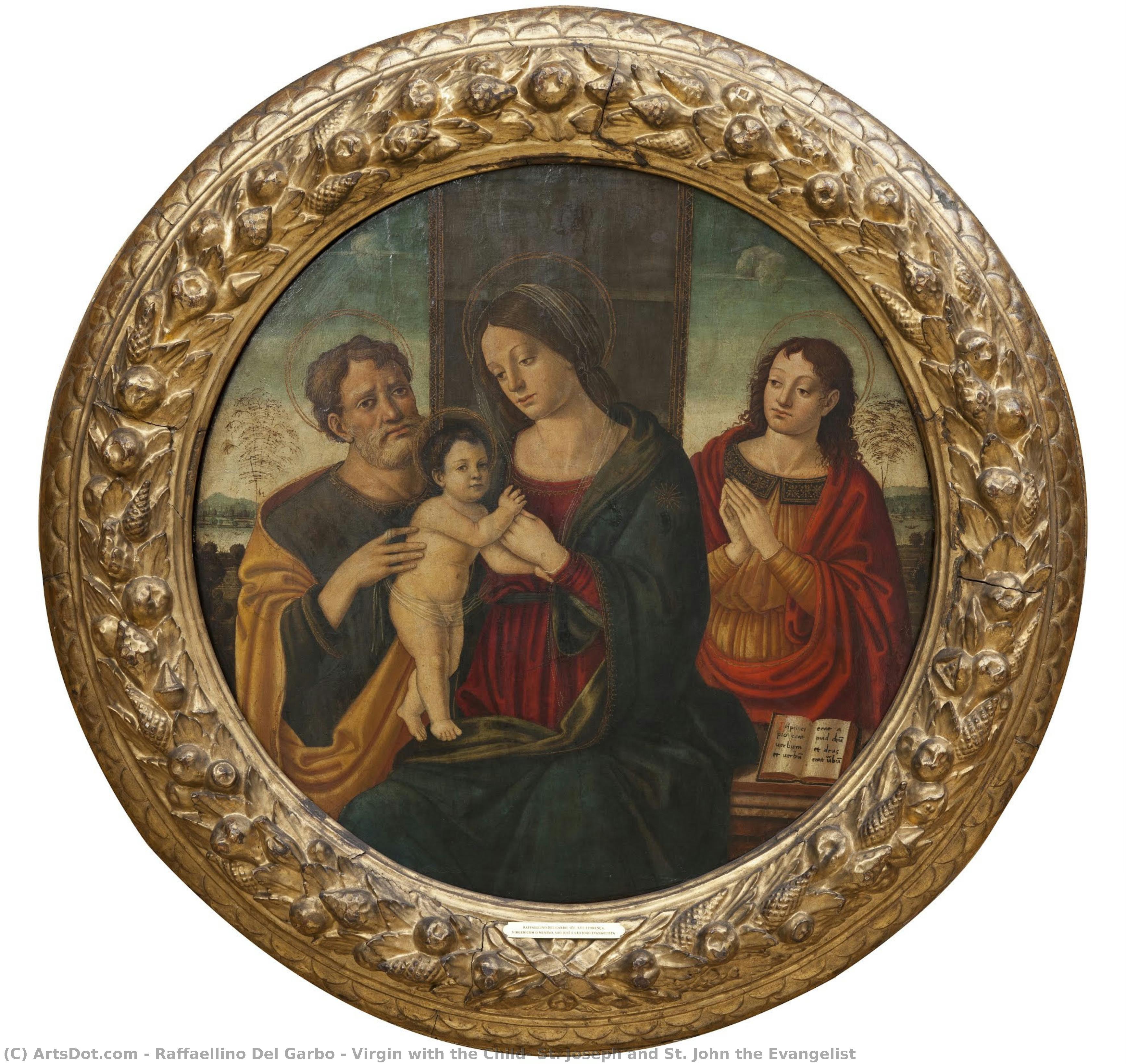
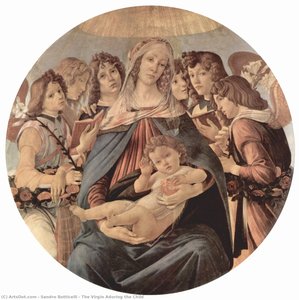
In the quiet, luminous realm of the Italian Renaissance, few works capture the tender intimacy of the sacred as effectively as Raffaellino del Garbo’s Virgin with the Child, St. Joseph and St. John the Evangelist. This masterpiece serves as a window into a period where the divine was brought down to earth through the delicate application of pigment and the profound mastery of human emotion. The composition draws the viewer into a celestial circle, a rhythmic arrangement of holy figures that suggests an eternal, unbroken bond between the earthly and the divine. At its heart, the Virgin Mary cradles the Christ Child, her presence radiating a maternal warmth that is both regal and profoundly accessible. Surrounding them, the watchful presence of St. Joseph and the contemplative gaze of St. John the Evangelist create a triangular stability, guiding the eye through a narrative of protection, devotion, and spiritual continuity.
The artistry of Raffaellino del Garbo is defined by what his very name implies: garbo, or grace. Having been trained under the legendary Filippino Lippi, Raffaellino inherited a sophisticated command of disegno—the Florentine emphasis on precise drawing and structural clarity. In this particular work, one can observe how the artist uses soft transitions of light and shadow to sculpt the figures, giving them a palpable, three-dimensional weight. The drapery of their 15th-century attire flows with a rhythmic elegance, each fold meticulously rendered to catch an unseen light, adding a sense of movement to an otherwise still and meditative scene. This technical precision does not merely showcase skill; it serves to elevate the subject matter, transforming a religious icon into a living, breathing moment of sanctity.
Symbolism and the Soul of the Renaissance
Beyond the surface beauty lies a complex tapestry of theological symbolism designed to stir the soul of the faithful. The circular arrangement of the figures is far from accidental; it represents the perfection of the heavens and the infinite nature of divine love. Each saint acts as a bridge for the viewer, inviting us into this sacred space. St. Joseph, standing as a pillar of strength and silent guardianship, embodies the virtues of humility and protection, while the youthful presence of St. John the Evangelist evokes the purity of faith and the promise of revelation. The interplay of light across the faces of the holy family creates an emotional resonance, moving the observer from mere observation to deep, empathetic contemplation.
For the discerning collector or interior designer, a reproduction of this caliber offers more than just a decorative element; it provides a focal point of profound historical and aesthetic depth. The painting’s palette—rich with the earthy tones and luminous highlights characteristic of the Florentine school—complements both classical and contemporary settings. Whether placed in a sunlit gallery or a sophisticated study, the work brings an atmosphere of timeless tranquility and intellectual prestige. To possess such a piece is to invite the quiet majesty of the Renaissance into one's personal sanctuary, ensuring that the legacy of Raffaellino’s graceful precision continues to inspire generations to come.
Related Artworks
![Life Of St John The Evangelist - [03] - Ascension Of The Evangelist — Giotto Di Bondone, Proto-renaissance Painting](/media/artworks/images-thumb/ab/15/ab151a8ad105b1ef78444cd367849cb4.jpg)
Artist Biography
Raffaellino del Garbo: Graceful Precision in Florentine Renaissance Painting
Raffaellino del Garbo (1470-1527), a Florentine painter born Raffaello di Bartolomeo dei Carli, stands as a testament to the refined aesthetic sensibilities of the Italian Renaissance. His nickname, “del garbo,” derived from the Via del Garbo in Florence—where his workshop resided—captures the essence of his artistic approach: understated elegance and meticulous attention to detail. Early Life and Training Raffaellino’s formative years were spent under the tutelage of Filippino Lippi, a pivotal figure in Florentine art who instilled in him a profound understanding of perspective and disegno – the foundational principles of Renaissance painting. Their collaboration lasted until 1490, shaping Raffaellino's initial artistic style and establishing a connection to Lippi’s humanist ideals. This influential mentorship propelled him to Rome, where he joined Lippi’s studio and undertook the monumental task of decorating the chapel of St. Thomas Aquinas (Caraffa Chapel) in Santa Maria sopra Minerva. This commission demanded masterful execution and cemented Raffaellino's reputation for blending classical influences with Florentine tradition. Artistic Style and Works Raffaellino’s oeuvre is characterized by a remarkable blend of tempera and oil paint, reflecting the artistic innovations of his time. He achieved renown for his serene depictions of religious subjects—particularly the Resurrection, originally intended for Monte Oliveto Monastery, now housed in the Galleria dell'Accademia – showcasing a masterful command of color and form. Similarly impressive is “The Miracle of the Loaves,” adorning the refectory of Cesto Convent, demonstrating his ability to convey spiritual emotion through precise observation and skillful technique. Notable masterpieces include "The Coronation of the Virgin," currently residing in the Louvre Museum, and “Madonna and Child with Saints and Donors,” previously displayed at Berlin Museum—each reflecting Raffaellino’s dedication to capturing idealized beauty and conveying profound theological themes. Influences and Legacy Raffaellino del Garbo's artistic vision was undeniably shaped by the humanist spirit of his era, mirroring the broader trends in Florentine art during the High Renaissance. He absorbed lessons from Leonardo da Vinci and Michelangelo, integrating their groundbreaking discoveries into his own practice. Furthermore, Raffaellino mentored Bronzino, fostering a continuation of stylistic excellence within Florence’s artistic milieu. His legacy extends beyond individual artworks; he embodies the enduring pursuit of grace and precision—qualities that define the very essence of Renaissance painting and continue to inspire artists today.Silvano Lodi Collection at Museo Silvano Lodi
The Silvano Lodi Collection, housed in Museo Silvano Lodi in Campione, Italy, offers a captivating glimpse into Raffaellino del Garbo’s artistic output. Featuring numerous paintings executed with tempera on wood—a technique favored by the artist—the collection underscores his commitment to textural richness and luminous color palettes. These works exemplify Raffaellino's signature style: understated elegance combined with meticulous attention to detail, mirroring the aesthetic sensibilities of his contemporaries.Concluding Remarks
Raffaellino del Garbo’s contribution to Florentine Renaissance art is undeniable. He skillfully blended classical ideals with humanist observation, producing images that resonate with timeless beauty and spiritual depth. His enduring influence can be discerned in the works of subsequent generations of artists—a testament to his mastery of technique and his unwavering dedication to capturing the sublime qualities of human experience.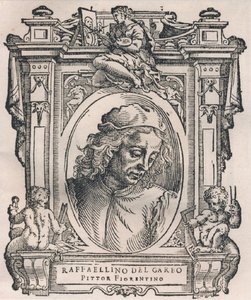
Raffaellino del Garbo
1470 - 1527 , Italy
Quick Facts
- Artistic Movement Or Style: Renaissance
- Artists Or Movements Influenced By This Artist: ['Bronzino']
- Artists Who Influenced This Artist: ['Filippino Lippi']
- Date Of Birth: 1466
- Date Of Death: ca. 1527
- Full Name: Raffaello di Bartolomeo dei Carli
- Nationality: Italian
- Notable Artworks:
- Holy Family with an Angel
- (47 x 30 CM) (1505)
- Virgin with the Child, St. Joseph and St. John the Evangelist
- Place Of Birth: Florence, Italy
Related Articles
John Singer Sargent's 25 Masterpieces: Portraits & Beyond | ArtsDot
Explore 25 iconic John Singer Sargent paintings – from dazzling portraits to Impressionist landscapes. Discover the stories behind Madame X, El Jaleo & more! Find museum-quality art reproductions and elevate your home decor with ArtsDot.com.

John Constable's Masterpieces: Explore 25 Iconic Landscapes for Your Home
Journey through John Constable's 25 most celebrated landscapes. Explore Romanticism, Dedham Vale & his masterful use of light in iconic paintings like 'Hay Wain'. Find museum-quality art reproductions and elevate your home decor on ArtsDot.com.
El Greco's Masterpieces: Explore 25 Iconic Paintings & Spiritual Visions | ArtsDot
Journey through El Greco's 25 most iconic paintings! Explore the spiritual depth & dramatic beauty of this Spanish Renaissance master. Discover art history, techniques & find museum-quality reproductions for your home at ArtsDot.com.
Uffizi's 25 Masterpieces: Renaissance Art & Timeless Decor Inspiration
Journey through the Uffizi Gallery's 25 most iconic Renaissance artworks! Explore Botticelli, Leonardo da Vinci & Michelangelo’s masterpieces. Find museum-quality art reproductions and curated decor ideas to bring timeless Italian beauty into your home. Discover all masterpieces on ArtsDot.com

Gwen John: Intimacy, Modernity & the Quiet Power of Welsh Portraiture
Explore the captivating world of Gwen John, a pioneering Welsh artist renowned for her intimate portraits & subtle style. Discover her life, legacy, and how to bring her timeless beauty into your home with ArtsDot.