 Preview
 Send
Send Share
Share
 Details

 Download
 Similars
 X-Ray
X-Ray Diaporama
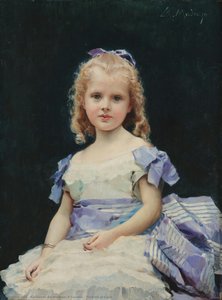
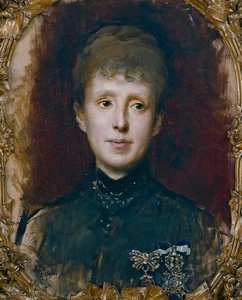
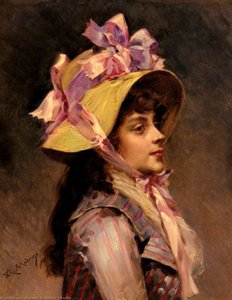
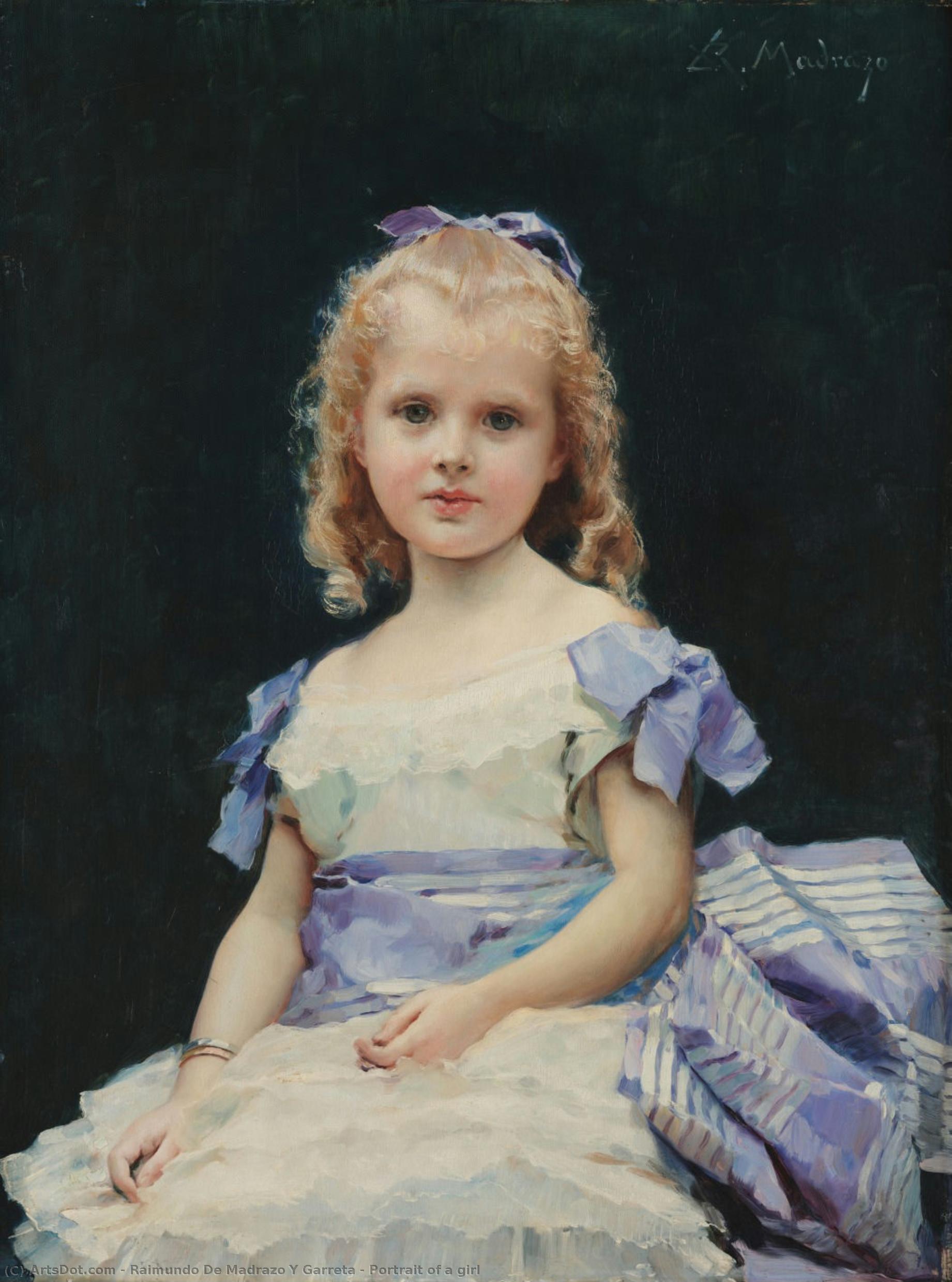
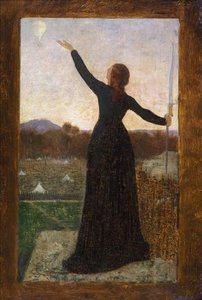
Portrait of a girl
 Oil
Oil- WallArt
- Realism
 1875
1875 80.0 x 61.0 cm
 Grão Vasco National Museum
 Read More
Hand Made Oil Reproduction
Hand-painted oil on canvas in your size and frame, made to order by our artists. ( Buy Print Buy Image)




P118B $10

P118H $10

P118W $10

P438Z $10

P508JH $12

P508YH $12

P805H $10

P805Z $10

P919BZ $10

P919G $10

P919XJ $10

P959ZH $10

P968JZ $12

W106C $8

W218G $10

W218JH $8

W218Y $10

W307PJ $10

W316G $10

W316PJ $8

W316Y $10

W398PJ $8

W4111J $10

W500HY $15

W500JH $15

W692G $12

W849H $8

W940BG $15

W953PJ $8




Pick from our preset sizes that match the artwork's original proportions.

You may enter your own dimensions to fit a specific frame or space. If your selected size does not match the original image's proportions, we will either crop the artwork or extend the painting with additional hand-painted elements. A digital mockup will be sent for your approval before production begins.
Please note that the on-screen preview does not reflect the actual cropping or extension. Only the mockup will accurately show the final composition.
While custom sizes are available, we recommend selecting a dimension from the predefined list to preserve the original proportions.
After order, ArtsDot.com team will email client for instructions and provide a mockup preview
Worldwide Delivery () in 3/4 weeks instead of standard 5 weeks. (16 August). No compromise on quality.

Free Worldwide Express Shipping

High-Quality Linen Canvas

Full Shipping Insurance

Customs Tax Refund Guarantee

True Color Matching Guarantee

60-Day Return Policy (Defects Only)

100% Money-Back Guarantee

Bulk Discount Offer
 Glass option is only available in size under 110 CM

Portrait of a girl
Reproduction Medium
Reproduction Size
-


Total Price
$ 263
Artwork Description
A Portrait of Innocence: Raimundo de Madrazo’s ‘Portrait of a Girl’
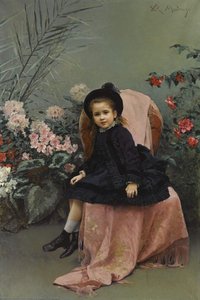
Raimundo de Madrazo y Garreta's “Portrait of a Girl,” painted in 1875, is more than just a likeness; it’s a poignant distillation of late 19th-century European realism imbued with a subtle, almost melancholic romanticism. This captivating work, currently residing within the Grão Vasco National Museum in Viseu, Portugal, offers a glimpse into the aristocratic circles of Madrid and Paris through the eyes of a young woman whose identity remains delightfully enigmatic. The painting immediately draws the viewer in with its quiet dignity – a sense of poised contemplation radiating from the subject’s gaze, directed squarely at the observer, inviting an intimate connection.
Madrazo, steeped in artistic lineage through his grandfather José de Madrazo (a former Director of the Prado) and father Federico de Madrazo, expertly captures a moment suspended in time. He wasn't merely replicating a physical form; he was striving to convey a psychological state – a fleeting impression of childhood innocence mingled with a hint of wistful awareness. The brushstrokes themselves are remarkably deliberate, revealing a careful balance between realistic representation and the artist’s own expressive style. Notice how the soft blending creates an almost velvety texture, particularly in the girl's dress and hair, suggesting luxurious fabrics and a gentle light.
Composition and Color – A Symphony of Restraint
The composition is strikingly centered around the young subject, occupying the majority of the canvas. This deliberate focus immediately establishes her as the undeniable star of the scene. The background, rendered in muted purples, whites, and soft greens, isn’t merely a backdrop; it subtly directs our attention back to the girl, creating an effective isolation that amplifies her presence. Two figures are faintly visible in the distance on either side, adding a touch of narrative depth without disrupting the overall sense of serenity. The color palette is remarkably restrained – a deliberate choice that contributes significantly to the painting’s mood. The dominant hues evoke a feeling of quiet elegance and understated wealth.
The girl's attire—a dress featuring delicate purple and white stripes—is a testament to the fashion trends of the era, reflecting the refined tastes of her social milieu. Her light brown or blonde hair, subtly highlighted, adds another layer of visual interest, while the dark background provides a crucial contrast, allowing the colors of her clothing and face to truly stand out. The artist’s skillful use of light is equally noteworthy; it's diffused and even, illuminating the girl’s features without creating harsh shadows, fostering an atmosphere of gentle tranquility.
Symbolism and Context – A Window into a World
“Portrait of a Girl” offers more than just a visual representation; it provides a window into the social dynamics of late 19th-century European society. The painting likely depicts a member of an aristocratic or bourgeois family, as suggested by the subject’s attire and demeanor – a common theme in Madrazo's work. The subtle romanticism evident in the brushstrokes hints at a broader cultural fascination with childhood innocence and the idealized portrayal of youth. It’s tempting to speculate about the girl’s story—her hopes, her dreams, perhaps even her anxieties—though the artist wisely leaves much open to interpretation.
Further research reveals that Madrazo was deeply influenced by his family's artistic legacy and by contemporary artists like Alfred Stevens and Léon Cogniet. His work often reflects a Rococo sensibility, evident in the graceful poses and delicate details of the portrait. The painting’s creation coincided with a period of significant social change in Europe, marked by industrialization and urbanization, yet Madrazo skillfully captured a sense of timeless beauty and elegance that transcends these shifts.
A Legacy of Elegance – Raimundo de Madrazo y Garreta
Raimundo de Madrazo y Garreta (1841-1920), born in Rome, was part of a celebrated artistic dynasty. His grandfather, José de Madrazo, held the prestigious position of Director of the Museo del Prado, while his father, Federico de Madrazo, was himself a renowned portraitist. This familial heritage instilled within young Raimundo not only technical mastery but also an understanding of the social standing associated with artistic creation. His early training unfolded within the intimate setting of his family’s studios, absorbing principles from both father and grandfather. Formal studies at the Real Academia de Bellas Artes de San Fernando in Madrid further refined his skills, exposing him to contemporary artistic currents. His work remains a testament to his skill and a valuable window into the social and cultural landscape of 19th-century Spain.
Related Artworks

![Vida De Miguel De Cervantes Saavedra (life Of Miguel De Cervantes Saavedra). Book V Of The Edition Of Don Quixote (biblioteca Nacional De España)\n\n[7] — Martín Fernández De Navarrete Y Ximénez De Tejada, Academic Art](/media/artworks/images/thumbnails/99/f9/99f969c294754562907a5ffd062310fa.jpg)
Artist Biography
A Legacy of Elegance: The Life and Art of Raimundo de Madrazo
Raimundo de Madrazo y Garreta, born in Rome in 1841, entered a world already steeped in artistic tradition. His lineage was one of considerable prestige; his grandfather, José de Madrazo, held the esteemed position of Director of the Museo del Prado, while his father, Federico de Madrazo, was himself a celebrated portraitist. This familial foundation wasn’t merely about inheritance—it instilled within young Raimundo not only a technical mastery but also an understanding of the power and social standing associated with artistic creation. His earliest training unfolded within the intimate setting of his family's studios, absorbing principles of classical technique from both father and grandfather. Formal studies at the Real Academia de Bellas Artes de San Fernando in Madrid, under Carlos Luis de Ribera and Carlos de Haes, further refined his skills, exposing him to contemporary artistic currents. However, it was a pivotal sojourn to Paris in 1860 that truly transformed his trajectory. Studying with Léon Cogniet and forging connections within the Parisian art world would define his aesthetic sensibilities for decades to come. The influence of Alfred Stevens during this period proved particularly significant, subtly shifting his approach towards a more refined and decorative sensibility—a move away from strict academicism toward a style imbued with grace and allure.Realism Infused with Refinement: Artistic Style and Influences
Madrazo’s artistic style is fundamentally rooted in Realism, yet it transcends mere imitation through an infusion of elegance and sophistication. While committed to accurate representation, his paintings possess a delicate grace that distinguishes them from the more austere strains of the movement. This refinement evolved over time, subtly incorporating elements reminiscent of Rococo—a fondness for ornate detail and playful composition—and *Japonisme*, the burgeoning Western fascination with Japanese art, particularly in its emphasis on flattened perspective and decorative patterns. He became renowned for his portraits, capturing not merely physical likeness but also the inner essence of his subjects with remarkable skill. The influence of Mariano Fortuny is palpable in Madrazo’s smaller-scale *tableautin* scenes—intimate glimpses into bourgeois life—and his ability to portray a world of luxurious textures and subtle emotions. Cogniet's academic rigor, combined with Stevens’ decorative flair, created the foundation for Madrazo’s unique artistic voice. He wasn’t simply recording reality; he was crafting an idealized vision of it, one that appealed to the tastes of a discerning clientele who sought beauty and refinement in art. This ability to blend realism with a touch of fantasy allowed him to create works that were both captivating and aspirational.Portraits of an Era: Major Works and Themes
Madrazo’s oeuvre is populated with captivating portraits and genre scenes that offer a window into the social world of the late 19th century. His *Portrait of his father painting* stands as a testament to both filial affection and artistic skill, showcasing not only a likeness but also the very act of creation itself—a painter portraying a painter, a meta-commentary on the artistic process. Works like *Fond Memories* demonstrate his talent for evoking nostalgia and capturing intimate moments with poignant sensitivity. However, it was his genre paintings, often featuring Aline Masson as the model, that garnered him widespread acclaim. *The Reluctant Mistress*, *After the Bath*, and *Portrait of Aline Masson in a Mantilla* are prime examples—sensuous, meticulously rendered scenes that celebrate feminine beauty and grace. Aline Masson’s presence is central to understanding Madrazo's artistic output; she served as his muse for many years, embodying the ideal of refined elegance that permeated his paintings. These works weren’t merely depictions of fashionable society; they were carefully constructed fantasies, designed to appeal to a clientele eager to possess images of beauty and luxury. The recurring motif of feminine allure, often veiled in an atmosphere of gentle mystery, became a hallmark of his style.International Recognition and Lasting Impact
Raimundo de Madrazo’s career unfolded on an international stage. His debut exhibition in Paris in 1860 marked the beginning of his professional journey, quickly followed by frequent trips to New York where he cultivated a loyal clientele among prominent families like the Vanderbilts and Alexander Turney Stewart. Despite this success abroad, he remained relatively reserved about exhibiting in Spain. A testament to his commitment to fostering artistic exchange was his co-founding of an “International Painting Exhibition” in Paris in 1882, alongside Alfred Stevens, de Nittis, and Petit—an initiative designed to promote the work of foreign artists. He consistently exhibited at the prestigious Paris Salon, receiving a major medal at the Exposition Universelle in 1889, solidifying his reputation as a leading artist of his time. Beyond his artistic achievements, Madrazo demonstrated a commitment to cultural preservation through his generous donation of Francisco de Goya’s works to the Museo del Prado in 1894 and his membership in the Royal Academy of London. Raimundo de Madrazo died in 1920, leaving behind a legacy as one of Spain's foremost realist painters—a master portraitist who captured the spirit of an era with elegance, skill, and enduring appeal. His work continues to resonate today, offering a glimpse into the opulent world of the Gilded Age and the artistic sensibilities that defined it. His son, Federico de Madrazo y Ochoa ("Coco"), continued the family tradition, ensuring that the Madrazo name remained synonymous with artistic excellence for generations to come. Madrazo’s paintings remain a testament to his ability to bridge academic traditions and emerging modern styles, leaving an indelible mark on 19th-century Spanish art.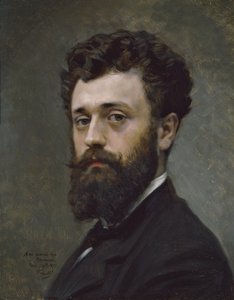
Raimundo de Madrazo y Garreta
1841 - 1920 , Italy
Quick Facts
- Artistic Movement Or Style: Realism, Rococo influence
- Artists Or Movements Influenced By This Artist: ['Federico de Madrazo']
- Artists Who Influenced This Artist:
- Alfred Stevens
- Léon Cogniet
- Mariano Fortuny
- Date Of Birth: 1841
- Date Of Death: 1920
- Full Name: Raimundo de Madrazo y Garreta
- Nationality: Spanish
- Notable Artworks:
- Portrait of his father painting
- Fond Memories
- The Reluctant Mistress
- After the Bath
- Masqueraders
- Place Of Birth: Rome, Italy
Related Articles

Demandes Commerciales
APS ofrece reproducciones de bellas artes y encargos personalizados desde 2004. Confían en nosotros corporaciones, hoteles y coleccionistas selectos para obras de arte de calidad museística, servicio discreto y soluciones artísticas completas. ¡Póngase en contacto con nosotros para obtener un presupuesto personalizado!
Raimundo de Madrazo: Capturing the Elegance of Spain’s Gilded Age Aristocracy
Explore the captivating world of Raimundo de Madrazo, master portraitist of Spain’s Gilded Age elite. Discover his artistic evolution, Parisian society portraits & investment potential. Expert insights for collectors.

Goya's Masterpieces: Explore 25 Iconic Paintings & Art Prints | ArtsDot
Delve into the world of Francisco Goya with ArtsDot. Explore 25 iconic paintings – from 'The Third of May' to his haunting Black Paintings. Discover the stories, techniques & emotions behind these Spanish masterpieces. Find museum-quality art reproductions for your home at ArtsDot.com!

A riguardo di noi
Découvrez notre histoire ! Nous apportons l'art de classe mondiale dans votre vie grâce à une sélection experte, des créations personnalisées et des aperçus gratuits. Approuvé par les particuliers et les entreprises depuis 2000.
Romantic Realism's Finest: 10 Masterpieces for Your Home | ArtsDot
Explore 10 defining masterpieces of Romantic Realism! Discover Courbet, Millet & Daumier's powerful paintings—capturing emotion and social realities. Find museum-quality reproductions for your home at ArtsDot.com.